Why Custom Aluminum Wheels Are a Smart Upgrade for Modern Vehicles
Why Custom Aluminum Wheels Are a Smart Upgrade for Modern Vehicles
When it comes to automotive modifications, few upgrades deliver the immediate visual impact and tangible performance benefits of swapping out factory rims for premium custom aluminum wheels. This single modification does more than just catch the eye at a stoplight—it fundamentally alters how a machine interacts with the tarmac.
For enthusiast drivers across the United States looking to optimize their daily drive, track experience, or off-road capability, understanding the engineering, materials, and maintenance behind these upgrades is essential to making an informed investment. Whether you pilot a classic muscle car along Route 66, navigate a lifted truck through rugged terrain, or fine-tune a European sports sedan for weekend autocross, the right set of wheels acts as the ultimate bridge between driver intent and road response.
1.Why Choose Custom Aluminum Wheels?
The modern automotive market demands a balance between form and function. Factory-installed wheels are frequently designed with strict cost-cutting compromises, often resulting in heavy, uninspired steel structures or basic, mass-produced alloy castings. Upgrading to tailored aluminum options offers distinct structural, behavioral, and economic advantages.
                  +---------------------------------------+
                  |    BENEFITS OF CUSTOM ALUMINUM        |
                  +---------------------------------------+
                                      |
         +----------------------------+----------------------------+
         |                                                         |
         v                                                         v
+----------------------------------+                     +----------------------------------+
|      PERFORMANCE UPGRADES        |                     |       AESTHETIC FREEDOM          |
+----------------------------------+                     +----------------------------------+
| • Reduced Unsprung Weight        |                     | • Tailored Finishes & Colors     |
| • Sharper Throttle Response      |                     | • Aggressive Offsets & Stance    |
| • Enhanced Brake Heat Dissipation|                     | • Unique Multi-Piece Designs     |
+----------------------------------+                     +----------------------------------+
The Physics of Performance: Unsprung Weight Explained
To appreciate why aftermarket aluminum options matter, one must look at the concept of unsprung weight. This refers to the mass of the components not supported by the vehicle’s suspension system, including tires, brakes, suspension linkages, and the wheels themselves.
-
Enhanced Acceleration: Lowering rotational mass means the powertrain requires less kinetic energy to spin the wheel up to speed. This results in sharper throttle response and faster times off the line.
-
Sharper Braking: Less rotating mass means the braking system can decelerate the wheels with greater efficiency, reducing stopping distances and minimizing brake fade during spirited driving.
-
Responsive Cornering Agility: Reduced unsprung weight allows the suspension dampers and springs to react faster to road imperfections. By keeping the tires firmly planted on the ground, the vehicle achieves superior mechanical grip and predictability.
Aesthetically Tailored Stance
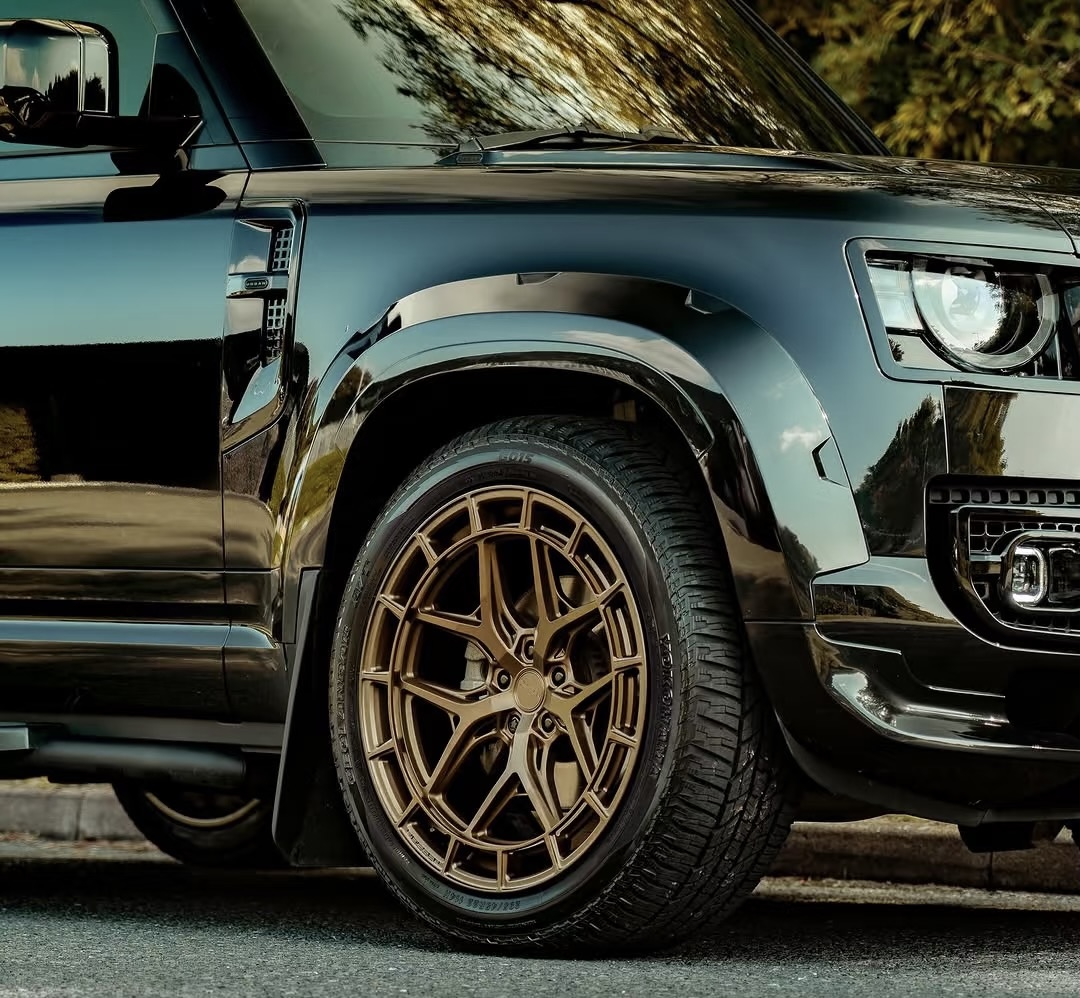
Beyond the track, customization allows owners to break away from the generic assembly-line appearance. Modern machining permits intricate spoke patterns, deep concave profiles, and multi-piece configurations that complement the specific body lines of modern builds. A custom wheel set allows you to fine-tune the stance of your vehicle—positioning the outer edge of the wheel flush with the fender line for an aggressive, purposeful look.
2.Manufacturing Methods: Cast, Flow-Formed, and Forged
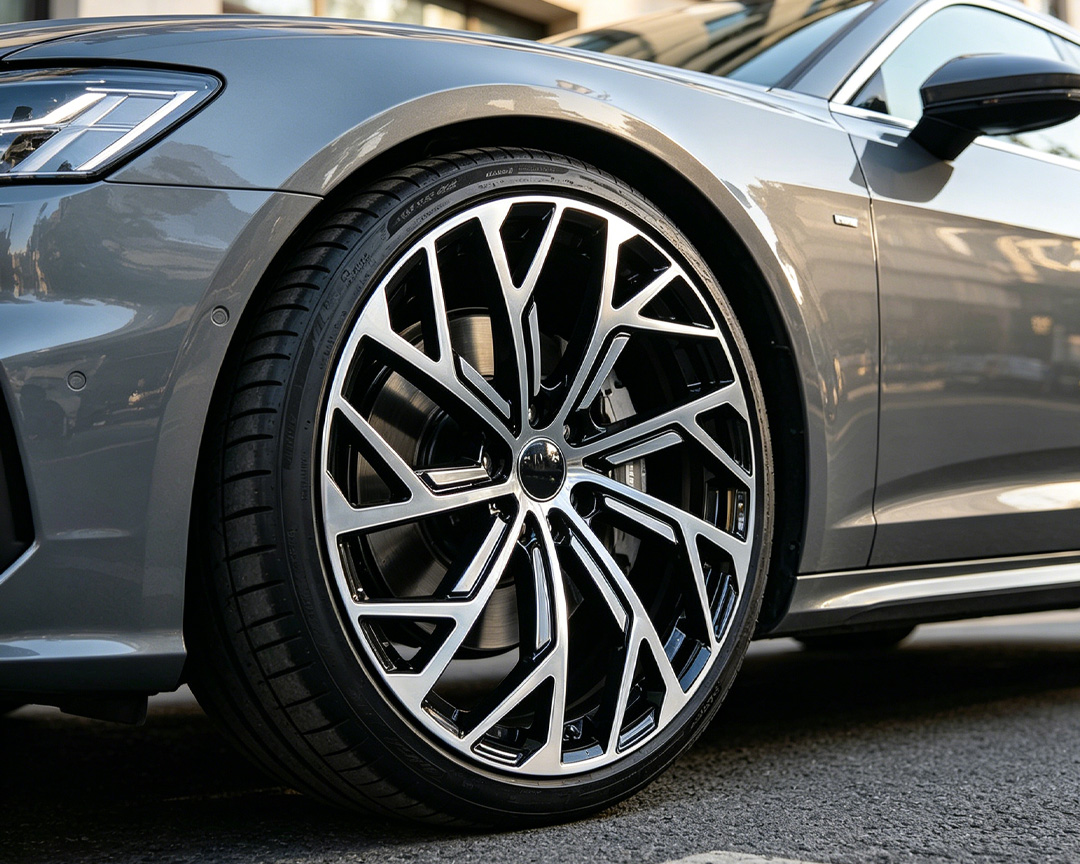
Not all aluminum wheels are created equal. The manufacturing technique directly dictates the strength, weight, and overall cost of the product. When sourcing upgrades from specialized outlets like ATK Wheels, buyers typically navigate among three primary categories: cast, flow-formed, and forged structures.
1. Cast Aluminum Wheels
Casting remains the most common manufacturing method in the aftermarket industry due to its balance of cost and design versatility. The process involves heating aluminum until it becomes molten liquid and then pouring or forcing it into a pre-designed mold.
-
Gravity Casting: The simplest method, relying purely on gravity to fill the mold. While highly cost-effective, the lack of high pressure can lead to microscopic porosity or tiny air pockets within the solidified metal, requiring thicker walls and thus more weight to achieve target safety ratings.
-
Low-Pressure Casting: Molten metal is pumped into the mold from the bottom up under controlled pneumatic pressure. This reduces porosity, refines the metal’s grain structure, and creates a denser molecular framework than gravity casting.
2. Flow-Formed Wheels (Rotary Forged)
Flow forming is a hybrid process that bridges the gap between casting and forging. It begins as a low-pressure cast wheel preform that is narrower than the final desired width. The preform is mounted onto a specialized mandrel and spun at high speeds while heavy hydraulic rollers apply extreme pressure to heat and stretch the barrel.
This stretching process aligns the aluminum molecules in a longitudinal direction, significantly increasing the tensile strength of the outer barrel. Consequently, manufacturers can use less material to achieve the necessary load rating, resulting in a wheel that is substantially lighter and tougher than a standard cast wheel, yet far more affordable than a fully forged alternative.
3. Forged Aluminum Wheels
Forging represents the absolute pinnacle of wheel manufacturing. Instead of melting the metal, a solid cylindrical billet of aerospace-grade aluminum alloy (typically 6061-T6) is subjected to intense heat and millions of pounds of pressure from massive industrial presses.
This extreme compression forces the grain structure of the aluminum to deform and align perfectly with the shape of the wheel, eliminating internal voids, cracks, or flaws. The result is an incredibly dense, remarkably strong component that can be machined into ultra-thin, lightweight spoke designs without compromising safety.
Side-by-Side Structural Comparison
| Feature | Cast Aluminum Wheels | Flow-Formed Wheels | Forged Aluminum Wheels |
|---|---|---|---|
| Manufacturing Process | Molten aluminum poured into a mold | Cast preform spun and stretched under heat | Solid billet compressed under high pressure |
| Grain Structure | Porous, random molecular alignment | Aligned along the outer barrel | High density, continuous aligned grain flow |
| Relative Weight | Moderate to heavy | Light (especially the barrel) | Exceptionally lightweight |
| Structural Strength | Standard structural tolerance | High rim-barrel strength | Extreme tensile strength and fatigue resistance |
| Impact Resistance | More prone to cracking under severe impacts | Highly resilient to barrel deformation | Outstanding; tends to bend rather than shatter |
| Price Range | Budget-friendly to mid-range | Mid-range | Premium investment |
3.How Custom Aluminum Wheels Impact Daily Driving
Investing in high-quality custom aluminum wheels yields immediate dividends on the open highway, local commutes, and winding mountain passes alike.
Suspension Efficiency and Ride Comfort
Because the suspension has less mass to control, shock absorbers and springs can operate within their optimal damping ranges. This means that despite running larger wheel diameters or lower-profile performance tires, the overall ride quality often remains remarkably compliant. The suspension absorbs sharp pavement transitions, expansion joints, and highway imperfections without jarring the cabin or causing interior rattles.
Fuel Efficiency and Rotational Inertia
Every pound saved from a rotating assembly is equivalent to shedding multiple pounds of static weight from the vehicle’s cabin. Lowering rotational inertia means the engine expends less energy during stop-and-go city driving. For modern hybrid and electric vehicles (EVs), switching to ultra-light forged wheels can preserve or even extend battery range while improving driving dynamics.
4.Protecting the Investment: Combating Corrosion and Wear
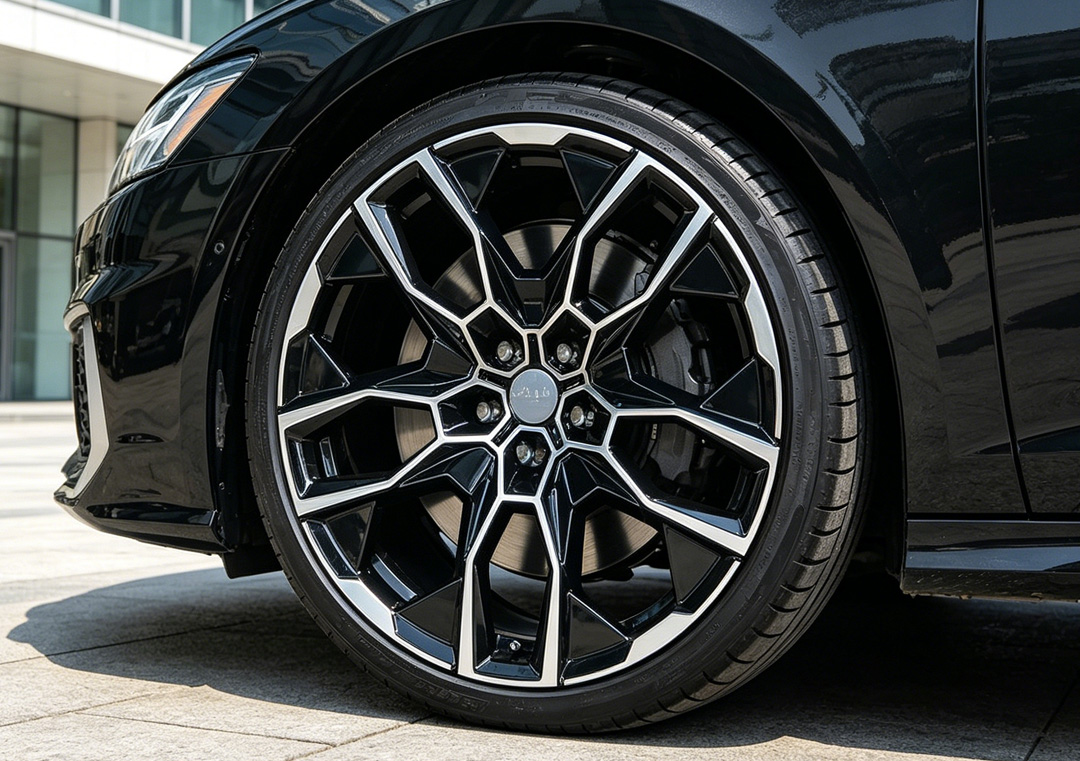
Aluminum is prized for its natural resistance to catastrophic red rust compared to raw steel, but it is far from invincible. Environmental hazards can quickly dull, pit, or destroy a premium finish if left unchecked.
                   +---------------------------------------+
                   |       WHEEL MAINTENANCE CYCLE         |
                   +---------------------------------------+
                                       |
          +----------------------------+----------------------------+
          |                            |                            |
          v                            v                            v
+--------------------+       +--------------------+       +--------------------+
|  FORTNIGHTLY WASH  | ----> |  BI-ANNUAL SEAL    | ----> |  OFF-SEASON STORAGE|
+--------------------+       +--------------------+       +--------------------+
| • pH-neutral soap  |       | • Ceramic coat     |       | • Deep clean       |
| • Soft microfiber  |       | • Synthetic wax    |       | • Dry completely   |
| • Clear brake dust |       | • Repel road salt  |       | • Stack flat/cool  |
+--------------------+       +--------------------+       +--------------------+
The Mechanics of Aluminum Corrosion
Corrosion occurs when moisture, corrosive road de-icing salts, or hot metallic brake dust penetrates the protective clear coat or painted surface, oxidizing the raw aluminum underneath. This often manifests as spiderweb-like white tracks beneath the clear coat, chalky white residue, or bubbling and pitting along the outer rim lip and bead seat.
Seasonal Protection Plan: Winter vs. Summer Care
Environmental demands vary wildly by region and season across the United States. To preserve your wheels, tailor your maintenance approach:
-
Winter Protection (Snow Belts): Road salt and chemical liquid de-icers (like magnesium chloride) are incredibly aggressive toward aluminum finishes. If you run your custom wheels through the winter, apply a high-grade ceramic coating in the autumn. Wash the wheels weekly to remove salt crust. Alternatively, many enthusiasts run a dedicated set of winter wheels to save their premium custom finishes from harsh road conditions.
-
Summer Protection (Coastal & High Heat): Coastal salt air and intense UV rays can degrade clear coats over time. Park in shady areas when possible, and apply a synthetic polymer wax to block UV-induced fading and oxidation.
Maintenance Protocol for Premium Finishes
To maximize the lifespan of custom setups, follow this strict maintenance routine:
-
Use Dedicated Microfibers: Wash wheels with separate wash mitts or microfiber towels from those used on your paint to prevent cross-contamination of abrasive brake dust.
-
Avoid Harsh Chemicals: Skip acid-based cleaners or heavy degreasers. Instead, stick to pH-neutral wheel cleaners that target iron fallout without eating away at clear coats or polished aluminum surfaces.
-
Cool to the Touch: Never spray cold water or cleaner onto wheels that are hot from driving. Sudden temperature drops can warp brake rotors and bake cleaning chemicals onto the wheel surface, leading to permanent staining.
5.Structural Integrity: When to Repair vs. Replace
The roads across America can be unforgiving. Potholes, construction zones, and unexpected highway debris present constant threats to low-profile tire and wheel configurations. Knowing the boundary between cosmetic damage and structural failure is critical for highway safety.
Safely Straightening and Refinishing
Minor bends along the inner or outer lip or superficial cosmetic curb rash can often be professionally corrected. Specialized wheel repair facilities use precise hydraulic machinery, dial indicators, and controlled induction heating to true a bent barrel back to factory roundness tolerances without compromising the alloy’s temper.
Structural Failures Demanding Replacement
Certain types of damage fundamentally ruin the structural integrity of the metal, making any repair attempt highly dangerous:
-
Major Cracks: Any crack that extends completely through the structural barrel, or occurs along the base of a load-bearing spoke, cannot be safely welded for public road use. Welding alters the local heat treatment of the aluminum, making the surrounding area brittle and prone to sudden failure.
-
Lug Seat Damage: Ovalized, elongated, or cracked lug seats mean the wheel can no longer be safely torqued to the hub assembly. This creates uneven clamping forces and presents a severe risk of the wheel detaching at speed.
-
Severe Structural Fatigue: Wheels that have undergone multiple severe impacts or have been heavily deformed cannot be heated and bent back repeatedly. Doing so work-hardens the aluminum, making it brittle and highly susceptible to catastrophic failure.
6.Crucial Fitment Variables for Custom Projects
Selecting the correct set goes far beyond matching a style or choosing a diameter. To ensure a vibration-free, safe ride that clears all mechanical components, several critical measurements must align perfectly.
Bolt Pattern (PCD)
The Pitch Circle Diameter (PCD) indicates the number of lug holes and the diameter of the imaginary circle they form (e.g., 5 x 114.3 or 5 x 120). This must match your vehicle’s hub assembly precisely to allow for correct installation.
Offset and Backspacing
Offset determines where the mounting surface of the wheel sits relative to the true centerline of the rim width.
-
Positive Offset: Pushes the mounting surface toward the front face, pulling the entire wheel assembly inward toward the suspension.
-
Negative Offset: Pushes the mounting surface deep inside the barrel, forcing the wheel outward for a wider track stance, popular in off-road and deep-dish applications.
-
Backspacing: The distance from the mounting pad to the innermost edge of the wheel. This is critical for preventing contact with suspension uprights, control arms, and frame rails.
Caliper Clearance (The X-Factor)
Often overlooked, brake caliper clearance (or the “X-Factor”) measures the distance between the back of the wheel spokes and the face of the brake calipers. This is especially vital for vehicles equipped with heavy-duty multi-piston aftermarket brakes or factory performance packages (like Brembo or Wilwood systems).
Hub-Centric vs. Lug-Centric Design
Most premium custom options feature a hub-centric design, meaning the center bore of the wheel perfectly matches the diameter of the vehicle’s hub lip. This ensures the weight of the vehicle is supported by the hub itself, rather than relying solely on the shear strength of the lug studs. If an aftermarket wheel’s center bore is larger than your car’s hub, high-quality hub-centric rings must be utilized to eliminate high-speed steering wheel vibrations.
Frequently Asked Questions
1.What is the difference between cast and forged custom aluminum wheels?
Cast aluminum wheels are made by pouring molten metal into a mold, offering excellent affordability and design variety. Forged aluminum wheels are compressed from a solid block of aluminum under extreme pressure, resulting in a much lighter, denser, and structurally stronger wheel that can withstand severe impacts and high stresses.
2.How do custom aluminum wheels impact performance?
High-quality custom aluminum wheels reduce unsprung weight and rotational mass. This reduction improves acceleration, responsive braking, and cornering agility, while also enhancing suspension dampening efficiency and overall ride quality.
3.Why do custom aluminum wheels corrode and how to prevent it?
Corrosion occurs when moisture, road salt, or brake dust penetrates the protective clear coat or paint, oxidizing the raw aluminum underneath. Prevention requires regular cleaning with pH-neutral soap, applying a dedicated wheel sealant or ceramic coating, and avoiding abrasive brushes and acid-based cleaners.
4.Can cracked or bent custom aluminum wheels be safely repaired?
Minor bends or cosmetic curb rash can often be professionally straightened and refinished by certified technicians. However, major cracks, severe bends on the structural barrel, or damage near the lug holes compromise structural integrity and require complete replacement to ensure safety.
5.What is the typical lifespan of custom aluminum wheels?
Premium aluminum wheels can last the lifetime of an automobile if properly maintained. However, their lifespan can be significantly shortened by structural damage from severe potholes, winter road salt exposure without cleaning, or structural fatigue under excessive towing or load weights.
Upgrade Your Stance with ATK Wheels
Finding the perfect intersection of engineering excellence, striking design, and exact fitment requires sourcing from industry experts. ATK Wheels specializes in delivering premium wheel solutions tailored to elevate the performance profile and stylistic presence of your specific build. Explore the curated collections at ATK Wheels to find the ideal setup for your machine today.