
Wheels Custom Rims: Choosing the Right Custom Wheels for Your Car
Wheels Custom Rims: Choosing the Right Custom Wheels for Your Car
Upgrading your vehicle with aftermarket wheels and custom rims stands as one of the most transformative modifications any automotive enthusiast or everyday driver can make. Beyond changing the visual silhouette of a sports coupe, luxury sedan, or heavy-duty truck, the right set of custom wheels fundamentally redefines how your vehicle handles turns, absorbs road impacts, accelerates off the line, and stops under heavy braking.
However, entering the aftermarket wheel industry without a solid grasp of technical fitment specifications can quickly turn an exciting project into an expensive headache. Incorrect measurements often result in tires rubbing against fender liners, brake calipers grinding against inner spokes, premature wheel bearing failure, or compromised suspension geometry.
Whether you want an aggressive flush stance, maximum track performance, or a dependable daily driver setup, getting the mechanical engineering right is essential. This comprehensive breakdown explores the engineering differences, manufacturing processes, key measurement parameters, and real-world handling impacts you need to master before buying.
1.What Is the Main Difference Between Wheels and Custom Rims?
In everyday automotive conversations, mechanics, auto parts retailers, and car enthusiasts frequently use the terms “wheels” and “rims” as synonyms. However, from a strict structural engineering standpoint, they represent two distinct parts of a complete automotive wheel assembly.
-
The Rim: The rim refers specifically to the outer circular cylindrical edge of the assembly that contacts and holds the rubber tire in place. Its primary structural duty is forming a secure, airtight bead seat with the tire wall, preventing air leakage during high-speed cornering and road impacts.
-
The Wheel: The wheel is the entire metal component, comprising the central mounting hub, structural spokes, lug nut holes, and the outer rim barrel. The wheel connects the tire directly to the vehicle’s hub assembly and axle.
-
Custom Rims: In modern aftermarket culture, the phrase “custom rims” has evolved into a popular industry term for aftermarket custom wheels. These are engineered with bespoke spoke designs, aggressive offset specs, unique lip depths, and specialized finishes designed to upgrade or replace factory Original Equipment Manufacturer (OEM) setups.
Understanding these technical distinctions allows you to communicate effectively with fitment specialists and avoid purchasing components with incompatible engineering specs.
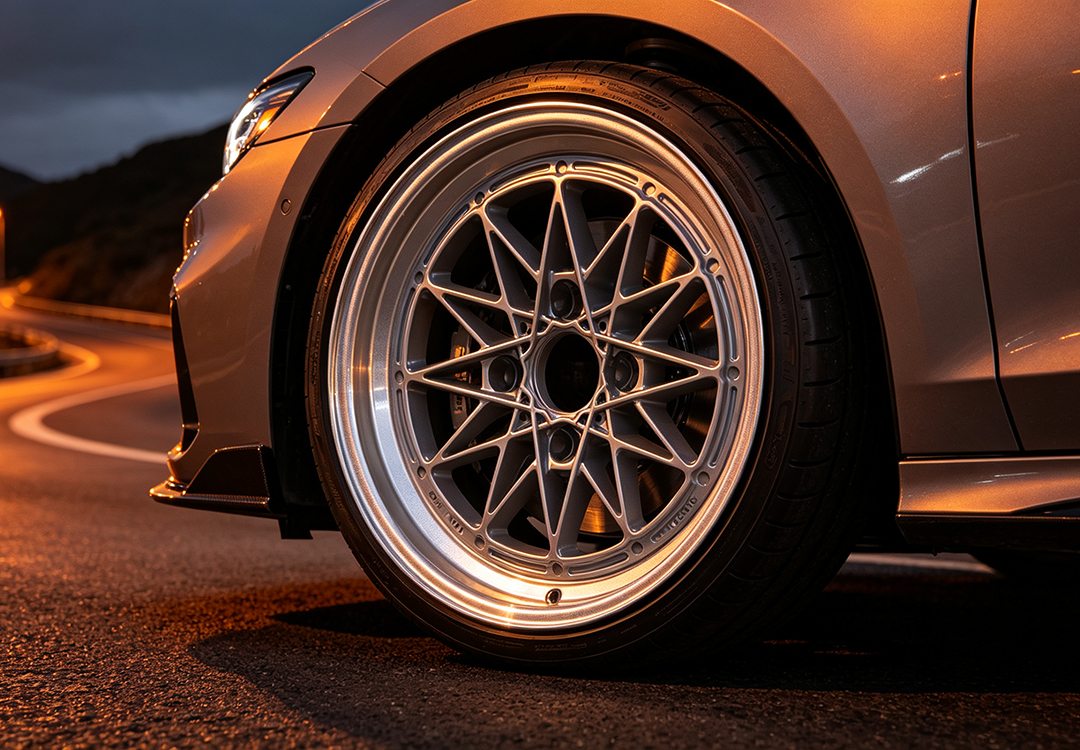
2.Cast, Flow-Formed, or Forged: Manufacturing Techniques Explained
Not all custom wheels are constructed using the same metallurgical processes. The manufacturing technique directly dictates structural density, tensile strength, overall weight, impact resistance, and final cost.
1. Cast Aluminum Wheels
Casting represents the most common and cost-effective manufacturing method in the automotive industry. Molten aluminum alloy is poured or forced into a pre-shaped mold to form the wheel structure.
-
Gravity Casting: Molten aluminum is poured into a mold, relying solely on natural gravity to fill the cavity. While inexpensive, it can result in a microscopic porous grain structure, requiring thicker walls and extra material weight to ensure baseline structural safety.
-
Low-Pressure Casting: Liquid aluminum is injected into the mold under low pressure from below. This pressure reduces internal air pockets, producing a denser structural grain and higher tensile strength than gravity casting.
2. Flow-Formed (Rotary Forged) Wheels
Flow-forming bridges the gap between traditional casting and top-tier forging. The manufacturing process starts with a low-pressure cast wheel blank. The barrel is then mounted onto a high-speed spinning mandrel while hydraulic rollers apply intense heat and pressure along the rim area.
This process stretches and compresses the aluminum alloy, aligning the molecular grain structure horizontally along the rim barrel. The result is a wheel with tensile strength close to forged aluminum at a price point much closer to standard cast options.
3. Forged Custom Wheels
Forging represents the pinnacle of wheel manufacturing technology. Rather than using liquid metal, forging begins with a solid billet of aerospace-grade 6061-T6 aluminum alloy.
This solid block is subjected to intense thermal heat and thousands of tons of hydraulic pressure, forcing the aluminum molecules into a continuous, dense grain pattern. CNC milling machines then carve the intricate spoke patterns and face details out of the forged blank.
-
Maximum Strength: Linear grain flow prevents internal micro-cracks, making forged aluminum exceptionally resilient against pothole impacts and track stresses.
-
Lightweight Efficiency: Because the material is so dense and strong, engineers can reduce wall thickness without sacrificing structural integrity, significantly cutting unneeded mass.
Manufacturing Process Comparison
| Feature / Parameter | Cast Custom Rims | Flow-Formed Wheels | Monoblock Forged Rims |
|---|---|---|---|
| Manufacturing Process | Liquid alloy poured into mold | Cast face with hydraulic pressure-rolled barrel | Precision CNC-milled from solid aluminum billet |
| Molecular Grain Structure | Porous, random orientation | Compacted along rim barrel | Continuous, high-density linear flow |
| Tensile Strength | Moderate baseline strength | High strength in barrel area | Maximum structural strength throughout |
| Unsprung Weight | Heavy | Balanced (Lightweight rim) | Ultra-lightweight performance |
| Impact Resistance | Higher risk of cracking under severe impact | Good energy absorption | Exceptional resistance to severe bend/crack stress |
| Target Price Point | Budget-friendly | Mid-tier value | Premium performance investment |
| Ideal Application | Daily street commuting, winter setups | Street performance, track day enthusiasts | High-performance exotic cars, heavy off-road, racing |
3.5 Essential Fitment Parameters Every Car Owner Must Measure
Proper wheel fitment requires precise geometry. Installing wheels with incorrect specifications can cause tire rubbing against inner wheel arches, interference with brake calipers, or accelerated wear on wheel bearings and suspension joints.
1. Bolt Pattern (Pitch Circle Diameter / PCD)
The bolt pattern indicates the number of lug holes on the wheel face and the diameter of the invisible circle formed by their centers. For example, a 5×114.3 bolt pattern means the wheel features 5 lug holes arranged around a 114.3 millimeter circle.
You must match your vehicle’s factory bolt pattern exactly. While PCD variation bolts (wobble bolts) or hub adapters exist, mounting exact-match bolt patterns remains the safest choice for structural stability.
2. Wheel Offset (ET)
Measured in millimeters, offset (denoted as ET) is the distance from the wheel’s true structural centerline to its mounting pad surface touching the brake hub.
-
Positive Offset (High ET): The hub mounting pad sits closer to the front face of the wheel, pulling the rim inward toward the suspension struts. This setup is common on front-wheel-drive passenger cars.
-
Zero Offset: The hub mounting pad aligns directly with the structural centerline of the wheel width.
-
Negative Offset (Low/Minus ET): The hub mounting pad sits closer to the back edge of the wheel, pushing the face outward away from the body line. This design creates a deep-lip look popular on lifted off-road trucks and widebody builds.
3. Backspacing
Backspacing is the physical distance measured from the back lip edge of the wheel rim to the hub mounting face. While offset calculates position relative to the middle of the wheel width, backspacing gives a direct physical measurement of how much room remains between the inner rim edge and suspension components like struts, control arms, or sway bars.
4. Center Bore and Hub-Centric Rings
The center bore is the machined central hole on the back of the wheel that slips over the vehicle’s axle hub snout.
-
Hub-Centric Wheels: The center bore matches the vehicle’s hub diameter down to the millimeter. The vehicle weight rests directly on the solid hub snout, ensuring perfect wheel alignment.
-
Lug-Centric Wheels: The center bore is purposefully oversized by aftermarket manufacturers to fit multiple vehicle models. When installing lug-centric custom rims, using hub-centric rings is essential to bridge the gap and eliminate wheel vibration at highway speeds.
5. Load Rating Capacity
Every aftermarket custom wheel features a maximum load rating stamped onto its back spoke or inner barrel wall. The combined weight capacity of all four custom rims must exceed your vehicle’s total Gross Axle Weight Rating (GAWR), especially for heavy trucks or towing setups.
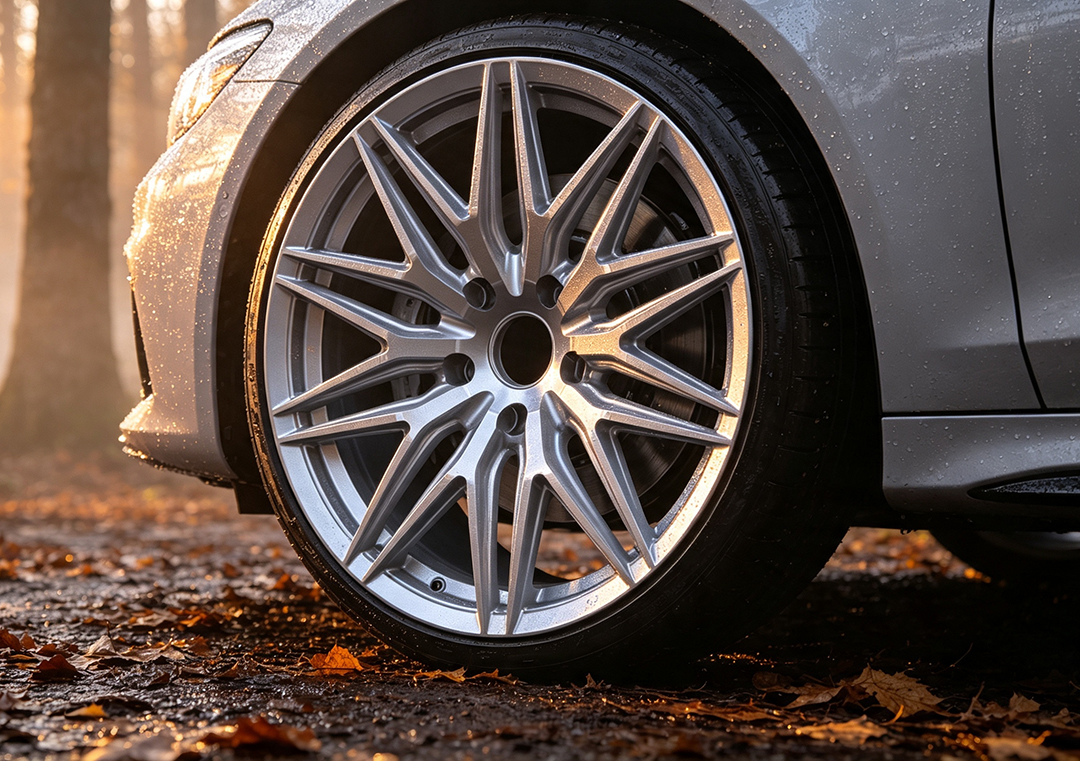
4.Vehicle Handling, Acceleration, and Speedometer Impact
Upgrading your wheels changes the mechanical forces applied to your steering rack, brake rotors, and suspension joints.
Unsprung Weight and Rotational Inertia
Unsprung weight includes all mechanical components not supported by your vehicle’s suspension springs—such as wheels, tires, brake calipers, rotors, and wheel hubs. Replacing heavy OEM cast rims with lightweight forged aluminum reduces unsprung mass, allowing your shocks and struts to compress and rebound faster over uneven road surfaces.
Furthermore, lighter custom rims reduce rotational inertia, delivering clear performance advantages:
-
Sharper Throttle Response: Lower rotational weight requires less engine torque to spin up, improving acceleration off the line.
-
Shorter Braking Distances: Decreased rotational mass lowers the kinetic energy your brake pads must dissipate when coming to a stop.
-
Improved Steering Precision: Reduced weight on the front axle lowers steering effort and improves turn-in crispness through tight corners.
Speedometer Accuracy and Rolling Diameter
When increasing wheel diameter (for example, moving from a factory 17-inch wheel to an aftermarket 19-inch rim), you must step down the tire sidewall aspect ratio accordingly. This keeps the overall rolling diameter of the combined wheel and tire assembly close to factory dimensions.
As a general rule, always ensure your new tire and custom rim setup stays within ±3%$of the factory total outer diameter. Deviating beyond this margin can throw off speedometer calibration, alter automatic transmission shift timing, and trigger unwanted anti-lock braking system (ABS) or traction control system (TCS) error codes.
5.Off-Road Trucks vs. Performance Cars: Custom Fitment Requirements
Custom wheel demands vary widely depending on vehicle platform and driving conditions:
Lifted Trucks, Jeeps, and Off-Road SUVs
-
Key Requirements: High load capacity, bead retention strength, and thick sidewall protection.
-
Typical Fitment: Uses smaller wheel diameters paired with thick, high-profile all-terrain tires. Zero or negative offsets are commonly used to push wheels outward, preventing wide tires from rubbing against inner suspension control arms during suspension articulation.
High-Performance Sports Cars and Track Builds
-
Key Requirements: Low unsprung weight, structural stiffness under lateral loading, and brake caliper clearance.
-
Typical Fitment: Features larger wheel diameters fitted with low-profile performance tires. Precise positive offsets keep tires flush with fender lips, maximizing high-speed stability without compromising original steering scrub radius specs.
6.Essential Care & Maintenance for Custom Finishes
Protecting custom wheel finishes against road salt, brake dust accumulation, and UV exposure requires proper cleaning techniques based on the outer coating:
-
Chrome Finishes: Wash with mild automobile shampoo, dry thoroughly with clean microfiber towels, and apply specialized non-abrasive chrome polish to prevent oxidation pitting.
-
Powder-Coated & Painted Finishes: Use pH-neutral wheel cleaners free of acidic chemicals. Avoid automatic drive-through car washes with stiff plastic brushes that scratch clear coats.
-
Machined & Anodized Finishes: Clean using soft microfiber mitts and mild soap. Applying a heat-resistant ceramic coating helps repel brake dust, making future washes much easier.
Frequently Asked Questions(FAQ)
1.What is the main difference between wheels and custom rims?
Technically, the rim is only the outer edge of a wheel that holds the tire, while the wheel includes the entire metal assembly, including the center hub and spokes. In everyday automotive terminology, however, “custom rims” usually refers to aftermarket, stylistically customized wheels designed to replace factory originals.
2.What vehicle specifications are required to fit custom rims correctly?
To ensure proper fitment, you must match five key parameters:
-
Bolt Pattern (PCD): The number and spacing of lug holes (e.g., 5×114.3).
-
Offset (ET): Distance from the mounting surface to the wheel centerline.
-
Center Bore: The central hub hole size in millimeters.
-
Wheel Size & Width: Diameter and width compatible with your vehicle’s wheel wells.
-
Load Rating: Maximum weight capacity per wheel.
3.Are forged custom rims better than cast custom rims?
Yes, in terms of strength and weight. Forged rims are machined from a single block of compressed aluminum, making them lighter, stronger, and more resistant to impacts—ideal for high performance. Cast rims are made by pouring molten aluminum into molds; they are heavier and weaker than forged options, but significantly more cost-effective for daily driving.
4.Will installing custom rims affect vehicle speedometer reading and handling?
It depends on total rolling diameter and weight:
-
Speedometer Accuracy: Changing the overall tire outer diameter alters speedometer and odometer readings. You must maintain within ±3%$of OEM diameter.
-
Handling & Comfort: Larger rims with lower-profile tires improve steering response and cornering stability, but typically yield a stiffer ride and increase vulnerability to pothole damage.
5.How do custom rim offset and backspacing impact tire clearance?
Offset (ET) and backspacing dictate how deep the wheel sits inside the fender well. Too high positive offset moves the wheel inward, risking contact with suspension components or brake calipers. Too low or negative offset pushes the wheel outward, which can cause tire rubbing against the fender lip and increase load on wheel bearings.
Ready to Elevate Your Vehicle’s Stance and Performance?
Upgrading your vehicle with high-performance wheels and custom rims requires a balance of style, structural integrity, and precise geometry. Whether you need lightweight forged monoblock rims for track day performance or rugged aftermarket wheels for off-road terrain, working with fitment specialists guarantees ideal stance and clear component operation.
Explore precision-engineered wheel collections, verify technical fitment specs, and browse custom finish options by visiting ATK Wheels. Upgrade your setup with confidence today!

