
What Are Forged Wheels? The Complete Engineering & Performance Breakdown
What Are Forged Wheels? The Complete Engineering & Performance Breakdown
If you have spent any time researching aftermarket wheels, track builds, or luxury automotive upgrades, you have likely run into the term forged wheels. Enthusiasts praise them, race teams rely on them, and high-end wheel manufacturers highlight them as the ultimate upgrade for strength and performance.
But what are forged wheels, exactly? Why do they command a premium price tag over standard factory wheels, and are they actually worth the investment for your vehicle?
Whether you are looking to shed unsprung weight for track days, upgrade your daily driver’s durability, or give your sports car a custom stance, understanding the manufacturing technology behind forged wheels is essential.
Below is a detailed breakdown of how forged wheels are made, how they differ from traditional cast wheels, their core performance advantages, and how to tell if a wheel is truly forged.
1.What Are Forged Wheels?
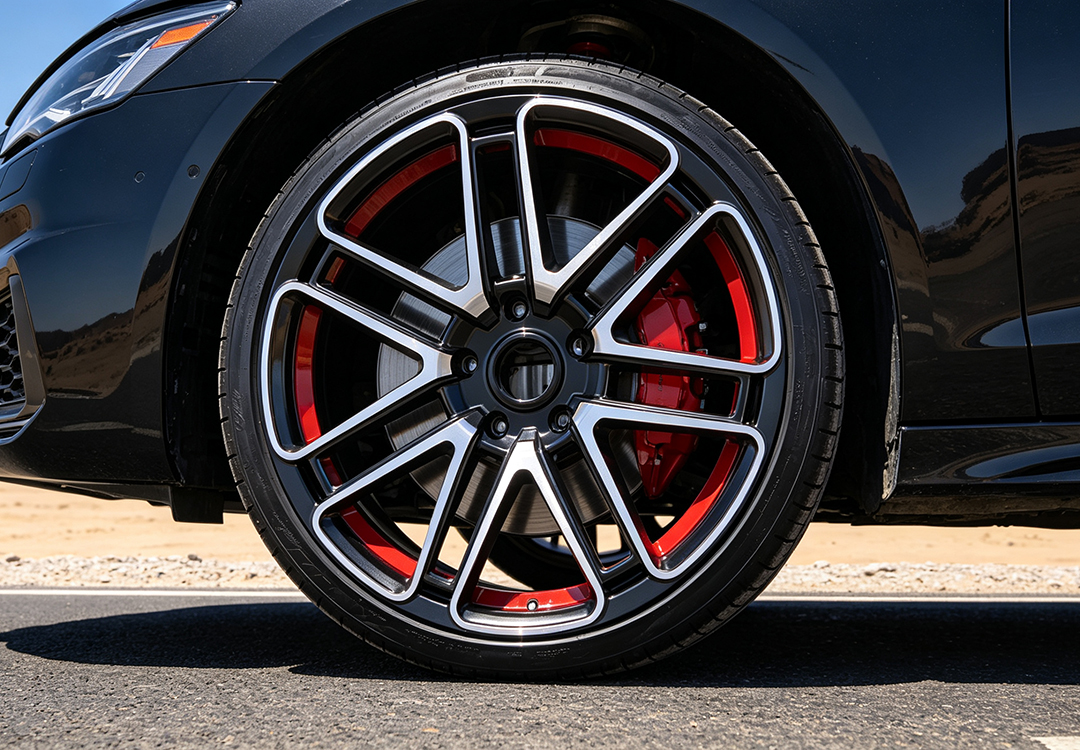
Forged wheels are high-performance automotive wheels crafted from a single solid block of aerospace-grade aluminum alloy (typically 6061-T6 aluminum billet). Instead of melting metal down into a liquid, the forging process applies extreme heat and intense hydraulic pressure—often exceeding 10,000 tons—to compress and shape the solid metal.
[Solid Billet] ➔ [10,000+ Ton Hydraulic Press] ➔ [Grain Realignment] ➔ [Precision CNC Machining] ➔ [Forged Wheel]
This massive mechanical force alters the molecular structure of the aluminum. It aligns the natural grain flow of the alloy along the contours of the wheel, eliminating internal porosity, air bubbles, and structural voids.
The result is a wheel that is exceptionally dense, ultra-lightweight, and structurally superior to standard cast wheels.
2.How Are Forged Wheels Manufactured?
To appreciate the strength of a forged wheel, it helps to understand the multi-step precision manufacturing process that brings a raw piece of metal to a finished product on your vehicle.
Step 1: Billet Preparation
The process starts with a high-grade aluminum alloy cylinder, known as a billet or “puck.” The industry standard is 6061-T6 aluminum, an alloy blended with magnesium and silicon known for its exceptional strength-to-weight ratio and corrosion resistance.
Step 2: High-Pressure Forging
The aluminum billet is heated to precise temperatures—hot enough to make the metal malleable without melting it into liquid. It is then placed into a high-tonnage hydraulic forging press. Under thousands of tons of force, the metal is squeezed into a rough wheel blank (often called a “forged forging”). This step locks in the continuous grain structure.
Step 3: Flow Forming & Rim Stretching
The forged blank undergoes rotary flow-forming. Massive mechanical rollers pressure the outer barrel while it spins at high speeds. This stretches and compresses the aluminum barrel to its final width and thickness, further increasing tensile strength along the rim flow.
Step 4: Heat Treatment (T6 Tempering)
The wheel blank undergoes a rigorous heat treatment process (T6 condition). It is solution heat-treated and artificially aged to maximize the yield strength and overall hardness of the aluminum alloy.
Step 5: Precision CNC Machining
Once the forged blank is fully hardened, it moves to 5-axis CNC machining centers. Computerized mills carve out the intricate spoke designs, lug hole patterns, back-pad pocketing, and center bores with tolerances measured in fractions of a millimeter.
Step 6: Finishing & Quality Control
Finally, the wheel undergoes surface preparation, powder coating, painting, or hand-polishing before undergoing rigorous testing. Quality checks include X-ray inspections, radial fatigue testing, cornering load tests, and dynamic balance verification.
3.Forged Wheels vs. Cast Wheels vs. Flow-Formed Wheels
Understanding the differences between manufacturing methods helps explain why wheels perform—and cost—differently.
+-----------------------------------------------------------------------------------+
|                        MANUFACTURING PROCESS COMPARISON                           |
+-----------------------------------------------------------------------------------+
|  CASTING:         [Liquid Metal]  ---> [Pour into Mold]   ---> [Cool & Harden]    |
|  FLOW FORMING:    [Cast Blank]    ---> [Spin & Roll Rim]  ---> [Denser Barrel]    |
|  FORGING:         [Solid Billet]  ---> [10k-Ton Press]    ---> [CNC Carve]        |
+-----------------------------------------------------------------------------------+
1. Cast Wheels (Gravity & Low-Pressure Casting)
Cast wheels are created by melting aluminum into a liquid state and pouring or pumping it into a wheel mold. As the metal cools, it hardens into shape.
-
Pros: Inexpensive to produce; highly accessible; endless aesthetic mold options.
-
Cons: Porosity (tiny air pockets inside the metal) makes them weaker. To make a cast wheel strong enough for road use, manufacturers must use significantly more aluminum, making the wheel heavier and more prone to brittle cracking under harsh impacts.
2. Flow-Formed Wheels (Rotary Forged)
Flow-formed wheels start as a specialized low-pressure cast blank. The wheel barrel is then spun and heated while hydraulic rollers pressure and stretch the rim area.
-
Pros: Stronger and lighter barrels than traditional cast wheels; moderate cost.
-
Cons: The center face and spokes remain cast metal, meaning they lack the full grain alignment and extreme strength of a true 1-piece forged wheel.
3. Forged Wheels (Monoblock & Multi-Piece)
Forged wheels start as solid billet aluminum compressed under intense pressure. They require no liquid pouring, resulting in zero internal porosity.
-
Pros: Highest strength-to-weight ratio; superior impact resistance; slimmer spoke designs; maximum weight reduction.
-
Cons: High production costs due to expensive machinery, engineering time, and CNC waste.
4.Forged Wheels Comparison Matrix
| Feature | Cast Wheels | Flow-Formed Wheels | Forged Wheels |
|---|---|---|---|
| Manufacturing Method | Molten metal poured into mold | Cast center with pressure-spun barrel | Solid billet compressed under high heat/pressure |
| Material Density | Low (Internal porosity present) | Medium (Dense barrel, porous face) | Ultra-High (Grain aligned, zero porosity) |
| Structural Strength | Low to Moderate | Moderate to High | Maximum Structural Integrity |
| Weight | Heavy | Moderate | Extremely Lightweight |
| Impact Reaction | Brittle (Tends to crack/shatter) | Moderate flexibility in barrel | Ductile (Bends under extreme shock rather than shattering) |
| Customization | Standard off-the-shelf fitments | Standard fitments | Fully custom offsets, bolt patterns, and finishes |
| Price Point | Budget-Friendly | Mid-Tier | Premium / High-End |
5.What Are the Key Benefits of Forged Wheels?
Upgrading to forged aluminum wheels impacts far more than just your vehicle’s appearance. The physics behind weight reduction and structural grain density directly translates into measurable driving enhancements.
                      ┌──> Reduced Unsprung Mass ──> Sharper Steering Response
                      │
FORGED WHEEL ADVANTAGE ├──> Lower Rotational Inertia ─> Faster Acceleration & Braking
                      │
                      └──> Dense Grain Structure ───> Bends (Not Cracks) on Impact
1. Reduced Unsprung Mass
Unsprung mass refers to the weight of vehicle components not supported by the suspension system—including wheels, tires, brake rotors, and hubs.
By reducing unsprung mass at all four corners, your vehicle’s suspension reacts much faster to bumps, dips, and road imperfections. The tires maintain consistent contact with the asphalt, drastically improving traction, cornering control, and ride comfort.
2. Lower Rotational Inertia
Wheels are rotational weight. Spinning a wheel requires significantly more energy than moving dead weight in the trunk.
A lighter forged wheel decreases rotational inertia, meaning your engine does not have to work as hard to spin the wheel up to speed, and your brakes do not have to work as hard to slow it down. This results in:
-
Quicker throttle response and acceleration.
-
Shorter braking distances.
-
Reduced thermal stress on brake pads and rotors.
-
Improved fuel efficiency or electric vehicle (EV) battery range.
3. Superior Strength and Safety Margin
Because high-pressure forging aligns the metallic grain along the contours of the wheel structure, forged aluminum resists fatigue, structural flexing, and severe road impacts far better than cast alloys.
Under hard cornering, forged wheels experience minimal flex, allowing your suspension geometry to remain precise and predictable.
6.Do Forged Wheels Crack or Bend?
A common question among vehicle owners is whether forged wheels are immune to damage. Forged wheels can bend under extreme, high-speed impacts, but they are far less likely to crack or shatter unexpectedly compared to cast wheels.
Here is the mechanical breakdown of why forged metal reacts differently under severe loads:
-
Cast Aluminum Behavior: Cast metal is rigid and brittle. When a cast wheel hits a deep pothole or curb at speed, the stress concentration often causes the metal to crack instantly or break off entirely at the lip, leading to sudden air loss and potential blowout risks.
-
Forged Aluminum Behavior: Forged 6061-T6 aluminum exhibits high ductility (tensile yield strength). Under an extreme impact that would shatter a cast wheel, a forged wheel tends to deform or bend slightly while keeping the structure intact.
This structural deformation typically allows the tire to hold air long enough for you to pull over safely. Furthermore, minor lip bends on forged wheels can often be professionally repaired by a specialist shop, whereas cracked cast wheels are generally unsafe to weld.
7.Types of Forged Wheels: Monoblock vs. Multi-Piece
When shopping for forged wheels, you will generally encounter two primary construction styles:
1-Piece Forged Wheels (Monoblock)
Monoblock wheels are machined from a single forged aluminum billet block.
[Single Forged Billet] ➔ [100% Precision CNC Machining] ➔ [1-Piece Monoblock Wheel]
-
Best For: Track performance, sports cars, and daily drivers wanting the ultimate lightweight setup.
-
Key Feature: Exceptional rigidity, minimal maintenance, and the lightest possible weight profile.
2-Piece and 3-Piece Forged Wheels (Multi-Piece)
Multi-Piece forged wheels consist of separate components assembled using high-tensile hardware (bolts) and specialized rim sealant.
-
2-Piece: A forged face welded or bolted to a forged barrel.
-
3-Piece: A forged center face bolted to an inner barrel and an outer lip.
[Forged Center Face]
        +             ➔ [Perimeter Hardware & Sealant] ➔ [Custom Multi-Piece Wheel]
[Outer Rim Lip]
        +
[Inner Rim Barrel]
-
Best For: Custom fitments, widebody builds, stance enthusiasts, and luxury vehicles.
-
Key Feature: Extreme customization flexibility. You can select custom rim depths, staggered offsets, contrasting inner/outer lip colors, and wide fitments not available in standard cast or monoblock molds. If you curb an outer lip on a 3-piece wheel, you can replace just the outer lip instead of buying an entirely new wheel.
8.How Can You Tell If a Wheel Is Forged?
With many aftermarket companies using terms like “rotary forged,” “forged mass,” or “cold-forged barrel” in their marketing, it is important to know how to identify a genuine, fully forged 1-piece or multi-piece wheel.
Here are five key indicators to check:
+---------------------------------------------------------------------------------+
|                        IDENTIFYING A TRUE FORGED WHEEL                          |
+---------------------------------------------------------------------------------+
| 1. WEIGHT            noticeably lighter than a cast wheel of the same size      |
| 2. BACKSIDE FINISH  Clean, crisp CNC tool marks (no rough sand-cast texture)    |
| 3. STAMPINGS        "FORGED" clearly engraved or stamped on lip/backpad         |
| 4. SPOKE PROFILE    Sleeker, thinner spokes with sharp, detailed chamfers       |
| 5. PRICE            Substantial raw material & CNC machining costs reflected    |
+---------------------------------------------------------------------------------+
-
Weight: Lift the wheel. A true forged wheel will feel distinctly lighter than an equivalent cast wheel of the exact same diameter and width (often 20% to 35% lighter).
-
Backside Machining Finish: Turn the wheel over and inspect the back of the spokes and center hub. Forged wheels exhibit smooth, highly detailed CNC lathe lines and milling patterns. Cast wheels show textured, pitted surface finishes left behind by sand or ceramic molds.
-
Engraved Markings: Genuine forged wheels almost always feature crisp, laser-engraved or CNC-milled stampings on the back pad, inner lip, or outer flange stating “FORGED”, along with specific load ratings (e.g., JWL, VIA, or TUV certifications).
-
Spoke and Lip Profiles: Because forged aluminum is so dense, engineers can design spokes that are remarkably slim while maintaining safety loads. Look for sharp geometric edges, tight radio cuts, and deep pocketing on the back of spokes that cast metal cannot replicate without snapping.
-
Price Point: High-grade 6061-T6 aluminum billets, multi-million dollar forging presses, and hours of 5-axis CNC machining require significant manufacturing capital. Genuine forged wheels generally start around $600 to $1,500+ per wheel, depending on size and custom specifications.
9.Are Forged Wheels Worth It?
Whether forged wheels are worth the financial investment depends entirely on how you use your vehicle and your personal automotive goals.
+---------------------------------------------------------------------------------+
|                              IS FORGING FOR YOU?                                |
+---------------------------------------------------------------------------------+
| HIGHLY RECOMMENDED FOR:               CONSIDER FLOW-FORMED/CAST FOR:            |
| • Track Day & Racing Drivers          • Strict Budget Builds                    |
| • Performance & Sports Car Owners     • Winter Wheel Setups                     |
| • Heavy Luxury Sedans & SUVs          • General Daily Commuters                 |
| • Custom Off-Road & Truck Builds      • Lease Vehicles Returned Soon            |
+---------------------------------------------------------------------------------+
Forged Wheels Are Worth It If:
-
You track or spirit-drive your vehicle: The unsprung weight savings offer instant advantages in lap times, cornering precision, heat dissipation, and braking stability.
-
You drive on rough urban roads: The fatigue resistance and ductile bending characteristics of forged metal provide peace of mind against structural rim failures over deep potholes.
-
You drive a heavy, high-torque vehicle: High-horsepower cars, heavy luxury sedans, electric vehicles with instant torque, and off-road trucks place immense loads on wheel centers. Forged strength prevents hub deformation over time.
-
You want a bespoke aesthetic: Forged wheels allow for tailored bolt patterns, custom offsets, deep concave profiles, and personalized finishes to achieve flush fitments.
Cast or Flow-Formed Wheels May Be Better If:
-
You are on a tight budget: If you simply need a clean cosmetic replacement for a daily commuter or winter wheel setup, quality flow-formed wheels deliver a balance of weight and affordability without the custom forged price point.
Frequently Asked Questions About Forged Wheels(FAQ)
1.Are forged wheels stronger than cast wheels?
Yes, forged wheels are significantly stronger than cast wheels. The forging process subjects solid aluminum to extreme hydraulic pressure, aligning the metal’s internal grain structure. This eliminates micro-porosity and creates a denser structural integrity that withstands higher loads and severe road impacts.
2.Why are forged wheels so expensive?
Forged wheels are expensive due to the cost of high-grade 6061-T6 aluminum billet raw materials, the massive industrial machinery required for multi-ton pressing, and the extensive precision CNC machining time needed to carve each custom design.
3.Do forged wheels improve acceleration and braking?
Yes. By reducing rotational inertia and unsprung weight at the wheel hub, your vehicle requires less engine power to accelerate the wheel and less braking force to bring it to a complete stop.
4.What is the weight difference between forged and cast wheels?
On average, a forged wheel is 20% to 35% lighter than a cast wheel of the same size and load capacity. For example, a typical 19-inch cast wheel might weigh 28–32 lbs (12.7–14.5 kg), whereas a 19-inch forged monoblock wheel can weigh as little as 18–22 lbs (8.1–10.0 kg).
5.What does “Monoblock forged” mean?
A monoblock forged wheel is crafted from a single, continuous piece of forged aluminum billet. It is machined entirely on a CNC mill into a single solid piece, offering the maximum combination of lightness and structural stiffness.
6.Can forged wheels be repaired if bent?
Yes. Because forged aluminum is ductile rather than brittle, minor bends caused by road impacts can often be professionally straightened by a qualified wheel repair facility. However, any structural damage should always be inspected by a certified technician before returning the wheel to service.
Upgrade Your Ride with Precision-Engineered Forged Wheels
Your wheels are the only structural component connecting your vehicle’s power and suspension to the road surface. Investing in forged wheels gives you uncompromised structural integrity, sharper handling, and a distinctive aesthetic profile tailored to your car.
Ready to transform your vehicle’s performance and stance?
Explore our premium range of custom monoblock and multi-piece forged wheel fitments at ATK Wheels. Browse custom offsets, explore tailored finishes, or contact our fitment specialists today to build the ideal set for your vehicle.

