
Forged Alloy Wheels: Strength, Weight, Cost, and Performance Explained
Forged Alloy Wheels: Strength, Weight, Cost, and Performance Explained
When upgrading a performance automobile, a daily commuter, or a heavy-duty truck, few aftermarket modifications deliver a more immediate visual transformation and mechanical impact than changing the wheel setup. Amidst a crowded marketplace of technical terminology—ranging from gravity cast and low-pressure cast to flow-formed and monoblock—forged alloy wheels represent the absolute pinnacle of wheel engineering and manufacturing excellence.
Drivers exploring custom wheel upgrades often experience sticker shock when they encounter the vast price disparities in the market. A standard set of cast alloy wheels might cost around six hundred dollars, while a bespoke, fully engineered set of forged alloy wheels can easily exceed four thousand dollars. Understanding what creates this massive price differential—and determining whether such a substantial investment aligns with your specific driving goals and vehicle dynamics—requires a comprehensive examination of structural metallurgy, precision manufacturing workflows, raw material science, and suspension physics.
1.The Metallurgy of Forged Alloy Wheels: Raw Materials and Composition
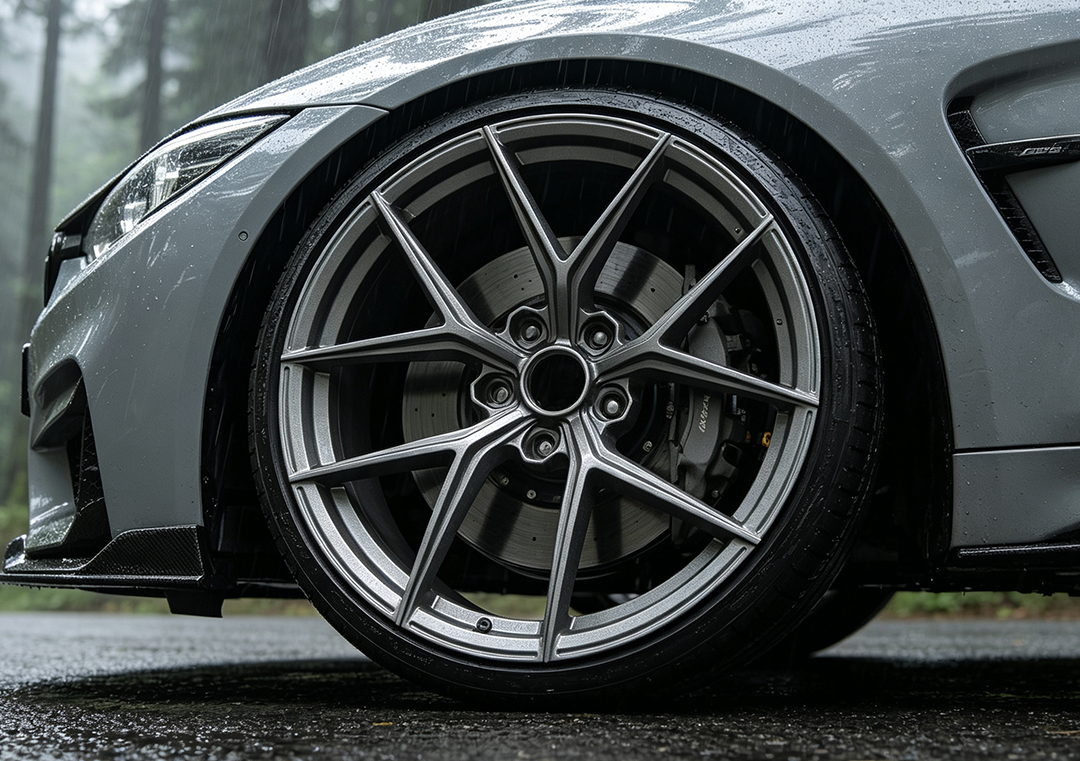
To truly comprehend why forged alloy wheels command such immense respect in both motorsports and luxury automotive styling, one must first look at the microscopic level of the material itself. Standard wheels often begin their lifecycle as liquid metal poured into a structural mold. In contrast, premium forged wheels start as a solid, cylindrical block of high-grade aluminum alloy—most commonly aerospace-grade 6061-T6 aluminum alloy.
The metallurgical designation “6061-T6” is not merely a marketing buzzword; it defines a specific precipitation-hardened aluminum alloy containing magnesium and silicon as its primary alloying elements. The “T6” temper designation indicates that the metal has been solution heat-treated and artificially aged to achieve maximum tensile strength, high resistance to environmental corrosion, and exceptional yield toughness.
When aluminum is melted into a liquid state during traditional casting processes, atoms cool randomly, and microscopic air bubbles, void spaces, and internal porosity inevitably become trapped within the solidifying matrix. These microscopic flaws create localized weak points. Forging completely bypasses this vulnerability. By subjecting solid metal billets to immense mechanical forces, the internal crystalline grain structure is physically compressed, elongated, and forced into a continuous, tightly packed directional flow that mirrors the exact contours of the wheel design. This structural homogeneity is what gives forged wheels their legendary durability.
2.Detailed Breakdown of the Manufacturing Process
The transformation of a solid block of aerospace aluminum into a lightweight, high-strength wheel is an engineering marvel that requires state-of-the-art heavy industry infrastructure. The multi-stage manufacturing process can be broken down into distinct mechanical phases:
Phase 1: Thermal Conditioning and Billet Preparation
The process begins with a solid cylindrical billet of 6061-T6 aluminum. Before any shaping can occur, the metal must be heated to precise thermal thresholds. This heating process softens the aluminum alloy just enough to make it highly malleable and receptive to extreme deformation without reaching its liquid melting point.
Phase 2: Multi-Stage Hydraulic Pressing
The heated aluminum billet is transferred into a massive industrial forging press capable of exerting anywhere from eight thousand to over ten thousand tons of continuous hydraulic pressure. As the heavy dies converge, the press crushes the solid metal block into a dense structural blank. This colossal pressure instantly collapses any internal micro-porosity, sealing any internal void spaces and forcing the metallic grain structure to align tightly along the stress vectors of the wheel geometry.
Phase 3: Solution Heat Treatment and T6 Tempering
Once the initial rough forging blank is formed, it undergoes a rigorous thermal cycle known as T6 tempering. The wheel blank is heated to precise temperatures, rapidly quenched in controlled fluids to lock the microscopic crystalline structure in place, and then artificially aged in high-temperature ovens. This process maximizes the tensile strength and yield elasticity of the alloy.
Phase 4: Precision CNC Machining
After heat treatment, the dense forged aluminum blank is moved to advanced multi-axis computer numerical control (CNC) machining centers. Computer-guided cutting heads precision-carve the face design, spoke windows, structural webbing, inner valve stem holes, and hub mounting pads directly out of the solid block. Up to eighty percent of the initial aluminum weight is carved away during this meticulous sculpting phase, leaving behind an intricate, lightweight structure.
Phase 5: Surface Finishing and Quality Assurance
The newly machined wheel undergoes stringent quality control inspections, including X-ray flaw detection to verify internal integrity, dynamic radial fatigue testing, and high-precision rotational balancing. Once cleared, the wheel receives its final surface treatment, which may include hand-mirror polishing, custom powder coating, anodizing, or brushed clear-coat finishes.
3.Structural Comparison: Cast, Flow-Formed, and Forged Wheels
To appreciate the structural superiority of forged alloy wheels, it is helpful to contrast them against alternative manufacturing methods available in the automotive aftermarket:
Gravity and Low-Pressure Cast Wheels
Cast wheels are produced by pouring molten aluminum into a static mold cavity, sometimes assisted by low pressure to push the metal into corners. As the liquid cools, the grain structure remains coarse, random, and porous. Because internal voids are common, manufacturers are forced to design cast wheels with thick, heavy walls and bulky cross-sections to ensure minimum safety standards. Consequently, cast wheels are heavy and behave rigidly under stress, making them prone to cracking or shattering rather than bending during severe impacts.
Flow-Formed (Rotary Forged) Wheels
Flow-forming represents a hybrid manufacturing compromise. The process typically starts with a low-pressure cast wheel center. The unfinished rim barrel is then mounted onto a massive steel mandrel while heavy hydraulic rollers heat, compress, and stretch the aluminum outward under high pressure. This stretching aligns the crystalline grain structure along the outer barrel, significantly improving barrel tensile strength and reducing weight compared to standard cast wheels. However, the structural face of the wheel remains fundamentally cast.
Fully Forged Wheels
Every single square millimeter of a fully forged wheel—from the central hub mounting flange down to the outer lip of the rim barrel—originates from a solid, heavily compressed block of metal. This uniform density allows engineers to design remarkably thin spokes and lightweight structural channels without ever compromising the wheel’s load rating.
Comprehensive Comparison Matrix
| Property / Feature | Cast Alloy Wheels | Flow-Formed Wheels | Forged Alloy Wheels |
|---|---|---|---|
| Manufacturing Base | Liquid molten aluminum poured into molds | Cast face combined with a stretched barrel | Solid billet of 6061-T6 aerospace aluminum |
| Internal Grain Structure | Coarse, random, and porous with air voids | Semi-aligned crystalline structure in the barrel | Ultra-dense, continuous directional metal flow |
| Tensile Strength | Lower (150-200 MPa} | Moderate (250-300MPa) | Extreme (310-340+MPa) |
| Weight Profile | Heavy and dense | Moderate ( ≈15%lighter than cast) | Ultra-light (≈25%-35% lighter than cast) |
| Impact Response | Prone to sudden cracking or shattering | Resistant in barrel; brittle on cast face | Bends under extreme load; extremely resistant to cracking |
| Design Flexibility | Limited by traditional mold release angles | Limited by cast face tooling constraints | Highly customizable via multi-axis CNC machining |
| Average Market Price | Budget-Friendly ($100-$300per wheel) | Mid-Tier ($250-$500per wheel) | Premium ($800-$2,500+per wheel) |
4.The Physics of Unsprung Mass and Vehicle Dynamics
The performance advantages delivered by forged alloy wheels are deeply rooted in automotive physics, specifically concerning unsprung weight and rotational inertia.
Unsprung weight encompasses all components of a vehicle that are not supported by the suspension springs. This includes tires, brake rotors, brake calipers, wheel bearings, suspension control arms, and the wheels themselves. In vehicle dynamics, reducing unsprung mass yields disproportionately dramatic performance improvements compared to shedding weight from static parts of the chassis (such as removing interior seats or cargo).
Automotive engineers frequently cite a traditional rule of thumb regarding rotational mass: reducing one pound of rotational unsprung weight feels roughly equivalent to removing four pounds of static weight from the vehicle’s sprung chassis during acceleration and cornering maneuvers.
1. Sharper Steering Response and Suspension Compliance
Because vehicle suspension dampers no longer have to struggle to control a heavy, oscillating wheel mass, the tires maintain constant, intimate contact with uneven pavement. Steering inputs become noticeably sharper, turn-in response is immediate, and chassis composure remains stable through aggressive cornering.
2. Accelerated Acceleration and Shorter Stopping Distances
A lighter wheel possesses significantly less rotational inertia. This means the engine requires less mechanical energy to spin the wheels up from a complete standstill, improving 0-60 mph acceleration times. Conversely, when applying the brakes hard from highway speeds, the braking system expends less energy overcoming the rotational momentum of heavy wheels, resulting in reduced stopping distances and mitigated brake fade.
3. Superior Thermal Dissipation
High-density 6061-T6 aluminum is an exceptional thermal conductor. During spirited track driving or prolonged mountain descents, forged wheels act as thermal conductors, efficiently drawing heat away from hot brake rotors and calipers and dissipating it into the surrounding airflow.
5.Economic Realities: Why Are Forged Alloy Wheels Expensive?
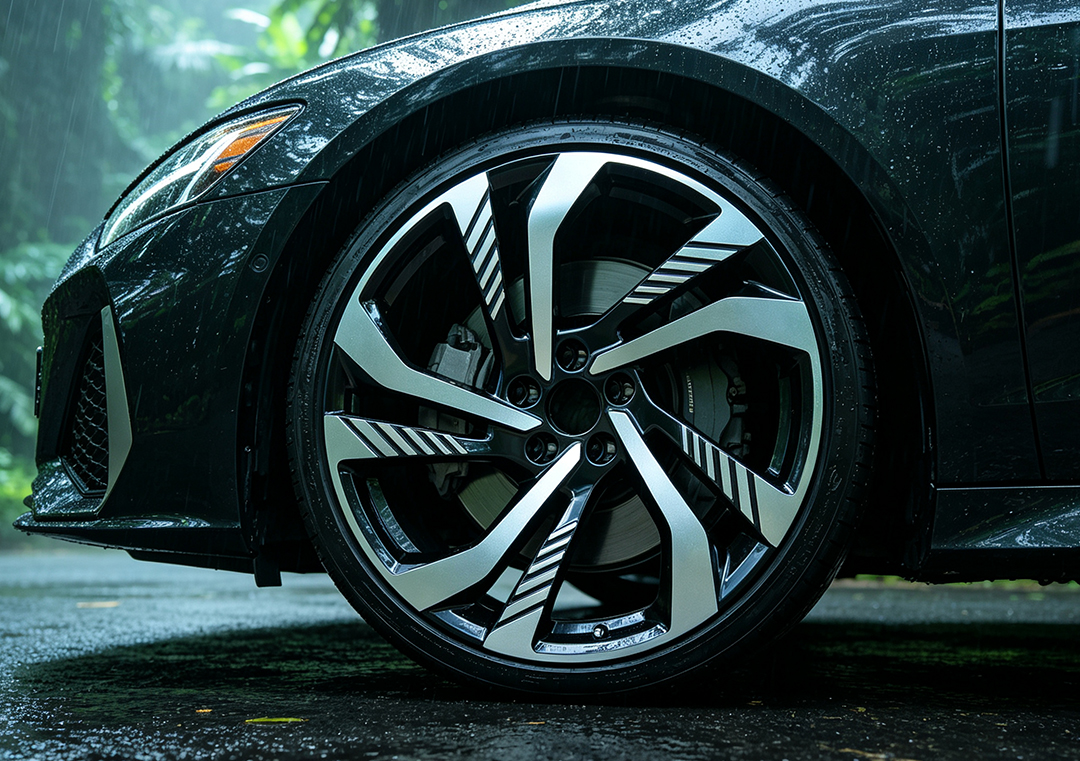
Consumers frequently question why forged alloy wheels command such a steep financial premium over traditional alternatives. The answer lies in three uncompromising economic and industrial realities:
-
Raw Material Expenses: Premium aerospace-grade 6061-T6 aluminum billets cost exponentially more per pound than recycled secondary aluminum scrap ingots melted down for mass-market gravity casting.
-
Massive Capital Infrastructure: Operating and maintaining multi-stage industrial forging presses capable of exerting ten thousand tons of continuous pressure requires specialized facilities, massive electrical power inputs, and rigorous engineering oversight.
-
Extreme Material Waste and Labor Intensity: Because up to eighty percent of the original solid aluminum billet is precision-milled away as metal shavings during the multi-axis CNC sculpting process, the material waste factor is exceptionally high. Furthermore, the prolonged machining time required for intricate, custom designs demands highly skilled engineering labor.
6.Architectural Layouts: Monoblock vs. Multi-Piece Forged Wheels
When selecting forged alloy wheels for a specific vehicle application, enthusiasts generally choose between two primary structural designs:
Monoblock (One-Piece Forged)
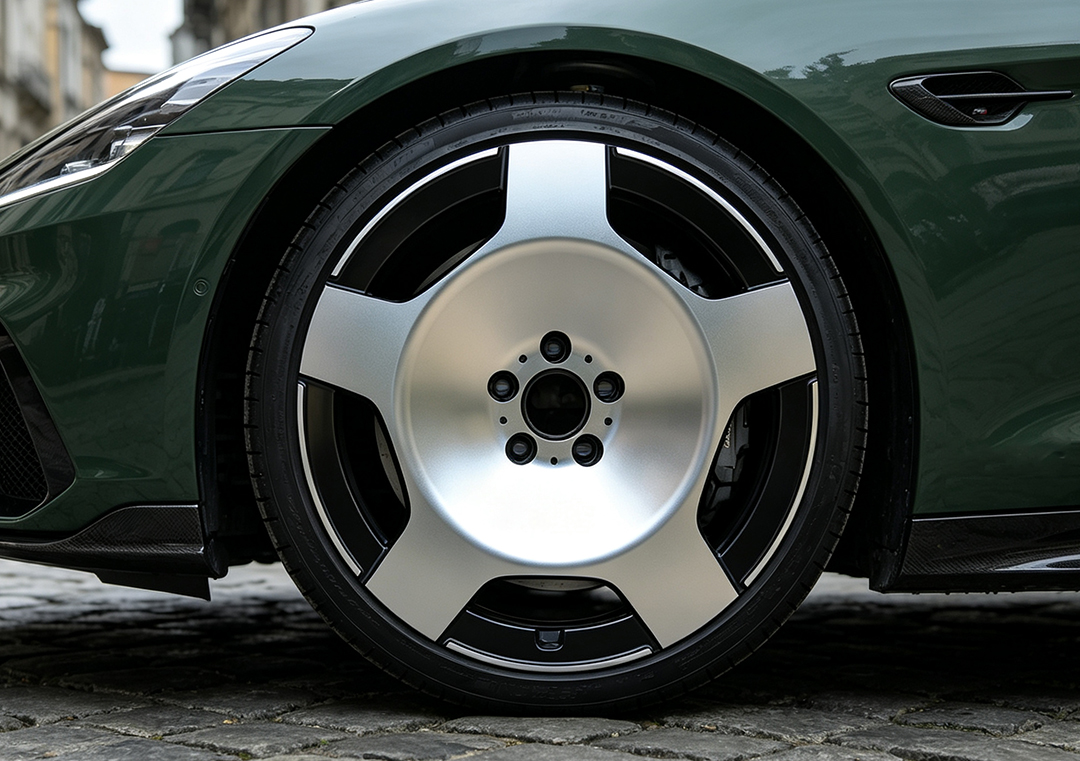
Monoblock wheels are carved entirely from a single solid forged aluminum blank. Because there are no separate welded joints or assembly bolts, monoblock wheels offer the highest possible structural rigidity, the lowest possible weight profile, and absolute seamless integrity. They are the preferred choice for track enthusiasts, time-attack racers, and supercars where weight minimization is paramount.
Multi-Piece (Two-Piece and Three-Piece Forged)
Multi-piece wheels are assembled from separate forged components. A two-piece wheel typically consists of a forged center face welded or bolted to a forged outer barrel. A three-piece wheel consists of a forged center disk, an outer rim lip, and an inner rim barrel, sealed together using high-strength aerospace assembly hardware and specialized silicone gaskets. Multi-piece designs offer incredible aesthetic customization, allowing owners to fine-tune custom offsets, achieve ultra-wide lip depths, and easily replace individual damaged rim components in the event of severe road hazards.
7.Real-World Applications: Determining Who Benefits Most
While forged alloy wheels offer undeniable technical superiority, they are not universally mandatory for every driving scenario. Understanding where they excel helps clarify their value proposition:
-
Track Day Enthusiasts and Competitive Racers: Drivers who frequent road courses benefit immensely from minimized rotational inertia, eliminated wheel flex under high cornering loads, and maximum durability under extreme thermal cycling.
-
High-Horsepower Supercars and Sports Sedans: Vehicles producing massive torque output place immense shear stress on wheel hubs during aggressive launches. Forged wheels provide the hub strength necessary to handle high-output torque without structural fatigue.
-
Off-Roading and Overland Expedition Rigs: Navigating rugged backcountry terrain involves crawling over sharp boulders, enduring heavy cargo loads, and running reduced tire pressures. Unlike brittle cast wheels that shatter upon severe impact, a high-quality forged wheel bends rather than breaks, allowing drivers to limp their vehicles back to safety.
-
Daily Drivers on Compromised Urban Infrastructure: Drivers navigating metropolitan environments plagued by deep potholes and neglected road surfaces benefit from the high yield strength of forged rims, drastically reducing the frequency of bent wheels and compromised tire seals.
Frequently Asked Questions(FAQ)
Q1: What are forged alloy wheels and how are they made?
Forged alloy wheels are high-performance wheels crafted from a solid billet of 6061-T6 aluminum alloy. Unlike cast wheels made from poured liquid metal, they are created by heating the aluminum billet and compressing it under thousands of tons of high pressure. This extreme pressure eliminates internal porosity and refines the metal’s grain structure, followed by precision CNC machining to carve out the final design.
Q2: What is the main difference between forged and cast alloy wheels?
The primary differences lie in strength, weight, and manufacturing process:
-
Strength and Safety: Forged wheels possess a dense, continuous grain structure, making them up to three times stronger than cast wheels. Under severe impacts, forged wheels tend to bend rather than crack or shatter like brittle cast wheels.
-
Weight: Forged wheels are approximately twenty to thirty percent lighter than comparable cast counterparts, significantly reducing unsprung mass for superior vehicle handling.
Q3: Why are forged alloy wheels so expensive?
Forged alloy wheels carry a premium price tag due to three core factors:
-
Raw Material Cost: They utilize high-grade, expensive 6061-T6 aerospace aluminum billets.
-
Tooling and Equipment: Production requires massive, costly industrial forging presses capable of exerting ten thousand or more tons of pressure.
-
Labor and Machining: Up to eighty percent of the initial solid aluminum billet is precision-carved away by multi-axis CNC machines, demanding extensive production time and advanced craftsmanship.
Q4: Do forged alloy wheels actually improve vehicle performance?
Yes. By significantly decreasing unsprung weight and rotational inertia, forged alloy wheels improve dynamic performance across multiple metrics:
-
Sharper Handling: Lighter wheels allow the suspension to react faster to road variations, improving steering feedback.
-
Quicker Acceleration and Braking: Reduced rotational mass decreases the load on the engine and braking system, improving response times.
-
Enhanced Heat Dissipation: Dense forged aluminum conducts thermal energy efficiently away from braking components, reducing brake fade during aggressive driving.
Q5: Are forged alloy wheels worth it for daily driving?
For standard commuting, forged wheels are usually unnecessary, as quality cast or flow-formed wheels offer adequate safety at a fraction of the cost. However, forged wheels are well worth the investment if you drive a high-horsepower sports car, frequently track your vehicle, carry heavy loads, or navigate poorly maintained roads where high impact resistance prevents rim failure.
Q6: How can you visually tell if a wheel is forged or cast?
While high-end surface finishes can make visual identification tricky, forged wheels typically feature sharper, crisper CNC-milled edge details, thinner spoke cross-sections, and smooth unpainted back-pad surfaces. Additionally, forged wheels usually feature laser-engraved structural markings rather than thick, raised cast-mold lettering on their back spokes.
Conclusion
Upgrading your vehicle with high-grade forged alloy wheels represents a definitive commitment to safety, structural integrity, dynamic performance, and aesthetic perfection. Whether your goal is to shave seconds off your lap times at the local racetrack, protect your daily driver against hazardous road conditions, or build a custom stance with bespoke offsets and widths, precision forging remains the gold standard in automotive wheel engineering.
To explore precision-engineered custom wheel fitments tailored to your exact vehicle application, visit ATK Wheels.

