Understanding Wheel Offset: The Complete Technical Blueprint for Perfect Wheel Fitment
Understanding Wheel Offset: The Complete Technical Blueprint for Perfect Wheel Fitment
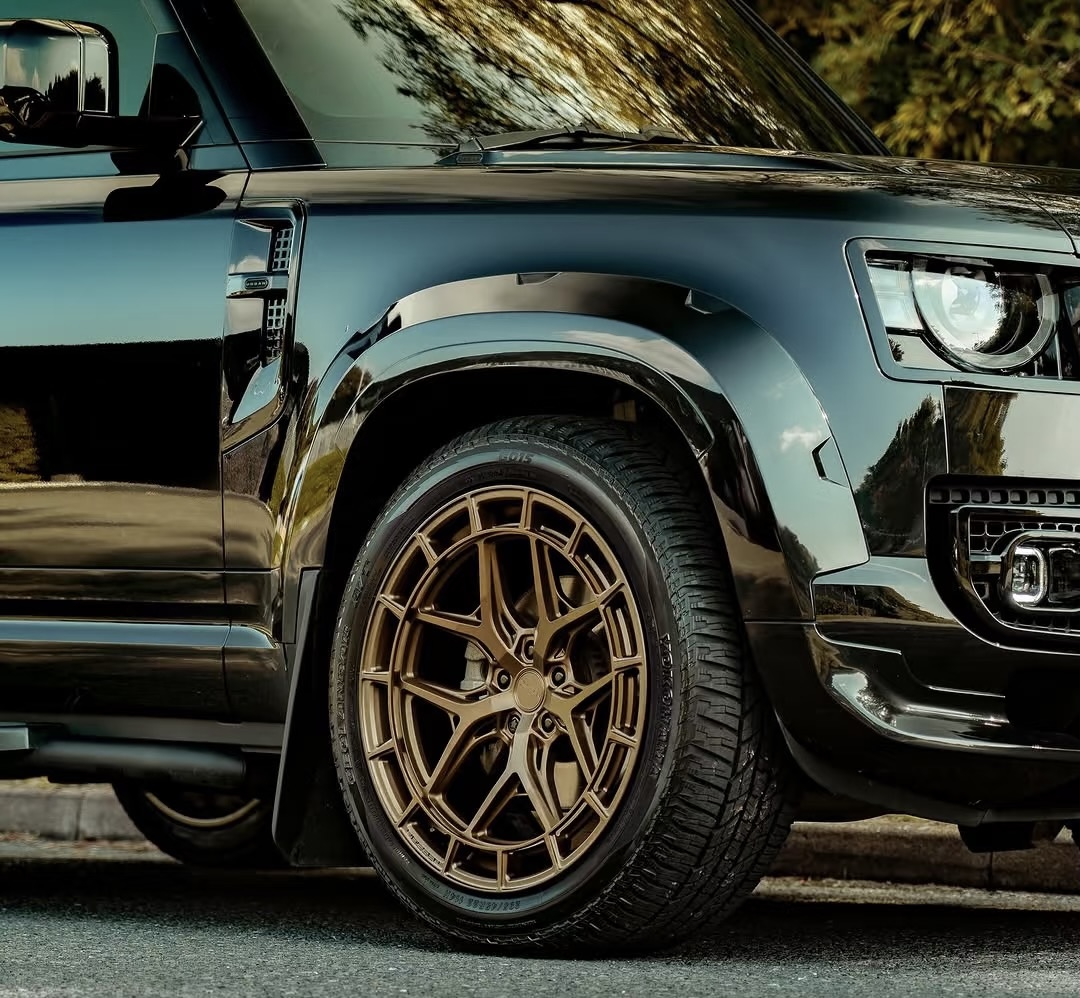
Finding the right set of aftermarket wheels involves far more than picking a stylish spoke pattern and a bold finish. If you want your truck, sports car, or daily driver to sit right, handle predictably, and avoid costly mechanical damage, you must master wheel offset.
Even a difference of five millimeters in offset can mean the difference between a sleek flush setup and severe tire rubbing against your brake calipers or fender arches. This deep dive breaks down the physics of offset, how to measure it, how it interacts with backspacing, and how to choose the absolute best fitment for your vehicle.
1.What Is Wheel Offset and Why Does It Matter?
Definition for Quick Reference: Wheel offset (often designated as ET, from the German word Einpresstiefe) is the measured distance in millimeters between the wheel’s hub mounting surface and its true mathematical centerline.
       [ INNER RIM LIP ]                 [ OUTER RIM LIP ]
               |                                 |
               |<------- Total Rim Width ------->|
               |                                 |
               |           Centerline            |
               |                |                |
               |    Negative    |    Positive    |
               |     Offset     |     Offset     |
               |   (<---ET)     |    (ET--->)    |
                                |
                        [Mounting Surface]
When you bolt a wheel to your vehicle’s brake hat or hub, the mounting surface presses flush against the vehicle. The location of that mounting face relative to the middle of the wheel barrel determines where the tire sits inside the wheel well.
The Real-World Impact of Wheel Offset
Wheel offset directly controls four major aspects of vehicle dynamics and aesthetics:
-
Fender Clearance: Keeps the tire tread and sidewall from slicing against the outer metal fender lip during suspension compression.
-
Suspension & Brake Clearance: Prevents the inner wheel barrel or tire shoulder from grinding against strut towers, control arms, and brake calipers.
-
Scrub Radius & Handling Dynamics: Changing offset alters the steering axis location relative to the center of the tire contact patch. This affects tracking, turn-in response, and torque steer.
-
Visual Stance: Dictates whether your wheels look tucked deep inside the wheel wells, sit perfectly flush with the body lines, or poke out past the fenders for a wide stance.
2.Positive vs. Negative vs. Zero Offset: What Is the Difference?
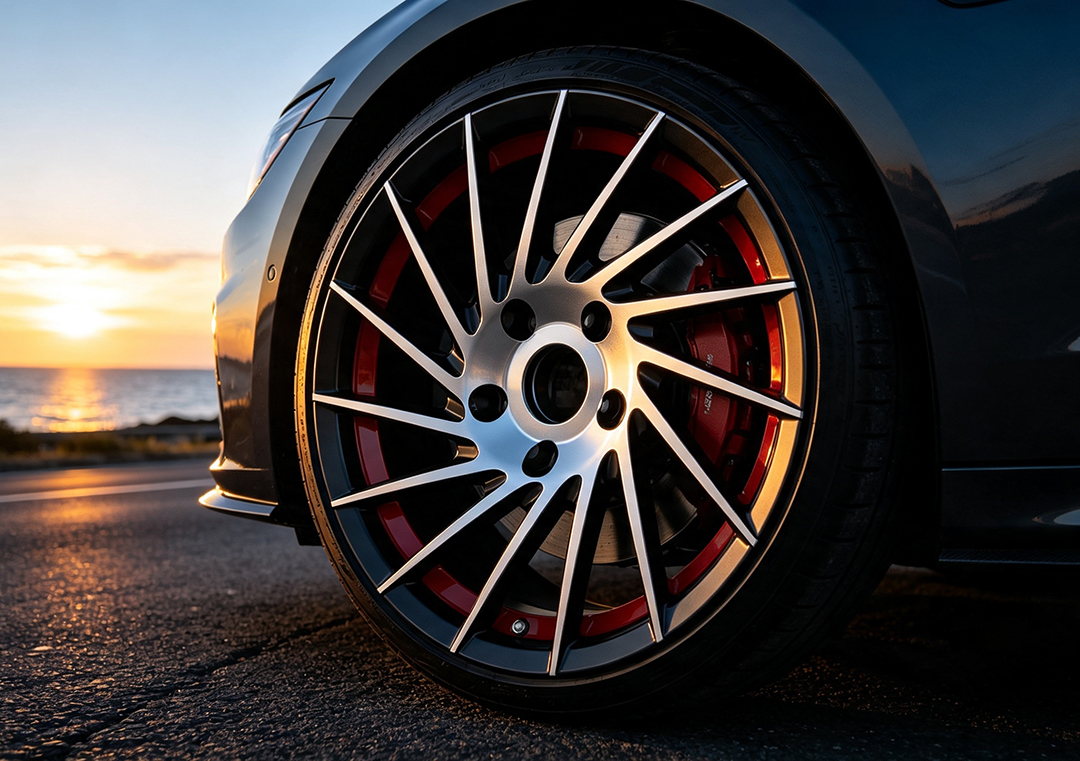
Every wheel falls into one of three offset categories. The term “ET” is followed by a number that indicates the exact millimeter measurement.
   POSITIVE OFFSET (+ET)          ZERO OFFSET (0 ET)          NEGATIVE OFFSET (-ET)
     Outside Face                  Outside Face                  Outside Face
      +---------+                   +---------+                   +---------+
      |    |    |                   |    |    |                   |    |    |
      |    | Hub|                   |   Hub   |                   |Hub |    |
      |    |=== |                   |   ===   |                   |=== |    |
      |    |    |                   |    |    |                   |    |    |
      +---------+                   +---------+                   +---------+
      Centerline                    Centerline                    Centerline
   (Mounting Surface             (Mounting Surface             (Mounting Surface
   Shifter OUTWARD)               At Centerline)                Shifted INWARD)
1. Positive Offset (+ET)
Positive offset means the hub mounting surface sits on the front half (street side) of the wheel’s centerline.
-
Effect: The wheel body gets pulled inward toward the brakes and frame.
-
Common Applications: Front-wheel drive (FWD) cars, modern crossovers, and standard modern sedans. A common factory rating might read +45mm or +50mm.
2. Zero Offset (0 ET)
Zero offset means the mounting face sits exactly in line with the wheel’s mathematical centerline.
-
Effect: The wheel splits its width evenly inside and outside the mounting hub.
-
Common Applications: Older rear-wheel-drive performance cars, classic muscle cars, and balanced retro wheel builds.
3. Negative Offset (-ET)
Negative offset means the mounting surface sits on the back half (brake side) of the wheel, closer to the inner lip.
-
Effect: The wheel gets pushed outward away from the car, creating a deep lip profile or a wide “poked” stance.
-
Common Applications: Lifted trucks, rock crawlers, off-road builds, and widebody drift cars. A common off-road spec might read -12mm or -24mm.
3.Quick Comparison: Offset Types at a Glance
| Feature / Aspect | Positive Offset (+ET) | Zero Offset (0 ET) | Negative Offset (-ET) |
|---|---|---|---|
| Mounting Surface Location | Toward the front/street face | Exactly on the centerline | Toward the back/brake side |
| Wheel Movement | Pulled inward toward suspension | Centered equally on hub | Pushed outward past fenders |
| Visual Appearance | Tucked or flush look | Moderate lip depth | Deep dish / Aggressive poke |
| Primary Risk | Rubbing on struts or calipers | Balanced fitment risks | Rubbing on outer fender arches |
| Typical Vehicles | Modern FWD / AWD Cars & Crossovers | Classic RWD Cars & Restomods | Lifted Trucks & Off-Road Rig Builds |
4.Does a Higher Offset Push the Wheel Out or In?
This is the single most common point of confusion when shopping for wheels:
Core Rule: Higher numbers push wheels IN. Lower (or negative) numbers push wheels OUT.
-
Moving from an ET+30 to an ET+45 pulls the wheel 15mm further inward toward your shocks and inner wheel wells.
-
Moving from an ET+45 to an ET+20 pushes the wheel 25mm further outward toward your exterior fenders.
If you purchase a set of wheels with too high of a positive offset, you run the risk of structural clearance issues on the inside. If you go too low into negative territory without a widebody kit or suspension lift, your tires will hit your bodywork every time you drive over a speed bump.
5.Wheel Offset vs. Backspacing: What Is the Difference?
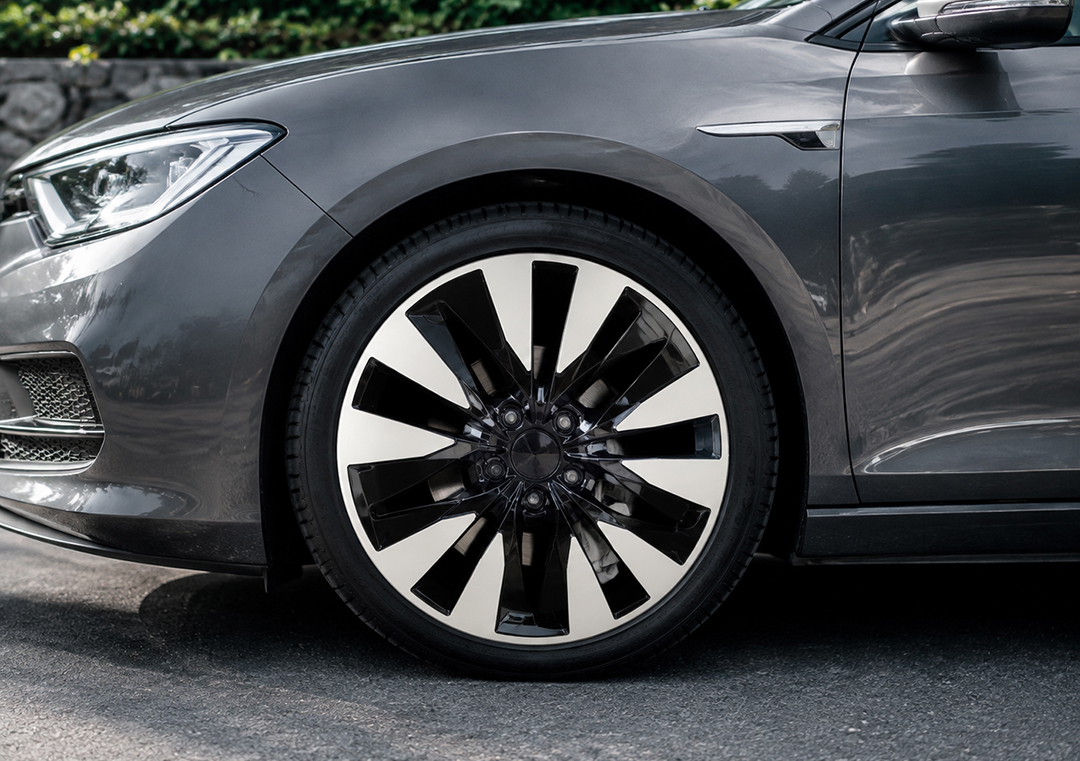
While offset and backspacing describe similar aspects of wheel geometry, they approach the measurement from different reference points and units.
                   <-------- Wheel Width -------->
                   [Inner Lip]        [Outer Lip]
                        |                  |
                        |<--- Backspace -->|
                        |                  |
                        |    Centerline    |
                        |        |         |
                        |        | Offset  |
                        |        |<------->|
                        |        |         |
                           [Mounting Face]
Key Distinctions Between Offset and Backspacing
-
Offset uses the centerline of the wheel as its starting point and is measured in millimeters. It can be positive, negative, or zero.
-
Backspacing uses the innermost lip edge of the wheel as its starting point and is measured in inches. Backspacing is always a positive number.
Converting Between the Two Measurements
To calculate backspacing when you know the wheel width and offset:
Backspace (inches) = ({Wheel Width + 1inch}/2) + (Offset in mm/25.4)
Backspace (inches) = ({Wheel Width + 1inch}/2) + (Offset in mm/25.4)
(Note: Add 1 inch to nominal wheel width to account for the physical lip flanges on both sides of the barrel.)
Truck enthusiasts and off-road builders frequently use backspacing because it directly shows how much room remains for suspension arms and frame rails. Performance car tuners prioritize offset to calculate fender flushness down to the exact millimeter.
6.The Hidden Mechanics: Scrub Radius and Handling
Changing your vehicle’s factory offset doesn’t just change how it looks; it alters steering geometry.
Understanding Scrub Radius
The scrub radius is the distance between two imaginary points on the road surface:
-
The center of the tire’s contact patch.
-
The point where the steering axis line intersects the ground.
       [ Steering Axis Line ]          [ Centerline of Tire ]
                 \                                |
                  \                               |
                   \                              |
                    \                             |
  ===================\============================|====================
                                 ^
                          [ Scrub Radius ]
-
Zero Scrub Radius: The steering axis intersects the exact center of the tire footprint.
-
Positive Scrub Radius: The steering axis intersects inside the contact patch center (common when pushing wheels outward with low/negative offset).
-
Negative Scrub Radius: The steering axis intersects outside the contact patch center.
Risks of Altering Offset Too Drastically
-
Increased Steering Effort & Squirm: Wide positive scrub radii make the steering wheel fight you over uneven road surface seams or rutted highways (tramlining).
-
Accelerated Bearing Wear: Pushing wheels outward adds leverage on your wheel hubs, accelerating wear on wheel bearings and ball joints.
-
Unpredictable Braking: If one side of the vehicle hits standing water, an aggressive scrub radius can cause the car to pull violently toward that side.
7.How to Measure Wheel Offset Yourself
If your wheel lacks stamped markings, you can calculate the offset manually using basic workshop tools.
Step 1: Lay wheel flat on face   -->  Measure distance from ground to rear lip flange (Total Width).
Step 2: Divide Total Width by 2  -->  This gives you the Centerline.
Step 3: Measure straight down    -->  From rear lip straight to hub mounting face (Backspacing).
Step 4: Subtract Centerline      -->  Backspacing minus Centerline = Offset!
        from Backspacing
Step-by-Step Measurement Procedure
-
Measure Total Wheel Width: Place the wheel face-down on a flat, soft surface. Lay a straightedge across the top inner lip. Measure straight down to the table surface. This is your Total Outer Width (usually 0.8 to 1 inch wider than the nominal rim width).
-
Find the Centerline: Divide the total outer width by 2.
-
Measure Backspacing: Keep the straightedge across the rear lip. Measure the distance from the bottom edge of the straightedge down to the flat hub mounting surface.
-
Calculate Offset: Subtract the Centerline value from your Backspacing value.
-
If Backspacing is greater than the Centerline, offset is Positive.
-
If Backspacing is less than the Centerline, offset is Negative.
-
Convert inches to millimeters by multiplying by 25.4.
-
8.Common Risks of Choosing the Wrong Wheel Offset
Installing wheels without checking offset specs leads to immediate mechanical headaches.
  TOO MUCH POSITIVE OFFSET (+ET)            TOO MUCH NEGATIVE OFFSET (-ET)

     [ Inner Fender Arch ]                     [ Outer Fender Arch ]
              |                                         |
    +----Rubbing Zone----+                     +----Rubbing Zone----+
    |                    |                     |                    |
    |  * Strut Towers    |                     |  * Outer Fenders   |
    |  * Brake Calipers  |                     |  * Plastic Liners  |
    |  * Control Arms    |                     |  * Frame Bodywork  |
    +--------------------+                     +--------------------+
Consequences of Excessively High Offset (+ET)
-
Inner Tire Rubbing: The tire shoulder scrapes against the inner strut housing, coil springs, or frame rails during sharp turns.
-
Brake Caliper Interference: The back of the wheel spokes presses against the face of the brake caliper, preventing the wheel from rotating freely or seating flush on the hub face.
Consequences of Excessively Low Offset (-ET)
-
Outer Fender Contact: Tires slam into the metal fender arches or plastic fender flare liners during suspension travel.
-
Premature Hub Bearing Failure: Increased leverage multiplies load forces on outer hub bearings and suspension bushings.
-
Kicked-Up Road Debris: Tires extending beyond the bodywork hurl stones, mud, and water directly along your side paint panels.
Frequently Asked Questions(FAQ)
1.What is wheel offset and why is it important?
Wheel offset is the distance (in millimeters) from the wheel’s mounting surface to its true centerline. It dictates how far the wheel sits inside or outside the wheel well, directly affecting tire clearance, suspension fitment, and vehicle handling.
2.What is the difference between positive, negative, and zero offset?
-
Positive offset: The mounting surface is toward the front (street side) of the wheel, pulling it inward toward the suspension.
-
Negative offset: The mounting surface is toward the back (brake side), pushing the wheel outward for a wider stance.
-
Zero offset: The mounting surface sits directly on the wheel’s centerline.
3.Does a higher wheel offset push the wheel out or in?
A higher (more positive) offset pulls the wheel further inward toward the car’s body and suspension. Conversely, a lower or negative offset pushes the wheel outward toward the fender.
4.What is the difference between wheel offset and backspacing?
Offset measures the distance from the wheel’s centerline to the mounting surface in millimeters. Backspacing measures the distance from the wheel’s inner lip to the mounting surface in inches. Both determine wheel fitment, but from different reference points.
5.Can incorrect wheel offset damage my vehicle?
Yes. Too high of an offset can cause tires to rub against brakes and suspension components. Too low (negative) of an offset can cause tires to rub against outer fenders and place extra stress on wheel bearings and suspension joints.
6.How do wheel spacers affect offset?
Installing wheel spacers reduces your effective offset. For example, adding a 10mm wheel spacer to an ET+40 wheel shifts the wheel outward, turning it into an effective ET+30 setup.
Dial In Your Fitment with Precision
Understanding wheel offset removes the guesswork from buying aftermarket wheels. Whether you are aiming for a clean street flush look, building a dedicated track machine with maximum rubber, or lifting a truck for off-road trails, checking your ET values ensures reliable performance and zero clearance issues.
Before buying your next set of wheels, check your vehicle’s factory offset specs, measure your available fender clearance, and choose a wheel width and ET combination that matches your build goals. Explore precision-engineered custom wheel options and verify exact fitment specs at ATK Wheels.