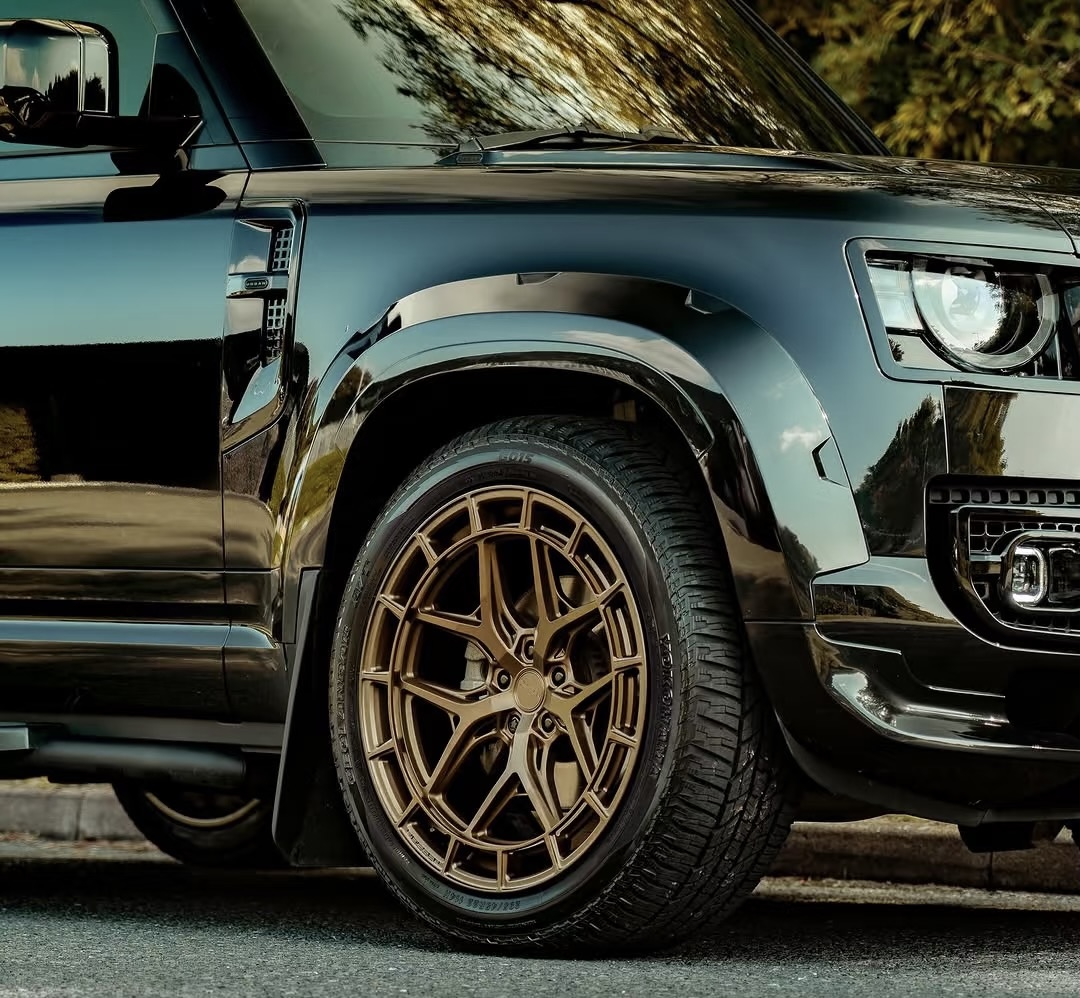
Truck Wheels: Everything You Need to Know Before Upgrading Your Pickup
Truck Wheels: Everything You Need to Know Before Upgrading Your Pickup
Buying a set of aftermarket truck wheels is one of the single best upgrades you can make to your vehicle. Whether you drive a Ford F-150, Chevrolet Silverado, RAM 1500, or a dedicated off-road rig, the right aftermarket wheels dramatically transform your truck’s stance, towing capability, and trail performance.
However, navigating the endless options of wheel sizes, offsets, bolt patterns, and manufacturing methods can quickly become overwhelming. Choosing the wrong wheel doesn’t just ruin your truck’s aesthetic—it can cause tire rubbing, suspension damage, speedo calibration errors, and serious safety hazards on or off the road.
In this deep-dive, hands-on technical breakdown, we cut through the marketing noise to bring you real-world advice on choosing, sizing, and installing high-performance truck wheels.
1.What Are Truck Wheels and Why Should You Upgrade?
At its core, a truck wheel (often referred to interchangeably as a rim) is the metal assembly that mounts directly to your truck’s wheel hub and supports the tire. While factory original equipment manufacturer (OEM) wheels are designed to handle average daily driving, they are heavily compromised by budget constraints, fuel efficiency targets, and generic styling.
+-------------------------------------------------------------------------+
|                        KEY TRUCK WHEEL COMPONENT MAP                    |
+-------------------------------------------------------------------------+
|                                                                         |
|                     [ Outer Lip / Barrel ]                              |
|                 +----------------------------+                          |
|                 |                            |                          |
|                 |    ( Center Bore )         |                          |
|                 |         O  <-- Hub Hole    |                          |
|                 |    o  o   o  o             | <-- Bolt Pattern (Lugs)  |
|                 |       \ /                  |                          |
|                 |    [ Spokes ]              |                          |
|                 |                            |                          |
|                 +----------------------------+                          |
|                     [ Mounting Pad Surface ]                            |
|                                                                         |
+-------------------------------------------------------------------------+
Upgrading to aftermarket truck wheels provides three major advantages:
-
Enhanced Strength and Load Capacity: Heavy-duty trucks used for towing, hauling, or rock crawling require wheels rated for higher payload capacities than standard OEM passenger wheels.
-
Custom Stance and Clearance: Aftermarket options allow you to run wider, taller tires with custom offsets that push the wheel out for a wider track width or clear upgraded brake kits.
-
Weight Reduction: High-grade aluminum alloy truck wheels reduce unsprung mass, improving acceleration, braking performance, and suspension response over heavy steel wheels.
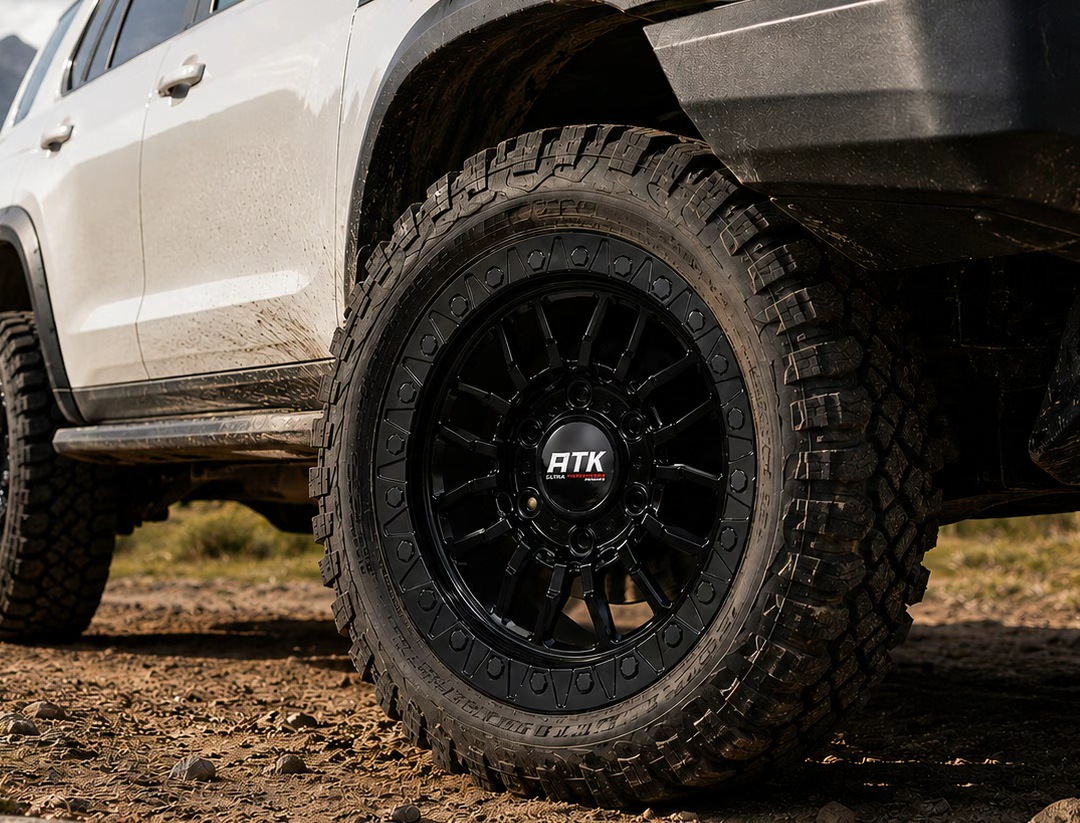
2.Key Fitment Specs Explained: How to Measure and Match
When shopping for custom truck wheels, you cannot rely on visual appearance alone. Every truck brand utilizes specific hub dimensions, lug spacings, and clearance tolerances.
                        WHEEL OFFSET DIAGRAM

   POSITIVE OFFSET              ZERO OFFSET             NEGATIVE OFFSET
  (Pushed Inward)               (Centered)              (Pushed Outward)

    Hub Pad                    Hub Pad                   Hub Pad
    |                          |                         |
    v                          v                         v
+---|-------+              +-------|---+             +-----------|--+
|   |       |              |       |   |             |           |  |
|   |       |              |       |   |             |           |  |
|   |       |              |       |   |             |           |  |
+---|-------+              +-------|---+             +-----------|--+
  Centerline                 Centerline                Centerline
1. Bolt Pattern (Lug Pattern)
The bolt pattern refers to the number of lug holes on the wheel and the diameter of the imaginary circle they form (known as the Pitch Circle Diameter or PCD).
Common light-truck bolt patterns include:
-
5-Lug (e.g., 5×127 / 5×5.0): Common on older Jeeps and lighter SUVs.
-
6-Lug (e.g., 6×135 or 6×139.7 / 6×5.5): The standard for modern Ford F-150s, Chevrolet Silverados, GMC Sierras, and Toyota Tacomas/Tundras.
-
8-Lug (e.g., 8×165.1 / 8×6.5 or 8×170): Heavy-duty 3/4-ton and 1-ton trucks (Ford F-250/F-350, RAM 2500/3500, Chevy Silverado 2500 HD).
2. Wheel Diameter and Width
Wheel dimensions are denoted as Diameter x Width in inches (e.g., 17×9 or 20×10).
-
17-inch to 18-inch wheels are preferred by off-road enthusiasts because smaller wheel diameters allow for taller tire sidewalls, enabling you to “air down” for maximum traction over rocks and sand.
-
20-inch to 24-inch wheels are popular for street performance, show trucks, and highway towing, delivering sharper steering response due to reduced tire sidewall flex.
3. Wheel Offset vs. Backspacing
-
Offset (measured in millimeters): The distance from the wheel’s mounting pad to its true centerline.
-
Positive Offset (+12mm to +44mm): Keeps the wheel tucked inside the wheel well. Standard on OEM trucks.
-
Zero Offset (0mm): Positions the mounting pad directly in the center of the wheel width.
-
Negative Offset (-12mm to -44mm): Moves the mounting surface inward, pushing the wheel outwards past the fenders for a wider, aggressive stance (“poke”) and better lateral stability.
-
-
Backspacing (measured in inches): The distance from the back edge of the wheel rim to the mounting surface pad. It directly determines how close the tire sits to your truck’s control arms, shocks, and frame.
4. Hub Bore and Hub-Centric vs. Lug-Centric Wheels
The hub bore is the center hole on the back of the wheel that sits over the truck’s axle hub.
-
Hub-Centric Wheels: Custom-machined to fit your truck’s exact hub diameter. The hub carries the weight of the vehicle, ensuring a perfectly smooth, vibration-free ride.
-
Lug-Centric Wheels: Feature a larger universal center bore designed to fit multiple vehicles. The wheel is centered solely by the tapered lug nuts. Pro tip: If running lug-centric aftermarket wheels, always install hub-centric rings to prevent high-speed steering wheel wobble.
3.Wheel Construction Methods: Cast vs. Flow-Formed vs. Forged
Not all aftermarket truck wheels are built the same way. The manufacturing process directly impacts a wheel’s structural integrity, weight, load rating, and price point.
+-----------------------------------------------------------------------------------+
|                        MANUFACTURING PROCESS COMPARISON                           |
+-----------------------------------------------------------------------------------+
| CASTING          --> Molten aluminum poured into a static mold.                   |
|                      (Economical, heavier, moderate strength)                     |
|                                                                                   |
| FLOW-FORMING     --> Cast wheel rim barrel stretched/compressed with rollers.     |
|                      (Lighter, stronger outer rim, balanced cost)                 |
|                                                                                   |
| FORGING          --> Solid aluminum billet forged under massive hydraulic heat/press. |
|                      (Maximum strength, lightest weight, premium cost)            |
+-----------------------------------------------------------------------------------+
Cast Aluminum Truck Wheels
Cast wheels are produced by pouring molten aluminum alloy into a pre-shaped mold. Once cooled, the raw wheel is CNC-machined and finished.
-
Low-Pressure Casting: The standard industry method where aluminum is drawn into the mold under mild pressure, reducing porosity and air bubbles.
-
Pros: Highly affordable, endless stylistic options, robust enough for daily highway driving.
-
Cons: Heavier than forged options; lower overall impact resistance under extreme stress.
Flow-Formed (Hybrid) Truck Wheels
Flow-forming begins with a specialized low-pressure cast wheel blank. The barrel of the wheel is then heated and spun over a mandrel while hydraulic rollers apply intense pressure to stretch and compress the aluminum grain structure.
-
Pros: Increases tensile strength in the outer rim barrel; significantly lighter than standard cast wheels; cost-effective alternative to fully forged setups.
-
Cons: Slightly more expensive than traditional cast wheels.
Forged Truck Wheels
Forged wheels represent the pinnacle of wheel manufacturing. A solid block of aerospace-grade 6061-T6 aluminum billet is subjected to thousands of tons of hydraulic pressure and extreme heat before being precision-carved on a multi-axis CNC machine.
-
Pros: Unmatched structural rigidity, extreme load capacity, lightweight design, highest resistance to cracking or bending on rocky terrain.
-
Cons: Premium price point; longer lead times for custom orders.
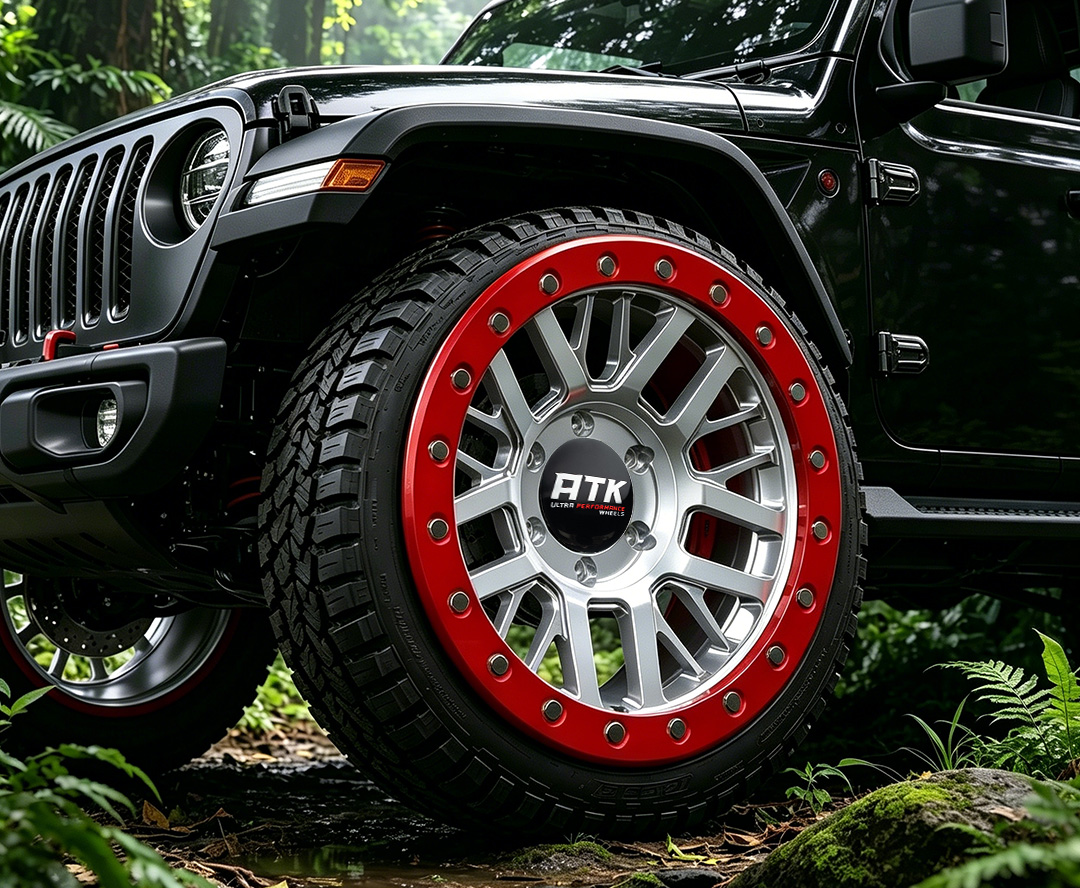
4.Comparison Table: Choosing the Right Construction for Your Needs
| Feature | Cast Truck Wheels | Flow-Formed Truck Wheels | Forged Truck Wheels |
|---|---|---|---|
| Manufacturing Method | Molten aluminum poured into mold | Cast center + hydraulic spun barrel | Solid forged aluminum billet |
| Relative Weight | Heavy | Moderate / Light | Lightest |
| Structural Strength | Standard | High | Maximum |
| Impact Resistance | Moderate | High | Superior |
| Price Range | $ / Budget-Friendly | $$ / Mid-Range \vert{} $$$$ / Premium | |
| Best Application | Daily driving, light towing | High-performance street, overland | Heavy towing, rock crawling, racing |
5.Popular Finishes and Coatings for Truck Wheels
The finish on your truck wheels isn’t just about looks—it is your wheel’s first line of defense against road salt, brake dust, rocks, and mud.
-
Matte & Gloss Black: The standard choice for modern truck builds. Provides a clean, aggressive look that masks minor brake dust between washes.
-
Chrome Plating: Classic high-shine luster preferred on traditional street trucks and dually setups. Requires routine polishing to prevent pitting in snow/salt environments.
-
Powder-Coated Finishes (Bronze, Gunmetal, Anthracite): Extremely durable electrostatically applied baked finish. Highly resistant to chipping, scratches, and harsh environmental contaminants.
-
Machined Face / Beadlock Style: Features raw CNC-machined aluminum accents contrasting against dark powder coats. Simulated beadlock rings offer off-road aesthetics without the high-maintenance hassle of true beadlocks.
6.Real-World Maintenance Tips for Long-Lasting Wheels
To maintain the finish and structural integrity of your aftermarket truck wheels over thousands of miles:
-
Avoid Harsh Acidic Wheel Cleaners: Acid-based cleaners can etch bare aluminum, strip clear coats, and stain dark powder coatings. Stick to pH-neutral wheel soap and micro-fiber brushes.
-
Torque Lug Nuts in a Star Pattern: Always use a calibrated torque wrench to tighten lug nuts to your truck’s factory torque specifications (typically 100–150 ft-lbs depending on thread pitch). Re-torque your lug nuts after driving 50 miles on new wheels.
-
Apply a Ceramic Coating: Treat brand-new truck wheels with a heat-resistant ceramic coating before installation. This repels brake dust, tar, and road grime, making future cleaning as simple as a pressure washer rinse.
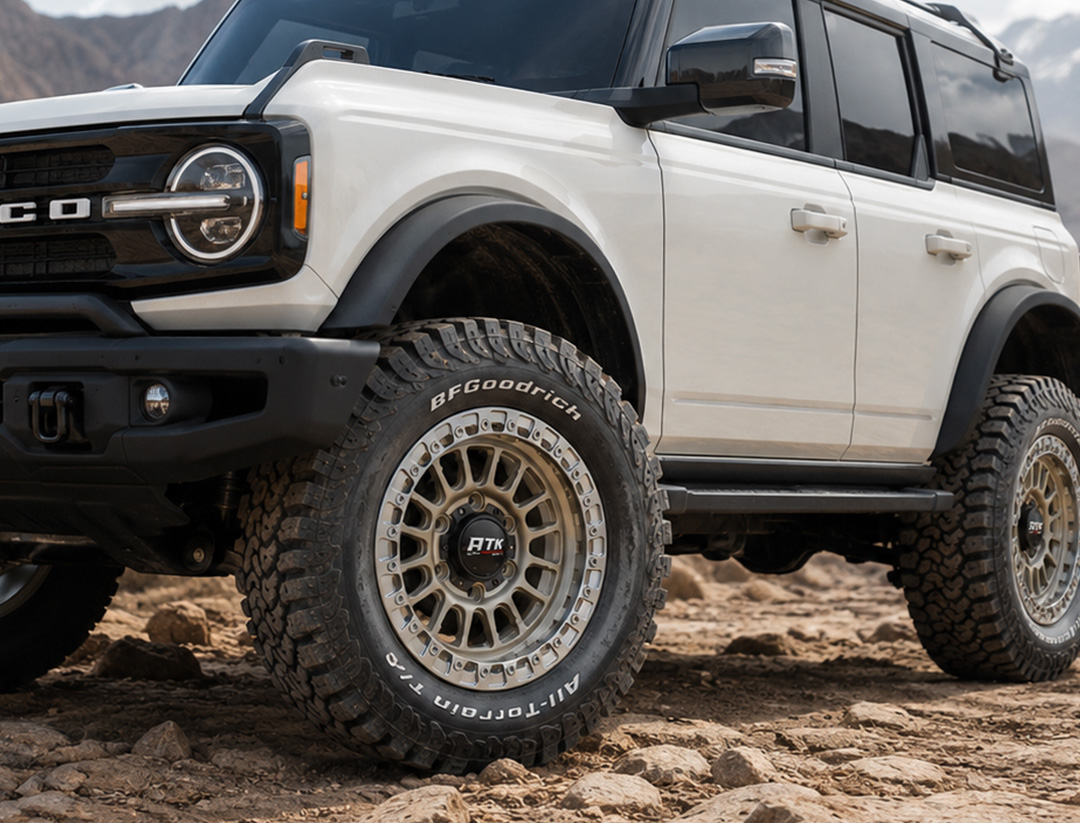
Frequently Asked Questions (FAQ)
1.How do I determine the correct wheel size for my truck?
Check your vehicle’s owner manual, the driver-side door jamb placard, or the tire sidewall code (e.g., in 275/65R18, 18 is the wheel diameter in inches). Key parameters to confirm include wheel diameter, width, bolt pattern, hub bore, and offset.
2.What is the difference between forged and cast truck wheels?
Forged wheels are crafted from solid aluminum under high hydraulic pressure, making them stronger, lighter, and more durable—ideal for heavy loads and off-roading. Cast wheels are made by pouring molten aluminum into molds, offering lower production costs and a wider variety of styles, but with lower overall impact resistance.
3.What does wheel offset mean, and how does it affect truck fitment?
Offset is the distance from the wheel’s mounting surface to its centerline.
-
Positive offset pushes the wheel inward toward the frame and suspension.
-
Negative offset pushes the wheel outward, creating a wider stance (“poke”) for off-road stability and aggressive aesthetics.
4.Are truck wheel bolt patterns universal?
No. Bolt patterns vary significantly by manufacturer, model, and year (e.g., 5-lug, 6-lug, or 8-lug with different pitch circle diameters). Wheels must match your truck’s specific bolt pattern and hub size to mount safely.
5.Can I use factory lug nuts on aftermarket truck wheels?
Usually no. Most aftermarket truck wheels feature smaller lug holes that require conical/tapered (60-degree) tuner-style lug nuts. Factory lug nuts often use flat or mag seats and are too bulky to fit inside aftermarket lug pockets. Using incorrect lug nuts can cause wheel loosening, vibration, or mounting seat damage.
Ready to Upgrade Your Truck’s Stance and Performance?
Upgrading your truck wheels is the fastest way to elevate your vehicle’s capability, load handling, and curb appeal. Whether you need rugged, trail-tested off-road wheels or sleek, high-strength forged options for heavy towing, getting the exact fitment specs right is the key to a smooth ride.
Explore a curated selection of precision-engineered aftermarket truck wheels built to conquer tough conditions. Visit ATK Wheels today to find the perfect fitment, style, and load rating engineered specifically for your truck!