
Tire Rims: Choosing the Right Size, Fitment, and Style
Tire Rims: Choosing the Right Size, Fitment, and Style
Choosing the correct set of tire rims is one of the most effective upgrades you can make to your vehicle. Beyond transforming your car’s visual appeal, rims directly impact handling, braking performance, ride comfort, and fuel efficiency. However, navigating the world of wheel fitment, bolt patterns, offsets, and structural materials can quickly feel overwhelming.
This deep-dive resource walks you through everything you need to know about purchasing, upgrading, and maintaining tire rims—ensuring your next setup delivers both peak performance and complete road safety.
1. What Are Tire Rims and Why Do They Matter?
Before diving into fitments and sizing, it helps to clear up a common confusion in the automotive world: the difference between a tire rim, a wheel, and a tire.
While drivers frequently use the terms interchangeably in casual conversation, automotive engineers treat them as distinct components:
-
Tire Rim: Technically, the rim is the outer circular edge of the wheel that holds the tire tread and bead in place, forming an airtight seal.
-
Wheel: The complete metal assembly, which includes the rim outer barrel, the central hub, and the connecting spokes.
-
Tire: The rubber ring containing air pressure that mounts directly onto the rim and makes contact with the road.
Despite the technical distinction, in everyday industry terminology, “tire rims” refers to the metal wheel structure that supports your tires.
       +---------------------------------------------+
       |                  TIRE                       |
       |  +---------------------------------------+  |
       |  |               RIM BARREL              |  |
       |  |   +-------------------------------+   |  |
       |  |   |             SPOKES            |   |  |
       |  |   |   +-----------------------+   |   |  |
       |  |   |   |       CENTER HUB      |   |   |  |
       |  |   |   +-----------------------+   |   |  |
       |  |   +-------------------------------+   |  |
       |  +---------------------------------------+  |
       +---------------------------------------------+
Why Tire Rims Matter for Vehicle Mechanics
Your rims are far more than aesthetic upgrades; they serve as critical dynamic components connecting your chassis to the pavement:
-
Handling & Cornering Responsiveness: Rigid, well-engineered rims prevent sidewall flex under hard cornering, providing precise steering feedback.
-
Braking Efficiency & Cooling: Open spoke designs allow air to flow directly across your brake rotors and calipers, dissipating heat and preventing brake fade during aggressive driving.
-
Ride Quality & Road Comfort: Heavier or larger rims change your vehicle’s unsprung weight, altering how your suspension absorbs bumps and potholes.
-
Fuel Economy: Lowering unsprung mass reduces rolling resistance and rotational inertia, allowing your engine to work less during acceleration.
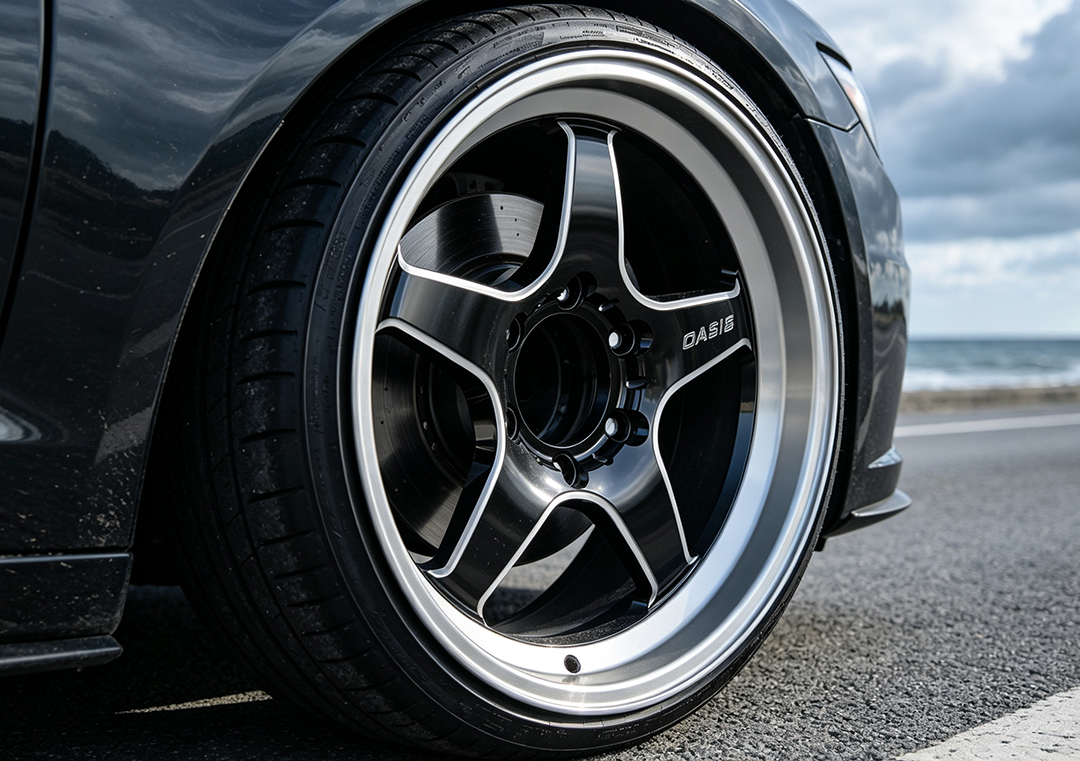
2. Rim Materials Compared: Steel vs. Cast Alloy vs. Flow-Formed vs. Forged
Selecting the ideal construction material determines your rims’ durability, weight, and price point. Here is how the four main manufacturing methods compare.
| Manufacturing Process | Primary Advantages | Common Disadvantages | Best Used For |
|---|---|---|---|
| Steel Rims | Extremely durable, low cost, easy to repair if bent | Very heavy, basic aesthetics, prone to rust without coating | Winter driving, work trucks, budget spares |
| Cast Aluminum Alloy | Cost-effective, endless style variations, light weight | Brittle under extreme impacts, higher weight than forged options | Daily commuting, standard aesthetic upgrades |
| Flow-Formed / Flow-Forged | 20–30% lighter than cast, increased barrel strength | Pricier than basic casting | Street performance, spirit driving, light track work |
| Forged Aluminum | Highest strength-to-weight ratio, extreme impact resistance | High initial price point | High-performance sport cars, track racing, heavy off-roading |
Understanding the Trade-Offs
Steel Rims
Constructed by stamping sheet metal together, steel rims are heavy but resilient. If a steel rim hits a harsh curb or deep pothole, it tends to bend rather than crack. You can often hammer a bent steel rim back into shape to hold air temporarily. However, their high mass increases unsprung weight, which dulls steering feel and slightly reduces fuel efficiency.
Cast Alloy Rims
Molten aluminum is poured into a pre-shaped mold. This process allows manufacturers to create intricate spoke designs at an affordable price point. While lighter than steel, cast alloy can crack under severe impacts because the metal structure contains microscopic pores.
Flow-Formed Rims
Flow-forming starts as a specialized casting. The outer barrel is then spun and stretched under immense heat and pressure, aligning the aluminum’s grain structure. The result is a thin, dense, and lightweight rim barrel that approaches the structural strength of a forged wheel at a fraction of the cost.
Forged Rims
Milled from a solid block of aerospace-grade aluminum under extreme pressures, forged rims feature an aligned grain structure. They offer maximum impact strength and structural rigidity at the lowest weight possible, though they require a premium investment.
3. How to Calculate and Verify Proper Rim Fitment
Installing rims with incorrect specifications can cause severe mechanical damage, including tires rubbing against inner fender wells, interference with brake calipers, or accelerated wheel bearing wear.
                  FRONT OF WHEEL (Face)
                           |
            +--------------|--------------+
            |              |              |
            |     Rim Width (Inches)      |
            |   |<------------------->|   |
            |   |          |          |   |
  Backside  |===|==========|==========|===|  Frontside
            |   |          |          |   |
            |   |          |          |   |
            +--------------|--------------+
                           |
                     Centerline
                           |<-->|
                          Offset (mm)
To ensure a seamless fit, evaluate these key dimensions before making a purchase:
1. Rim Diameter and Width
Expressed in inches (e.g., 18 x 8.5), the first number represents the outer mounting diameter where the tire bead sits, while the second indicates the width between the inner and outer rim flanges.
2. Bolt Pattern (PCD – Pitch Circle Diameter)
The bolt pattern dictates the number of lug holes and the diameter of the imaginary circle they form. For example, a 5×114.3 pattern means the rim has 5 lug holes arranged around a 114.3 mm circle.
-
Crucial Rule: Your replacement rims must match your vehicle hub’s bolt pattern exactly. Adapter plates exist, but they alter offsets and add failure points.
3. Offset (ET)
Measured in millimeters, offset is the distance from the wheel’s mounting hub surface to its true center line:
-
Positive Offset (+ET): The mounting hub sits closer to the front face of the rim. Standard on most modern front-wheel-drive and all-wheel-drive passenger vehicles.
-
Zero Offset (ET0): The mounting hub aligns directly with the wheel’s center line.
-
Negative Offset (-ET): The mounting surface sits deep toward the back of the rim, making the wheel push outward for a wider stance. Popular on off-road trucks and wide-body sports cars.
4. Center Bore and Hub Centric Rings
The center bore is the machined hole in the middle of the rim that sits over the vehicle’s axle hub.
-
Hub-Centric Rims: The center bore matches your vehicle’s hub diameter precisely, carrying the weight of the vehicle directly on the hub.
-
Lug-Centric Rims: The center bore is larger to fit multiple vehicle applications. To prevent vibrations at highway speeds, you must install synthetic or aluminum hub-centric rings to center the wheel on the hub.
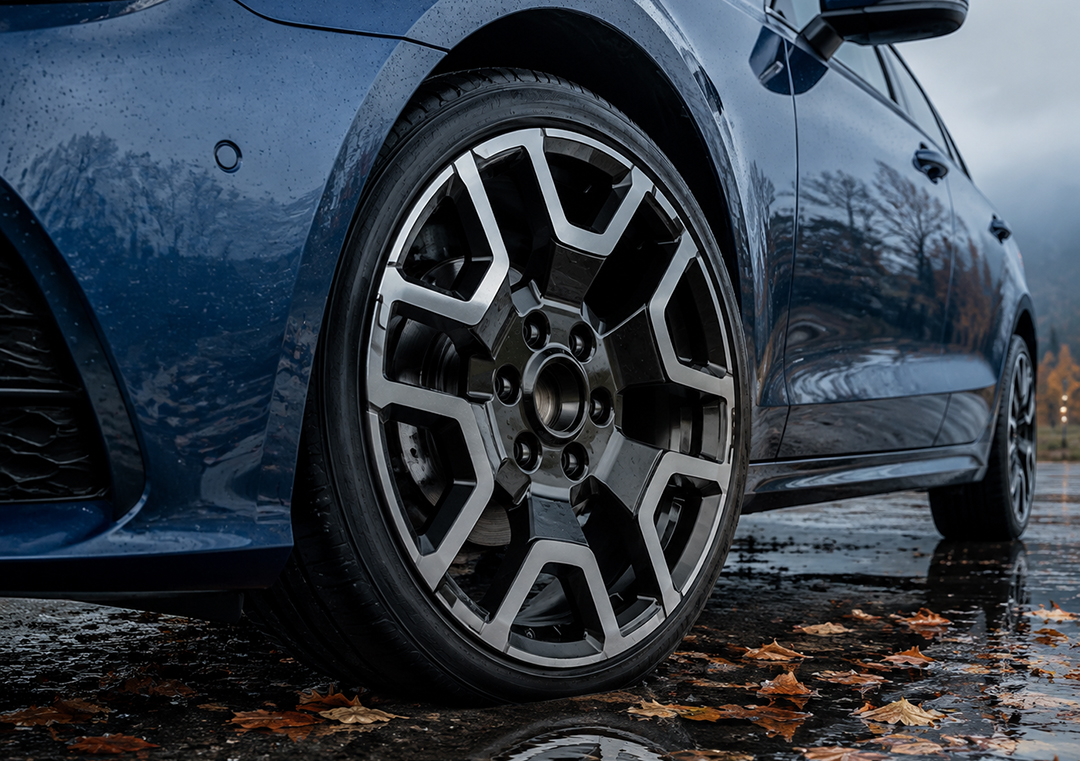
4. Performance Impact: Sizing Up vs. Keeping Stock Dimensions
Upgrading to larger rims—often called Plus-Sizing or Plus-One Tuning—is a popular performance and visual enhancement. However, changing your rim size requires careful consideration of mechanical trade-offs.
       STOCK SETUP                     PLUS-ONE SETUP
    (17" Rim + Tall Sidewall)        (18" Rim + Short Sidewall)

       /-------------\                  /-------------\
      /   Tire Rubber \                /   Tire Rubber \
     |   +-----------+ |              |   +-----------+ |
     |   |  17" Rim  | |     ===>     |   |  18" Rim  | |
     |   +-----------+ |              |   +-----------+ |
      \               /                \               /
       \-------------/                  \-------------/
    [Overall Outer Diameter Remains identical]
What Happens When You Plus-Size?
When moving from a 17-inch to an 18-inch or 19-inch rim, you must lower the tire’s aspect ratio (sidewall height) so that the overall rolling diameter of the tire remains identical to stock factory specifications.
The Benefits of Plus-Sizing
-
Sharper Turn-In Response: Shorter tire sidewalls flex significantly less under cornering forces, delivering immediate steering feedback.
-
Enhanced Aesthetics: Fills out the wheel arches for a sportier, more aggressive stance.
-
Room for Larger Brakes: Broader rim diameters allow you to install aftermarket big brake kits (BBKs) for increased stopping power.
The Trade-Offs of Larger Rims
-
Firm or Harsh Ride Quality: Reduced rubber sidewall height provides less cushion over road bumps, surface expansion joints, and potholes.
-
Higher Risk of Damage: Lower-profile tires offer minimal structural defense against pothole impacts, leaving rims vulnerable to bends or hairline cracks.
-
Increased Unsprung Mass: Heavy cast rims can slow down suspension dampening cycles and slightly reduce off-the-line acceleration.
5. Maintenance and Protection Practices
High-quality tire rims are a financial investment. Preserving their structural integrity and surface finish requires dedicated maintenance routines:
Regular Cleaning Routines
-
Avoid Harsh Household Chemicals: Acid-based cleaners can strip clear coats, cloud polished aluminum, or stain anodized finishes. Use pH-neutral wheel cleaners designed specifically for automotive wheels.
-
Cool Down Before Washing: Never spray cold water or cleaning solvents onto hot rims immediately after driving. Thermal shock can warp brake rotors and damage the rim finish.
-
Use Soft Microfiber Tools: Avoid stiff bristle brushes or abrasive pads that leave micro-scratches on painted or polished clear coats.
Protective Coatings
Applying a dedicated ceramic coating or high-temperature synthetic rim wax creates a hydrophobic barrier. This prevents hot metallic brake dust from burning into the clear coat, making future wash cycles effortless.
Seasonal Storage Tips
If you run dedicated winter and summer rim sets:
-
Wash off all road salt and grime thoroughly before storing.
-
Let the wheels dry completely to prevent corrosion under center caps or around valve stems.
-
Store rims in a temperature-controlled, dry room away from direct ozone sources like electric motors.
6. How to Choose the Best Rims for Your Vehicle Type
Match your selection to your specific driving habits and vehicle platform:
Daily Commuters & Sedans
-
Focus: Fuel economy, long-term durability, and ride comfort.
-
Recommendation: Stick to stock diameters or a +1 sizing setup using durable flow-formed alloy options. Choose silver, gunmetal, or satin black painted finishes that withstand daily car washes and variable weather.
Off-Road Trucks & SUVs
-
Focus: Structural load ratings, impact resistance, and tire bead retention.
-
Recommendation: Select heavy-duty cast or forged rims with generous load capacity ratings. Look for beadlock-style or true beadlock setups if you plan on airing down tires for low-traction trail driving. Smaller rim diameters paired with taller, knobby all-terrain tires provide optimal off-road cushion.
Sports Cars & Performance Vehicles
-
Focus: Unsprung weight reduction, structural rigidity, and brake cooling.
-
Recommendation: Prioritize flow-formed or high-grade forged aluminum rims. Look for lightweight multi-spoke designs that optimize heat release from performance brake calipers while cutting rotational mass.
Frequently Asked Questions(FAQ)
1.What are tire rims and why are they important?
Tire rims are the structural metal components of a wheel assembly that hold and support the tire. They establish an airtight seal with the tire bead, ensure proper fitment to the vehicle hub, and directly influence handling, braking performance, road stability, and aesthetic style.
2.How do I know what size tire rims fit my car?
To determine proper fitment, verify your vehicle’s factory specifications:
-
Recommended rim diameter and width.
-
Bolt pattern (e.g., 5×114.3 or 5×120).
-
Offset (ET range) and hub bore measurement.
-
Clearance around brake calipers and suspension struts.You can find these details printed on your tire placard inside the driver’s door jamb, inside your owner’s manual, or stamped on the back of your factory rim spokes.
3.Can any tire fit any rim?
No. A tire must be paired with a rim that matches its precise inner bead diameter (e.g., an 18-inch tire requires an 18-inch rim). Furthermore, the rim width must fall within the tire manufacturer’s approved width range. Mounting a tire on an improperly sized rim compromises safety, accelerates tread wear, and degrades handling.
4.What is the difference between tire rims and wheels?
Technically, the rim is the outer circular edge of the wheel that secures the rubber tire. The wheel refers to the entire metal structure, including the mounting hub and spokes. In casual automotive conversations, drivers and shops often use “rims” and “wheels” to describe the same item.
5.Do wider tire rims improve vehicle performance?
Yes, wider tire rims can boost handling performance when paired with appropriately sized wide tires. A wider base increases the tire’s contact patch with the road and reduces sidewall flexing under high cornering forces. However, the rim width must stay within the tire’s approved manufacturer limits to avoid rim damage or bead separation.
Elevate Your Ride Today
Upgrading your vehicle with a engineered set of tire rims elevates performance, improves safety, and transforms aesthetic appeal. Whether you want to cut unsprung weight on a sports coupe, tackle challenging off-road trails, or refresh your daily commuter’s look, choosing proper specifications ensures lasting performance.
Ready to transform your vehicle’s look and road response? Explore the extensive collection of precision-engineered alloy and performance wheels at ATK Wheels to find the ideal match for your vehicle today.

