
The Complete Car Rims Manual: Choose, Fit, and Upgrade Like a Pro
The Complete Car Rims Manual: Choose, Fit, and Upgrade Like a Pro
Upgrading your car rims is one of the most effective ways to transform your vehicle’s overall performance, handling, and street presence. Whether you want to replace damaged stock wheels, set up dedicated winter tires, or give your daily driver an aggressive custom stance, choosing the right set involves much more than picking a stylish design.
Selecting improper car rims can lead to tire rubbing, inaccurate speedometer readings, premature suspension wear, or dangerous safety hazards. This manual breaks down everything you need to know about aftermarket and OEM car rims, from materials and manufacturing methods to precise sizing and fitment metrics.
+-------------------------------------------------------------------+
|                        COMPLETE WHEEL ASSEMBLY                    |
|                                                                   |
|   +-----------------------------------------------------------+   |
|   |                        TIRE RUBBER                        |   |
|   |   +---------------------------------------------------+   |   |
|   |   |                    CAR RIM                        |   |   |
|   |   |            (Outer Circular Lip Edge)              |   |   |
|   |   |   +-------------------------------------------+   |   |   |
|   |   |   |   SPOKES  |  CENTER HUB  | LUG HOLES      |   |   |   |
|   |   |   +-------------------------------------------+   |   |   |
|   |   +---------------------------------------------------+   |   |
|   +-----------------------------------------------------------+   |
+-------------------------------------------------------------------+
1.Car Rims vs. Wheels: Clearing Up the Confusion
Before diving into specifications, it helps to clarify common industry terminology. Many drivers, mechanics, and auto enthusiasts use the terms “rims” and “wheels” interchangeably, but technically, they refer to different components of the same assembly.
-
The Car Rim: The rim is specifically the outer circular barrel edge of the wheel assembly that supports and seals the tire bead. It forms the outer lip that creates an airtight seal with the tubeless tire.
-
The Wheel: The complete unit consisting of the outer rim, the structural center hub, the mounting surface, and the inner connecting spokes.
-
The Tire: The rubber outer ring that wraps around the rim barrel and contacts the road surface directly.
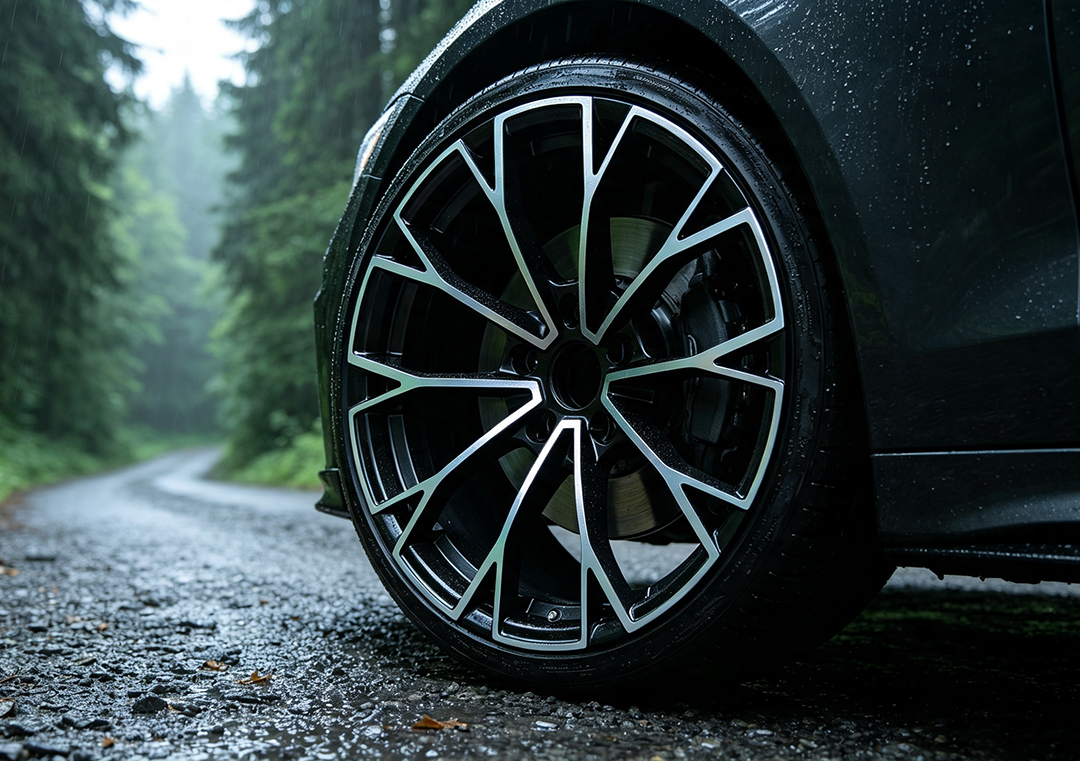
In casual auto enthusiast terminology, “car rims” almost always refers to the entire metal wheel structure. However, understanding this technical distinction helps when communicating with mechanics or ordering custom offset specifications online.
2.The Primary Materials Used in Modern Car Rims
The material composition of your car rims directly impacts vehicle dynamics, unsprung weight, structural durability, and overall budget. Modern manufacturers primarily utilize four core material classes.
                          CAR RIM MATERIALS
                                  |
    +-----------------+-----------+-----------+-----------------+
    |                 |                       |                 |
Steel Rims       Cast Alloy Rims         Forged Alloy Rims    Carbon Fiber
(Heavy/Cheap)   (Standard Balance)      (Strong/Lightweight)  (Track Only)
1. Steel Rims
Steel rims are stamped from heavy-duty steel and welded together. They represent the standard factory equipment on budget vehicles, base trims, commercial trucks, and temporary spare tires.
-
Pros: Highly durable, extremely resistant to cracking under heavy impact, easily bent back into shape if damaged, and significantly less expensive to replace.
-
Cons: Extremely heavy (increasing unsprung weight), poor thermal conductivity for brake cooling, and limited to basic aesthetic styles (often requiring plastic hubcaps).
-
Best For: Winter driving setups, heavy-duty commercial applications, and budget-conscious drivers prioritizing pure utility.
2. Cast Aluminum Alloy Rims
Alloy rims dominate the modern automotive market. They are manufactured by pouring molten aluminum mixed with nickel or magnesium into a precise wheel mold. Cast alloy options are produced via gravity casting or low-pressure casting.
-
Pros: Highly versatile design options, lighter than steel, excellent heat dispersion from brake systems, and budget-friendly price points for aftermarket customization.
-
Cons: More brittle than forged metal or steel, making them prone to cracking under high-impact pothole strikes rather than bending.
-
Best For: Everyday commuter cars, street builds, and drivers seeking a balance of style, lightweight handling, and value.
3. Forged Aluminum Rims
Forged alloy rims represent the benchmark for performance vehicles. Instead of pouring liquid metal into a mold, forged wheels start as a solid billet of aerospace-grade aluminum. This billet is subjected to immense pressure and heat, crushing the metal grain structure into extreme density before being precision CNC-machined into the final design.
-
Pros: Exceptionally strong, structurally rigid, extremely lightweight, highly resistant to cracking under extreme forces, and ideal for reducing unsprung vehicle mass.
-
Cons: Significantly higher cost due to complex manufacturing and specialized material processing.
-
Best For: Sports cars, high-performance track builds, luxury sport sedans, and off-road builds demanding ultimate strength.
4. Carbon Fiber Rims
Carbon fiber wheels utilize woven carbon fiber composite structures bound with specialized high-temp resins. While historically restricted to hypercars and supercars, they are gradually entering the high-performance aftermarket sector.
-
Pros: Unmatched weight reduction, extreme structural stiffness, and incredible steering response.
-
Cons: Extremely expensive, difficult to repair if structurally damaged, and vulnerable to deep curb abrasions.
-
Best For: Dedicated professional track racing vehicles and exotic hypercars.
3.Material Comparison Matrix
| Feature | Steel Rims | Cast Aluminum Alloy | Forged Aluminum Alloy | Carbon Fiber Rims |
|---|---|---|---|---|
| Weight | Heavy | Moderate | Light | Extremely Light |
| Strength | High (Bends on impact) | Moderate (Cracks under extreme impact) | Exceptional (Resists high loads) | Extreme (Rigid structural limit) |
| Price Point | Low | Moderate / High /Premium | ||
| Corrosion Resistance | Poor (Prone to rust) | Good (Paints/Coats well) | Excellent (Anodized/Painted) | Immunity to Rust |
| Primary Focus | Utility & Winter Use | Daily Driving & Style | Performance & Track | Exotic Hypercars |
4.Understanding Car Rim Sizes and Key Fitment Specs
Installing custom car rims requires precise engineering alignment. Buying rims based solely on visual appeal or rim diameter can result in suspension clearing issues or improper fitment over brake calipers.
       CAR RIM PROFILE SPECIFICATIONS

       |<----------- Diameter (e.g. 18") ----------->|
       +---------------------------------------------+  ---
       |                                             |   |
       |               OUTER RIM LIP                 |   | Width
       |  +---------------------------------------+  |   | (e.g. 8.5")
       |  |               SPOKES                  |  |   |
       |  |                 (O)                   |  |  ---
       |  |             CENTER BORE               |  |
       |  +---------------------------------------+  |
       |                                             |
       +---------------------------------------------+
1. Rim Diameter and Width
Car rim sizes are formatted in inches. For example, a rim labeled as 18 x 8.5 means:
-
18 Inches: The total diameter of the wheel barrel where the tire bead seats.
-
8.5 Inches: The total width of the rim barrel from inner flange to outer flange.
2. Bolt Pattern (PCD – Pitch Circle Diameter)
The bolt pattern determines whether the mounting holes on the rim align with the wheel studs on your vehicle’s hub. It is represented by two numbers: 5×114.3 or 4×100.
-
The first number represents the total count of lug holes (e.g., 5 lugs).
-
The second number represents the diameter of the imaginary circle formed by the lug holes in millimeters (e.g., 114.3 mm).
Never force a rim onto a vehicle with an incorrect bolt pattern. Always verify your exact factory specification before ordering aftermarket custom sets.
3. Wheel Offset (ET)
Wheel offset refers to the distance in millimeters from the hub mounting surface to the true centerline of the wheel width. It dictates how far inward or outward the wheel sits inside the fender well.
       POSITIVE OFFSET (+)       ZERO OFFSET (0)        NEGATIVE OFFSET (-)

          |   Mounting             |   Mounting             |   Mounting
          |   Surface              |   Surface              |   Surface
       +--v------------+        +--v------------+        +--v------------+
       |   |           |        |       |       |        |           |   |
       |   |           |        |       |       |        |           |   |
       +---------------+        +---------------+        +---------------+
         Hub face shifted         Hub face directly        Hub face shifted
         towards FRONT            on CENTERLINE            towards REAR
       (Deep in fender)         (Balanced position)      (Aggressive push-out)
-
Positive Offset (+ET): The mounting face sits closer to the front face of the rim. Common on modern front-wheel drive and all-wheel drive passenger vehicles.
-
Zero Offset (0 ET): The mounting face aligns directly with the wheel’s structural centerline.
-
Negative Offset (-ET): The mounting surface sits deep toward the back of the rim, pushing the wheel outward away from the vehicle body. Popular for widebody builds and off-road trucks.
4. Center Bore and Hub-Centric Rings
The center bore is the machined hole located on the back of the rim center hub that seats directly onto the vehicle’s hub flange.
-
Hub-Centric Fitment: The rim’s center bore matches the vehicle’s hub flange exactly. The hub bears the vehicle’s weight.
-
Lug-Centric Fitment: The center bore is larger than the vehicle’s hub. The lug studs bear the weight, which can cause high-speed steering vibration.
If your aftermarket rims have a larger center bore than your car’s hub, install hub-centric rings to eliminate vibration and bridge the gap cleanly.
5.How Upgrading Car Rims Affects Driving Performance
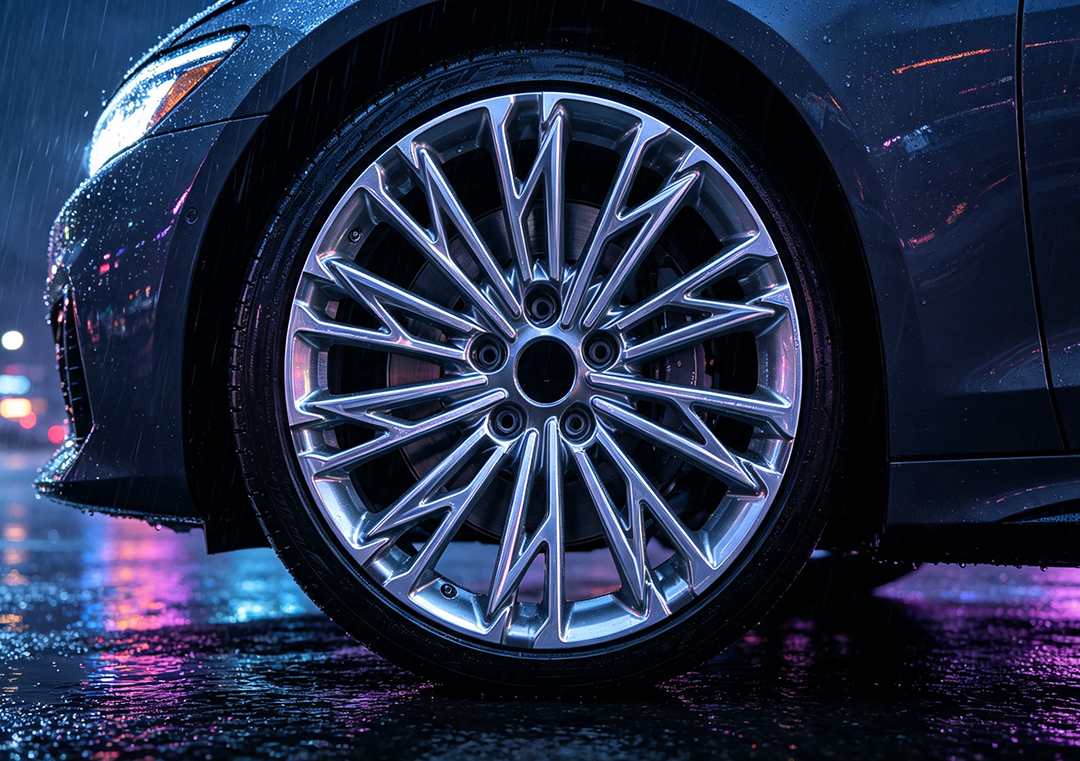
Upgrading your factory car rims alters vehicle geometry, unsprung mass, and contact dynamics with the pavement.
                    VEHICLE IMPACT SPECTRUM

          PLUS-SIZING                          FORGED LIGHTWEIGHTING
 (Larger Rims / Thinner Tires)                 (Lighter Wheel Weight)
              |                                          |
   +----------+----------+                    +----------+----------+
   |                     |                    |                     |
Improved             Firmer Ride         Faster Engine          Better Fuel
Cornering Grip       Quality             Acceleration           Efficiency
Unsprung Weight vs. Sprung Mass
Sprung mass refers to everything supported by your car’s suspension system (engine, chassis, passengers). Unsprung weight includes parts below the suspension springs (rims, tires, brake rotors, control arms).
Reducing unsprung weight with lightweight alloy or forged rims allows your vehicle’s suspension to react significantly faster over uneven pavement, maintaining tighter contact with the road, sharpening steering turn-in response, and improving braking performance.
Plus-Sizing Rims (Upsizing)
Plus-sizing involves increasing your rim diameter while choosing lower-profile tires to maintain the exact same overall rolling circumference.
-
Plus-One Setup: Replacing a factory 17-inch rim with an 18-inch rim paired with a shorter tire sidewall.
-
Benefits: Reduces tire sidewall flex, sharpens steering response, allows room for larger high-performance brake setups, and creates a sportier vehicle profile.
-
Trade-Offs: A thinner tire sidewall absorbs fewer road impacts, resulting in a firmer ride quality. It also increases the risk of damage from deep potholes.
6.Proper Maintenance to Keep Car Rims Looking New
Environmental contaminants like corrosive metallic brake dust, road salt, chemical de-icers, and grit can rapidly dull painted, machined, or polished rim finishes. Follow this structured care routine to extend the lifespan of your finish:
                  RIMS MAINTENANCE WORKFLOW

     +--------------------------------------------------+
     | 1. Cool Down: Allow wheels & brakes to drop temp  |
     +--------------------------------------------------+
                              |
     +--------------------------------------------------+
     | 2. Pre-Rinse: Blast away surface grit with water |
     +--------------------------------------------------+
                              |
     +--------------------------------------------------+
     | 3. Cleanse: Spray pH-balanced dedicated cleaner  |
     +--------------------------------------------------+
                              |
     +--------------------------------------------------+
     | 4. Scrub: Use soft microfiber wheel brushes      |
     +--------------------------------------------------+
                              |
     +--------------------------------------------------+
     | 5. Protect: Apply synthetic wax or ceramic seal  |
     +--------------------------------------------------+
-
Use pH-Balanced Cleaners: Avoid generic harsh household degreasers or acidic wheel cleaners, which can etch clear coats or cloud anodized finishes over time.
-
Use Soft Microfiber Brushes: Never scrub alloy or painted rims with stiff wire brushes or abrasive scouring pads.
-
Apply Ceramic Protection: Protect new alloy car rims by applying dedicated ceramic wheel coatings or synthetic rim wax to prevent hot brake dust from burning into the clear finish.
-
Winter Wash Schedule: If driving through regions that spread road salt during winter, wash rims frequently to prevent corrosion around the valve stems and rim bead seals.
Frequently Asked Questions(FAQ)
1.What is the difference between car rims and wheels?
A rim is specifically the outer circular edge of a wheel that holds the tire in place, while a wheel includes the rim, center hub, and spokes as a complete unit. However, the two terms are often used interchangeably in everyday conversation.
2.What is the best material for car rims?
Aluminum alloy is the most popular material because it offers a great balance of light weight, strong performance, stylish designs, and reasonable cost. Steel is more affordable and durable for heavy-duty or winter use, while carbon fiber and forged aluminum offer peak performance at a premium price.
3.How do I know what rim size fits my car?
You can find your rim size on the tire sidewall (e.g., the “17” in 205/55R17), inside the driver’s side door jamb sticker, or in the owner’s manual. Key parameters to check include diameter, width, bolt pattern, and offset.
4.Do bigger car rims affect gas mileage and performance?
Yes. Larger rims are generally heavier, which can reduce fuel efficiency and slow down acceleration. However, they allow for wider tires with lower profiles, improving cornering grip and overall handling.
5.Can I replace my steel rims with alloy rims?
Yes, switching from steel to alloy rims is a common upgrade that reduces unsprung weight, enhances vehicle handling, and improves appearance. Just ensure the new alloy rims match your vehicle’s correct bolt pattern, offset, and center bore.
Upgrade Your Vehicle with ATK Wheels
Ready to elevate your vehicle’s performance, style, and handling capabilities? Finding the ideal set of custom car rims requires high-grade materials, reliable manufacturing, and exact fitment accuracy.
At ATK Wheels, we offer a broad lineup of cast, flow-formed, and forged alloy options tailored specifically for modern passenger cars, sports coupes, crossovers, trucks, and SUVs. Whether you need lightweight performance setups, rugged off-road durability, or sleek street aesthetics, our team can help you select the exact bolt pattern, width, and offset specs for your vehicle.
Browse our online catalog at ATK Wheels today, or reach out to our fitment specialists to select your next set of premium car rims!

