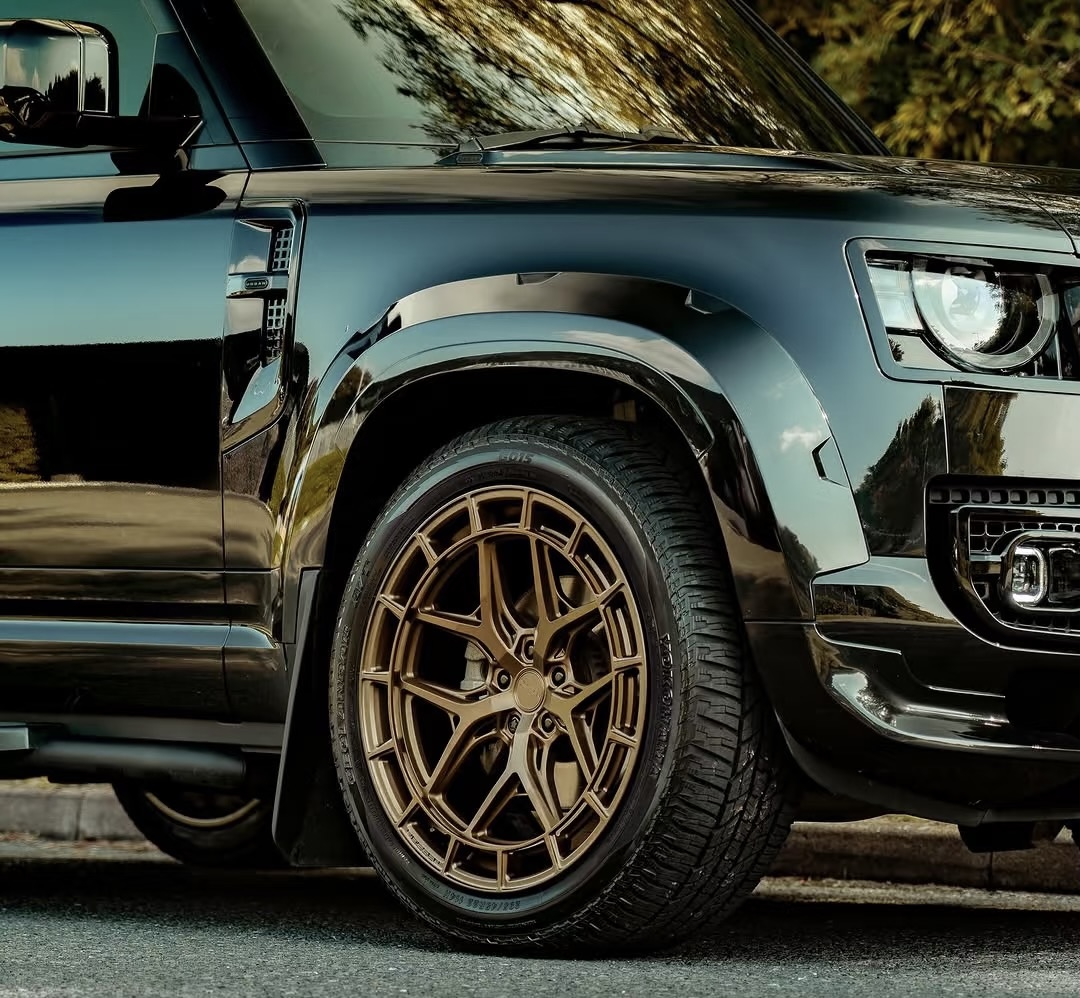
The Complete Blueprint to Custom Automobile Rims: Upgrade Your Ride’s Performance and Style
The Complete Blueprint to Custom Automobile Rims: Upgrade Your Ride’s Performance and Style
When automotive enthusiasts look to transform a vehicle’s appearance, boost dynamic handling, or express personal style, the first upgrade on the checklist is almost universally a set of custom automobile rims.
While factory wheels (often referred to as OEM or Original Equipment Manufacturer wheels) are designed for low-cost mass production and middle-of-the-road aesthetic appeal, aftermarket custom rims offer precision engineering, reduced structural weight, and distinctive visual presence.
Whether you drive a daily commuter sedan, a high-performance muscle car, an off-road truck, or a track-ready sports car, choosing the right set of custom automobile rims requires balancing mechanical fitment, material science, and design aesthetics.
1.What Are Custom Automobile Rims?
Custom automobile rims are aftermarket wheels specifically crafted to replace factory-installed equipment. Engineered using advanced metallurgical processes, custom rims allow drivers to customize visual finishes, change wheel dimensions (diameter and width), optimize vehicle stance, and improve performance characteristics such as cornering grip and acceleration.
2.Why Upgrade to Custom Automobile Rims?
Upgrading your wheels goes far beyond vanity. While a crisp, aggressive wheel design transforms a car’s silhouette, the mechanical advantages under the chassis are equally compelling.
1. Reduction of Unsprung Mass
In automotive engineering, unsprung weight refers to the mass of the components not supported by the vehicle’s suspension springs—this includes the brakes, tires, and rims.
-
Lower unsprung mass allows suspension dampers and springs to react faster to bumps and road imperfections.
-
Removing just 5 lbs per wheel translates to an immediate, noticeable reduction in rotational inertia.
-
The vehicle accelerates quicker, stops in shorter distances, and turns into corners with heightened agility.
2. Enhanced Heat Dissipation for Brakes
Aggressive driving generates extreme heat within brake rotors and calipers. High-quality custom automobile rims feature engineered spoke designs and open air passages that draw cool ambient air over brake assemblies. Superior air circulation prevents brake fade during spirited canyon drives or track sessions.
3. Customized Vehicle Stance and Track Width
Stock wheels usually sit tucked deep inside the fender wells. Custom rims let you adjust offset and wheel width so the tire sits flush with the fender lip. Widening the track width expands the vehicle’s footprint, lowering the center of gravity during high-speed cornering and giving the car a wider, more purposeful athletic stance.
3.Wheel Comparison Matrix
Understanding construction methods and specs ensures you select the right wheel for your driving habits, load requirements, and budget.
| Wheel Category | Manufacturing Process | Material Density & Strength | Weight Savings | Impact Resistance | Pricing Range | Ideal Driving Application |
|---|---|---|---|---|---|---|
| Factory OEM Rims | Low-pressure gravity casting | Standard density with conservative mass | Heavier (0% savings, optimized for low cost) | Moderate | Standard Factory Option | Everyday commuting, standard road driving |
| Cast Aluminum Rims | Molten aluminum poured into a pre-shaped mold | Standard density with minor porosity risk | Standard mass | Fair to Moderate | Budget-friendly | Daily commuting, budget builds, winter tire setups |
| Flow-Formed Rims | Cast center with heat-and-pressure spun rim barrel | High barrel density (approaching forged grain) | High (~15–20% lighter than cast) | Good | Performance value | Performance street cars, weekend track day, autocross |
| Fully Forged Rims | CNC-machined from solid T6-6061 billet aluminum block | Superior, ultra-dense continuous grain structure | Maximum (~25–30% lighter than cast) | Exceptional (Bends under extreme load instead of shattering) | Premium / High-end | Motorsports, track racing, heavy off-road, supercars |
4.Technical Fitment Breakdown: Master the Metrics
Selecting custom automobile rims requires precision. Installing incorrectly sized wheels can lead to tire scrubbing on control arms, fender rubbing, speedometer distortion, or suspension binding. Here are the key measurement specifications you must master:
1. Bolt Pattern (PCD – Pitch Circle Diameter)
The bolt pattern indicates how many lug holes exist and the diameter of the imaginary circle they form.
-
Metric Example:
5x114.3means 5 lug holes arranged around a circle with a diameter of 114.3 mm (common on Japanese and American vehicles). -
Crucial Rule: Your custom rims must match your vehicle’s factory PCD precisely, unless PCD variation bolts or adapter plates are utilized.
2. Offset (ET)
Offset is the millimeter distance from the wheel’s true centerline to the hub mounting face.
-
Positive Offset (+ET): The mounting face sits toward the front face of the wheel. Common on front-wheel-drive and modern rear-wheel-drive cars.
-
Zero Offset (ET0): The mounting face aligns perfectly with the centerline.
-
Negative Offset (-ET): The mounting face sits recessed toward the back of the wheel, pushing the rim outward. Common on lifted off-road trucks and deep-dish classic cars.
3. Center Bore (CB)
The center bore is the machined hole in the middle of the back of the rim that slides over the vehicle’s hub snout.
-
Hub-Centric Rims: The center bore matches the car’s hub snout exactly (e.g., 66.1 mm or 73.1 mm), centering the wheel load on the hub.
-
Lug-Centric Rims: The center bore is larger than the hub snout. Always use aluminum or composite hub-centric rings when fitting multi-fit aftermarket wheels to prevent high-speed wheel vibration.
4. Backspacing
Backspacing measures the distance from the rear mounting face to the innermost lip of the wheel. This metric ensures the custom rim will not collide with inner coilover struts, brake lines, or sway bar links.
5. Load Rating
Every aftermarket wheel features a specific load rating in pounds or kilograms. Always confirm that four custom rims combined can support your vehicle’s Gross Vehicle Weight Rating (GVWR) with a comfortable safety margin, especially for trucks and EV platforms carrying heavy battery packs.
5.Sizing Up: Plus-Sizing vs. OEM Specifications
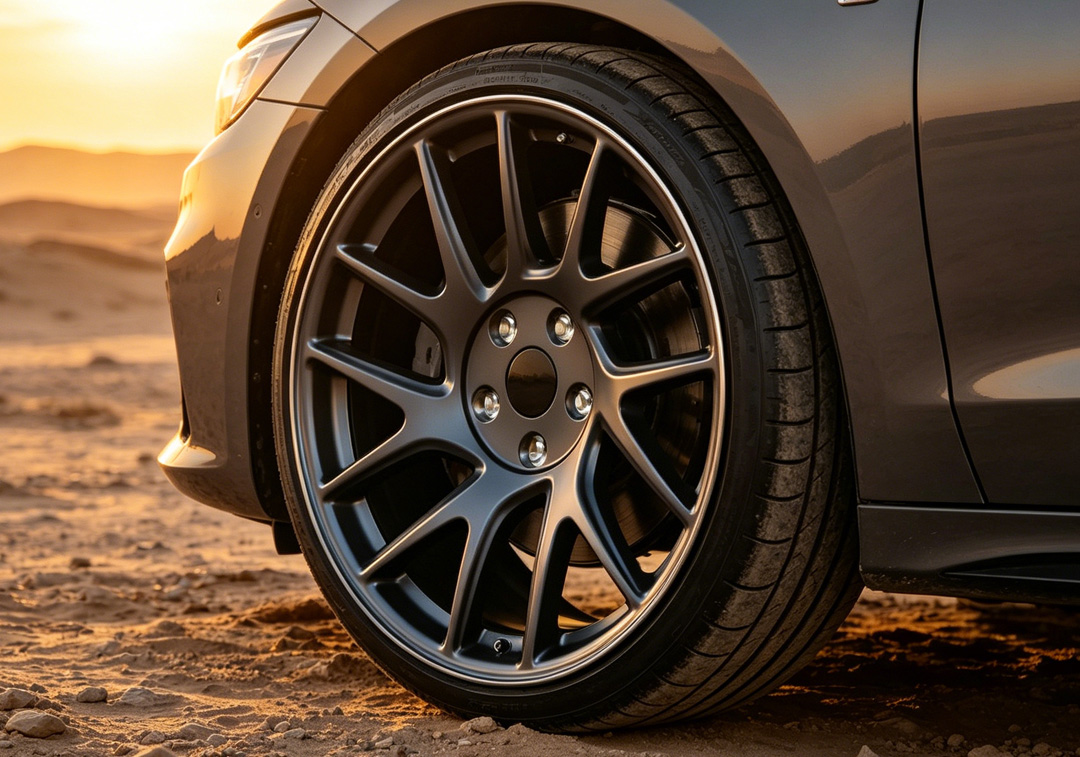
Many drivers choose to increase their wheel diameter when installing custom automobile rims. This practice is known in the industry as “Plus-Sizing”.
The Rules of Plus-Sizing
-
Plus-One: Increasing rim diameter by 1 inch while reducing tire sidewall height proportionately (e.g., swapping a 215/60R16 setup for a 225/50R17 setup).
-
Plus-Two: Increasing rim diameter by 2 inches with an ultralow-profile tire (e.g., moving from 17-inch to 19-inch wheels).
Important Safety Standard: Keep the overall rolling diameter of the new tire within ±1.5% of the original factory setup. Keeping total rolling diameter stable maintains proper speedometer readings, transmission shift logic, ABS calibration, and traction control algorithms.
6.Popular Finishes and Aesthetics
The surface finish of your custom automobile rims sets the mood for your vehicle’s overall theme.
-
Powder Coated (Matte / Gloss / Satin Black): Provides a clean, stealthy aesthetic. Powder coat offers superior protection against road salt, brake dust, and stone chips compared to wet paint.
-
Brushed Bronze / Gold: A striking choice for dark vehicles (navy blue, emerald green, mineral gray), providing high contrast without appearing tacky.
-
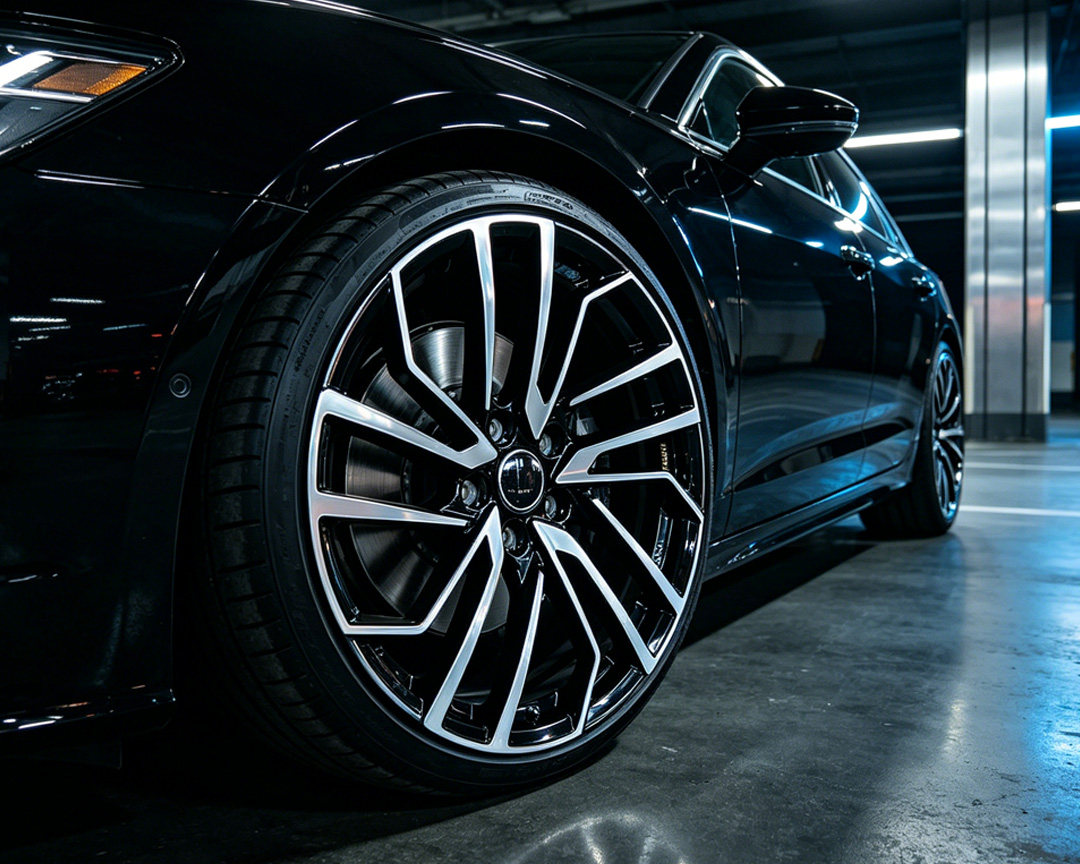
Machined Face / Diamond Cut: Combines painted inner pockets (black or gunmetal) with a precision CNC-lathed bare metal outer face, sealed with clear coat.
-
Polished / Chrome: Classic high-luster reflective finish ideal for lowriders, muscle cars, and luxury sedans.
-
Anodized Finishes: Vibrant metallic tones (red, blue, purple) often seen on high-end forged racing wheels.
7.Maintenance and Care for Custom Rims
High-end custom automobile rims require proper care to preserve their finish and structural longevity.
-
Avoid Harsh Chemicals: Avoid acidic or high-alkaline wheel cleaners. Phosphoric acid formulas degrade protective clear coats and stain anodized finishes. Use pH-neutral wheel cleaners.
-
Clean Cold Wheels Only: Never spray cool water or chemical cleaners onto hot rims right after driving. Thermal shock can warp brake rotors and damage delicate clear coatings.
-
Apply Ceramic Coating: Seal fresh custom rims with a high-temperature quartz ceramic coating. This prevents caustic metallic brake dust from burning into the wheel finish and allows wash water to sheet off effortlessly.
-
Use Microfiber Tools: Avoid stiff bristle brushes on polished or painted surfaces. Opt for soft microfiber barrel brushes and dedicated wheel wash mitts.
Frequently Asked Questions(FAQ)
1. What are custom automobile rims?
Custom automobile rims are aftermarket wheels engineered to replace factory OEM wheels. They allow vehicle owners to customize physical dimensions, structural materials, surface finishes, and fitment offsets to elevate visual style, handling response, and overall driving performance.
2. Are custom automobile rims worth the investment?
Yes, provided they are selected with proper fitment specifications and quality engineering. High-quality custom rims reduce unsprung weight for quicker acceleration and improved braking, enhance cornering performance, and boost vehicle resale value.
3. How do I choose the right custom automobile rims?
To choose the correct set, confirm your vehicle’s bolt pattern (PCD), center bore, load capacity, and offset ranges. Align your material choice (cast, flow-formed, or forged) with your budget and intended use (daily commute, track racing, or off-roading).
4. What materials are best for custom automobile rims?
Forged T6-6061 aluminum is the premium choice due to its high strength-to-weight ratio, structural durability, and impact resistance. Flow-formed aluminum serves as an excellent middle-ground option, balancing reduced weight and structural strength at an accessible price point. Cast aluminum remains a reliable choice for everyday commuting budget builds.
5. Do custom automobile rims affect vehicle performance?
Yes. Installing lightweight custom rims lowers rotational mass, resulting in faster throttle response, sharper steering turn-in, and reduced braking distances. Conversely, installing oversized, excessively heavy, or improperly fitted rims can degrade ride comfort, decrease fuel economy, and cause tire rubbing.
6. Do I need special lug nuts for aftermarket custom rims?
In most cases, yes. OEM wheels frequently use flat washer seats or ball seats, whereas the majority of custom aftermarket rims utilize tapered (60-degree conical) lug nut seats. Always match the lug nut seat type directly to the receiver holes on your custom rims.
Transform Your Ride Today
Ready to elevate your vehicle’s performance and appearance? Installing a set of precision-engineered custom automobile rims is the single most impactful modification you can make.
Explore options suited to your vehicle’s specs, confirm your fitment metrics, and step into a smoother, sharper, and more personalized driving experience.