
Rims for Cars: How to Choose the Right Size, Fitment, and Style
Rims for Cars: How to Choose the Right Size, Fitment, and Style
Upgrading the rims on your vehicle is one of the most impactful modifications you can make. It fundamentally transforms your car’s visual stance, sharpens steering response, and alters everyday ride comfort. However, navigating the aftermarket rim space requires balancing stylistic preference with strict mechanical tolerances.
Selecting the wrong wheel specs can lead to severe tire rubbing, erratic speedometer calibration, or accelerated suspension wear. This complete resource covers everything you need to know about rims for cars—from structural materials and fitment calculations to real-world performance trade-offs.
1.What Is the Difference Between Car Wheels and Car Rims?
In casual automotive conversation, drivers use the terms “rims” and “wheels” interchangeably. However, from a technical engineering standpoint, they refer to distinct structural parts:
-
The Rim: The outer cylindrical boundary of the wheel assembly that holds the tire bead in place and forms an airtight seal.
-
The Wheel: The complete metal unit comprising the hub mounting plate, spokes, barrel, and rim edge.
Featured Snippet Definition:Technically, the rim is only the outer rim edge that holds the tire in place. The wheel refers to the entire metal casting or forging, including the center hub and spokes. In everyday automotive culture, however, enthusiasts and retailers frequently use both terms to describe the entire aftermarket unit.
Understanding this structural distinction helps when consulting fitment manuals, ordering replacement parts, or discussing custom wheel builds with technicians.
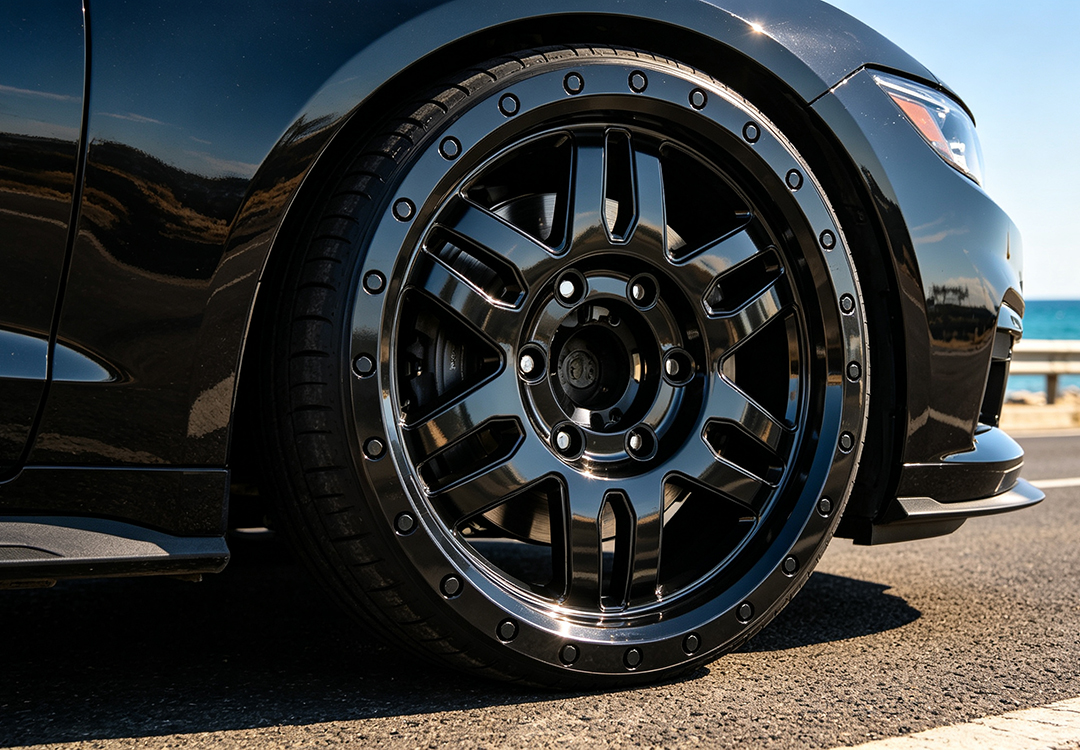
2.Wheel Materials and Manufacturing: Alloy vs. Steel vs. Forged
The material composition and manufacturing process of a wheel dictate its overall strength, total weight, thermal resistance, and retail price point.
1. Steel Rims (Stamped Steel)
Steel wheels are stamped from heavy gauge steel and welded together.
-
Pros: Highly durable, resistant to cracking under heavy impact, extremely affordable, and easy to bend back into shape if deformed.
-
Cons: Extremely heavy, prone to surface rust if unpainted, and limited to basic, utilitarian designs.
-
Best For: Winter tire setups, heavy-duty utility trucks, and budget commuter vehicles.
2. Cast Aluminum Alloy Rims
Cast alloy rims are created by pouring molten aluminum into a molded shape. Low-pressure casting improves density over standard gravity casting.
-
Pros: Light weight, high thermal conductivity (which helps dissipate brake heat), and vast aesthetic flexibility.
-
Cons: More brittle than steel or forged wheels; severe pothole impacts can cause cracking rather than bending.
-
Best For: Everyday passenger cars, daily drivers, and budget-conscious aesthetic upgrades.
3. Flow-Formed / Rotary Forged Rims
A hybrid process where a low-pressure cast wheel is spun and stretched under high pressure and temperature.
-
Pros: Near-forged tensile strength and lightweight properties at a fraction of the cost of full forging.
-
Cons: Higher price point than standard cast aluminum.
-
Best For: Performance street cars, track-day builds, and spirited driving applications.
4. Fully Forged Alloy Rims
Forged wheels are machined from a single solid billet of aerospace-grade 6061-T6 aluminum using massive hydraulic pressure.
-
Pros: Ultimate strength-to-weight ratio, structural resistance to cracking, and optimized unsprung weight reduction.
-
Cons: Premium price point, often exceeding several thousand dollars per set.
-
Best For: High-performance sports cars, luxury vehicles, and competitive motorsports.
Wheel Material & Construction Comparison
| Feature | Steel Rims | Cast Alloy Rims | Flow-Formed Alloy | Fully Forged Alloy |
|---|---|---|---|---|
| Manufacturing Process | Stamped & Welded | Molten Casting | Cast + Flow Stretch | Machined Solid Billet |
| Relative Weight | Heavy | Moderate | Light | Extremely Light |
| Structural Durability | Bends under impact | Cracks under extreme force | High impact resistance | Maximum structural integrity |
| Aesthetic Variety | Basic / Utilitarian | Extensive | Broad | Custom / High-End |
| Relative Cost | Budget /Moderate/Premium/Ultra-Luxury |
3.Key Wheel Fitment Specifications: How to Read Rims Specs
Installing aftermarket rims for cars requires matching five key parameters. Ignoring any single spec can cause brake caliper interference, body panel rubbing, or extreme mechanical stress on wheel bearings.
1. Rim Diameter and Width
Expressed as
18x8.5 (18 inches in diameter by 8.5 inches in rim bed width). Diameter dictates tire size compatibility, while width determines how wide a tire tread can be safely mounted.2. Bolt Pattern (PCD – Pitch Circle Diameter)
Expressed as
5x114.3 or 5x120.-
The first number indicates the total number of lug holes (e.g., 5 lugs).
-
The second number measures the diameter of the imaginary circle formed by the lug centers in millimeters.
3. Wheel Offset (ET)
Wheel offset (measured in millimeters) is the distance from the wheel’s true centerline to its hub mounting surface:
-
Positive Offset (+ET): The mounting hub sits closer to the outer face of the wheel. Common on front-wheel-drive passenger vehicles.
-
Zero Offset (ET0): The mounting hub aligns directly with the wheel’s physical centerline.
-
Negative Offset (-ET): The mounting hub sits inward toward the back of the wheel, pushing the outer rim edge outward toward the fender. Common on off-road trucks and widebody sports builds.
4. Center Bore and Hub-Centric Rings
The center bore is the machined hole on the back of the wheel that seats over the car’s axle hub.
-
Hub-Centric Fitment: The wheel’s center bore matches the axle hub exactly, bearing the vehicle’s weight.
-
Lug-Centric Fitment: The center bore is larger than the hub, leaving the lug studs to support the vehicle’s weight.
Important Safety Note: Always use aluminum or high-grade plastic hub-centric rings when installing lug-centric aftermarket wheels to eliminate high-speed steering wheel vibrations.
5. Backspacing
The distance from the rear mounting surface to the absolute inner edge of the wheel flange. Crucial for verifying that inner wheel barrels will clear struts, control arms, and sway bars.
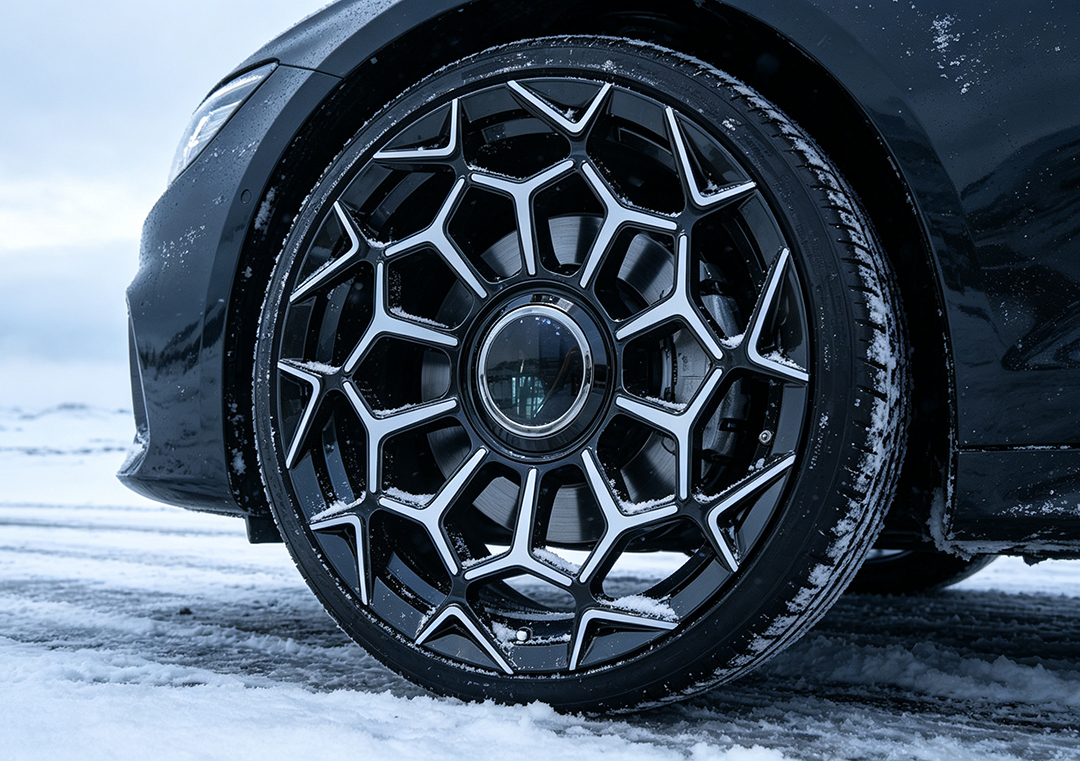
4.How Changing Rim Size Affects Vehicle Performance
Upgrading your vehicle’s factory setup by fitting larger diameter rims (a practice known as “+1” or “+2” sizing) changes performance characteristics across several vectors.
Advantages of Upsizing Rims (e.g., 16″ to 18″)
-
Enhanced Lateral Stability: Larger rims force the use of lower-profile tires with shorter sidewalls. Shorter sidewalls flex significantly less under hard cornering, improving steering precision.
-
Aggressive Aesthetics: Fills out wheel arch gaps and delivers an upgraded visual stance.
-
Brake Clearance: Provides the necessary clearance for aftermarket Big Brake Kits (BBKs) with larger multi-piston calipers and rotors.
Trade-offs of Upsizing Rims
-
Harsher Ride Quality: Thinner tire sidewalls absorb fewer surface imperfections, transferring bumps directly into the cabin.
-
Increased Unsprung Weight: Unless upgrading to forged options, larger cast wheels add unsprung weight, which increases suspension strain and slightly decreases acceleration responsiveness.
-
Pothole Vulnerability: Low-profile tires offer minimal cushioning, making larger alloy rims susceptible to lip bends or structural cracks on poor roads.
5.Step-by-Step Selection Workflow: Finding Rims for Your Car
To ensure structural safety and aesthetic fitment, follow this four-step selection process when shopping for rims for cars:
Step 1: Decode Your Vehicle’s Factory Setup
Before browsing aftermarket options, locate your baseline specifications:
-
Check the tire placard inside your driver-side door jamb for original tire dimensions and inflation levels.
-
Inspect the back of your factory wheels (or owner manual) for stamped specs such as width, offset, and PCD.
-
Confirm your factory bolt pattern and center bore dimension using an automotive database.
Step 2: Establish Your Usage Intent
Align your rim material and dimensions with how you use your vehicle:
-
Daily Commuting / Long Highway Drives: Stick to factory wheel diameters or modest +1 upgrades with high-durability cast or flow-formed alloy wheels.
-
Track Days / Enthusiast Driving: Prioritize lightweight flow-formed or forged aluminum rims to minimize rotational inertia and optimize acceleration and braking.
-
Winter & Harsh Conditions: Downsize wheel diameter by 1 inch and opt for rugged steel wheels or fully sealed, powder-coated alloy wheels paired with dedicated winter tires.
Step 3: Check Overall Tire Diameter
When changing rim sizes, ensure that the combined height of the new rim and tire matches your original setup as closely as possible. Aim to keep the overall tire diameter within 3% of the factory measurement. Maintaining this outer dimension prevents errors with your speedometer, anti-lock braking system (ABS), and traction control sensors.
Step 4: Verify Caliper and Fender Clearance
-
Confirm that the wheel spoke profile leaves sufficient clearance for brake calipers.
-
Use offset calculations to verify that the outer edge of the rim will not contact the inner fender lip when the suspension compresses.
-
Ensure that inner backspacing leaves enough room to prevent rubbing against strut bodies or steering linkages during lock-to-lock turns.
6.Wheel Maintenance and Care Best Practices
Protecting your investment in aftermarket rims for cars requires proper ongoing maintenance:
-
Avoid Acidic Cleaners: Never use harsh, acid-based wheel cleaners on polished, anodized, or custom-painted rims. Use pH-neutral wheel soaps and dedicated microfiber brushes.
-
Never Clean Hot Wheels: Washing wheels immediately after driving causes thermal shock, which can warp brake rotors or damage clear-coat finishes.
-
Torque Lug Nuts to Spec: Always use a calibrated torque wrench to tighten lug nuts in a star pattern according to your manufacturer’s specific torque ratings. Over-tightening can warp brake rotors, while under-tightening can lead to wheel separation.
-
Apply Ceramic Protection: Applying a heat-resistant ceramic coating to fresh rims prevents brake dust embedding and makes routine washing much easier.
Frequently Asked Questions (FAQ)
1.What is the difference between car wheels and car rims?
Technically, the rim is only the outer edge of the wheel assembly that holds the tire in place. The wheel includes the entire metal unit, including the rim, spokes, and center hub. However, in casual automotive contexts, the terms are often used interchangeably.
2.How do I know what size rims fit my car?
You can find your vehicle’s factory rim size on the tire placard located inside the driver-side door jamb, or check the tire sidewall markings (e.g., the “17” in 225/50R17 indicates a 17-inch rim). When buying aftermarket rims, you must also verify the bolt pattern, offset, and center bore.
3.What are the advantages of alloy rims over steel rims?
Alloy rims are lighter, which improves fuel economy, handling, and acceleration, while also offering better heat dissipation for brakes and superior aesthetic designs. Steel rims are heavier, but they are significantly more durable, cheaper to repair, and ideal for harsh winter driving conditions.
4.Does changing rim size affect vehicle performance?
Yes. Larger rims with low-profile tires offer better handling responsiveness and a sportier look, but they result in a stiffer ride and increase the risk of damage from potholes. Smaller rims allow for thicker tire sidewalls, delivering a smoother, more comfortable ride and better impact absorption.
5.Can I put bigger rims on my stock tires?
No. The inner diameter of the tire must exactly match the outer diameter of the rim. If you upgrade to larger rims (e.g., going from 16-inch to 18-inch), you must also purchase new tires designed for that specific rim diameter while maintaining overall tire height to keep the speedometer accurate.
Ready to Upgrade Your Ride’s Stance and Handling?
Selecting the right rims for cars is a balance of precision engineering and personal style. Whether you need lightweight flow-formed wheels for track days, rugged steel rims for winter commutes, or eye-catching forged upgrades for a show build, choosing the correct specs ensures safety and performance.
Explore complete fitment databases, compare top-rated rim finishes, and consult with wheel fitment specialists before finalizing your set. Check your bolt pattern and offset specs today to start transforming your vehicle’s drive and look!

