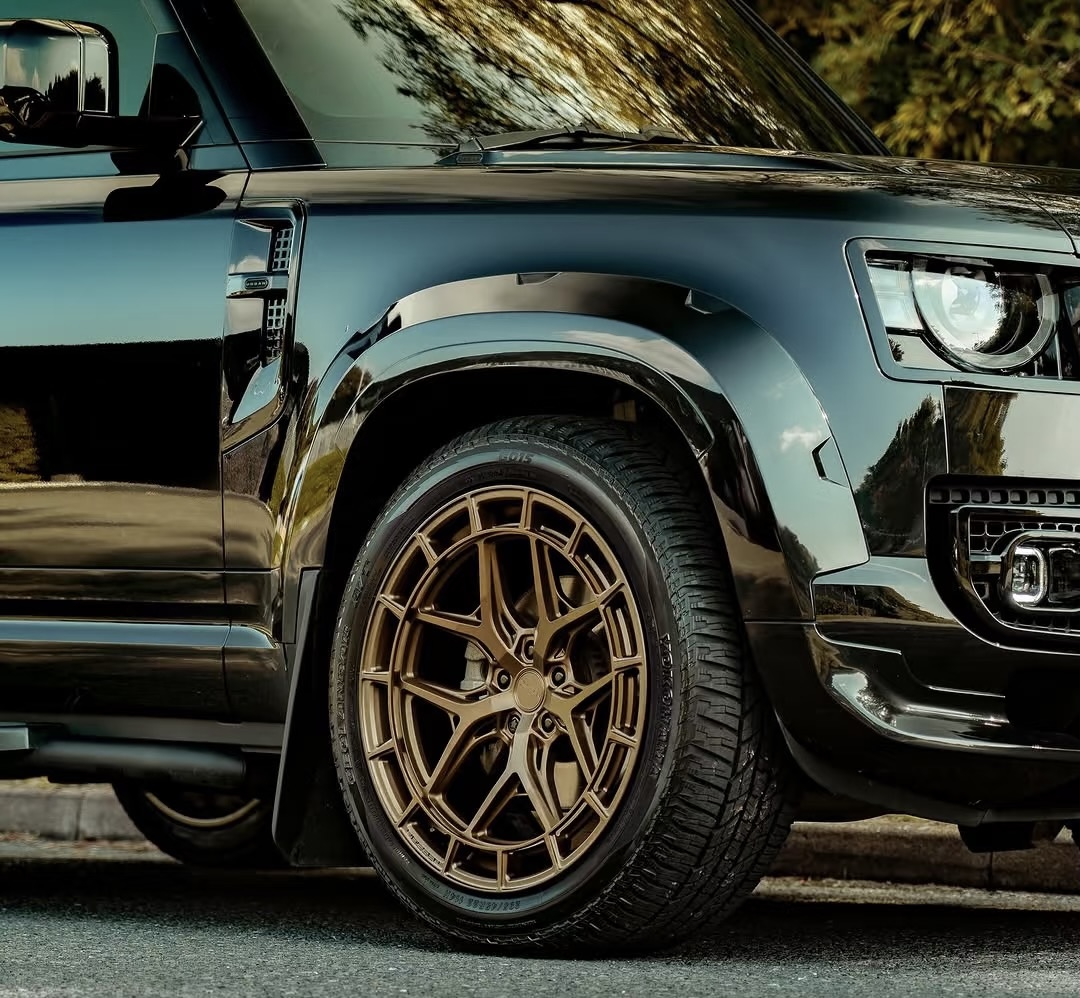
Off Road Wheels: Built for Tough Terrain, Better Control, and Real Adventures
Off Road Wheels: Built for Tough Terrain, Better Control, and Real Adventures
When you take a truck, SUV, or overland rig off the pavement, your factory setup quickly shows its limits. Stock aluminum rims are designed primarily for highway fuel economy, smooth city streets, and standard tire dimensions. The moment you air down on a jagged trail, crawl over sharp rocks, or navigate deep mud, standard highway rims risk cracking, bending, or losing their tire bead.
Upgrading to a dedicated set of off road wheels is one of the most critical modifications you can make for trail safety and vehicle performance. Beyond giving your rig an aggressive, stance-driven look, high-performance aftermarket wheels are engineered to handle massive impact loads, fit oversized all-terrain or mud-terrain tires, and stabilize your vehicle on unpredictable topography.
In this comprehensive resource, we break down everything you need to know about purchasing, sizing, and installing off road wheels built for real-world trail conditions.
1.What Makes an Off Road Wheel Different From a Regular Wheel?
Off road wheels are heavy-duty rim assemblies specifically engineered to withstand harsh multi-terrain stress, high structural impacts, and low tire pressures. Unlike standard passenger car or highway truck wheels, aftermarket trail wheels prioritize structural integrity, load capacity, and clearance over pure weight reduction.
+-----------------------------------------------------------------------+
|                       OFF ROAD WHEEL ARCHITECTURE                     |
|                                                                       |
|  [Reinforced Outer Lip] ---> Resists rock rash and rim deflection    |
|  [Thickened Spokes]     ---> Distributes heavy impact energy          |
|  [Aggressive Offset]    ---> Pushes wheel out for suspension clearance|
|  [High Load Rating]     ---> Handles heavy trail payloads & armor      |
+-----------------------------------------------------------------------+
Here are the four key engineering elements that distinguish trail-ready rims from regular street wheels:
-
Higher Load Ratings: Off-road rims feature structural load capacities ranging from 2,500 lbs to over 3,600 lbs per wheel. This accommodates heavy payloads, aftermarket steel bumpers, roof racks, and recovery gear.
-
Reinforced Wheel Lips & Thicker Spokes: To absorb sudden impacts against granite boulders or deep ruts, the outer flange (lip) and spokes are cast or forged with extra structural material.
-
Specialized Finishes: Trail environments ruin painted finishes. Quality off-road rims utilize thick powder coating, tactile matte finishes, or dual-stage clear coats engineered to resist scratch damage, trail debris, and road salt corrosion.
-
Aggressive Backspacing & Offset: Aftermarket designs are built with negative offsets to push the tire away from inner suspension components, permitting the installation of wider, 33-inch, 35-inch, or 37-inch off-road tires.
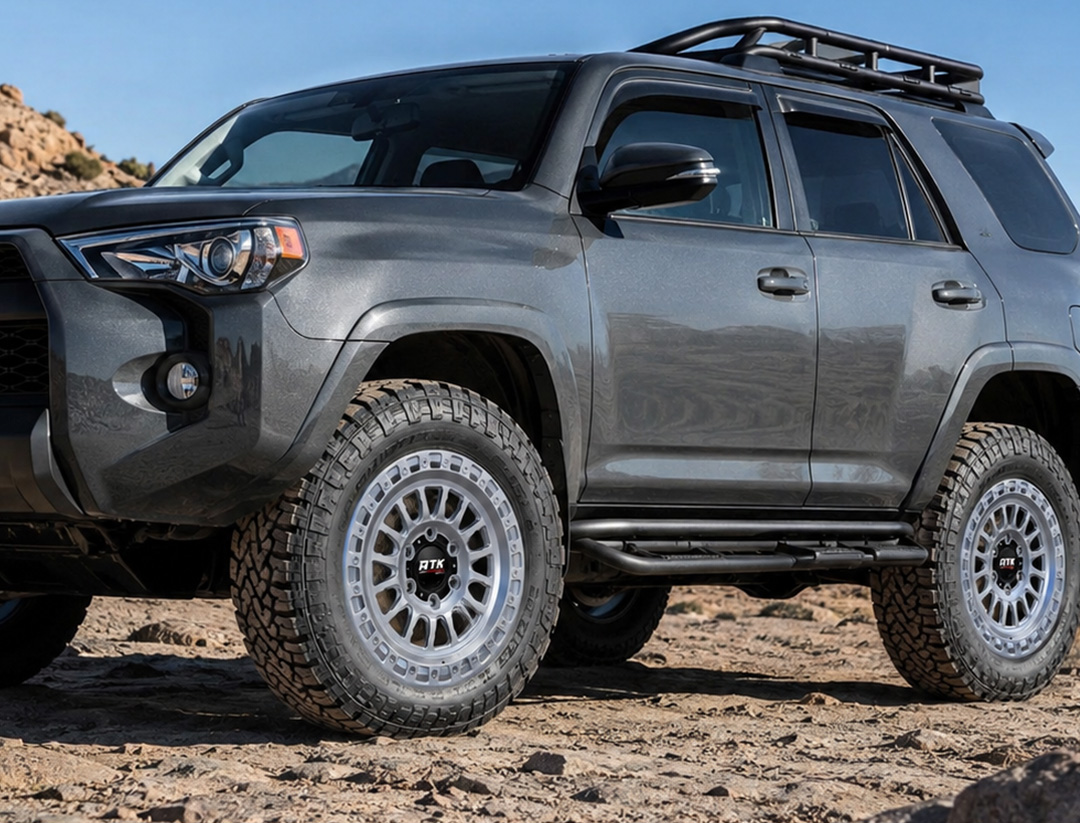
2.Steel vs. Alloy Off Road Wheels: Which Material Is Best?
One of the first decisions every off-roader faces is selecting between steel and cast/forged aluminum alloy. Both materials offer distinct trade-offs depending on your budget, driving style, and primary terrain.
| Feature / Attribute | Steel Wheels | Cast / Forged Alloy Wheels |
|---|---|---|
| Material Construction | Heavy-duty stamped steel | Aluminum alloy (A356/T6) |
| Weight | Heavy (35–50+ lbs) | Lightweight (20–30 lbs) |
| Durability & Impact | Bends under extreme stress (repairable) | Cracks under catastrophic impact (rare) |
| On-Road Handling | Sluggish steering, longer braking distances | Crisp steering, better acceleration |
| Heat Dissipation | Poor | Excellent (keeps brakes cool) |
| Price Point | Budget-friendly ($70 - $150/wheel) | Mid-to-high range ($180 - $500+/wheel) |
| Best Terrain Application | Rock crawling, mud bogs, extreme abuse | Overlanding, daily driving, desert racing |
Steel Wheels: The Unbreakable Workhorse
Steel wheels are the classic choice for budget-conscious trail riders and hardcore rock crawlers. Because steel is a ductile material, a massive impact on a boulder will usually dent or bend the rim lip rather than shatter it. On a remote trail, a bent steel lip can often be pounded back into shape with a dead-blow hammer, allowing the tire to hold air so you can drive home. However, their extreme weight increases unsprung mass, reducing fuel economy, accelerating brake wear, and slowing down highway acceleration.
Alloy Wheels: Lightweight Performance and Aesthetics
Modern aluminum alloy wheels—popularized by top-tier manufacturers like those featured at ATK Wheels—are the industry standard for daily-driven trucks and overland rigs. Aluminum is significantly lighter than steel, which dramatically reduces unsprung weight. This allows your vehicle’s suspension to react faster to bumps, improves gas mileage, and provides better braking responsiveness. While a severe impact can crack an alloy rim rather than bend it, high-end cast and forged manufacturing processes make modern alloy wheels incredibly tough.
3.Understanding Fitment: Wheel Offset, Backspacing, and Bolt Patterns
Choosing the right look is only half the battle; ensuring proper fitment without tire rub against your control arms, body mounts, or fenders requires an understanding of wheel geometry.
          OUTSIDE OF VEHICLE                  INSIDE (SUSPENSION)
                     |                                |
                     |        Hub Mounting Face       |
                     |               |                |
   Negative Offset <--               v                --> Positive Offset
(Deep Dish / Wide Stance)      [Center Line]     (Tucked In / Factory)
1. Wheel Offset (Positive, Zero, Negative)
Wheel offset is the distance from the hub mounting surface to the true centerline of the wheel, measured in millimeters:
-
Positive Offset (+): The mounting hub is toward the front face of the wheel. This keeps the tire tucked neatly inside the wheel well (standard on factory trucks).
-
Zero Offset (0mm): The mounting hub aligns directly with the wheel’s centerline.
-
Negative Offset (-): The mounting hub is recessed toward the back of the wheel. This pushes the entire wheel and tire assembly outward, creating a wide, aggressive stance.
Why does negative offset matter for off-roading? A negative offset expands your vehicle’s track width, lower center of gravity, and increases side-to-side stability on off-camber trails. Crucially, it creates the necessary inner clearance so larger 35-inch tires do not rub against upper control arms (UCAs) or frame rails during full steering lock and suspension articulation.
2. Backspacing
While offset is measured from the centerline in millimeters, backspacing measures the distance from the hub mounting surface to the back edge of the wheel lip in inches. For instance, most lifted 4×4 vehicles require a wheel with 4.5 inches of backspacing or less to clear aftermarket suspension lifts and larger steering components.
3. Bolt Patterns (PCD)
Never buy wheels without verifying your vehicle’s Pitch Circle Diameter (PCD). Common truck bolt patterns include:
-
6×139.7mm (6×5.5″): Found on Toyota Tacoma, 4Runner, Ford Bronco, Chevrolet Silverado.
-
5x127mm (5×5″): Standard on Jeep Wrangler (JK/JL) and Jeep Gladiator (JT).
-
8×165.1mm (8×6.5″): Common on heavy-duty 3/4-ton and 1-ton trucks (RAM 2500, older Ford F-250).
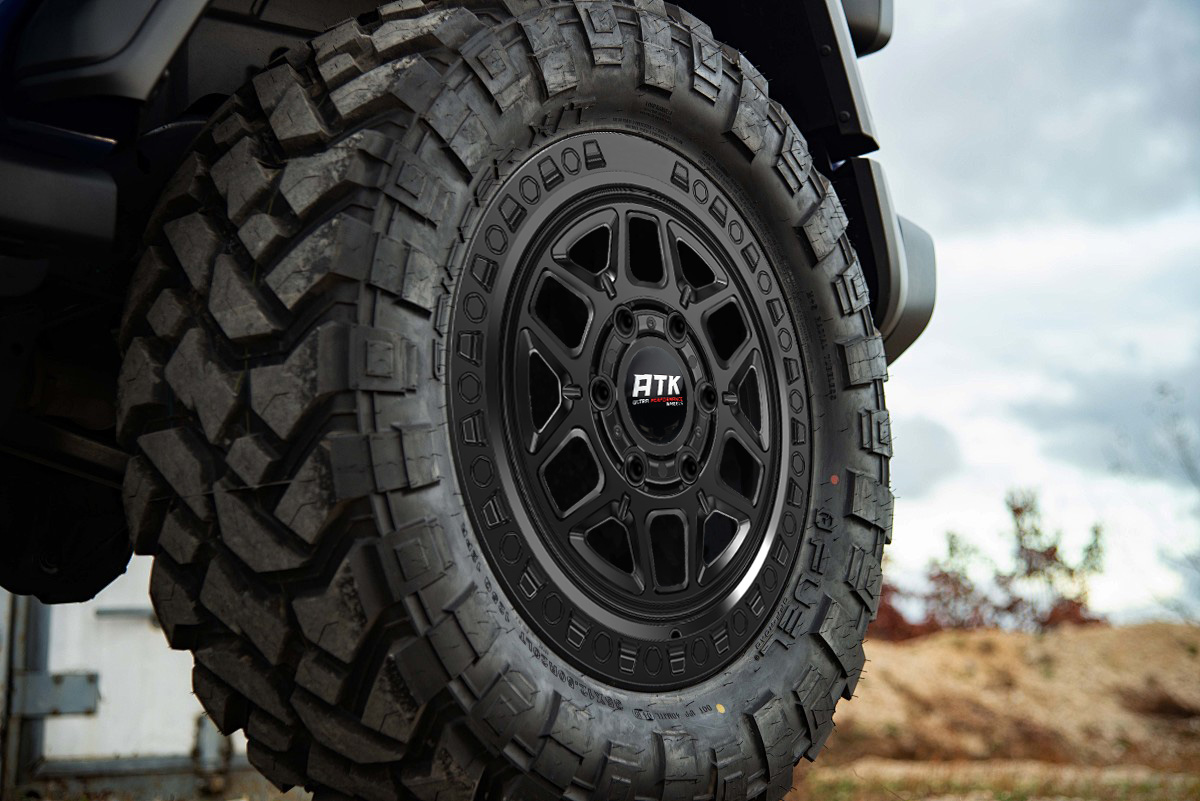
4.Beadlock Wheels vs. Standard Trail Rims vs. Bead Grip
When traversing loose sand, deep snow, or technical rock obstacles, off-road drivers lower their tire pressure (airing down to 10–15 PSI or lower). Airing down widens the tire’s contact patch, delivering massive traction improvement. However, low pressure reduces the force holding the tire bead against the rim, increasing the risk of the tire popping off the wheel entirely.
       STANDARD WHEEL                      BEADLOCK WHEEL
   +--------------------+              +--------------------+
   |   Tire Bead Seat   |              |  External Ring     |
   |   [ Air Pressure ] |              |  [ Bolted Clamp ]  |
   |   Holds Tire On    |              |  Pinch Tire Outer  |
   +--------------------+              +--------------------+
   (Risk at <15 PSI)                   (Safe at <10 PSI)
True Beadlock Wheels
True beadlock wheels utilize a mechanical clamping system. The outer tire bead is placed on the outside of the wheel flange, and a secondary forged ring is bolted down with 24 to 32 grade-8 bolts to physically lock the rubber in place.
-
Pros: Allows you to safely run ultralow pressures (3 to 8 PSI) without dropping a bead.
-
Cons: Heavy, requires constant bolt torque maintenance, expensive, and generally not DOT-approved for highway use in many regions.
Standard Wheels (Non-Beadlock)
Standard one-piece wheels rely solely on internal air pressure to push the tire bead against the inner safety humps of the rim.
-
Pros: 100% street legal, lightweight, balanced easily, low maintenance, budget-friendly.
-
Cons: Risk of unseating a tire bead if you drop air pressure below 12–15 PSI under high lateral loads.
Hybrid “Bead Grip” Technology
A rising trend in the off-road industry is safety-hump rim technology (such as Method Bead Grip or similar patented inner knurling designs). These wheels feature aggressive ridges machined directly into the bead seat to bite into the tire rubber. They let you air down safely to around 10–12 PSI without needing heavy, non-DOT-compliant mechanical locking rings.
5.How to Choose the Right Off Road Wheels for Your Vehicle
To select the ideal set of rims, align your setup with your actual driving conditions rather than just visual preferences.
+-------------------------------------------------------------------------+
|                       TERRAIN SELECTION MATRIX                          |
|                                                                         |
|  [Daily Driver / Light Trail] ---> 17-18" Alloy | 0 to -12mm Offset      |
|  [Overland / Long Distance]   ---> 17" Lightweight Alloy | Heavy Load   |
|  [Rock Crawling / Extreme]    ---> 15-17" Steel or Beadlock | High Neg. |
+-------------------------------------------------------------------------+
1. Overlanding & Long-Distance Exploration
-
Recommended Setup: 17-inch Cast/Forged Aluminum Alloy Wheels
-
Target Specs: +0mm to -12mm offset, high load rating (2,500+ lbs per wheel).
-
Rationale: Overlanding involves thousands of highway miles combined with moderate dirt trails. You need a durable, lightweight wheel that maximizes fuel economy and minimizes stress on wheel bearings while carrying camping equipment.
2. Technical Rock Crawling & Extreme Trails
-
Recommended Setup: 15 to 17-inch True Beadlocks or Heavy-Duty Steel Wheels
-
Target Specs: Deep negative offset (-24mm to -44mm), heavy backspacing reduction.
-
Rationale: Low-speed rock crawling demands maximum rubber flex and sidewall protection. Smaller wheel diameters (15–17 inches) allow for taller tire sidewalls (e.g., 37-inch tires on a 17-inch wheel), absorbing trail impacts before they reach your rim.
3. Daily Driving with Weekend Trail Use
-
Recommended Setup: 17 or 18-inch Street-Legal Alloy Wheels
-
Target Specs: -6mm to -12mm offset.
-
Rationale: Keeps the truck looking aggressive while retaining factory-like road handling, low tire noise, and simple maintenance schedules.
6.Wheel Maintenance and Trail Recovery Care
Off-road environments subject your wheels to severe abrasion, thermal shock, and chemical exposure. Follow these maintenance practices to maximize service life:
-
Torque Lug Nuts Post-Trail: Extreme vibration from washboard roads can cause wheel lug nuts to back off. Re-torque all lug nuts using a calibrated torque wrench after every major trail trip (typically 90–100 ft-lbs for light trucks, 130–150 ft-lbs for heavy-duty trucks).
-
Clean Out Packed Mud: Mud trapped inside the barrel of an alloy wheel creates a severe dynamic imbalance, leading to aggressive steering wheel vibration at highway speeds (50–70 mph). Hose out the back barrel thoroughly after mud runs.
-
Inspect Outer Lips for Burls: Rock rash creates sharp metal burrs along the outer lip of aluminum rims. File these smooth to prevent them from cutting tire sidewalls during deep flex.
-
Touch Up Powder Coating: Scratch marks through powder coating expose bare metal to moisture. Apply touch-up clear coat or high-temp enamel paint to prevent oxidation under the surrounding finish.
Frequently Asked Questions (FAQ)
Q1: What is the main difference between off road wheels and regular wheels?
Off-road wheels are built with thicker aluminum or steel material, higher structural load ratings (often 2,500 to 3,500+ lbs), and reinforced outer lips to handle high impacts. They feature scratch-resistant finishes and custom backspacing/offsets designed to accommodate wider, oversized off-road tires and aftermarket lift kits.
Q2: Are steel or alloy off road wheels better?
It depends on your application. Steel wheels are cheap, highly durable, and can be hammered back into shape if bent on the trail, making them great for budget rock crawling. Alloy (aluminum) wheels are significantly lighter, improving fuel efficiency, street handling, and heat dissipation, making them the best option for daily drivers and overland vehicles.
Q3: What does negative offset do on off road wheels?
A negative offset shifts the mounting surface inward toward the vehicle center, which pushes the wheel face further outward. This widens the vehicle’s stance for better off-camber stability and creates essential clearance inside the wheel well to keep large tires from rubbing against suspension components.
Q4: Do I need beadlock wheels for off-roading?
No. True beadlock wheels are only necessary for extreme, slow-speed off-roading (such as technical rock crawling) where tire pressures are dropped below 10–12 PSI. For general trail riding, overland travel, and daily highway driving, standard non-beadlock wheels or bead-grip wheels are safer, lighter, street-legal, and lower maintenance.
Q5: Can you use off road wheels for daily driving?
Yes, provided they are street-legal, non-beadlock alloy or steel wheels. Keep in mind that aggressive wheel offsets and heavier off-road tire combinations may slightly decrease fuel efficiency, increase road noise, and put additional wear on wheel bearings over time compared to factory setups.
Upgrade Your Rig with Performance Off Road Wheels
Ready to elevate your truck or SUV’s performance and appearance? Choosing the right wheel combination transforms your driving experience both on the highway and on rugged backcountry trails.
Explore premium, high-strength alloy wheel options engineered specifically for trucks, Jeeps, and SUVs by visiting ATK Wheels. Match your vehicle’s bolt pattern and required load ratings today to prepare your vehicle for its next off-pavement adventure.