Measuring Wheel Offset: How to Calculate Backspacing and Choose the Right Fit
Measuring Wheel Offset: How to Calculate Backspacing and Choose the Right Fit
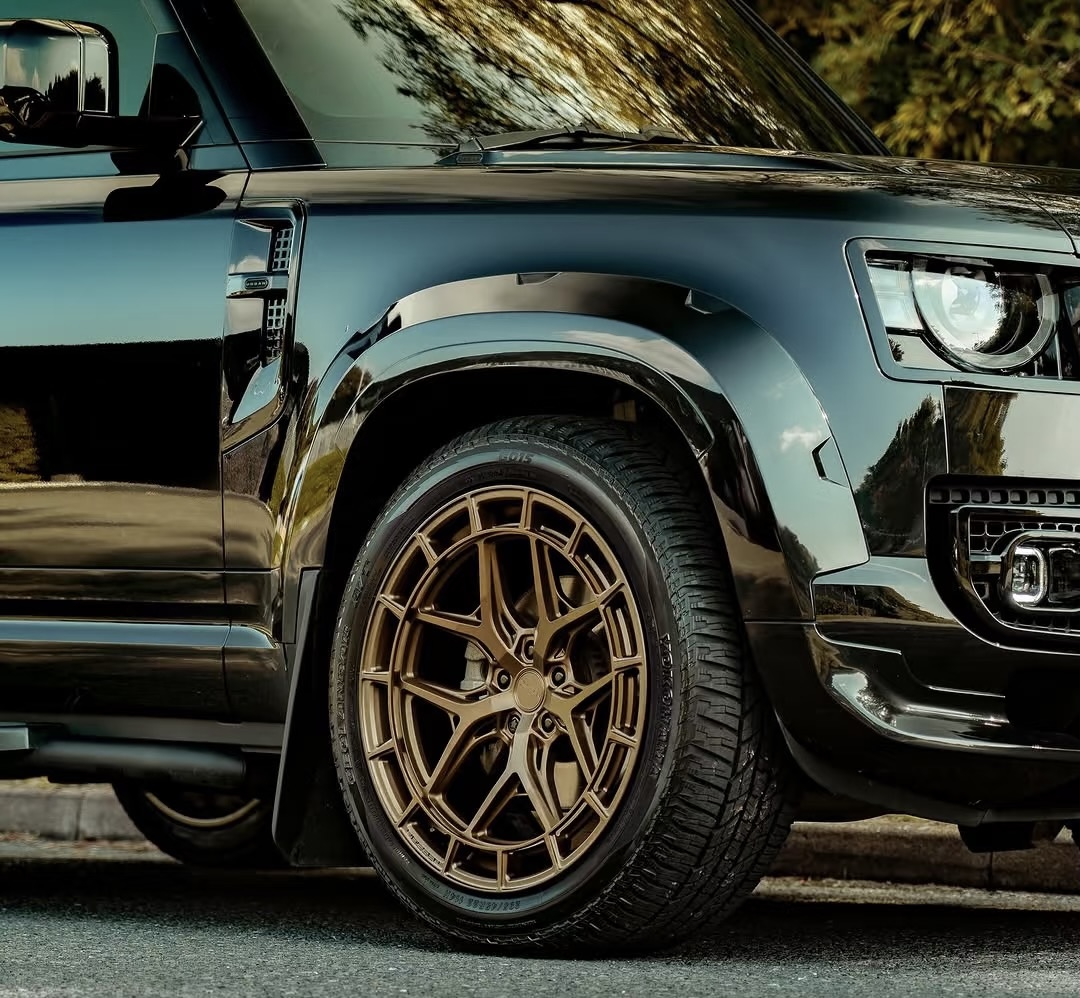
Upgrading your wheels transforms your vehicle’s stance, handling, and visual appeal. However, selecting custom wheels involves more than picking a stylish finish and bolt pattern. One critical dimension dictates whether your new setup fits flush against the fender or rubs against your suspension components: wheel offset.
Incorrect offset measurement leads to tire scrubbing, brake caliper interference, and compromised handling dynamics. This detailed breakdown explains how to measure wheel offset accurately in your workshop, ensuring a precise fitment for your truck, SUV, or performance car.
1.What Is Wheel Offset and Why Does Precision Fitment Matter?
Wheel offset measures the distance from the wheel’s true centerline to its hub mounting surface (the flat area on the back of the wheel that bolts against the brake rotor). Expressed in millimeters (mm), offset determines how far inward or outward a wheel sits inside your wheel well.
       +-----------------------------------------------+
       |                 OUTER WHEEL LIP               |
       +-----------------------+-----------------------+
                               |
                               |  <--- Centerline
                               |
               +---------------+---------------+
               |   Positive    |   Negative    |
               |   Offset (+)  |   Offset (-)  |
               |               |               |
               +---------------+---------------+
                               |
       +-----------------------+-----------------------+
       |                 INNER WHEEL LIP               |
       +-----------------------------------------------+
The Three Types of Wheel Offset
-
Positive Offset (+mm): The hub mounting pad sits closer to the front face of the wheel. This pulls the entire assembly inward toward the vehicle frame. Most modern front-wheel-drive passenger cars and crossovers use high positive offsets (+35mm to +50mm).
-
Negative Offset (-mm): The mounting pad sits closer to the back edge of the wheel. This pushes the wheel outward past the fender line, creating a deep-lip look common on lifted trucks, off-road vehicles, and classic muscle cars.
-
Zero Offset (0mm): The hub mounting surface aligns directly with the geometric centerline of the wheel.
Featured Snippet Definition:Wheel Offset is the distance in millimeters between a wheel’s mounting hub pad and its true centerline. It determines fender flushness, suspension clearance, and overall vehicle track width.
2.Key Terms: Wheel Width vs. Overall Wheel Width
A common point of confusion when measuring wheel offset involves advertised wheel width versus total overall wheel width.
-
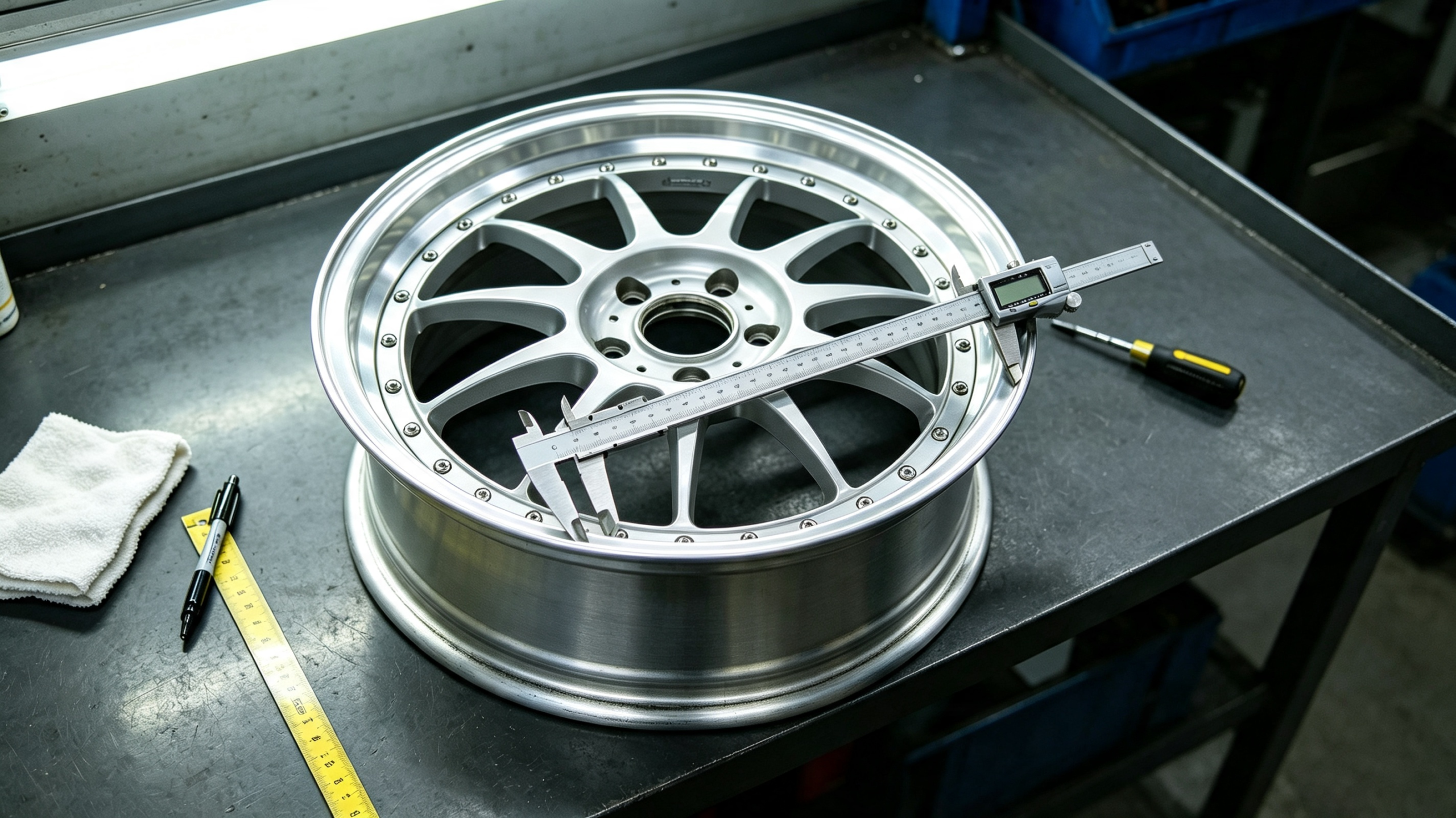
Advertised Structure Width: The distance measured inside the wheel lips where the tire bead seats. A wheel labeled as 18×8 inches has an 8-inch bead-to-bead width.
-
Overall Wheel Width: The actual distance from the outer edge of the front lip to the outer edge of the rear lip. Lip flanges typically add about 0.5 inches on each side (1.0 inch total). Therefore, an 8-inch wide wheel usually measures roughly 9.0 inches in total width from edge to edge.
Crucial Rule: Always measure the total edge-to-edge distance across the lips when finding your wheel’s centerline.
3.Tools Required for DIY Wheel Measurement
Gather these standard shop tools before taking measurements:
-
A clean, flat workbench or smooth floor surface
-
A rigid straightedge or metal ruler (long enough to span the wheel diameter)
-
A tape measure or digital caliper (measuring in inches or millimeters)
-
A notepad
-
A soft towel or cardboard sheet to protect the wheel face from scratches
4.Step-by-Step Method to Measure Wheel Offset
For accurate measurements, remove the wheel assembly from the vehicle. Unmounted wheels yield precise results because you can lay your straightedge completely flat across the rear lip.
       +-------------------------------------------------------+
       |                  RIGID STRAIGHTEDGE                   |
       +-------------------------------------------------------+
           |                                               |
           |                  BACKSPACING                  |
           v                                               v
       +-------+                                       +-------+
       | Outer |                                       | Rear  |
       | Lip   |===================|===================| Mounting
       |       |              Centerline               | Pad   |
       +-------+                                       +-------+
           ^                                               ^
           |              OVERALL WHEEL WIDTH              |
           +-----------------------------------------------+
1. Position the Wheel
Lay the wheel face-down on a protective towel or piece of cardboard on a flat surface. Ensure the wheel sits level without tipping.
2. Measure Total Wheel Width
Place your straightedge flat across the back edge of the wheel flange. Use your tape measure to find the total width from the outermost edge of the front lip to the outermost edge of the back lip.
Example: An 18×8.5-inch wheel might measure 9.5 inches in total overall width.
3. Find the Centerline
Divide the total overall wheel width in half to locate the exact centerline.
Example: Half of 9.5 inches total width gives you a 4.75-inch centerline.
4. Measure Backspacing
Keep the straightedge flat across the rear flange of the wheel. Measure the vertical distance straight down from the underside of the straightedge to the flat hub mounting surface. This measurement is your backspacing.
Example: The distance from the rear lip edge down to the hub pad measures 5.75 inches.
5. Calculate the Offset Difference
Subtract your centerline measurement from your backspacing measurement:
Example: 5.75 inches backspacing minus 4.75 inches centerline leaves 1.0 inch.
6. Convert to Millimeters
Wheel offset is universally expressed in millimeters. Multiply your result in inches by 25.4 (since 1 inch equals 25.4 millimeters):
Example: 1.0 inch multiplied by 25.4 equals +25.4 mm (commonly rounded to a +25mm offset).
5.Understanding Backspacing vs. Offset
While both metrics specify wheel fitment, they measure from different reference points:
| Metric | Measured From | Unit of Measure | Primary Application |
|---|---|---|---|
| Offset | Wheel Centerline to Mounting Pad | Millimeters (mm) | Modern Cars, Crossovers, Tuner Fitments |
| Backspacing | Rear Lip Edge to Mounting Pad | Inches (in) | Off-Road Trucks, Classic Cars, Drag Racing |
To switch from backspacing to offset, find the difference between your backspacing and half of the total wheel width, then convert that figure into millimeters.
6.Measuring Mounted Wheels vs. Off-Vehicle Wheels
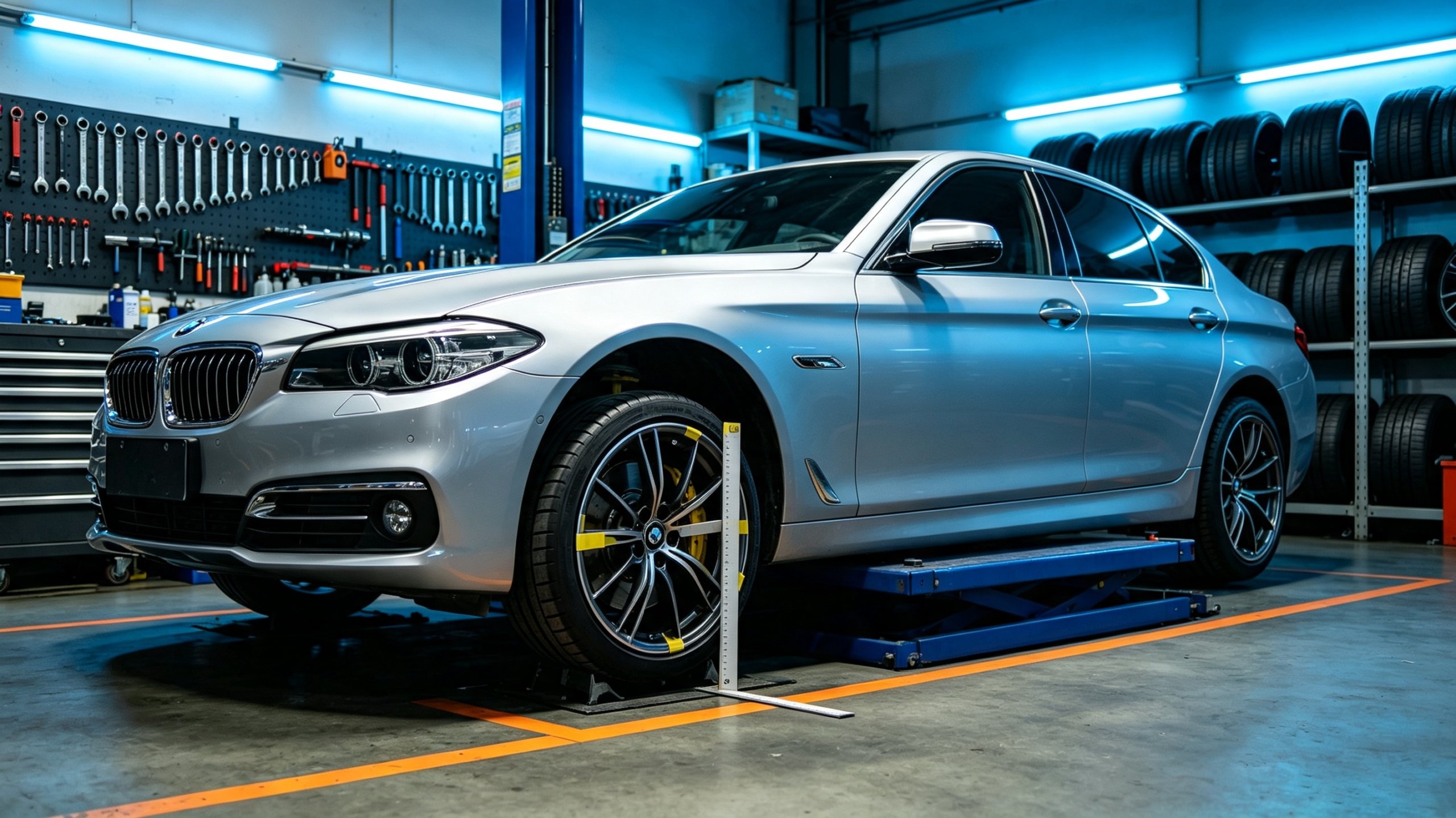
Measuring offset directly on a vehicle equipped with mounted tires is challenging due to body overhangs, suspension components, and tire sidewall bulge.
Off-Vehicle Measurement (Recommended Method)
-
Accuracy: High (+/- 1mm)
-
Accessibility: Direct access to the flat hub mounting pad and rear lip flange.
-
Requirements: Floor jack, lug wrench, straightedge, tape measure.
On-Vehicle Measurement (Estimation Method)
-
Accuracy: Moderate to Low (+/- 5mm)
-
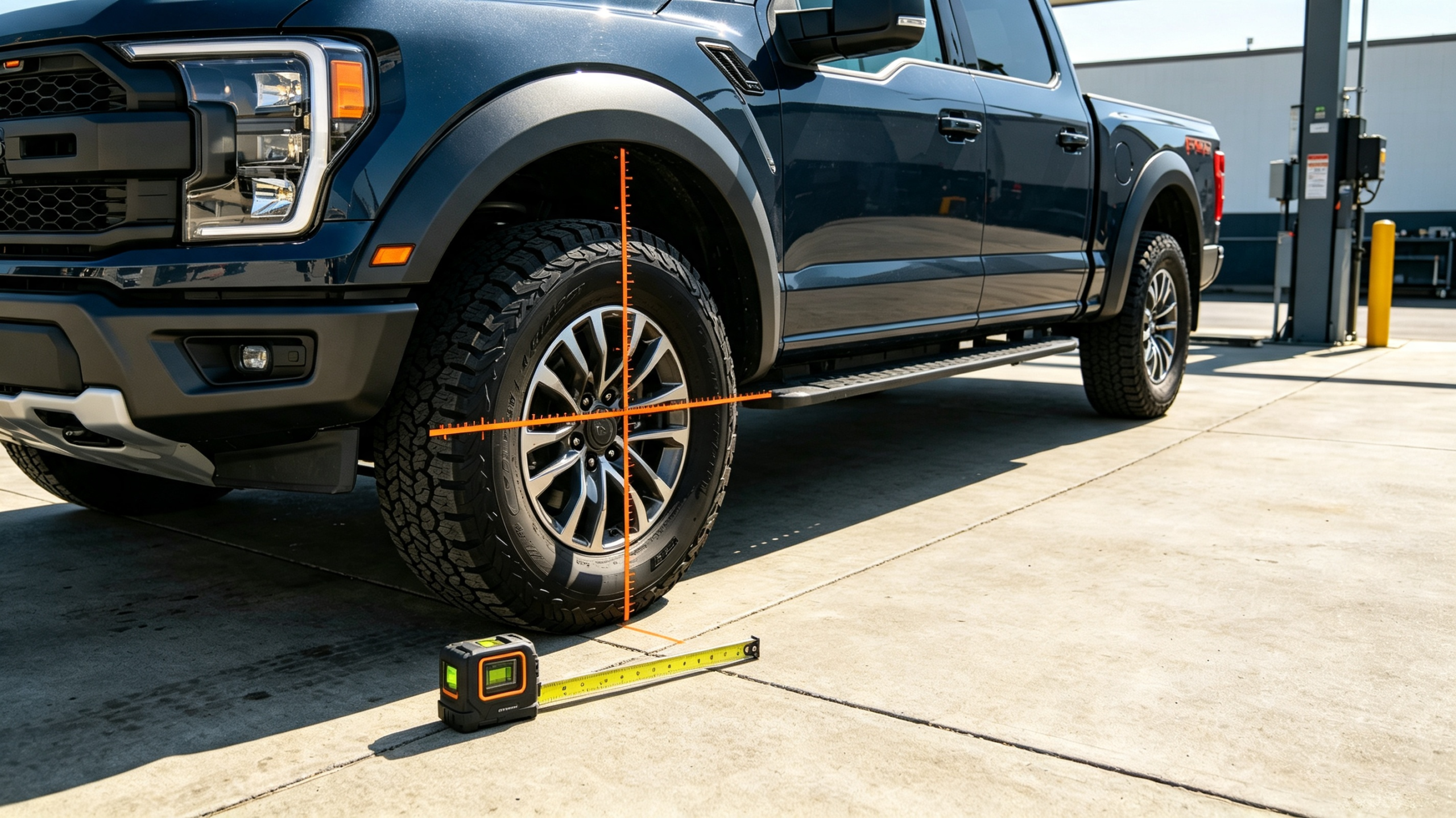
Process: Run a plumb line against the outer fender, measure the distance to the rotor mounting face, and subtract estimated tire bulge.
-
Best Used For: Quick field checks when removing the rim is impractical. For precise custom builds, off-vehicle measurement remains essential.
7.Effects of Incorrect Wheel Offset
Altering wheel offset affects suspension geometry, steering response, and component longevity. Here is how deviation from OEM specifications impacts vehicle operation:
                          HIGH POSITIVE OFFSET
                                (Inward)
                                   |
            +----------------------+----------------------+
            |                                             |
            v                                             v
Suspension Interference                       Reduced Track Width
(Rubs struts, control arms)                   (Tipped-in stance)

------------------------------------------------------------------

                          HIGH NEGATIVE OFFSET
                                (Outward)
                                   |
            +----------------------+----------------------+
            |                                             |
            v                                             v
 Fender Clearance Issues                      Bearing Stress
(Rubs outer wheel arches)                     (Increases leverage on hub)
-
Suspension Interference (High Positive Offset): Moving the wheel too far inward brings the inner lip and tire sidewall close to strut towers, sway bars, and control arms.
-
Fender Contact (High Negative Offset): Pushing the wheel outward can cause tire tread to contact the fender lip during suspension compression or sharp turns.
-
Altered Scrub Radius: Changing offset alters steering feedback and stability. Excessive changes cause steering pull under heavy braking and tramlining on rutted roads.
-
Accelerated Bearing Wear: Moving the center of tire load further outside the designed stress plane increases strain, leading to premature wheel bearing hub failure.
Frequently Asked Questions(FAQ)
1.What is wheel offset and how is it measured?
Wheel offset is the distance (in millimeters) between the wheel’s mounting surface and its centerline. It is measured by subtracting half of the overall wheel width (centerline) from the backspacing (distance from the mounting pad to the rear edge of the wheel).
2.How do you calculate wheel offset from backspacing?
Subtract half of the total wheel width from your backspacing distance. Measure both total width and backspacing using a straightedge and tape measure, then convert the final result from inches to millimeters (1 inch = 25.4 mm).
3.Can you measure wheel offset without removing the wheel?
While you can estimate backspacing with the wheel mounted, removing the wheel is strongly recommended for accurate results. Precise measurements require lay-flat access to both the outer lips and the rear mounting hub surface.
4.What is the difference between positive, negative, and zero wheel offset?
-
Positive Offset: The mounting surface is closer to the front face, pulling the wheel inward toward the suspension.
-
Negative Offset: The mounting surface is closer to the back, pushing the wheel outward past the fender.
-
Zero Offset: The mounting surface aligns perfectly with the wheel’s centerline.
5.Why is accurate wheel offset measurement important?
Incorrect offset can cause tires to rub against suspension parts or fender arches, compromise brake caliper clearance, alter vehicle handling dynamics, and accelerate wear on wheel bearings.
Upgrade Your Fitment with Confidence
Accurate measurement removes guesswork when upgrading your vehicle’s stance. Whether you need a flush street setup or aggressive off-road clearance, matching your offset specifications ensures clean fitment and reliable performance.
Explore aftermarket wheels engineered for precise application fitments at ATK Wheels. Browse wheel configurations, technical fitment specs, and wheel styles tailored for your build.