
Luxury Aftermarket Wheels: Elevate Style, Performance, and Driving Experience
Luxury Aftermarket Wheels: Elevate Style, Performance, and Driving Experience
When you pull up in a high-end sport sedan, custom exotic, or premium SUV, factory equipment rarely tells the full story. Standard OEM wheels are mass-produced compromises engineered to meet bare-minimum cost targets, broad climate conditions, and generic aesthetic tastes.
Upgrading to luxury aftermarket wheels bridges the gap between factory assembly line constraints and true automotive artistry. Whether you want to command attention at a weekend car meet, optimize unsprung weight for razor-sharp track handling, or simply give your daily luxury cruiser a bespoke stance, premium custom rims are the single most impactful modification you can make.
This complete overview explores manufacturing technologies, proper vehicle fitment mechanics, surface finish trends, and essential purchasing strategies so you can upgrade your ride with complete confidence.
1.What Makes Luxury Aftermarket Wheels Different From Standard Wheels?
At first glance, a standard cast rim and a high-end luxury wheel might look similar under showroom lights. However, the engineering beneath the clear coat reveals two entirely different worlds.
Standard cast wheels are created by pouring molten aluminum into a mold. While cost-effective for mass production, this process often leaves micro-porosity—tiny air pockets trapped within the metal structure. To compensate for these structural weak points, manufacturers must make the wheel spokes thicker and heavier.
In contrast, luxury aftermarket wheels utilize high-grade aerospace alloys (such as 6061-T6 aluminum) and sophisticated manufacturing methods like precision flow-forming and multi-axis CNC machining.
[Standard Molten Aluminum] ──► Pour & Cool ──► Porous Structure ──► Thicker/Heavier Wheel
[Aerospace 6061-T6 Alloy] ──► High Heat & Pressure ──► Dense Grain Matrix ──► Lighter/Stronger Wheel
Key Differentiators:
-
Structural Density: Intense heat and mechanical pressure refine the metal’s internal grain structure, granting exceptional tensile strength without unnecessary mass.
-
Bespoke Craftsmanship: Luxury wheels feature complex concavity, intricate multi-spoke profiles, floating center-cap assemblies, and hand-finished accents that automated mass assembly lines cannot replicate.
-
Tailored Fitment: Rather than using universal hub sizes, premium custom wheels are engineered to match exact center bores, offset dimensions, and oversized brake caliper clearances for specific chassis.
2.Manufacturing Methods: Cast vs. Flow-Formed vs. Forged
Understanding how custom rims are manufactured helps explain why prices range from $400 to over $3,000 per corner. The three primary production methods offer distinct balances of structural strength, weight savings, and overall cost.
Cost & Weight Spectrum:
[Advanced Gravity Casting] ──► [Flow-Forming / Rotary Forged] ──► [Full Precision Monoblock Forged]
  (Budget-Friendly, Heavier)        (Balanced Weight & Cost)            (Maximum Strength, Lightweight)
1. Advanced Casting (Gravity & Low-Pressure)
Low-pressure casting forces molten metal into a mold using slight positive pressure to minimize air bubbles. Advanced casting delivers exceptional design flexibility and durable performance at an accessible entry price point. It is ideal for daily drivers who prioritize a fresh appearance without requiring track-focused weight reduction.
2. Flow-Forming (Rotary Forging)
Flow-forming is a hybrid process where a specially cast wheel blank is mounted on a mandrel and spun while high-pressure rollers stretch and compress the aluminum barrel.
-
The Result: The metal’s grain flow aligns similarly to a forged wheel.
-
The Benefit: Flow-formed wheels deliver a significant reduction in rotational mass at a fraction of the cost of full forging, making them a popular sweet spot for modern sport sedans and performance crossovers.
3. Full Forged (Monoblock & Multi-Piece)
Forged wheels represent the peak of custom wheel engineering. A solid billet block of 6061-T6 aluminum is subjected to thousands of tons of hydraulic pressure, creating an intensely dense metal structure.
               FORGED MONOBLOCK (1-Piece)                                     FORGED MULTI-PIECE (2 or 3-Piece)
┌─────────────────────────┐       ┌─────────────────────────┐
│           • Single billet block                  │       │             • Face + Inner/Outer Lip             │
│           • Maximum rigidity                     │       │             • Infinite custom offsets            │
│           • Lightest overall mass                │       │             • Easily repairable rims             │
└─────────────────────────┘       └─────────────────────────┘
-
Monoblock (1-Piece): Machined from a single forged block, offering maximum structural rigidity and the lowest possible weight.
-
Multi-Piece (2-Piece & 3-Piece): Assembled using precision hardware that connects a forged center face to separate inner and outer barrel lips. This setup allows for aggressive dish depths, step-lip styles, and ultra-custom offsets tailored for widebody builds.
3.Technical Comparison Matrix
To quickly evaluate which wheel technology fits your vehicle build, use this comparative analysis:
| Wheel Construction | Structural Strength | Weight / Mass | Customization Options | Price Range (Set of 4) | Best Suited For |
|---|---|---|---|---|---|
| Advanced Cast | Moderate | Standard Heavy | Fixed sizes & factory finishes | $1,200 – $2,200 | Daily commute, winter setups, appearance upgrades |
| Flow-Formed | High | Reduced (-15% to -20%) | Moderate concavity & offsets | $1,800 – $3,500 | Sport sedans, tuning builds, spirited street driving |
| Forged Monoblock | Extreme | Ultra-Light (-25% to -35%) | Bespoke colorways, custom machining | $4,500 – $9,000+ | Supercars, track days, premium luxury vehicles |
| Multi-Piece Forged | Extreme | Custom Optimized | Unlimited widths, lips, and hardware | $6,000 – $14,000+ | Widebody builds, show cars, bespoke exotics |
4.Performance Dynamics: How Wheel Weight Reshapes the Drive
Upgrading to luxury wheels is not just a visual transformation—it fundamentally changes how your chassis responds to driver inputs. The key lies in reducing unsprung weight and rotational mass.
            ┌─────────────────────────────────────────┐
            │                                  ENGINE HORSEPOWER                               │
            └────────────────────┬────────────────────┘
                                                      │
                        ┌──────────────┴──────────────┐
                        ▼                                                          ▼
                 [Rotational Mass]                                           [Unsprung Mass]
           Rotates with drivetrain                                        Sits beneath suspension
                        │                                                           │
        ┌───────┴──────┐                             ┌───────┴────────┐
        ▼                            ▼                             ▼                                ▼
Quicker Throttle                Shorter Stopping               Faster Dampening                 Sharper Steering
-
Unsprung Mass: Any component not supported by the vehicle suspension springs (wheels, tires, brakes, and hubs). Lightening these corners allows shocks and springs to react instantly to road imperfections, keeping the tire patch firmly planted.
-
Rotational Mass: Inertia stored inside spinning components. A lighter wheel requires less kinetic energy to spin up or slow down.
As a general rule of thumb in vehicle dynamics, cutting 1 lb of rotational unsprung weight feels equivalent to removing roughly 4 lbs of static weight inside the cabin.
5.Fitment Science: Achieving the Perfect Stance
Installing custom luxury rims requires precise measurements. A miscalculation by even a few millimeters can cause severe tire scrubbing, rubbing against suspension struts, or interference with large multi-piston brake calipers.
WHEEL SPECIFICATION LAYOUT:
[ Diameter ] ──► e.g., 20"
[ Width ]    ──► e.g., 9.5"
[ PCD ]      ──► Bolt Pattern (e.g., 5x112)
[ Offset ]   ──► ET (Positive / Negative distance from centerline)
[ Bore ]     ──► Hub Diameter (e.g., 66.6mm)
1. Bolt Pattern (PCD – Pitch Circle Diameter)
Measured as the number of lug studs multiplied by the diameter of the imaginary circle they form (e.g.,
5x112 for Audi/Mercedes-Benz, 5x120 for BMW, or 5x130 for Porsche). Always ensure an exact match or use hub-centric adapters verified by experienced technicians.2. Offset (ET Number)
Offset determines how far the wheel’s mounting surface sits relative to its true centerline:
-
Positive Offset (High ET): The hub mounting surface moves toward the front face, pulling the wheel inward toward the suspension.
-
Negative Offset (Low/Deep ET): The mounting surface sits deep inside, pushing the outer lip outward toward the fender edge for a wider, more aggressive stance.
3. Center Bore & Hub-Centric Design
Always choose hub-centric wheels engineered to match your vehicle’s hub lip diameter precisely. Lug-centric fits rely entirely on lug nuts to center the wheel, which can lead to high-speed steering vibration. Hub-centric setups distribute the vehicle’s corner weight directly onto the axle spindle for vibration-free cruising.
4. Brake Caliper Clearance
Modern luxury vehicles come equipped with large 6-piston or 8-piston brake calipers. Upgrading to concave or deep-dish wheel faces requires analyzing the X-factor—the distance between the back of the wheel spokes and the brake assembly.
6.Luxury Finishes & Aesthetics: Trends Redefining Street Style
The finish applied to a custom wheel defines its personality. Modern surface coating technologies protect metal substrates against harsh climate elements, corrosive road salts, and high-heat brake dust.
Popular Aesthetic Palette:
├── Satin & Matte Bronze (Subtle warmth, contrast for gray/white paint)
├── Tinted Black Chrome / Brushed Smoke (Modern stealth luxury look)
├── Fully Polished & Hand-Brushed Clear (Exposes raw aluminum grain)
└── Dual-Tone Machined Accents (Highlights geometric spoke cuts)
-
Satin & Matte Bronze Finishes: Metallic bronze has emerged as a top choice for car enthusiasts. It strikes a balance between bright gold and muted black, adding rich visual warmth that highlights complex geometric spokes.
-
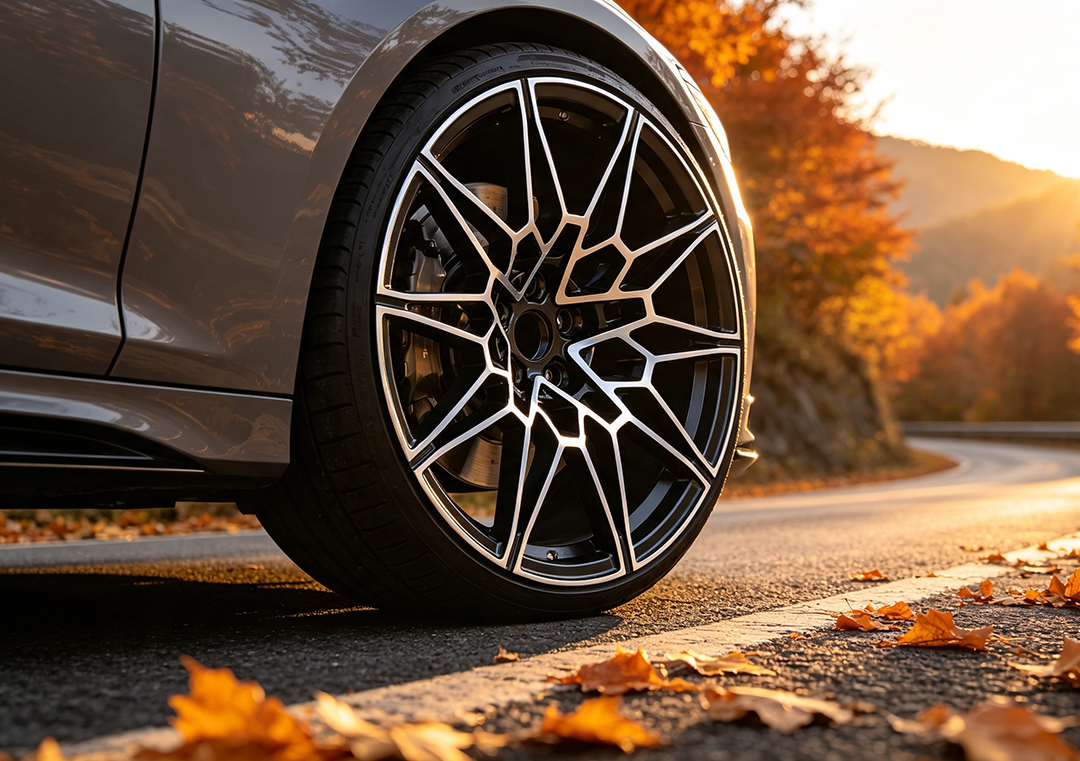
Brushed Dark Smoke & Liquid Tint: Brushed finishes showcase the raw metal texture beneath a dark-tinted clear coat. In low light, the wheels appear stealthy dark black; under direct sunlight, the underlying polished grain shines through.
-
Classic Polished & Hand-Brushed: Multi-stage hand polishing creates a deep mirror shine that complements executive luxury sedans and timeless vintage builds.
7.Maintenance & Protection Strategies
To protect your investment in custom rims, follow these maintenance practices:
CLEANING PROCEDURE:
[ Cool Wheels Down ] ──► [ pH-Neutral Cleaner ] ──► [ Soft Microfiber ] ──► [ Protective Ceramic Coating ]
-
Avoid Automatic Drive-Through Car Washes: The rigid plastic brushes and metal wheel tracks in automated drive-through washes can scratch custom clear coats and lip edges.
-
Use Only pH-Neutral Cleaners: Strong acid cleaners or heavy-duty degreasers can strip protective clear coats, turn dark tints cloudy, or stain raw metal lips. Stick to dedicated pH-neutral soap formulas and soft microfiber barrels.
-
Apply a Hydrophobic Ceramic Coating: Applying a high-temp ceramic coating prevents hot brake dust from baking into the finish, making routine washdowns fast and chemical-free.
Frequently Asked Questions(FAQ)
1.Do larger luxury aftermarket wheels affect ride quality?
Yes, increasing wheel diameter usually requires installing tires with thinner side walls (lower aspect ratios). Thinner tire sidewalls flex less during cornering, which improves steering sharpness. However, they absorb fewer road imperfections, resulting in a slightly firmer ride. To preserve everyday comfort, consider stepping up no more than 1 to 2 inches above the original factory wheel size.
2.Are forged wheels better for high-performance luxury cars?
Forged wheels offer an exceptional strength-to-weight ratio. Their dense metal structure provides maximum impact resistance alongside light rotational mass, making them ideal for high-powered luxury vehicles, heavy electrified platforms, and track environments.
3.Will installing aftermarket wheels void my vehicle’s factory warranty?
Simply installing quality custom wheels does not void your vehicle’s overall factory warranty. Under consumer protection regulations (such as the U.S. Magnuson-Moss Warranty Act), auto manufacturers cannot deny a warranty claim unless they can prove that the specific aftermarket part or incorrect wheel fitment caused a related mechanical failure.
4.How do I ensure proper brake clearance with custom rims?
Verify the wheel offset, inner barrel diameter, and spoke profile (X-factor offset) relative to your vehicle’s brake calipers. Professional custom wheel builders reference precise 3D CAD templates for your specific vehicle trim to ensure clearance for multi-piston sport calipers.
5.What is the difference between single-piece monoblock and multi-piece wheels?
Monoblock wheels are CNC-machined from a single forged aluminum piece, offering maximum structural rigidity and low overall mass. Multi-piece wheels are built by bolting a custom-machined face to separate inner and outer barrel sections. This design allows for deep lips, extreme concavity, wide rim widths, and easy repair of damaged outer lips.
Transform Your Ride Today
Upgrading to luxury aftermarket wheels bridges the gap between everyday transportation and personalized automotive performance. By balancing wheel construction types, precision vehicle fitments, and dynamic visual finishes, you can achieve an aggressive stance that turns heads while sharpening handling at every turn.
Ready to elevate your driving experience? Explore our full lineup of custom forged profiles, advanced flow-formed series, and bespoke fitments tailored specifically for your vehicle at ATK Wheels. Contact our team of technical fitment specialists today to craft your personalized wheel setup!

