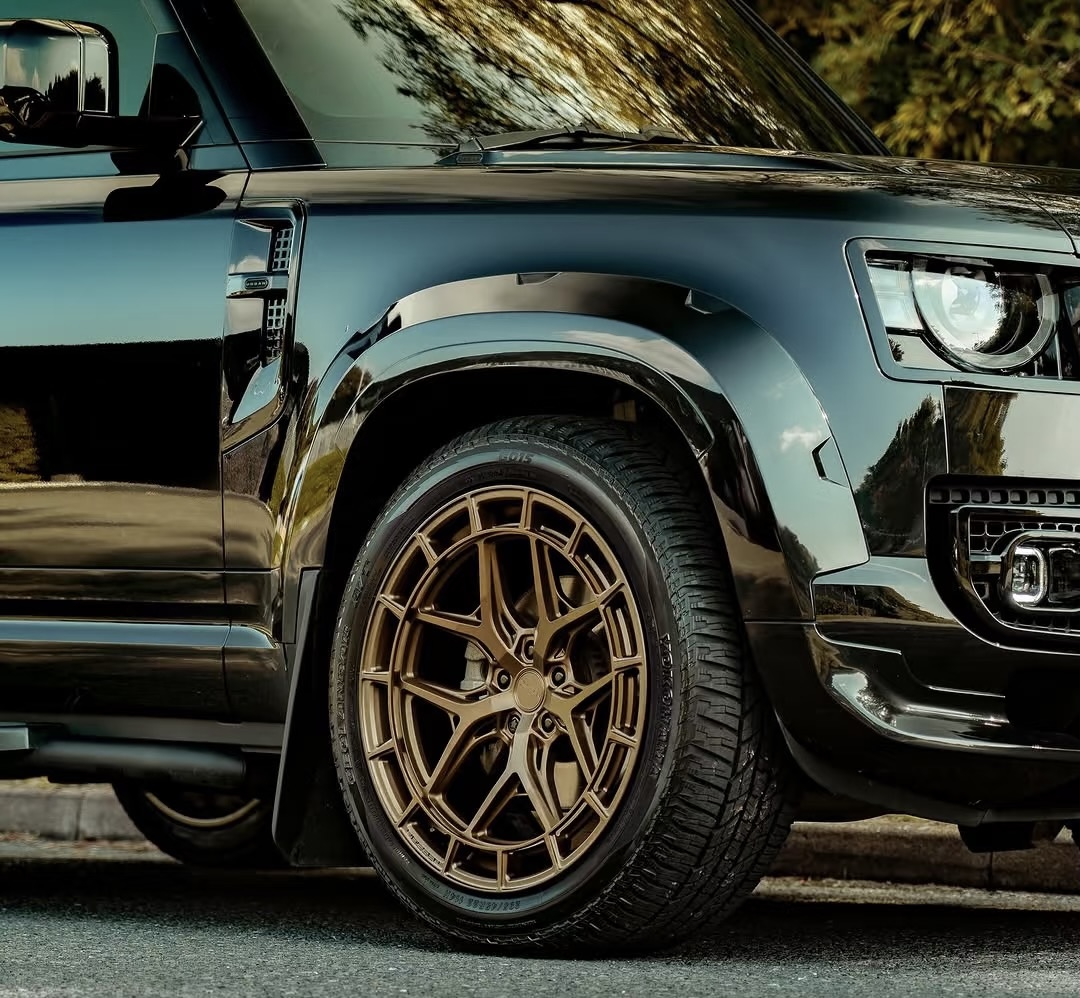
Lightweight Performance Wheels: Why Wheel Weight Matters for Performance
Lightweight Performance Wheels: Why Wheel Weight Matters for Performance
Ask any seasoned track engineer or auto enthusiast what single modification yields the highest return on investment for vehicle dynamics, and the answer is rarely a tune or an exhaust. It is almost always reducing rotational mass.
Your vehicle’s engine works against two distinct types of mass: sprung mass (everything supported by the suspension, like the chassis, engine, and interior) and unsprung mass (components below the suspension springs, including brakes, tires, and wheels).
When you upgrade to high-grade lightweight performance wheels, you directly eliminate unsprung rotational mass. This fundamentally transforms how your vehicle accelerates, turns, and stops.
       +-------------------------------------------------------+
       |                     SPRUNG MASS                       |
       |         (Body, Engine, Chassis, Passengers)           |
       +-------------------------------------------------------+
                                   |
                          [ SUSPENSION SPRINGS ]
                                   |
       +-------------------------------------------------------+
       |                    UNSPRUNG MASS                      |
       |    (Lightweight Wheels, Tires, Brakes, Suspension)    |
       +-------------------------------------------------------+
Below, we cover everything you need to know about wheel construction, engineering benefits, fitment parameters, and real-world performance gains so you can choose the ideal setup for your street or track vehicle.
1.What Are Lightweight Performance Wheels?
Definition: A lightweight performance wheel is an aftermarket or specialized original equipment (OE) wheel engineered to minimize overall mass while maintaining structural integrity, structural load ratings, and optimal brake clearance.
Unlike standard cast aluminum alloy wheels mass-produced for commuter cars, performance-oriented wheels utilize advanced metallurgy, refined forging techniques, and optimized spoke geometries. The primary objective is removing non-essential aluminum from areas low in structural stress while reinforcing high-load zones.
Direct Benefits Breakdown
Why do enthusiast drivers prioritize lighter wheels above almost all other hardware upgrades? The answer lies in physics.
-
Rapid Engine Rev-Up and Acceleration: Lower rotational inertia allows your drivetrain to transfer horsepower and torque to the asphalt with far less resistance.
-
Sharper Steering Response: Decreased gyroscopic forces at the wheel hubs allow your front tires to change direction with less resistance, resulting in immediate turn-in precision.
-
Superior Suspension Control: Lighter wheels allow shocks and springs to keep the tire contact patch planted firmly over bumps, expansion joints, and track kerbs.
-
Shorter Braking Distances: The braking system dissipates less kinetic energy trying to halt heavy spinning aluminum, resulting in reduced brake fade and sharper pedal feel.
-
Enhanced Fuel and Energy Efficiency: Lowering overall wheel weight benefits internal combustion engine (ICE) fuel economy and extends electric vehicle (EV) battery range during stop-and-go driving.
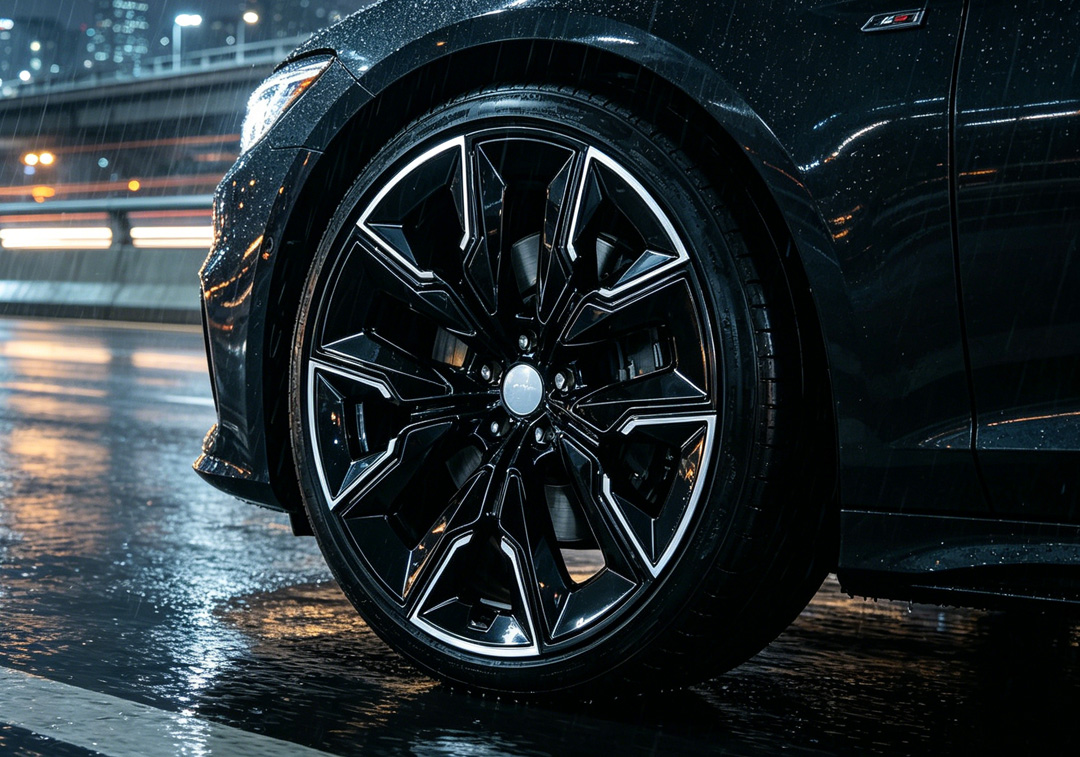
2.The Engineering Behind the Weight: Unsprung vs. Rotational Mass
To appreciate the impact of lightweight performance wheels, it helps to understand the physics operating at each corner of your vehicle.
+-----------------------------------------------------------------------+
|                         ROTATIONAL INERTIA                            |
|                                                                       |
|   1 lbs Saved on Rotational Mass  ≈  4 lbs Reduced in Static Weight   |
|                                                                       |
|   [ Less Rotational Mass ] ---> [ Quicker Engine Spin-Up ]            |
|                            ---> [ Reduced Kinetic Energy Demand ]     |
|                            ---> [ Sharper Directional Transitions ]   |
+-----------------------------------------------------------------------+
Unsprung Mass Dynamics
When your vehicle hits an imperfection in the road surface, the wheel and tire assembly is pushed upward. The vehicle’s coil spring must compress, and the shock absorber must dampen that movement.
If the wheel is heavy, it carries significant kinetic inertia upward, compressing the suspension aggressively and often transmitting harsh impacts directly into the cabin. A lighter wheel moves quickly, allowing the tire to maintain steady contact with the road without upsetting the chassis balance.
Rotational Mass and Inertia
Rotational mass is mass that must be spun up as the vehicle accelerates and slowed down as it stops.
As a general rule of engineering thumb, removing 1 pound of rotational mass yields a dynamic performance feel equivalent to shedding approximately 3 to 4 pounds of static weight inside the cabin.
By saving 6 pounds per corner with upgraded performance wheels, your vehicle responds as if you pulled nearly 100 pounds of dead weight out of the trunk and passenger cabin.
3.Manufacturing Methods: Cast vs. Flow-Formed vs. Forged
Not all aftermarket aluminum wheels are manufactured using the same process. Understanding these construction methods helps you pick the right balance of price, weight, and structural strength.
          [ LIQUID ALUMINUM ]
                   |
           ( Gravity / Pressure )
                   |
                   v
             [ CAST WHEEL ]
       (Heavier, Standard Strength)
                   |
     +-------------+-------------+
     |                           |
     v                           v
(Spin-Forming Barrel)      (10,000+ Ton Press)
     |                           |
     v                           v
[ FLOW-FORMED WHEEL ]     [ FORGED WHEEL ]
(Lighter, Mid-Price)      (Lightest, Maximum Strength)
Cast Aluminum Wheels
Casting involves pouring molten aluminum into a mold shaped like the wheel. Once cooled, the material settles, and the final finishing touches are machined.
-
Pros: Highly affordable, endless stylistic variations.
-
Cons: Requires thicker grain structures and more aluminum volume to achieve adequate load safety ratings, making cast wheels the heaviest option available.
Flow-Formed (Rotary Forged) Wheels
Flow-forming starts as a specialized low-pressure cast wheel blank. The inner barrel section is then placed on a mandrel, heated, and spun under high-pressure hydraulic rollers. This process stretches and compresses the aluminum, aligning the internal grain structure along the outer barrel.
-
Pros: Achieves structural grain density and weight savings comparable to full forging at a fraction of the cost.
-
Cons: Spoke structure retains cast properties; only the rim barrel receives flow-formed strength benefits.
Fully Forged Wheels
Forging represents the absolute pinnacle of high-performance wheel manufacturing. A solid cylinder of aerospace-grade alloy—typically 6061-T6 aluminum—is subjected to extreme heat and pressed under 10,000 tons of force. This crushes air pockets and aligns the metal’s crystalline structure in continuous, unbroken directional lines.
-
Pros: Unmatched strength-to-weight ratio, maximum rigidity, exceptional fatigue resistance under heavy track abuse.
-
Cons: High manufacturing cost and specialized machinery lead to premium retail pricing.

4.Direct Manufacturing Comparison Matrix
| Feature | Gravity / Low-Pressure Cast | Flow-Formed (Rotary Forged) | Fully Forged 6061-T6 |
|---|---|---|---|
| Weight Profile | Standard / Heavy | Light (-15% to 25% vs Cast) | Ultra-Light (-25% to 40% vs Cast) |
| Material Structural Density | Low / Porous | High in Barrel, Medium in Spokes | Exceptionally High Throughout |
| Impact & Deflection Resistance | Moderate | High | Maximum |
| Ideal Application | Daily Commuting / Budget Styling | Aggressive Street / Weekend Track | Professional Motorsport / Track Days |
5.Key Fitment Parameters You Must Verify
Selecting the lightest wheel on paper is only half the battle. If fitment calculations are off by even a few millimeters, you risk tire rubbing, cleared brake caliper issues, or compromised suspension geometry.
                   CENTER LINE
                       |
                       | <-- POSITIVE OFFSET (+)
                       |     (Wheel Hub is Outer-Facing)
                       |
               +-------+-------+
               |       |       |
               |   [HUB MOUNT] |
               |       |       |
               |       |       |
               +-------+-------+
                       |
               | <-- BRAKE CLEARANCE ZONE
When evaluating specialized aftermarket brands like ATK Wheels, always cross-reference these core specifications prior to installation:
Bolt Pattern (PCD)
The Pitch Circle Diameter (PCD) measures the arrangement of lug nut holes. Common examples include $5 \times 114.3\text{ mm}$ for many Japanese performance vehicles or $5 \times 112\text{ mm}$ for European platforms. The PCD must match your vehicle’s wheel hub precisely.
Wheel Diameter and Width
Choose a wheel diameter that accommodates your preferred tire sidewall profile and overall rolling radius. Increasing rim width allows for a wider tire contact patch, providing higher lateral grip during cornering.
Wheel Offset (ET)
Wheel offset is measured in millimeters from the wheel’s true centerline to its hub-mounting surface:
-
Positive Offset: The mounting face sits closer to the outer street face of the wheel (standard on most modern front-wheel and all-wheel-drive performance cars).
-
Negative Offset: The mounting face sits inward toward the vehicle hub, pushing the wheel outward for a wide stance.
Fitment Tip: An incorrect offset alters scrub radius, increases hub bearing stress, and causes tires to rub against suspension struts or fender liners.
Center Bore & Hub-Centric Rings
The center bore is the machined opening at the back of the wheel that sits directly on the hub lip. Ensure your wheels are hub-centric—either by direct factory fitment or by using high-grade aluminum hub-centric adapter rings—to prevent wheel vibration at highway speeds.
Caliper Clearance (X-Factor)
Lightweight wheel spoke designs must provide adequate clearance for oversized multi-piston big brake kits (BBKs). Look at spoke curvature and inner barrel profile to clear wide calipers without resorting to unsprung wheel spacers.
6.Real-World Case Studies: Performance Gains Across Vehicle Types
Upgrading your wheels produces noticeable driving dynamics across various performance platforms. Here is how lightweight wheels perform on three popular enthusiast builds.
+--------------------------------------------------------------------+
|                TRACK DAY PLATFORM (e.g., Porsche 911 / BMW M3)     |
|  * 19-inch Forged Aluminum Wheels                                  |
|  * -6.5 lbs Per Corner (-26 lbs Total Unsprung Weight)             |
|  * Dynamic Benefit: Precise turn-in, reduced shock fade over kerbs |
+--------------------------------------------------------------------+
                                   |
+--------------------------------------------------------------------+
|                EV PERFORMANCE PLATFORM (e.g., Tesla Model 3)       |
|  * 18-inch Aerodynamic Flow-Formed Wheels                          |
|  * -8.0 lbs Per Corner (-32 lbs Total Unsprung Weight)             |
|  * Dynamic Benefit: Quicker 0-60 throttle burst, extended range    |
+--------------------------------------------------------------------+
                                   |
+--------------------------------------------------------------------+
|                STREET & AUTOCROSS PLATFORM (e.g., Mazda Miata/BRZ) |
|  * 17-inch Ultra-Light Flow-Formed Wheels                          |
|  * -4.2 lbs Per Corner (-16.8 lbs Total Unsprung Weight)           |
|  * Dynamic Benefit: Nimble steering, instant low-end punch         |
+--------------------------------------------------------------------+
Track Day Sports Cars (e.g., Porsche 911 GT3, BMW M3)
-
Modification: Swapping heavy factory cast wheels for 19-inch forged monolithic performance wheels.
-
Weight Saved: 6.5 lbs per corner (26 lbs total unsprung rotational weight dropped).
-
Observed Gains: Reduced damper heat and shock fade over continuous laps, significantly sharper turn-in at high speeds, and improved throttle response when accelerating out of tight corners.
Performance Electric Vehicles (e.g., Tesla Model 3 Performance)
-
Modification: Replacing heavy 20-inch factory wheels with high-efficiency 18-inch flow-formed lightweight wheels.
-
Weight Saved: 8 lbs per corner (32 lbs total unsprung rotational weight dropped).
-
Observed Gains: Instant power delivery during low-speed launches, improved ride comfort on poor road surfaces, and a measurable 3% to 5% increase in total battery range during city driving.
Light Autocross Coupes (e.g., Mazda MX-5 Miata, Subaru BRZ)
-
Modification: Installing light 17-inch performance wheels with wider rim beds for sticky compound tires.
-
Weight Saved: 4.2 lbs per corner (16.8 lbs total unsprung mass dropped).
-
Observed Gains: Significantly improved steering response, allowing quick direction changes through tight slalom cones without disturbing the car’s dynamic balance.
7.Step-by-Step Selection Methodology
Follow this simple selection process to find the right lightweight wheels for your car:
[ Step 1: Define Usage Profile ]
       |---> (100% Daily Driver / Street Enthusiast / Pure Track Car)
       |
[ Step 2: Establish Realistic Budget ]
       |---> (Cast vs. Flow-Formed vs. Fully Forged)
       |
[ Step 3: Identify Precise OEM Fitment Baseline ]
       |---> (PCD, Center Bore, OEM Offset, Caliper Depth)
       |
[ Step 4: Compare True Verified Wheel Weights ]
       |---> (Focus on verified weight specs, not unverified claims)
       |
[ Step 5: Verify Load Ratings & Safety Certifications ]
       |---> (JWL, VIA, TUV compliance verification)
-
Define Primary Usage Profile: Determine if your car is dedicated to daily driving, occasional track days, or competitive autocross.
-
Establish a Realistic Budget: Match your budget to the appropriate build process—flow-formed wheels offer a great balance of cost and performance, while forged wheels offer ultimate track capability.
-
Confirm Vehicle Fitment Parameters: Document your factory wheel specs, including PCD, offset, center bore, and brake clearance dimensions.
-
Compare Verified Weight Figures: Review verified wheel weights across brands rather than relying on estimated specs.
-
Verify Safety Certifications: Ensure your target wheels are tested and certified to recognized structural safety standards such as JWL, VIA, or TÜV.
Frequently Asked Questions(FAQ)
1.What are the benefits of lightweight performance wheels?
Lightweight performance wheels significantly reduce unsprung rotational weight at all four corners of your vehicle. This reduction allows suspension components to react faster to road irregularities, shortens braking distances, sharpens steering turn-in response, and improves overall acceleration feel.
2.Do lightweight performance wheels improve handling?
Yes. Lowering unsprung mass reduces the gyroscopic resistance of the spinning wheel and tire assembly. This helps the suspension keep the tire contact patch flat on the road over bumps and dips, resulting in precise cornering and excellent chassis balance.
3.Are forged wheels better for lightweight performance?
Forged wheels offer a higher strength-to-weight ratio than traditional cast wheels. The intense high-pressure forging process produces an extremely dense grain structure, allowing engineers to remove excess material while maintaining structural integrity and high load ratings.
4.How much weight should lightweight performance wheels save?
There is no fixed target savings, as wheel weights vary by width and diameter. However, saving even 3 to 5 pounds per wheel makes a noticeable difference in throttle response, steering feel, and ride compliance on both street and track vehicles.
5.What should I consider when buying lightweight performance wheels?
Key factors include verified wheel weight, diameter, width, bolt pattern (PCD), offset (ET), center bore, and brake clearance for wide calipers. A lightweight wheel must meet your vehicle’s correct load ratings and fitment specifications to perform safely.
Elevate Your Driving Dynamics
Upgrading to high-quality lightweight performance wheels is one of the most effective ways to transform how your vehicle handles, accelerates, and responds to your inputs. By removing unsprung weight, you give your suspension, brakes, and engine room to perform at their absolute best.
When upgrading your setup, prioritize engineering standards, structural strength, and precise fitment over simple visual styling. Choosing high-performance flow-formed or custom forged wheels ensures every drive delivers immediate feedback, uncompromised safety, and exceptional handling performance.