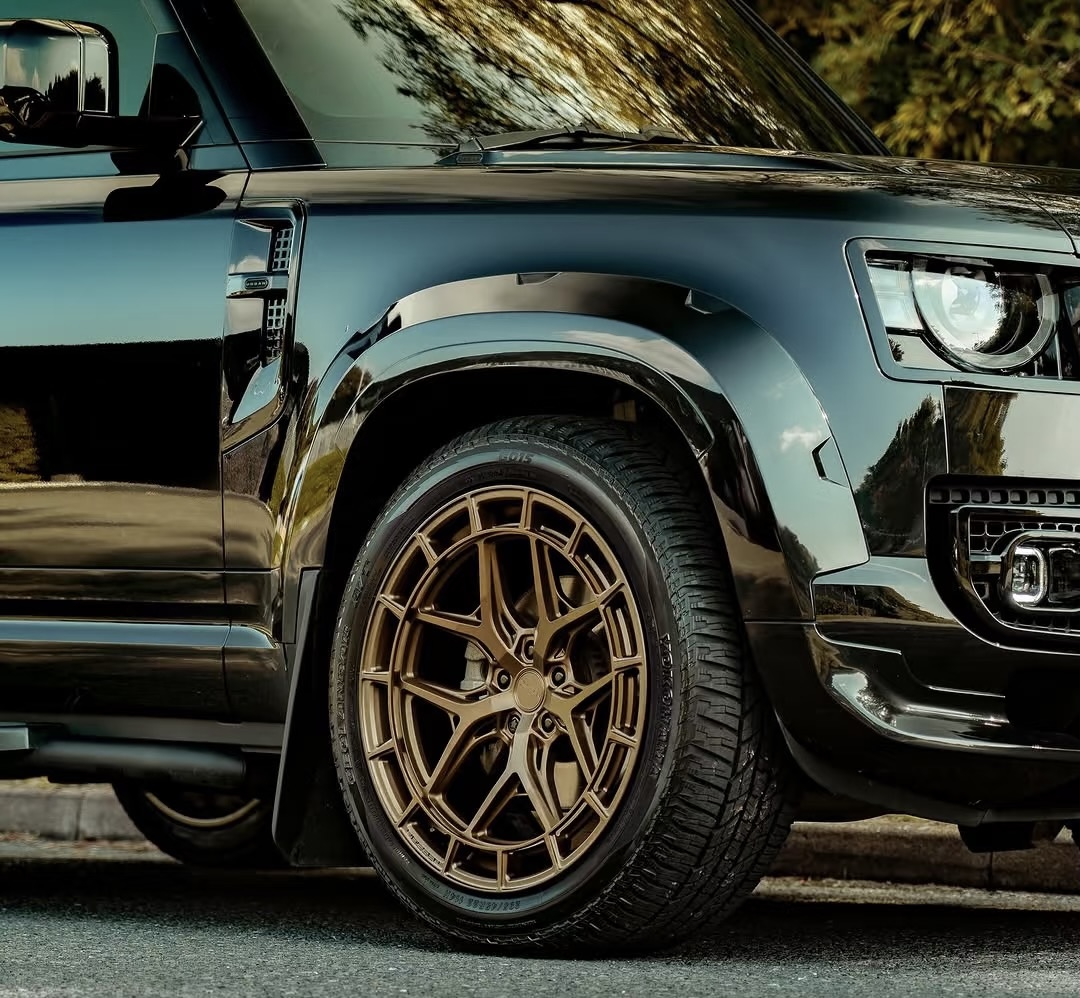
How to Measure Wheel Bolt Pattern: The Quick & Easy Precision Formula
How to Measure Wheel Bolt Pattern: The Quick & Easy Precision Formula
Upgrading your truck, SUV, or passenger vehicle with custom aftermarket wheels is one of the most effective ways to transform both performance and curb appeal. However, nothing halts an exciting build faster than receiving a fresh set of rims only to discover that the lug holes do not align with your vehicle’s wheel studs. Beyond the frustration of returns and shipping delays, attempting to mount improperly fitted wheels poses catastrophic safety risks.
At ATK Wheels, precision fitment is the foundation of our engineering philosophy. A vehicle’s wheel bolt pattern—frequently referred to as the lug pattern or Pitch Circle Diameter (PCD)—determines whether a wheel can physically bolt onto your hub assembly securely. Even a microscopic measurement error of less than one millimeter can cause severe high-speed vibrations, accelerated tire wear, sheared wheel studs, or total wheel detachment while driving. In this comprehensive guide, modeled after Fortune Recommends technical evaluation standards, we break down the exact geometric principles, measurement techniques, metric-to-imperial conversion tables, and expert pitfall warnings to ensure your fitment is 100% accurate.
QUICK TAKEAWAYS & FAST RULES
-
The Two-Number System: Bolt patterns are expressed as [Lug Count] x [Circle Diameter] (e.g., 5×114.3 or 6×139.7).
-
Even Lug Rule (4, 6, 8 Lugs): Measure directly from the center of one lug hole to the center of the opposite hole directly across the hub.
-
Odd Lug Rule (5 Lugs): Measure from the rear outer edge of one lug hole to the center of the second hole across the hub.
-
Precision Warning: Close is never enough! A 5×114.3mm pattern is NOT the same as 5x115mm—a 0.7mm error causes wheel wobble and stud shearing.
What Is a Wheel Bolt Pattern and How Does It Work?
A tire’s bolt pattern (or lug pattern) is the number of bolts and the diameter of the imaginary circle they form. When shopping for aftermarket wheels or reviewing vehicle specifications, you will consistently see bolt patterns written in a standardized two-number format, such as 5×114.3 or 6×139.7 (or in imperial notation like 6×5.5″).
-
The First Number: Represents the total lug count (e.g., 4, 5, 6, or 8 lug holes on the wheel face).
-
The Second Number: Represents the exact diameter of the imaginary circle (in millimeters or inches) that passes directly through the geometric center of every stud or lug hole.
Understanding whether your pattern is stated in metric or imperial units is vital. Imperial measurements (common in North American trucks and classic vehicles) use inches, whereas metric measurements (common in modern international platforms) use millimeters. Because 1 inch equals exactly 25.4 millimeters, converting between the two is straightforward mathematically ($1\text{ inch} = 25.4\text{ mm}$), but obtaining the initial measurement requires strict adherence to proper geometry.

Essential Tools You Need Before Measuring
To get an accurate measurement, gather the following tools before starting:
-
Rigid Steel Ruler or Tape Measure: Ideal for quick initial checks, though flexible tape measures should be avoided as they stretch and distort readings.
-
Digital Vernier Calipers: The absolute gold standard for measuring precise centerline distances and fractions of a millimeter.
-
Bolt Pattern Gauge (PCD Tool): An inexpensive specialized tool featuring pre-drilled sliding pins that slide directly over studs to provide instant, fool-proof measurement.
-
Notepad & Pen: To record both raw measurements and converted calculations.
Step-by-Step Guide: How to Measure Your Lug Pattern
To find your bolt pattern, count the number of lugs, then use a tape measure to get the diameter. The measuring method depends on if the total lug count is even or odd.
Method 1: Measuring Even Lug Patterns (4, 6, and 8-Lug Wheels)
Even-numbered bolt patterns are simple and straightforward to measure because every stud or hole has an exact counterpart positioned directly across the hub cap from it.
-
Select any lug hole on the wheel or hub as your starting point.
-
Locate the lug hole positioned directly opposite across the center hub cap.
-
Place your ruler or caliper at the exact center of the first lug hole or stud.
-
Measure in a straight line across the hub to the exact center of the opposite lug hole.
-
Record the distance. If measuring in inches, convert to millimeters by multiplying by 25.4.
Example: On a 6-lug truck wheel, if the distance across opposite stud centers reads 5.5 inches, your bolt pattern is 6×5.5 inches, which equals 6×139.7mm ($5.5 \times 25.4 = 139.7$).
Method 2: Measuring Odd Lug Patterns (5-Lug Wheels)
To measure a 5-lug bolt pattern, calculate the diameter of the imaginary circle that runs through the center of your wheel studs or holes. Since odd-numbered patterns don’t have studs directly across from one another, use either of these specific methods:
Technique A: Center-to-Outside Edge (The Direct Tape Measure Method)
Pick any lug hole as your starting point. Skip one adjacent lug hole, and extend your tape measure toward the next hole across the hub. Measure from the far outer edge (backside) of your starting lug hole to the exact center of the destination hole. This offset measurement geometrically accounts for the missing opposite stud and gives you the true circle diameter.
Technique B: Adjacent Center Multiplier (The Caliper Method)
Using digital calipers, measure the exact distance ($S$) from the center of one stud directly to the center of an immediately adjacent (side-by-side) stud. Multiply that single measurement by the constant 1.7012:
For example, if the distance between adjacent studs measures 2.645 inches: $2.645 \times 1.7012 = 4.50\text{ inches}$ (a standard 5×4.5″ / 5×114.3mm pattern).

Master Wheel Bolt Pattern Conversion Table
Use this reference table from ATK Wheels to easily convert between imperial and metric specifications across common vehicle platforms:
| Lug Count | Imperial (Inches) | Metric (mm) | Popular Vehicle Applications |
|---|---|---|---|
| 4-Lug | 4 x 3.94" | 4 x 100 mm | Honda Civic, Toyota Yaris, Mazda Miata |
| 4-Lug | 4 x 4.25" | 4 x 108 mm | Ford Focus, Classic Mustang, Fiesta |
| 4-Lug | 4 x 4.50" | 4 x 114.3 mm | Classic Nissan/Datsun, Hyundai, Vintage Imports |
| 5-Lug | 5 x 3.94" | 5 x 100 mm | Subaru Outback/Impreza, Toyota Prius, VW Golf |
| 5-Lug | 5 x 4.25" | 5 x 108 mm | Ford Fusion, Volvo, Jaguar, Land Rover Freelander |
| 5-Lug | 5 x 4.50" | 5 x 114.3 mm | Ford Mustang, Jeep Wrangler (TJ/YJ), Toyota Camry, Nissan Z |
| 5-Lug | 5 x 4.52" | 5 x 115 mm | Dodge Charger/Challenger, Chrysler 300, Chevy Impala |
| 5-Lug | 5 x 4.72" | 5 x 120 mm | BMW 3/5 Series, Chevy Camaro, Honda Ridgeline/Pilot |
| 5-Lug | 5 x 5.00" | 5 x 127 mm | Jeep Wrangler (JK/JL/JT), Grand Cherokee, RAM 1500 (older) |
| 5-Lug | 5 x 5.50" | 5 x 139.7 mm | RAM 1500 (Classic), Ford F-150 (Pre-2004), Suzuki Jimny |
| 6-Lug | 6 x 4.50" | 6 x 114.3 mm | Nissan Frontier, Nissan Xterra, Dodge Dakota |
| 6-Lug | 6 x 5.31" | 6 x 135 mm | Ford F-150 (2004–Present), Ford Expedition |
| 6-Lug | 6 x 5.50" | 6 x 139.7 mm | Chevy Silverado, GMC Sierra, Toyota Tacoma/4Runner, RAM 1500 |
| 8-Lug | 8 x 6.50" | 8 x 165.1 mm | Heavy Duty Trucks (Classic Chevy/GMC/RAM/Ford 2500/3500) |
| 8-Lug | 8 x 6.69" | 8 x 170 mm | Ford F-250 / F-350 Super Duty (1999–Present) |
| 8-Lug | 8 x 7.09" | 8 x 180 mm | Chevy Silverado / GMC Sierra 2500/3500 HD (2011–Present) |
Common Bolt Pattern Mistakes & Critical Warnings
What are common bolt pattern mistakes? Understanding technical pitfalls is essential to keeping your build safe and performance-ready.
1. The 0.7mm Danger: 5×114.3mm vs. 5x115mm
One of the biggest mistakes is thinking that close patterns are the same. A 5×114.3mm pattern is NOT the same as a 5x115mm pattern. Even this tiny 0.7mm difference can cause your wheels to fit poorly or wobble. Forcing a 5×114.3mm wheel onto a 5x115mm hub causes uneven lug seat seating, places severe lateral bending strain on studs, and frequently results in lug nuts loosening or studs snapping under heavy load.
2. Ignoring Center Bore Diameter
The center bore is the machined hole on the backside of the wheel that seats over the vehicle’s hub snout. If the wheel’s center bore is smaller than your hub, the wheel cannot sit flat against the brake rotor, even if the bolt pattern matches perfectly. If the bore is larger, you must install hub-centric rings to prevent severe high-speed vibration.
3. Overlooking Wheel Offset and Backspacing
Wheel offset defines how far inward or outward the wheel sits relative to the mounting face. Incorrect offset can cause tires to scrub against inner suspension control arms or extend dangerously far past fender flares.

Frequently Asked Questions (FAQ)
How do you measure a 5 lug bolt pattern?
To measure a 5-lug bolt pattern, calculate the diameter of the imaginary circle that runs through the center of your wheel studs or holes. Since odd-numbered patterns don’t have studs directly across from one another, use either of these specific methods:
-
Tape Measure Method: Measure from the outer edge (backside) of one lug hole, skip an adjacent hole, and measure directly to the center of the third hole across the hub.
-
Formula Method: Measure the exact distance between the centers of two adjacent (side-by-side) studs and multiply that distance by 1.7012 ($\text{Diameter} = S \times 1.7012$).
-
Pattern Gauge: Slip a dedicated 5-lug bolt pattern tool over the studs for an immediate reading.
What is the most common 6 lug bolt pattern?
The most popular 6-lug pattern for trucks and SUVs is 6×5.5 inches, which equals 6×139.7mm. These numbers are identical—5.5 inches converts directly to 139.7mm ($5.5 \times 25.4 = 139.7$). This ultra-common standard is used extensively across platforms such as the Chevrolet Silverado, GMC Sierra, Toyota Tacoma, Toyota 4Runner, Nissan Titan, and RAM 1500.
Is there a universal wheel bolt pattern?
There are no truly universal bolt patterns for 5 lug wheels as bolt pattern and hub diameter vary by vehicle make and model. However, 5×114.3 is a common pattern shared by many vehicles, which allows for more interchangeability across major automotive brands including Ford, Toyota, Honda, Nissan, and Hyundai. While some aftermarket wheels feature “dual-drilled” lug patterns to accommodate two distinct bolt circles on one wheel, they are still limited to those specific specs rather than being truly universal.
How do I figure out my wheel bolt pattern?
A tire’s bolt pattern (or lug pattern) is the number of bolts and the diameter of the imaginary circle they form. To find it, count the number of lugs, then use a tape measure to get the diameter. The measuring method depends on if the total lug count is even or odd:
-
Even Lug Count (4, 6, 8 Lugs): Measure directly from the center of one lug hole to the center of the opposite lug hole directly across the hub.
-
Odd Lug Count (5 Lugs): Measure from the outer edge of one lug hole to the center of the second lug hole across the hub.
-
Alternatively, look up your vehicle’s year, make, and model in an official vehicle fitment database.
What are common bolt pattern mistakes?
One of the biggest mistakes is thinking that close patterns are the same. A 5×114.3mm pattern is NOT the same as a 5x115mm pattern. Even this tiny 0.7mm difference can cause your wheels to fit poorly or wobble. Other frequent mistakes include failing to check the center bore hub size, ignoring offset/backspacing requirements, and taking imprecise measurements with flexible tools.
Final Verdict: Guarantee Perfect Fitment with ATK Wheels
Finding the ideal aftermarket wheels should be an exciting upgrade, not a stress-filled guessing game. By taking a few extra minutes to accurately measure your lug pattern—or confirming it with a dedicated pattern gauge—you guarantee smooth, safe, and vibration-free performance on every drive.
At ATK Wheels, every wheel in our catalog is engineered to exact OEM and performance tolerances. Whether you’re seeking a rugged off-road 6×139.7 setup for your truck or a precision 5×114.3 fitment for your performance build, our fitment specialists are ready to assist.
Explore the ATK Wheels Catalog today to find the exact bolt pattern, center bore, and offset for your vehicle!