How to Measure Offset: The Complete Wheel Offset Guide for Accurate Fitment
How to Measure Offset: The Complete Wheel Offset Guide for Accurate Fitment
Wheel offset is one of the most important measurements when selecting aftermarket or custom wheels. Yet it’s also one of the most misunderstood specifications among vehicle owners.
Whether you’re upgrading to forged wheels, replacing factory rims, or planning a custom wheel setup, understanding how to measure offset is essential for achieving proper fitment, avoiding rubbing issues, and maintaining vehicle performance.
In this guide, you’ll learn exactly what wheel offset is, how to measure it correctly, how it affects your vehicle, and how to choose the right offset for your specific application.
How to Measure Wheel Offset: The Ultimate Step-by-Step Guide for Perfect Fitment
If you’ve ever looked at a set of custom wheels and wondered why some sit deep inside the fender while others “poke” out past the bodywork, you’ve encountered the science of wheel offset.
Whether you’re upgrading your daily driver or building a dedicated off-road rig, understanding and measuring offset is the difference between a head-turning stance and a mechanical nightmare involving shredded tires and ruined fenders. In this guide, we’ll break down exactly how to measure offset, why it matters for your vehicle’s health, and how to ensure your next set of rims from ATK Wheels fits perfectly.
What is Wheel Offset? (And Why It Matters)
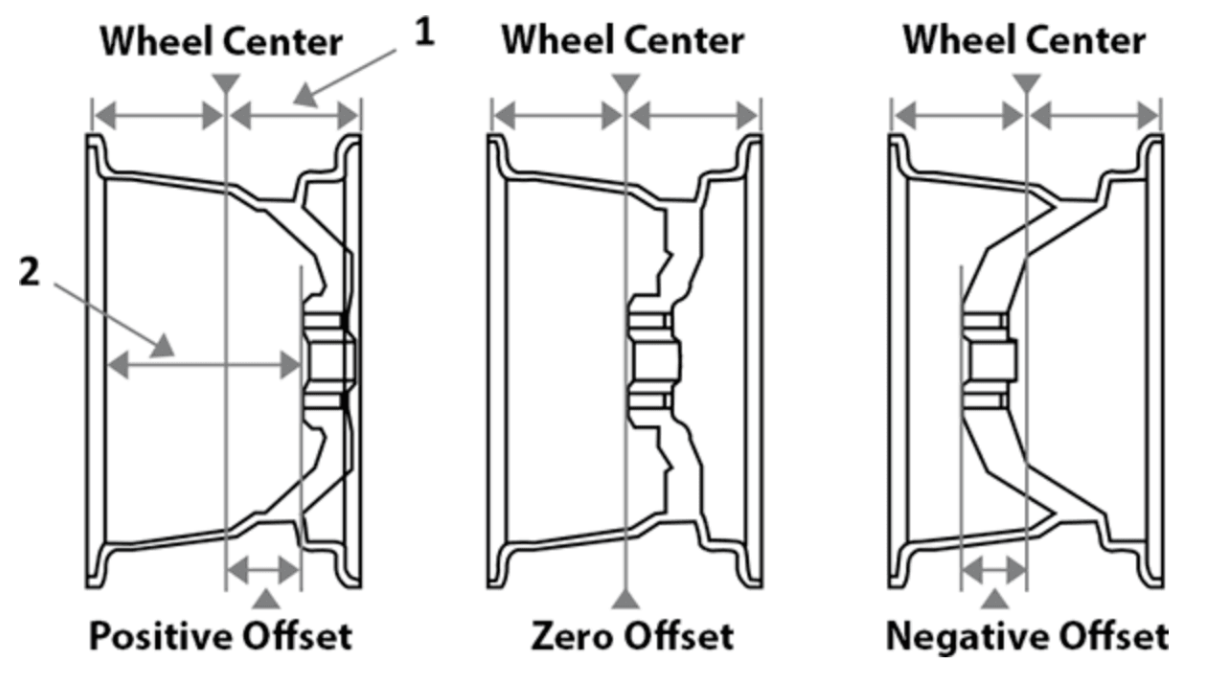
Before you grab your tape measure, you need a solid grasp of the terminology. Wheel offset is the distance (measured in millimeters) from the wheel’s true centerline to the hub mounting surface (the part of the wheel that actually touches the car).
Think of offset as the “footprint” of your wheel. It determines where the wheel sits relative to your suspension and your fender.
The Three Types of Offset
-
Positive Offset: The hub mounting surface is closer to the street side (front) of the wheel. This pulls the wheel inward, toward the suspension. Most modern front-wheel-drive cars use positive offset.
-
Zero Offset: The hub mounting surface is exactly even with the centerline of the wheel.
-
Negative Offset: The hub mounting surface is closer to the brake side (back) of the wheel. This pushes the wheel outward, creating that “deep dish” look or wide stance common on lifted trucks and classic muscle cars.
The Pro’s Tool Kit: What You’ll Need
Measuring offset isn’t difficult, but it does require precision. You’ll need the following tools:
-
A straight edge: A sturdy piece of wood or metal long enough to lay across the back of the wheel.
-
Tape measure or ruler: Preferably one that shows millimeters (mm), as offset is almost always calculated in metric.
-
A flat surface: A garage floor or workbench is ideal.
-
A calculator: For the final math.
Pro Tip: If the tire is still mounted on the rim, your measurements will be slightly different because you’ll be measuring from the tire sidewall rather than the rim edge. For the most accurate result, measure the bare wheel.
How to Measure Offset in 4 Steps
To find your offset, you essentially need to find two other numbers first: the Total Width and the Backspacing. Once you have those, the offset is just a simple subtraction away.
Step 1: Measure Total Wheel Width
Lay the wheel flat on the ground with the “front” (the side people see) facing down. Place your straight edge across the back of the wheel. Measure the total distance from the ground to the straight edge.
Note: If your wheel is an “18×9,” that 9 inches refers to the bead-to-bead width. The actual physical width of the wheel is usually about an inch wider.
Step 2: Calculate the Centerline
Divide your total width by two. This is your Centerline. Example: If your total width is 10 inches (254mm), your centerline is 5 inches (127mm).
Step 3: Measure Backspacing
With the wheel still face-down, place the straight edge across the back of the rim. Measure the distance from the hub mounting surface up to the bottom of the straight edge. This is your Backspacing.
Step 4: Use the Offset Formula
Subtract the centerline from the backspacing to get your offset.
The Formula: Backspacing – Centerline = Offset
Calculation Example:
-
Total Width: 254mm (10 inches)
-
Centerline: 127mm (5 inches)
-
Backspacing: 152mm (6 inches)
-
Offset: 152mm – 127mm = +25mm
Offset vs. Backspacing: What’s the Difference?
While they are related, they aren’t the same thing.
-
Offset is about where the wheel sits in relation to its own center.
-
Backspacing is the physical distance from the back edge of the rim to the mounting surface.
Suspension manufacturers often use backspacing because it tells them exactly how much room is left for control arms and brake calipers. Wheel manufacturers use offset to describe how the wheel will look on the car.
Comparison Table: Offset vs. Backspacing
| Feature | Wheel Offset | Backspacing |
|---|---|---|
| Measurement Unit | Millimeters (mm) | Inches (in) |
| Reference Point | Centerline of the wheel | Back edge of the rim |
| Primary Concern | Stance and fender clearance | Suspension and brake clearance |
| Value Range | Can be Positive, Negative, or Zero | Always a positive number |
Does Wheel Offset Have to Be Exact?
The short answer is no, but you need to stay within a safe “tolerance.”
When you change your wheels, staying within 5mm of the factory specification is the industry standard for safety. If you stray too far (e.g., moving from a +45mm to a 0mm offset), you risk several issues:
-
Fender Rubbing: The tire hits the outer bodywork during turns or over bumps.
-
Suspension Interference: The inner edge of the wheel hits your struts or control arms.
-
Accelerated Bearing Wear: Incorrect offset puts uneven leverage on your hub bearings, leading to premature failure.
-
Altered Steering Feel: This changes your “scrub radius,” which can make the car pull or feel twitchy under braking.
How to Check Your Current Offset (The Easy Way)
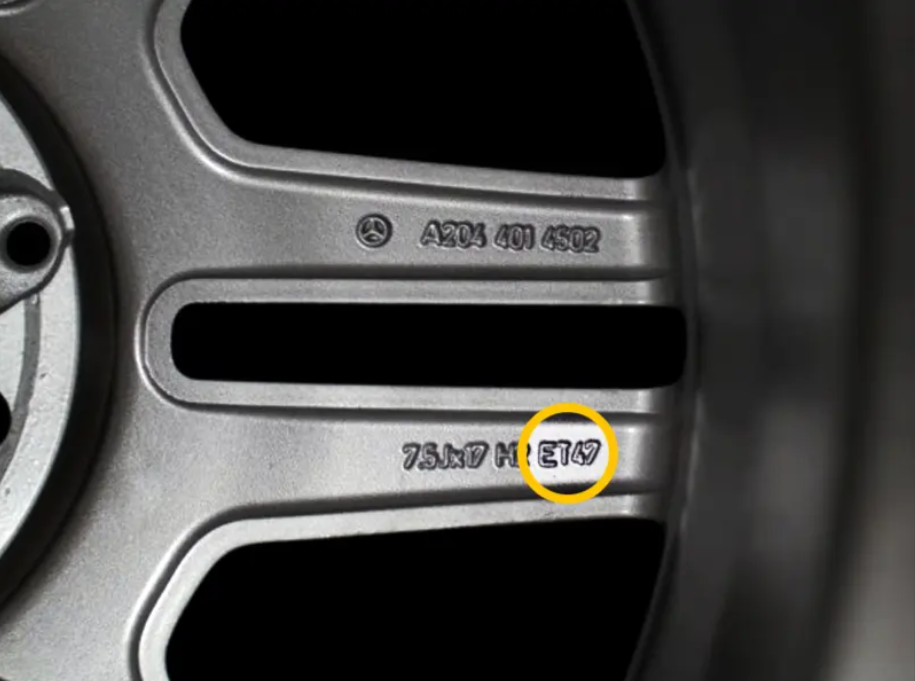
If you don’t want to break out the tape measure, look for the ET stamp. Most wheels have their specifications cast into the back of the spokes or the hub area.
You’re looking for a code like “ET45” or “45ET.” This stands for Einpresstiefe, the German word for offset. In this case, your offset is +45mm.
Common Mistakes to Avoid
-
Measuring from the Tire: If your tires are mounted, remember that the “bulge” of the tire extends past the rim. If you measure from the tire sidewall, your width and backspacing numbers will be off by several millimeters.
-
Ignoring the Rim Lip: When using a straight edge, ensure it is resting on the metal rim, not the tire.
-
Mixing Units: If you measure your width in inches, convert it to millimeters (1 inch = 25.4mm) before calculating the offset. Most wheel manufacturers exclusively use metric for offset.
Frequently Asked Questions (FAQ)
1. Is a smaller wheel offset better?
It depends on your goal. A smaller (or more negative) offset pushes the wheels out, widening the car’s “track.” This can increase cornering stability and give the car a more aggressive look. However, it also increases the risk of the tire hitting the fender.
2. What is the best offset for rims?
There is no “one size fits all” answer. The best offset depends on your vehicle’s make, model, and whether you’ve modified the suspension. Generally, staying within ±5mm of your factory offset is the safest bet for daily driving.
3. Will spacers change my offset?
Yes. Installing a wheel spacer effectively reduces your offset. For example, if you have a +40mm wheel and add a 10mm spacer, your effective offset is now +30mm.
4. Can I measure offset while the wheel is on the car?
It is extremely difficult to get an accurate measurement while the wheel is mounted. To do it correctly, you must remove the wheel to access the hub mounting surface.
Final Thoughts: Get the Stance You Want
Measuring offset might seem like a chore, but it’s the most important step in customizing your vehicle’s wheels. By taking five minutes to measure your current setup, you can shop for new rims with the confidence that they’ll bolt on and roll smoothly without rubbing.
Ready to find your perfect set? Browse our collection of high-performance rims at ATK Wheels and use your new measuring skills to dial in that perfect stance.
CTA
Looking for perfectly fitted custom forged wheels?
Our engineering team specializes in vehicle-specific wheel designs with optimized offsets, precise fitment calculations, and premium forged construction. Contact us today to discuss your build and discover custom wheels engineered specifically for your vehicle.