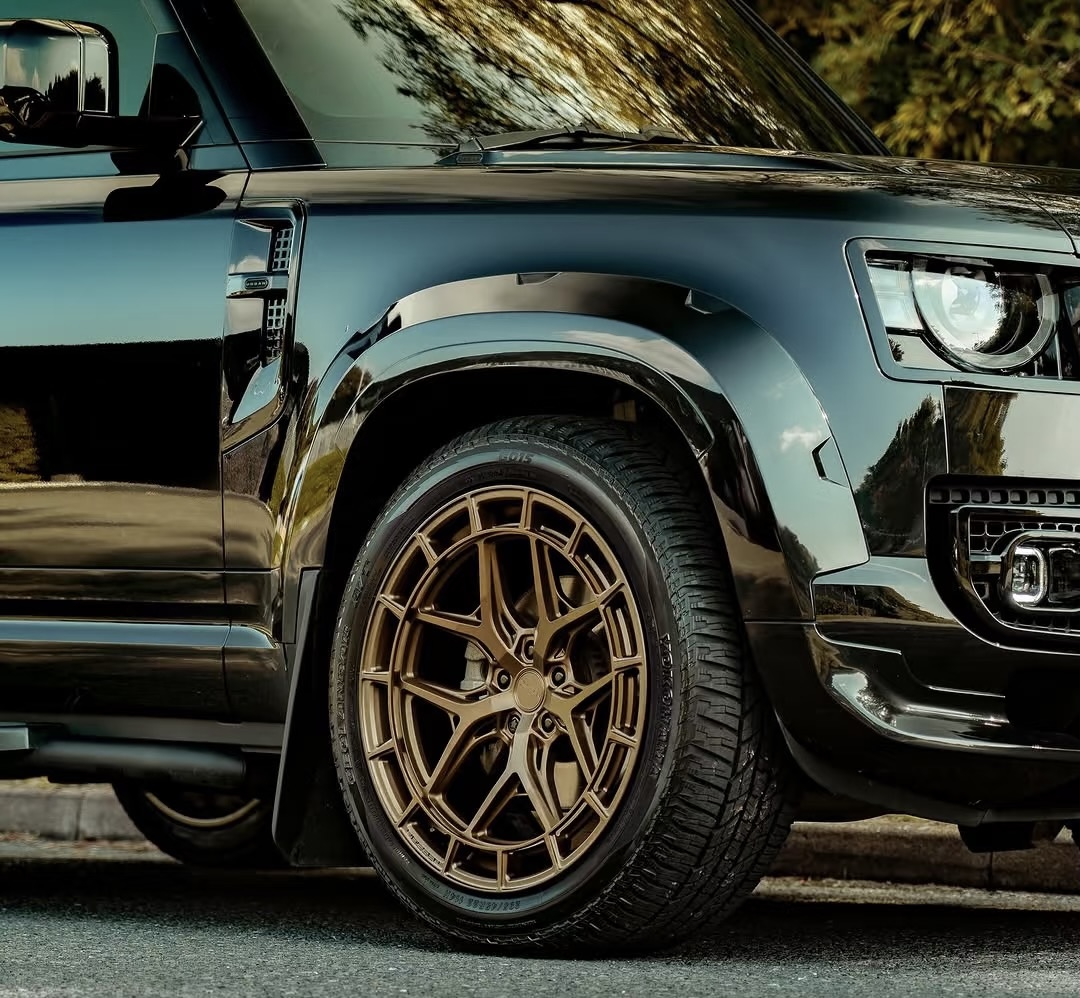
Forged Wheels: Why They Are the Preferred Choice for Performance and Luxury Cars
Forged Wheels: Why They Are the Preferred Choice for Performance and Luxury Cars
When upgrading a vehicle for better track times, sharper steering response, or simply a refined aesthetic, few modifications yield as drastic a transformation as replacing stock wheels. Among all aftermarket choices, forged wheels represent the absolute pinnacle of wheel engineering, manufacturing precision, and structural integrity.
Whether you drive a high-horsepower sports car, a modified daily driver, or an off-road rig, switching to custom forged aluminum wheels changes how your car handles, accelerates, and stops. But what exactly makes a wheel “forged,” how does the process differ from traditional casting, and are they worth the premium investment?
This comprehensive deep dive breaks down the science, performance advantages, structural variations, and real-world value of forged wheels to help you make an informed decision for your vehicle.
1.What Are Forged Wheels and How Are They Made?
To understand why forged wheels command a premium reputation among automotive enthusiasts, you must look closely at their manufacturing process. Unlike standard factory wheels that rely on liquid metal poured into molds, forged wheels are created through brute force and extreme thermal mechanical processing.
The Extreme Pressure Forging Process
The journey of a forged wheel begins with a solid billet of aerospace-grade aluminum—most commonly 6061-T6 aluminum alloy. This solid cylinder of raw aluminum is heated to precise working temperatures and placed into massive industrial hydraulic presses capable of exerting anywhere from 8,000 to 10,000 tons of pressure.
Under this intense force, the aluminum billet is crushed and shaped into a dense wheel blank. This process alters the metal on a molecular level:
-
Grain Structure Alignment: In raw or molten aluminum, the microscopic grain structure is random and multidirectional. The immense pressure of forging aligns the continuous grain structure of the aluminum along the contours of the wheel shape.
-
Elimination of Porosity: Because the metal remains solid during the pressure phase (never liquefied), air bubbles, microscopic voids, and surface porosity are completely eliminated.
-
Enhanced Tensile Strength: The compact, continuous grain flow gives forged aluminum significantly higher tensile yield strength and fatigue resistance than cast metal.
After the initial forging step, the wheel blank undergoes precision flow-forming (spinning the barrel under pressure to achieve exact rim width and wall thickness) followed by multi-axis CNC machining. Computer-controlled milling bits carve away excess material to form intricate spoke designs, custom offsets, and center bore dimensions with microscopic tolerance levels.
Comprehensive Comparison: Cast, Flow Formed, Monoblock & Multi-Piece Wheels
Understanding how different wheel types and structural builds compare clarifies why forged construction stands apart in weight, strength, ductility, and overall performance.
| Comparative Feature | Cast Wheels | Flow Formed Wheels | 1-Piece (Monoblock) Forged Wheels | Multi-Piece (2/3-Piece) Forged Wheels |
|---|---|---|---|---|
| Manufacturing Process | Molten aluminum poured into static molds | Cast face with barrel stretched/compressed under heat and high pressure | Solid 6061-T6 aluminum block compressed under 10,000+ tons & CNC-milled | Assembled using separate forged center faces, inner barrels, and outer lips |
| Structural Grain Density | Porous and non-directional; higher risk of micro-fractures | Dense rim barrel with standard cast face density | Continuous, ultra-dense, aligned directional grain structure throughout | Ultra-dense grain structure across all individual forged sections |
| Relative Weight | Heaviest (Baseline reference) | Moderate (~15–20% lighter than cast) | Lightest (~25–35% lighter than cast) | Light to Moderate (Slightly heavier than Monoblock due to hardware) |
| Impact Behavior & Safety | Low ductility; tends to crack or shatter under extreme stress | Medium ductility; strong barrel, but face retains cast properties | High ductility; bends under extreme impact to retain tire air pressure | High ductility; outer lips bend rather than shatter under heavy impact |
| Customization & Fitments | Low (Restricted to mass-produced offsets and widths) | Moderate (Limited variations in barrel widths and standard offsets) | High (Precision CNC-milled to exact vehicle-specific offsets and center bores) | Maximum (Custom lip depths, modular widths, and dual-tone finish options) |
| Repairability | Difficult; cracking usually requires complete replacement | Moderate; barrel bends can be straightened, but face damage is permanent | Refinishing possible for light curb rash; major damage requires full replacement | Exceptional (Damaged outer lips or inner barrels can be individually unbolted and replaced) |
| Primary Application | Standard OEM replacements & budget-friendly daily commuting | Entry-level track days, spirited driving, and cost-effective upgrades | Pure track performance, high-horsepower sports cars, and modern EVs | Custom stance builds, widebody fitments, exotic luxury cars, and show vehicles |
| Price Point | Budget | Mid-Range/Premium Investment/Bespoke/Top-Tier Investment |
2.Structural Variations: Monoblock vs. Multi-Piece Forged Wheels
Not all forged wheels are constructed the same way. Depending on your aesthetic goals, vehicle fitment, and performance needs, forged wheels generally fall into two primary mechanical categories: Monoblock (1-Piece) and Modular (Multi-Piece).
1-Piece (Monoblock) Forged Wheels
A Monoblock wheel is precision-machined entirely out of a single forged aluminum block. Because it consists of one seamless structure with zero assembly hardware or structural joints, it offers the highest possible structural stiffness and the lowest overall weight.
-
Pros: Exceptionally light, maximum structural rigidity, zero maintenance regarding hardware torque or sealant leaks, ideal for track use and performance driving.
-
Cons: Fixed widths and offsets once machined; repairing severe curb damage usually requires replacing or refinishing the entire single unit.
2-Piece and 3-Piece Modular Forged Wheels
Modular forged wheels are assembled using separate forged components fastened together with high-strength assembly bolts or titanium hardware:
-
2-Piece Forged Wheels: Feature a separate forged face bolted or welded inside a forged barrel.
-
3-Piece Forged Wheels: Consist of three distinct components—a forged center face, an inner barrel lip, and an outer barrel lip—sealed with specialized silicone sealant and bolted together.
-
Pros: Infinite customization possibilities. You can mix and match custom widths, aggressive negative offsets, extreme lip depths, dual-tone finish combinations, and stepped lips. Furthermore, if you damage an outer lip on a severe pothole, you only need to replace that individual section rather than the entire wheel.
-
Cons: Slightly heavier than Monoblock alternatives due to assembly bolts and overlap joints; requires quality assembly to ensure seals remain airtight over time.
3.How Forged Wheels Elevate Vehicle Performance
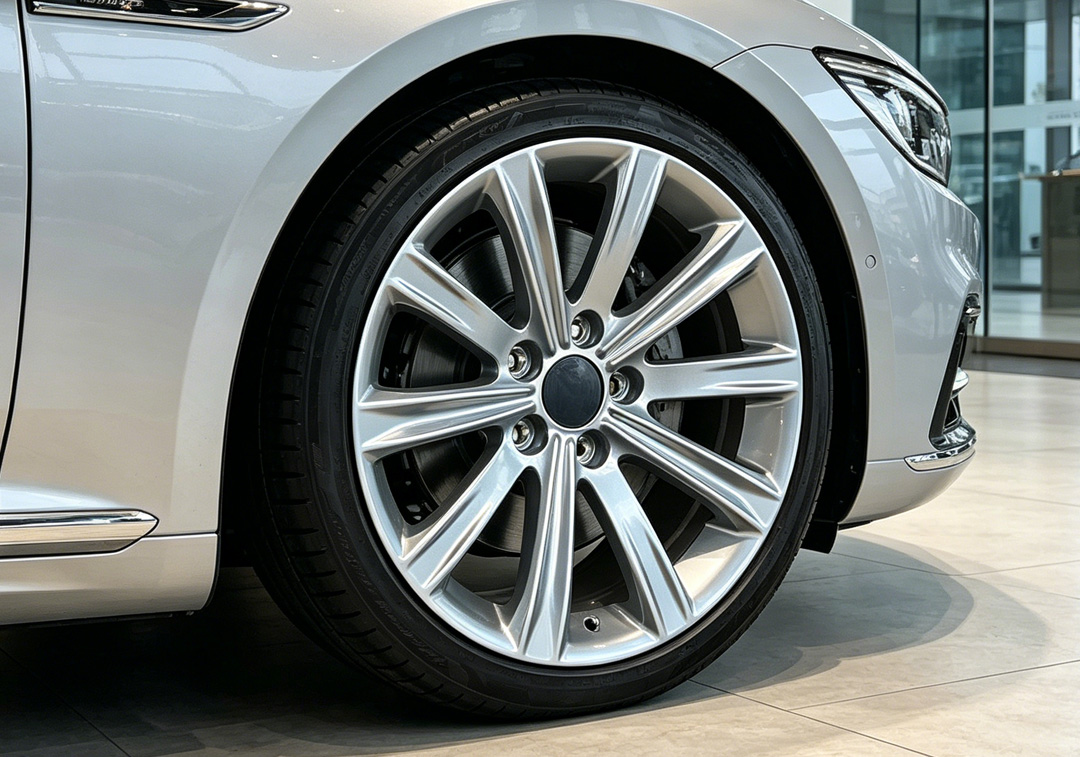
The most significant advantage of swapping heavy cast wheels for forged alternatives isn’t just aesthetic—it is rooted directly in physics.
Unsprung Mass and Rotational Inertia Explained
To understand why forged wheels improve vehicle dynamics, you must distinguish between sprung weight and unsprung weight:
-
Sprung Weight: Everything supported by your vehicle’s suspension system (engine, chassis, body panels, interior, passengers).
-
Unsprung Weight: Components located directly between the road and the suspension system (wheels, tires, brake rotors, wheel bearings, lower control arms).
Unsprung mass dictates how quickly your suspension can react to bumps, dips, and road surface variations. Furthermore, because wheels spin, they generate rotational inertia.
As a general rule in automotive engineering, dropping 1 lb of unsprung rotational weight feels equivalent to removing roughly 4 lbs of static weight inside the cabin when accelerating, steering, or braking.
Key Performance Upgrades
-
Faster Acceleration & Reduced Inertial Resistance: Because a lighter, forged wheel requires less rotational torque to begin spinning, your engine doesn’t have to work as hard to transfer horsepower to the pavement. This translates to quicker throttle response, faster off-the-line launch times, and reduced lag when accelerating out of tight corners.
-
Sharper, Shorter Braking Distances: Just as a lighter wheel requires less energy to spin up, it demands significantly less energy to stop. Lower rotational kinetic energy allows brake calipers and rotors to slow down wheel rotation with less thermal fade, shortening braking distances during aggressive driving or sudden stops.
-
Crisp Handling and Suspension Responsiveness: When your vehicle hits a bump or expansion joint at speed, the tire and wheel are forced upward. A heavy cast wheel carries massive momentum, compressing the shock absorbers hard and causing body unsettling. A lightweight forged wheel allows the suspension spring and damper to react instantly, keeping the tire’s contact patch glued to the road surface for maximum traction and precise steering turn-in.
-
Better Power Economy and Efficiency: Reducing rotational mass lowers the overall mechanical strain on the drivetrain. Whether driving a combustion-powered vehicle or an electric vehicle (EV), reducing rotational drag improves fuel efficiency and extends battery range per charge.
4.Safety and Durability: Do Forged Wheels Bend or Crack?
A common question among drivers evaluating performance wheels is how forged metal behaves under severe road stress. What happens when you hit a deep pothole at highway speeds?
Ductility Under High Impact
The safety difference between forged and cast aluminum comes down to ductility—the physical property that allows a material to deform under tensile stress rather than snapping abruptly.
-
Cast Aluminum Behavior: Cast metal is brittle due to internal porosity and non-aligned grain structures. Under a massive shock impact, a cast wheel is prone to cracking, snapping spokes, or shattering entirely. This can cause an instant loss of tire air pressure, wheel detachment, or serious catastrophic suspension damage.
-
Forged Aluminum Behavior: Forged metal possesses high yield strength and superior ductility. Under extreme stress, a forged wheel absorbs shock energy by bending slightly rather than cracking or shattering into pieces.
This controlled deformation is a critical safety benefit. A bent forged wheel rim lip will almost always continue to hold air pressure in the tire, giving you time to safely pull off the road without experiencing a sudden, dangerous blowout at high speeds.
5.Are Forged Wheels Worth the Investment for Daily Driving?
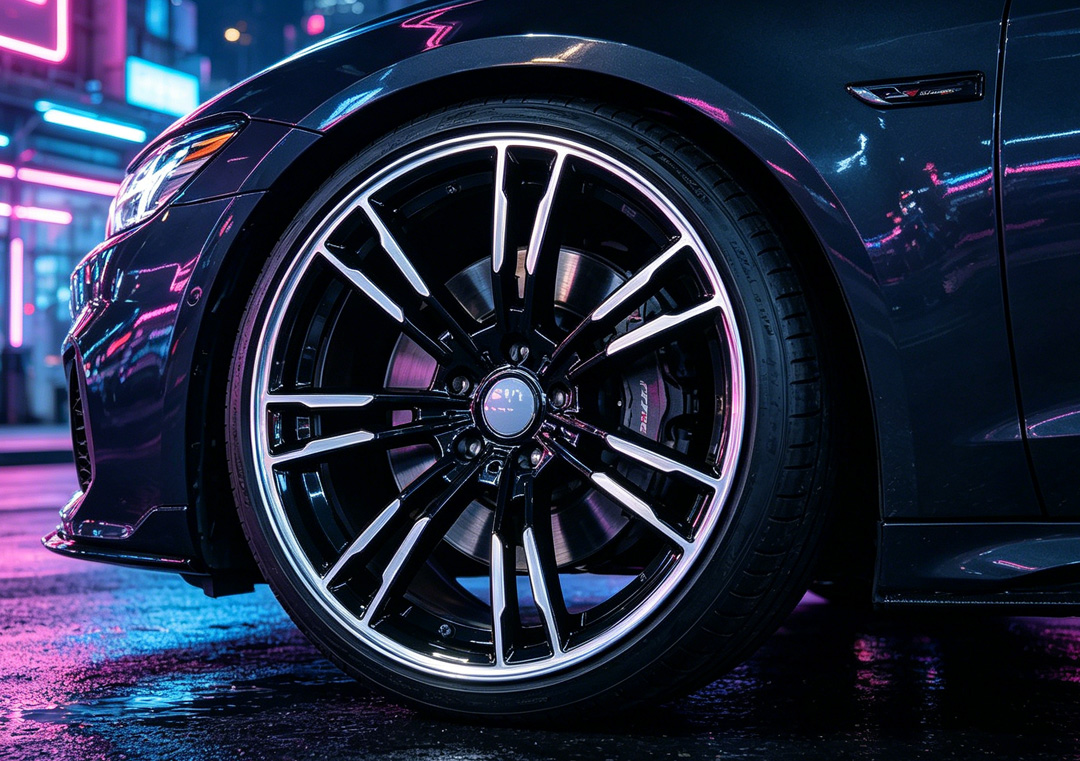
It is no secret that forged wheels cost more upfront than cast or flow-formed options. Manufacturing solid 6061-T6 aluminum blocks, operating multi-ton forging presses, and running hours of intricate CNC machining requires sophisticated infrastructure and expert quality control.
So, are forged wheels practical for an everyday commuter vehicle?
Evaluating Cost vs. Long-Term Value
-
Pothole Resistance: Replacement costs for cheap cast wheels add up quickly if you live in regions with harsh winters and poorly maintained asphalt. A forged wheel’s ability to withstand harsh impacts without cracking saves you money on frequent wheel replacements.
-
Resale Value Retention: Unlike low-tier aftermarket cast wheels that depreciate quickly, high-quality forged wheels retain a strong percentage of their value on the second-hand market among car enthusiasts.
-
Vehicle Aesthetics & Fitment: Custom forged wheels allow for exact hub-centric fitment, tailored flush fender offsets, and big-brake kit clearance without needing unsafe universal wheel spacers or hub adapters.
If your vehicle is purely a tool to travel from point A to point B without interest in handling dynamics, cast wheels will suffice. However, if you value driving feedback, brake responsiveness, structural safety, and long-term durability, upgrading to forged wheels is one of the single most rewarding investments you can make for your vehicle.
6.Key Considerations Before Purchasing Forged Wheels
Selecting the perfect set of forged wheels involves more than just picking a stylish spoke pattern. To ensure seamless fitment and peak performance, pay close attention to these vital engineering specs:
-
Bolt Pattern (PCD) and Hub-Centricity: Ensure the Pitch Circle Diameter (PCD)—such as 5×114.3, 5×120, or 5×112—matches your vehicle’s hub exactly. Always insist on hub-centric forged wheels engineered to match your vehicle’s center bore diameter. Hub-centric setups carry the vehicle’s weight directly on the hub axle rather than putting shear stress on the lug bolts, eliminating high-speed steering wheel vibrations.
-
Offset (ET) and Backspacing: Offset determines how deep or flush the wheel sits relative to your vehicle’s fender arches. Positive offset pushes the wheel mounting surface outward, pulling the wheel inward toward the suspension. Negative offset pushes the wheel mounting face inward toward the brakes, extending the wheel lip outward for a wide stance. Custom forged manufacturing allows you to specify exact millimeter offsets to clear aftermarket coilovers and oversized multi-piston brake calipers effortlessly.
-
Load Rating Requirements: Verify that the wheel’s certified structural load rating matches or exceeds your vehicle’s Gross Axle Weight Rating (GAWR). Heavy SUVs, EV trucks, and high-horsepower sedans require higher load ratings than lightweight sports coupes.
Frequently Asked Questions(FAQ)
Q1: What is the main difference between forged wheels and cast wheels?
The core difference lies in the manufacturing process and structural density. Cast wheels are made by pouring molten aluminum into molds, while forged wheels are pressed from solid aluminum blocks under extreme pressure. As a result, forged wheels are significantly lighter, stronger, and more resistant to impacts than cast wheels.
Q2: Are forged wheels worth the extra cost for daily driving?
It depends on priorities. For pure commuting, cast wheels are sufficient. However, forged wheels offer better fuel efficiency, improved suspension response, and superior bend resistance against severe potholes, making them a worthwhile long-term investment for performance enthusiasts and daily drivers alike.
Q3: What is the difference between 1-piece (Monoblock) and multi-piece forged wheels?
Monoblock (1-piece) wheels are precision-machined from a single forging block, offering maximum stiffness and minimum weight. Multi-piece (2 or 3-piece) wheels are assembled using separate forged centers, barrels, and rims held by hardware. They allow for wider customization (depth, width, dual-tone finishes) and cost-effective modular repairs.
Q4: Do forged wheels crack or bend under high impact?
Forged aluminum has higher structural integrity and ductility. Under extreme impact (such as deep potholes or track collisions), a forged wheel is more likely to bend rather than shatter or crack. This allows the tire to hold air pressure, preventing catastrophic blowouts and safety hazards.
Q5: How do forged wheels improve vehicle performance?
By reducing unsprung mass (weight not supported by the suspension) and rotational inertia, forged wheels provide:
-
Faster Acceleration & Braking: Less energy required to spin or stop the wheels.
-
Sharper Handling: Reduced inertia allows suspension systems to react faster to road contours.
-
Better Fuel/Power Economy: Lighter rotational weight improves overall energy efficiency.
Transform Your Drive with Precision Custom Wheels
Upgrading to a set of high-performance forged wheels is the ultimate fusion of form and function. By reducing unsprung mass, refining suspension feedback, and offering unmatched structural strength against road hazards, forged wheels fundamentally elevate how your vehicle looks, feels, and performs on every drive.
If you are ready to engineer the perfect setup tailored specifically to your vehicle’s make, model, and performance goals, explore bespoke wheel configurations at ATK Wheels. Discover custom precision-milled monoblock designs, modular multi-piece fitments, and premium finishes built to master both the street and the track.