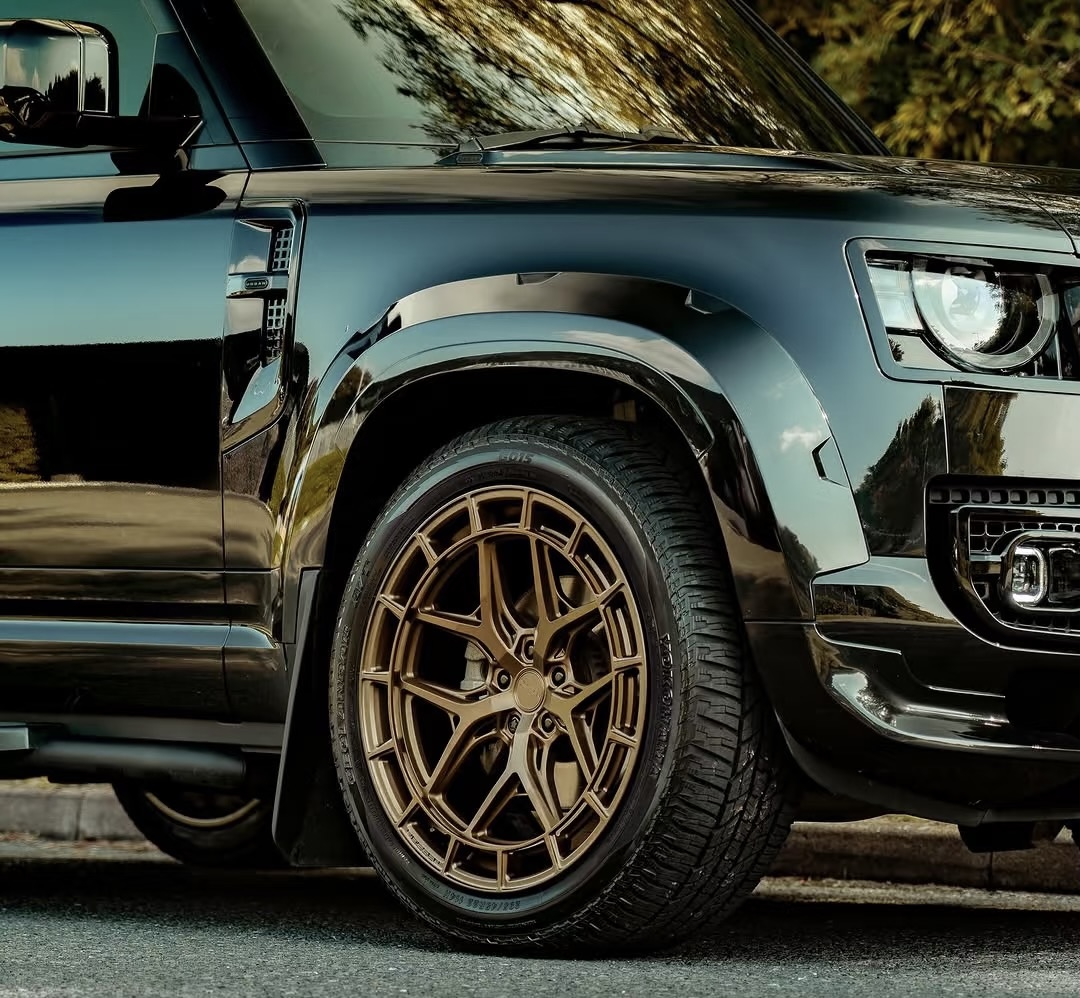
Forged Wheels Truck: What Truck Owners Should Know Before Buying
Forged Wheels Truck: What Truck Owners Should Know Before Buying
When you operate a heavy-duty pickup—whether it’s a Ford F-250 hauling a 5th-wheel camper, a Chevrolet Silverado 3500 dually pulling heavy machinery, or a custom lifted RAM 1500 hitting rugged trails—your wheels take more abuse than almost any other component on your vehicle. Standard factory wheels might suffice for grocery runs, but once you increase payloads, mount oversized mud-terrain tires, or push through harsh terrain, structural integrity becomes a non-negotiable factor.
This reality has driven serious truck owners, off-road enthusiasts, and fleet operators toward one definitive upgrade: forged wheels for trucks. But what makes forged wheels fundamentally superior to conventional cast or flow-formed alternatives? Is the price point justified for a daily driver? And how do you ensure correct fitment when upgrading?
Below, we break down the engineering behind forged truck wheels, examine real-world towing and off-road benefits, compare options head-to-head, and reveal exact specification requirements to help you choose with confidence.
1.What Are Forged Truck Wheels and How Are They Made?
To understand the advantage of a forged wheel, you must first look at the manufacturing process. Unlike cast wheels, which are made by pouring molten aluminum into a mold, forged wheels are created through intense thermal and mechanical pressure.
The process begins with a solid billet of aerospace-grade 6061-T6 aluminum. This solid cylinder is heated to extreme temperatures and subjected to massive mechanical presses—often applying between 8,000 to 10,000 tons of hydraulic pressure. This process crushes and shapes the aluminum while maintaining a solid state.
Key Technical Insight: Grain Structure AlignmentThe extreme pressure during forging aligns the internal grain structure of the metal to match the exact shape of the wheel. Eliminating internal microscopic porosity (air pockets) yields a finished wheel with immensely high tensile strength, structural density, and impact resistance.
After initial forging, the wheel blank is CNC-machined using precision tooling to craft spokes, bolt holes, center bores, and custom aesthetic details. The result is a monolithic, highly durable wheel engineered to withstand extreme mechanical stress without added weight.
2.Forged vs. Cast Truck Wheels: The Direct Comparison
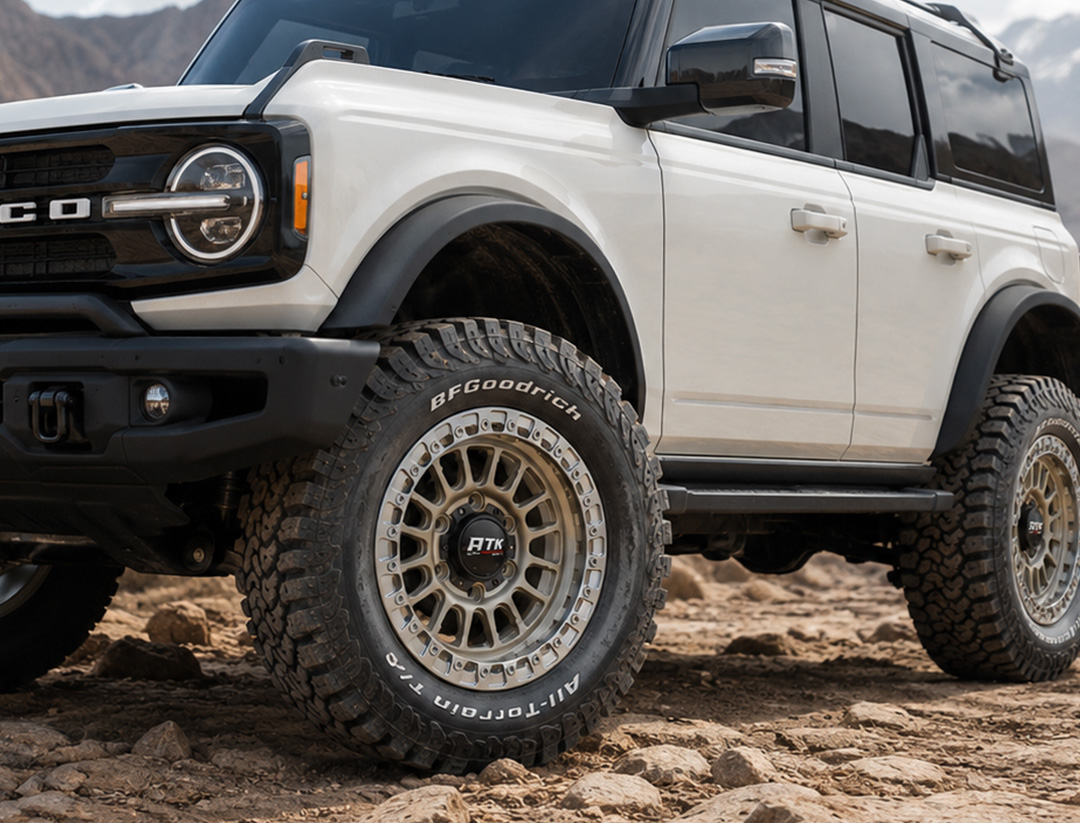
Choosing between forged and cast wheels comes down to how you use your truck. Cast wheels are inexpensive to produce, making them common for factory stock builds and budget aftermarket applications. However, cast aluminum is brittle under extreme stress due to random grain alignment and potential microscopic air pockets.
Flow-formed (or rotary forged) wheels sit in the middle ground, using pressure to stretch the wheel barrel. While stronger than standard casting, flow-formed wheels still feature a cast center and hub section, leaving them vulnerable compared to fully forged construction.
| Feature / Specification | Cast Truck Wheels | Flow-Formed Truck Wheels | Forged Truck Wheels |
|---|---|---|---|
| Manufacturing Method | Molten aluminum poured into mold | Cast center with roll-formed barrel | Solid 6061-T6 aluminum forged under 8000+ tons |
| Structural Grain Structure | Random / Unaligned | Aligned in barrel only | Fully aligned throughout entire structure |
| Weight Reduction | Baseline (Heavy) | 10% to 15% lighter than cast | Up to 25% to 30% lighter than cast |
| Tensile & Yield Strength | Standard (Lower limit) | Moderate improvement | Maximum rating (Highest load-to-weight ratio) |
| Impact Response | Cracks or shatters under heavy impact | Resists moderate bends; can crack | Bends rather than shatters under extreme force |
| Load Rating per Wheel | 2,000 lbs – 2,500 lbs typical | 2,500 lbs – 3,200 lbs typical | 3,500 lbs – 5,000+ lbs heavy-duty rating |
| Ideal Application | Light daily commuting; stock replacements | Mild off-roading; general daily driving | Heavy towing, dually trucks, hard off-roading, oversized tires |
3.Core Benefits of Installing Forged Wheels on Your Truck
Featured Snippet Summary: Key Benefits of Forged Truck WheelsForged wheels provide an exceptional strength-to-weight ratio, offering up to 30% weight reduction and significantly higher load ratings than cast wheels. For truck owners, key benefits include enhanced towing safety margins, improved fuel efficiency through unsprung weight reduction, superior off-road impact resistance, reduced braking distances, and customizable fitments.
1. Exceptional Strength-to-Weight Ratio
Forged wheels deliver unmatched structural density. Because the forged metal is so strong, manufacturers can use less material to achieve required load capacities. This allows forged wheels to be up to 30% lighter than cast wheels of identical dimensions while carrying significantly higher load ratings.
2. Improved Fuel Efficiency and Acceleration
Wheels represent rotational unsprung mass. Reducing unsprung weight on a truck yields disproportionate real-world benefits: it takes less engine torque to rotate a lighter wheel. As a result, trucks equipped with forged wheels often experience sharper throttle response, faster acceleration, and measurable improvements in miles-per-gallon (MPG), especially during urban stop-and-go driving.
3. Enhanced Towing Margins and Heavy Load Safety
Truck owners frequently push vehicle payloads close to capacity. High-end forged wheels built for heavy-duty trucks feature load ratings of 3,500 lbs to 5,000 lbs per wheel (or higher for dually applications). This structural overhead provides an extra margin of safety when hauling heavy fifth-wheel trailers, goosenecks, or commercial gear over uneven highway expansion joints.
4. Superior Resistance to Cracking and Off-Road Impact
When off-roading across sharp rocks, rutted trails, or deep washboards, wheels experience severe lateral and vertical force spikes. Cast wheels, being brittle, are prone to cracking or sudden catastrophic shattering under hard impact. In contrast, the dense grain structure of a forged wheel gives it high ductility. Under extreme forces that would crack a cast wheel, a forged wheel tends to bend slightly rather than break, allowing tires to retain bead pressure so you aren’t stranded on the trail.
5. Reduced Braking Effort and Suspension Wear
Lighter rotational mass means less kinetic energy stored in the wheel assembly while cruising. When you press the brake pedal, the braking system works less to slow down the vehicle, shortening stopping distances and reducing brake pad fade. Furthermore, lighter unsprung weight allows your truck’s shock absorbers and springs to react faster to bumps, resulting in a smoother ride and less wear on suspension bushings, ball joints, and wheel bearings.
4.Forged Wheels for Heavy Towing & Off-Roading: Real-World Scenarios
To appreciate why truck operators choose forged construction, consider two demanding operational environments:
Scenario A: The Heavy Towing & Hauling Application
Imagine towing a 16,000-lb enclosed trailer behind a diesel truck at 70 mph on the interstate. The combined vehicle weight places immense strain on axles, tires, and wheels. Hitting a deep pothole at high speed creates a massive load surge on the outer rim lip. A cast wheel can suffer fatigue cracks over time from constant high-stress cycles, leading to sudden air pressure loss. A heavy-duty forged truck wheel handles cyclical loading with minimal metal fatigue, offering peace of mind across long highway stretches.
Scenario B: Technical Off-Roading & Oversized Tires
Running 37-inch or 40-inch mud tires introduces extreme leverage on wheel spokes and hubs. In technical rock crawling, single wheels frequently support a major fraction of the vehicle’s total weight while wedged against solid rock faces. Forged wheels resist bending and rim flange deformities under low tire pressure beadlock conditions, allowing truck owners to tackle difficult trails with confidence.
5.Are Forged Wheels Worth the Extra Cost for a Daily Driver?
Forged truck wheels require a higher initial investment compared to cast alternatives. Whether they make financial sense for your specific build depends on your primary usage patterns:
-
High Worth Investment: If you frequently tow heavy loads, run oversized off-road tires, operate in severe weather/off-road environments, or own a heavy dually truck, forged wheels are a smart long-term investment. Their durability prevents costly trail breakdowns, rim replacements, and uneven tire wear.
-
Selective Investment: If your truck is primarily a daily commuter used for pavement driving with stock tire sizes and light bed loads, high-quality flow-formed wheels may offer a balanced, budget-conscious alternative.
Ultimately, for truck owners who view their vehicle as a functional tool, workhorse, or specialized build, the long-term safety, fuel economy gains, and performance resilience of forged wheels justify the upfront cost.
6.Can Forged Wheels Increase Your Truck’s Official Towing Capacity?
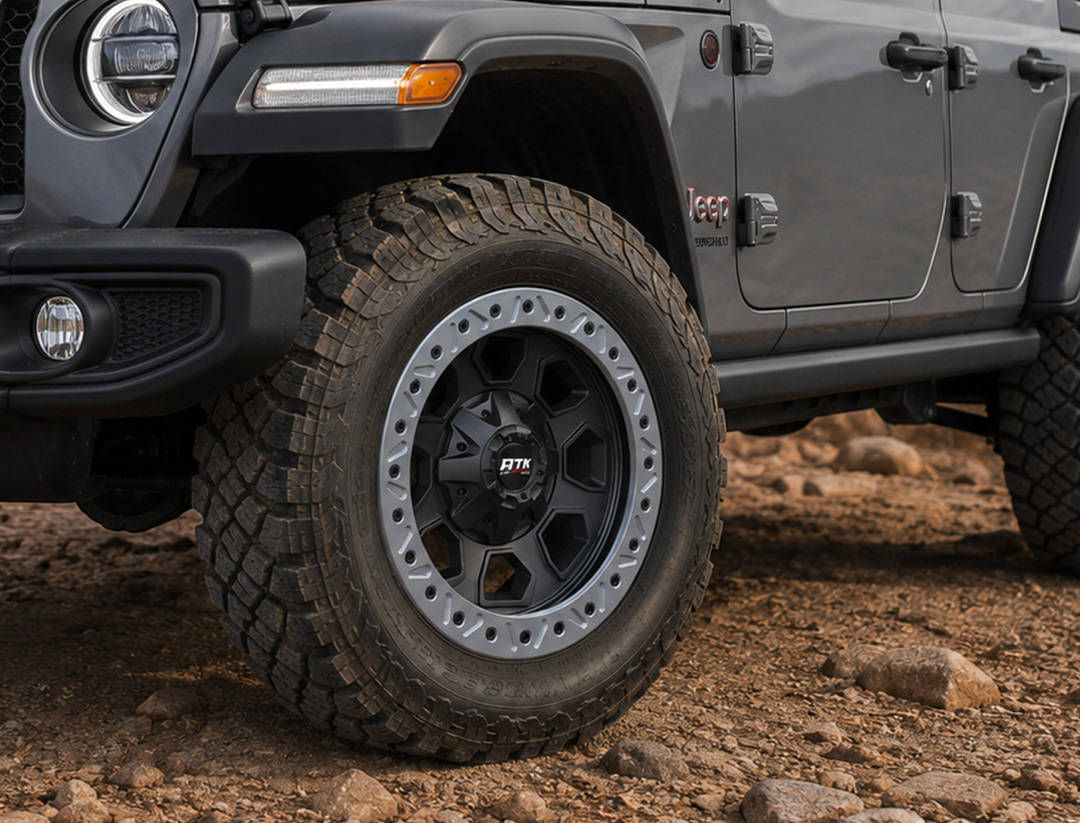
A common misconception among truck enthusiasts is that installing heavy-duty forged wheels instantly raises a truck’s towing or payload rating. It does not.
Crucial Safety Principle: Your truck’s official Gross Vehicle Weight Rating (GVWR) and Gross Combined Weight Rating (GCWR) are strictly set by the vehicle manufacturer based on the weakest link in the drivetrain, chassis, frame, brakes, and suspension.
Installing forged wheels rated for 4,500 lbs each will not legally increase your vehicle’s GVWR. However, what forged wheels do provide is a significantly higher structural safety buffer. By eliminating the wheel as a potential failure point during maximum-capacity operations, you ensure your truck operates at peak reliability near factory limits.
7.Critical Fitment Specifications to Check Before Buying
Selecting the right forged wheels for a truck requires evaluating several precise technical dimensions. Ordering incorrect specifications can lead to tire rubbing, caliper clearance issues, suspension interference, or unsafe wheel lug engagement.
1. Bolt Pattern (PCD)
The bolt pattern (Pitch Circle Diameter) must match your truck’s hub setup exactly. Common truck bolt patterns include:
-
6×135: Standard on modern Ford F-150 models.
-
6×139.7 (6×5.5): Standard on Chevrolet Silverado 1500, GMC Sierra 1500, Toyota Tundra.
-
8×170: Standard on Ford F-250 and F-350 Super Duty trucks.
-
8×165.1 (8×6.5) & 8×180: Common across RAM heavy-duty and Chevrolet/GMC 2500/3500 HD models.
2. Center Bore Size
Most trucks require hub-centric wheels, meaning the center bore of the wheel matches the diameter of the truck’s axle hub snout exactly. This ensures vehicle weight rests on the hub rather than solely on the wheel studs. If installing lug-centric aftermarket wheels, high-strength hub-centric rings must be used to eliminate high-speed steering wheel vibrations.
3. Wheel Offset & Backspacing
Offset (measured in millimeters) and backspacing (measured in inches) determine how far inside or outside the wheel sits relative to your truck’s fender wells:
-
Positive Offset (+): Pulls the wheel inward toward the suspension. Common on stock configurations.
-
Negative Offset (-): Pushes the wheel outward beyond the fender, creating a wider stance typical of lifted trucks running aggressive off-road tires.
4. Individual Wheel Load Rating
Never install a wheel with a load rating lower than half of your truck’s highest axle weight rating (GAWR). For heavy-duty 2500/3500 trucks and dually models, always choose forged wheels specifically rated for heavy-duty commercial or towing applications (typically 3,500 lbs to 5,000+ lbs per wheel).
Frequently Asked Questions (FAQ)
Q1: What are the main benefits of forged wheels for trucks?
A: Forged wheels offer a superior strength-to-weight ratio. They are up to 30% lighter and significantly stronger than traditional cast wheels. For trucks, this translates to higher structural load margins, improved fuel efficiency, enhanced braking performance, and superior impact resistance off-road.
Q2: Forged vs. Cast truck wheels: Which is better for heavy towing and offroading?
A: Forged wheels are far better suited for both heavy towing and aggressive off-roading. The high-pressure forging process eliminates internal porosity and aligns the metal’s grain structure, allowing forged wheels to resist cracking under heavy loads and bend rather than shatter upon extreme off-road impacts.
Q3: Are forged wheels worth the extra cost for a daily driven truck?
A: It depends on your vehicle usage. If you frequently tow heavy loads, run oversized tires, or take your truck off-road, forged wheels represent a smart long-term investment in durability and safety. For light daily commuting on paved roads, high-quality flow-formed or cast wheels offer a cost-effective alternative.
Q4: Can forged wheels increase a truck’s payload and towing capacity?
A: No. While forged wheels have higher structural strength and individual load ratings, they cannot increase your truck’s official Gross Vehicle Weight Rating (GVWR) or towing capacity set by the manufacturer. However, they provide a much higher safety margin when operating near maximum payload limits.
Q5: How do I choose the correct size and fitment for forged truck wheels?
A: You must verify four critical specifications: Bolt Pattern (e.g., 6×135, 8×170), Wheel Offset/Backspacing, Center Bore size (ensuring hub-centric fitment), and Wheel Load Rating. For custom lifted or dually trucks, precise measurements are mandatory to prevent tire rubbing against suspension components or fenders.
Elevate Your Truck’s Performance & Stance
Ready to upgrade your truck with custom forged strength? Explore precision engineering, robust load ratings, and tailored fitments at ATK Wheels. Transform your towing capability and off-road confidence with forged truck wheels built to handle real-world challenges.