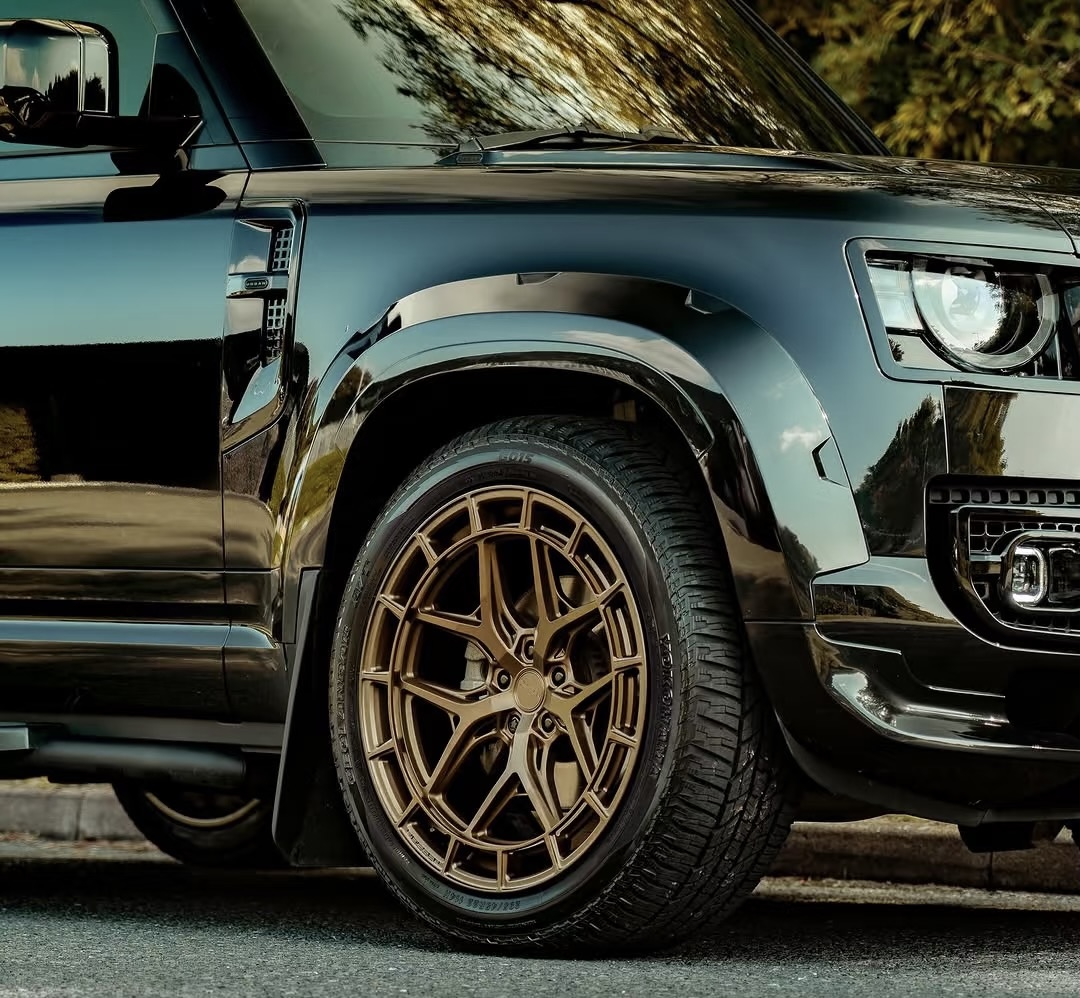
Flow Forged Wheel: The Smart Choice for Performance and Everyday Driving
Flow Forged Wheel: The Smart Choice for Performance and Everyday Driving
If you are looking to upgrade your vehicle’s performance and aesthetics, you have likely run into a massive wall of marketing jargon. Between “cast,” “fully forged,” “rotary forged,” and flow forged wheels, finding the right balance between strength, weight, and budget can feel like a daunting task.
You want a wheel that can handle potholes, improve your car’s handling, and look incredible—all without draining your bank account.
Enter the flow forged wheel.
Often considered the sweet spot of the aftermarket wheel industry, flow forged technology offers a premium compromise that bridges the gap between affordable cast wheels and ultra-premium fully forged options. But what exactly is a flow forged wheel, and is it the right choice for your build? Let’s break down the science, the benefits, and how this manufacturing process alters your driving experience.
1.What Is a Flow Forged Wheel?
At its core, a flow forged wheel is a hybrid product that combines traditional casting with advanced forging techniques. It is engineered to deliver the structural integrity of a forged wheel in the barrel area while keeping manufacturing costs closer to a standard cast wheel.
The Manufacturing Process Step-by-Step
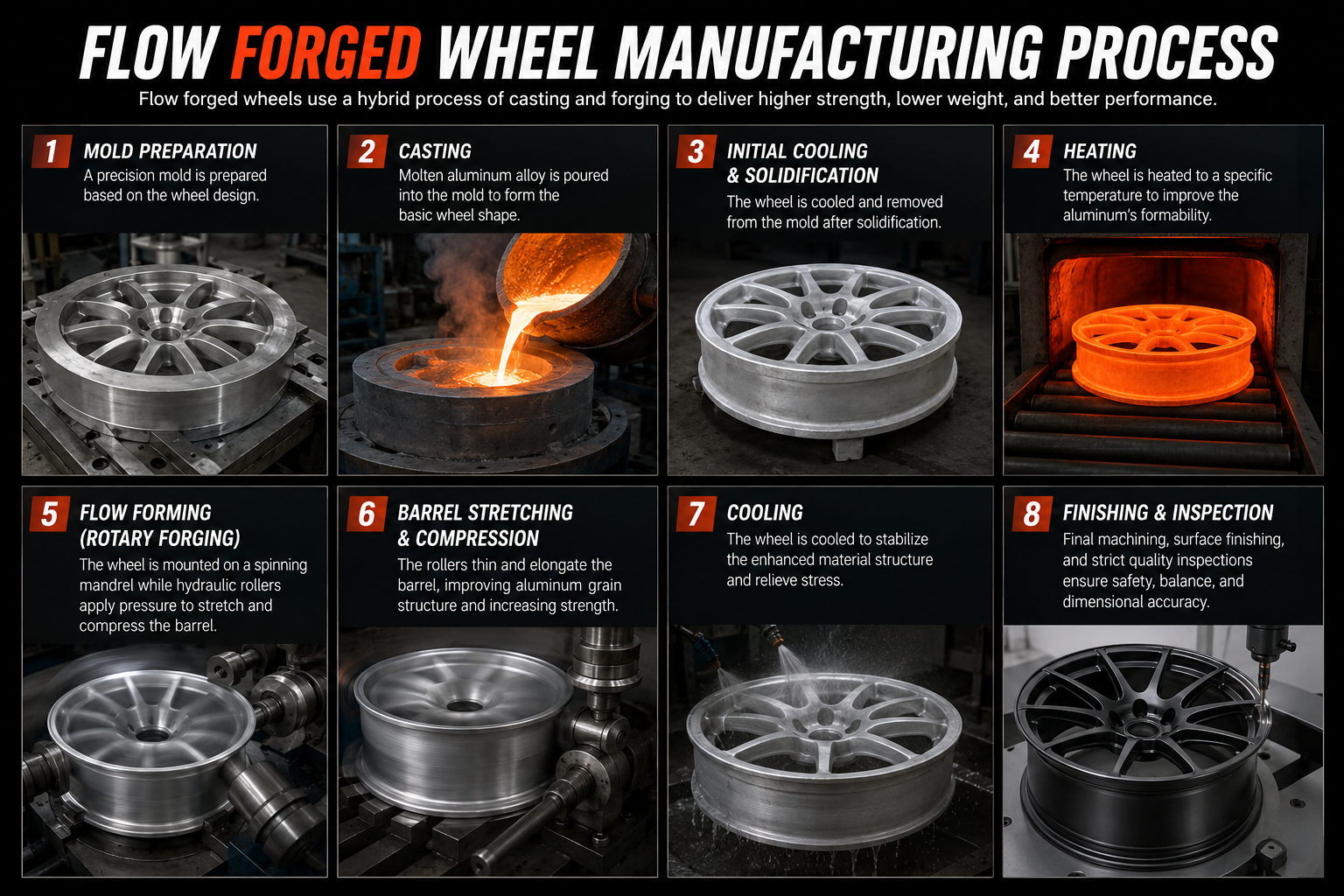
To truly understand why these wheels are highly regarded, we need to look at how they are made. The process is a fascinating blend of heat, pressure, and high-speed rotation.
-
The Initial Cast: The process begins with a specialized, low-pressure aluminum cast. This initial cast creates a “pre-form” wheel that looks like a standard wheel but features a much shorter, thicker barrel.
-
Heating and Mounting: This pre-form wheel is placed onto a proprietary flow-forming machine and heated to precise, high temperatures to make the aluminum malleable.
-
Spinning and Pressurized Rolling: The machine spins the wheel at high speeds. As it spins, heavy hydraulic rollers apply immense pressure to the outer barrel.
-
Stretching the Material: These rollers move along the barrel, pulling, stretching, and compressing the aluminum to its final width and profile.
This mechanical manipulation changes the physical properties of the aluminum, resulting in a finished wheel that performs exceptionally well under stress.
2.The Science of Flow Forging: Why It Matters
The magic of the flow forging process lies in metallurgy. When aluminum is poured into a traditional mold and left to cool, the microscopic grain structure of the metal is random and porous. This inherent porosity makes cast wheels more brittle and susceptible to cracking under heavy impacts.
When the hydraulic rollers stretch and compress the heated aluminum during the flow forging process, they alter the metal’s internal structure.
-
Grain Alignment: The process aligns the aluminum molecules in a linear, continuous direction along the barrel.
-
Increased Density: The intense pressure eliminates microscopic air pockets and voids within the metal.
-
Forged-Like Properties: Because the grain flow of the aluminum is altered and compressed, the resulting barrel possesses a tensile strength that mimics that of a fully forged wheel.
Because the barrel becomes significantly stronger through this process, engineers can use less material to achieve the required load rating. Thinner walls mean less weight, creating a lighter wheel that does not sacrifice structural integrity.
3.Flow Forged vs. Cast vs. Fully Forged: The Direct Comparison
To make an informed decision for your vehicle, it helps to understand how flow forged wheels stack up against the other two primary manufacturing methods: traditional cast and fully forged.
1. Traditional Cast Wheels
Cast wheels are made by pouring molten aluminum into a mold and allowing it to cool. This is the most common and cost-effective way to manufacture wheels. While they are highly affordable and allow for intricate face designs, they are heavy and brittle. If you hit a severe pothole, a cast wheel is more likely to crack or shatter rather than bend.
2. Fully Forged Wheels
Fully forged wheels represent the pinnacle of wheel technology. They start as a solid block of premium aerospace-grade aluminum billet ($6061-T6$). This solid block is subjected to thousands of tons of pressure from an industrial press, crushing the metal into the shape of a wheel before the final design is CNC-machined. Fully forged wheels are incredibly light and exceptionally strong throughout the entire structure (both face and barrel). However, they require highly specialized equipment to manufacture, making them incredibly expensive.
3. Flow Forged Wheels (The Hybrid)
Flow forged wheels use a cast face but a forged barrel. This gives you the design flexibility and lower cost of a cast wheel, combined with the strength and weight savings of a forged barrel. Since the barrel bears the brunt of road impacts and handles the vehicle’s cornering forces, upgrading its strength yields massive performance gains at a fraction of the cost of a fully forged wheel.
Side-by-Side Comparison Table
| Feature | Traditional Cast Wheels | Flow Forged Wheels | Fully Forged Wheels |
|---|---|---|---|
| Manufacturing Process | Molten aluminum poured into a static mold | Cast face with a hydraulically rolled/stretched barrel | Solid aluminum billet compressed under immense pressure |
| Relative Strength | Standard (Brittle under extreme impact) | High (Excellent barrel strength and elasticity) | Ultra-High (Maximum strength across the entire wheel) |
| Weight | Heavy | Light (15% to 25% lighter than cast) | Ultra-Lightweight |
| Shock Resistance | Poor (Prone to cracking) | Great (Resists cracks, tends to bend before breaking) | Exceptional (Highest impact resistance) |
| Average Cost | (Budget-friendly) | (Best value for performance) | (Premium investment) |
4.Key Benefits of Upgrading to Flow Forged Wheels
Investing in a set of flow forged wheels offers immediate, tangible improvements to your vehicle’s dynamics, safety, and longevity.
1. Significant Weight Reduction
A flow forged wheel is typically 15% to 25% lighter than a standard cast wheel of the exact same dimensions. In the automotive world, reducing wheel weight is incredibly valuable because it reduces unsprung weight and rotational mass.
Unsprung weight refers to any component of the vehicle not supported by the suspension (wheels, tires, and brakes). Lowering unsprung mass allows your suspension to react faster to bumps and dips, keeping your tires firmly planted on the tarmac for superior grip and a smoother ride.
2. Enhanced Vehicle Performance
Because a lighter wheel requires less energy to spin, reducing rotational mass yields noticeable performance gains:
-
Quicker Acceleration: Your engine does not have to work as hard to overcome the inertia of heavy wheels.
-
Sharper Braking: Less rotating mass means your brakes can bring the wheels to a halt more efficiently, reducing stopping distances.
-
Agile Handling: Reduced gyroscopic effect from lighter spinning wheels makes your steering feel sharper, crisper, and more responsive when cornering.
3. Superior Strength and Durability
Road conditions can be brutal. Potholes, debris, and track curbing can easily ruin a cheap cast wheel. Thanks to the compressed grain structure of the barrel, flow forged wheels boast much higher tensile strength and shock resistance. If you do hit an unavoidable hazard, a flow forged wheel is much more likely to bend slightly rather than catastrophically crack, allowing you to maintain control of the vehicle and safely pull over.
4. Cost-Effective Performance
For the vast majority of enthusiasts, fully forged wheels are financially out of reach, often costing thousands of dollars per wheel. Flow forged wheels offer a massive portion of those performance advantages—namely the weight savings and barrel strength—at a price point that is accessible to everyday drivers and track weekend enthusiasts alike.

5.Clearing Up the Nomenclature: Flow Forged vs. Rotary Forged
If you have been shopping around, you may have seen terms like “Rotary Forged,” “Flow Formed,” “Spin Forged,” or “Rim Rolled.” It is easy to get confused and assume these are competing technologies. However, here is an insider industry secret: they are exactly the same thing.
Different wheel manufacturers use unique proprietary names for marketing purposes to differentiate their product lines. Whether a brand calls it flow formed, rotary forged, or flow forged, the fundamental manufacturing step remains unchanged: a cast aluminum pre-form is heated, spun, and rolled using hydraulic pressure to shape the barrel.
6.Who Are Flow Forged Wheels Best For?
While flow forged wheels offer incredible value, they are particularly well-suited for specific types of drivers:
-
Daily Drivers in Pothole-Prone Areas: If your commute involves poorly maintained city streets, the added structural elasticity of a flow forged barrel provides an invaluable safety margin against cracked rims.
-
Track Day & Autocross Enthusiasts: If you participate in grassroots racing, autocross, or HPDE (High-Performance Driving Events), dropping unsprung weight will immediately improve your lap times and cornering feedback without exhausting your racing budget.
-
Performance Car Owners: Modern sports cars and performance sedans generate high cornering forces. Flow forged wheels ensure your wheels can handle those lateral loads without excessive flexing.
-
Aesthetics Enthusiasts: If you simply want to fill out your fenders with wider, aggressive fitments, choosing a flow forged option keeps the overall weight of a larger diameter wheel manageable.

Frequently Asked Questions (FAQs)
1.What is the main difference between a flow forged wheel and a cast wheel?
The main difference lies in how the barrel is constructed. A standard cast wheel is formed entirely by cooling molten metal in a mold. A flow forged wheel starts as a cast piece, but its barrel is heated, spun, and stretched by hydraulic rollers. This extra step aligns the metal grain structure, making the barrel significantly thinner, lighter, and stronger than a traditional cast barrel.
2.Can flow forged wheels be repaired if they bend?
Yes. Because the aluminum grain structure in the barrel has been compressed and aligned, it possesses higher ductility (elasticity) than a standard cast wheel. Specialized wheel repair shops can often safely straighten minor bends in a flow forged barrel. In contrast, standard cast wheels are brittle and frequently crack when a technician attempts to bend them back into shape.
3.Is a flow forged wheel as strong as a fully forged wheel?
No. While a flow forged wheel features a barrel with strength properties close to a forged wheel, its face and spokes are still made using a traditional low-pressure casting process. A fully forged wheel is pressed from a single solid block of aluminum, meaning both the face and the barrel share the absolute maximum level of structural density and strength.
4.Do flow forged wheels improve fuel economy?
Yes, minor improvements can occur. Because flow forged wheels reduce the vehicle’s total rotational mass, the engine expends less energy to accelerate from a stop. While the fuel economy gains may be modest during steady highway cruising, you will notice improved efficiency in stop-and-go city driving.
5.Why do some brands call them “rotary forged” instead of “flow forged”?
“Rotary forged” and “flow forged” describe the exact same hybrid manufacturing process. Brands use different terms primarily for marketing and brand differentiation.
Conclusion: Is It Time to Make the Switch?
When it comes to upgrading your vehicle, your wheels are one of the most critical components you can change. They dictate your car’s stance, safety, and core performance characteristics.
While traditional cast wheels are budget-friendly, they compromise on weight and durability. Fully forged wheels offer zero compromises but come with a luxury price tag. The flow forged wheel provides the ultimate middle ground—giving you track-tested strength, lighter unsprung weight, and exceptional styling at a price point that makes sense.
Are you ready to transform your vehicle’s looks and handling dynamics? Explore a premium selection of lightweight, high-strength options engineered to elevate your daily drive or track performance. Check out the latest designs and find the perfect fitment for your vehicle today.
Explore high-quality flow forged wheel options from ATK Wheels and find a design that matches your driving style, vehicle fitment, and performance goals.
Choose wheels built for strength, style, and confidence on every road.