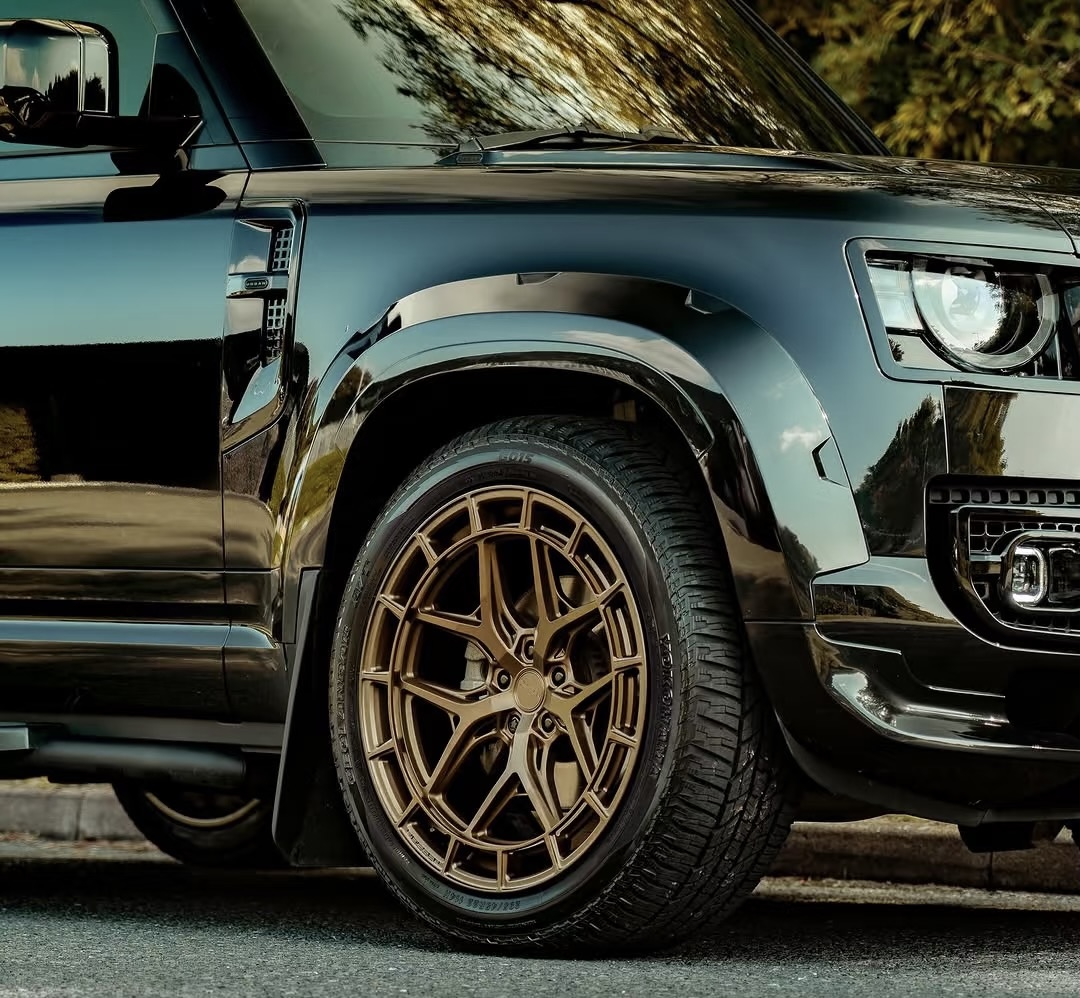
Custom Wheel Selection: Size, Fitment, Offset, and Performance Explained
Custom Wheel Selection: Size, Fitment, Offset, and Performance Explained
Upgrading to a tailored set of aftermarket rims remains one of the most effective, functional, and visually striking modifications you can execute on a modern car, truck, or crossover vehicle. Far beyond simple visual upgrades, selecting an appropriately engineered custom setup refines dynamic handling characteristics, reduces overall rotating mass, and provides a customized stance aligned with your specific driving habits and performance objectives.
However, navigating the intricate nuances of structural engineering, metallurgical manufacturing processes, and tight fitment parameters can prove challenging given the overwhelming volume of technical specifications available in today’s aftermarket industry. Miscalculating clearance tolerances by even a few millimeters or selecting an improper offset profile can compromise vehicle structural safety, degrade handling efficiency, induce severe high-speed vibration, and cause premature tire tread wear.
This comprehensive technical analysis explores structural manufacturing methodologies, essential fitment geometry, mechanical load tolerances, and real-world performance trade-offs. Armed with this knowledge, you can ensure your next custom setup fits perfectly, operates predictably, and delivers long-term driving safety across all road conditions.
1.Understanding Custom Wheel Construction: Cast, Flow-Formed, and Forged
Selecting aftermarket custom wheels begins with choosing the appropriate structural manufacturing process. The inner grain structure created during manufacturing directly determines the finished wheel’s tensile strength, total mass, impact deformation resistance, and overall financial cost.
       CAST WHEELS                 FLOW-FORMED WHEELS               FORGED WHEELS
+------------------------+     +------------------------+     +------------------------+
|  Molten Aluminum Mold  |     | Cast Preform + Stretched|     | Solid Billet Compressed|
| Moderate Strength/Weight|    |  Dense Rim Barrel Shell |    | Max Strength/Min Weight|
+------------------------+     +------------------------+     +------------------------+
Cast Aluminum Wheels
Cast aluminum wheels represent the foundational standard for accessible, cost-effective aftermarket upgrades. In this manufacturing workflow, liquid aluminum alloy—typically A356 aluminum—is poured or drawn into a pre-shaped mold cavity using either atmospheric gravity or low-pressure feeding systems.
-
Gravity Casting: The simplest method, where gravity pulls molten metal into the mold. While highly economical, it often results in a porous aluminum structure with lower mechanical density, necessitating thicker, heavier spokes to achieve baseline safety ratings.
-
Low-Pressure Casting: Molten alloy is pushed into the mold from underneath using pressurized air. This process reduces gas porosity and creates a denser structural integrity than gravity casting, allowing for slightly reduced weight without compromising rigidity.
-
Pros: Highly cost-effective production, wide variety of intricate aesthetic designs, fully suited for standard daily street driving and commuting.
-
Cons: Higher overall weight profile, lower structural density, increased susceptibility to cosmetic cracking or total fracture under severe pothole impacts.
Flow-Formed Wheels
Flow-forming—also frequently marketed as rotary forging, rim-rolling, or spin-forging—blends low-pressure casting techniques with high-pressure hydraulic metal forming. The initial face of the wheel is cast as a smaller preform. The unit is then mounted onto a specialized spinning mandrel while high-heat torches and heavy hydraulic rollers press, compress, and stretch the aluminum rim barrel to its final width.
-
Metallurgical Advantage: The high-pressure rolling action realigns the crystalline aluminum grain structure longitudinally along the outer barrel shell, replicating the tensile grain density found in fully forged barrels.
-
Pros: Achieves structural barrel strength close to forged setups, reduces unsprung mass by roughly 15-20% compared to standard cast options, offers superior impact resistance against hard road debris and potholes.
-
Cons: Sits at a moderate price point higher than standard cast models while retaining a cast center face design.
Forged Billet Wheels
Forged wheels represent the absolute pinnacle of automotive structural design and high-performance engineering. Rather than melting aluminum down to a liquid state, forged wheels start as solid cylindrical billets of aerospace-grade 6061-T6 aluminum alloy. These solid metal blocks are heated and subjected to immense hydraulic pressure—often exceeding 10,000 tons—to compress the raw metal into dense wheel blanks. CNC milling machines then carve out the final spoke geometry with sub-millimeter precision.
-
Monoblock vs. Multi-Piece Forged: Monoblock forged wheels are machined out of a single billet for maximum structural rigidity and minimal weight. Multi-piece forged builds (2-piece or 3-piece) join forged center faces to spun aluminum inner and outer barrels using high-tensile hardware, allowing for endless custom widths, colors, and offset configurations.
-
Pros: Unmatched strength-to-weight efficiency, extreme structural flexibility under heavy cornering loads, maximum impact deformation resistance, and significant reduction of rotating mass.
-
Cons: Premium production costs, specialized custom manufacturing, and extended order lead times due to precision machining requirements.
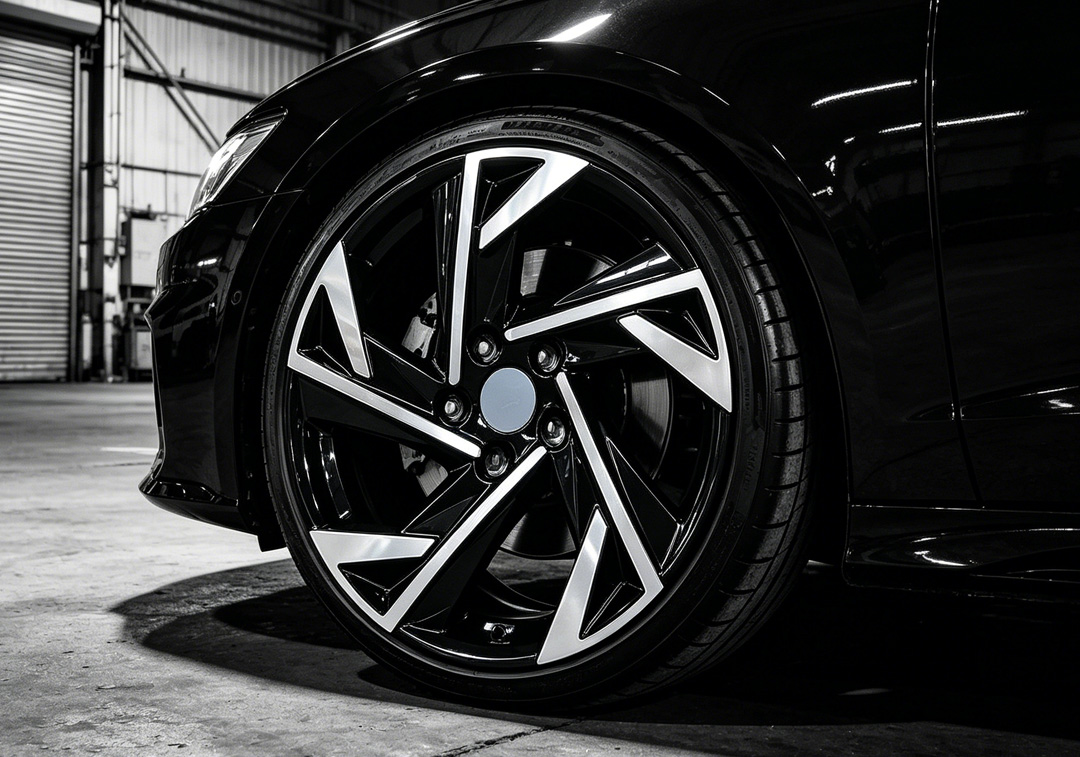
2.Technical Specifications Comparison
Evaluating custom wheel construction requires balancing structural strength, vehicle weight requirements, intended driving environments, and total budget constraints.
| Construction Type | Manufacturing Process | Weight Profile | Impact Resistance | Ideal Application |
|---|---|---|---|---|
| Gravity / Low-Pressure Cast | Molten alloy poured into static molds | Standard / Heavy | Moderate | Daily commuting, winter setups, cosmetic street upgrades |
| Flow-Formed / Rotary Forged | Cast face with pressure-stretched barrel | Lightweight | High | Spirited driving, track days, daily performance, heavy SUVs |
| Monoblock Forged | CNC-machined solid 6061-T6 aluminum block | Ultralight | Maximum | Track performance, motorsport, custom luxury, heavy off-road builds |
3.Critical Fitment Parameters Every Driver Must Measure
Achieving a flush, rub-free setup requires precise measurement accuracy across every geometric axis. A variance of just a few millimeters can lead to inner strut clearance failure, brake caliper interference, or outer fender contact during suspension compression.
                        WHEEL OFFSET & BACKSPACING

             [ Outer Lip ]     [ Hub Centerline ]     [ Inner Lip ]
                   |                  |                    |
                   |<--- Positive --->|                    |
                   |      Offset      |                    |
                   |                  |<--- Backspacing --->|
1. Bolt Pattern (PCD – Pitch Circle Diameter)
The bolt pattern comprises two values: the total number of lug holes and the diameter of the imaginary circle formed by their centers. For example, a 5×114.3 mm spec indicates 5 lug holes spaced around a 114.3 mm diameter circle (commonly found on Japanese and American vehicles), whereas 5×120 mm is standard across many European platforms. Securing an exact match to your vehicle’s factory axle hub specification is mandatory to allow flush seating and even lug torque distribution. Never attempt to force a wheel with an incorrect PCD onto your hub without engineered adapter plates.
2. Wheel Offset (ET) and Backspacing
Offset—designated as “ET” from the German word Einpresstiefe—is the exact millimeter distance from the true mathematical centerline of the total wheel width to its rear mounting pad:
-
Positive Offset: Locates the mounting surface pad toward the front wheel face, pulling the entire assembly inward toward the vehicle’s suspension components. This is common in modern front-wheel-drive vehicles and modern sports sedans.
-
Zero Offset: Positions the mounting face pad directly aligned with the geometric centerline.
-
Negative Offset: Shifts the mounting surface back toward the rear barrel lip, pushing the wheel outward away from the chassis to create a wide, aggressive stance. This setup is popular in off-road truck applications and deep-lip custom builds.
-
Backspacing: The distance from the rear mounting surface pad to the extreme inner lip edge of the wheel. While offset calculates position relative to the centerline, backspacing measures total clearance depth toward the inner wheel well.
3. Center Bore and Hub-Centric Rings
The center bore denotes the central machined circular opening on the rear of the hub plate that seats directly over the vehicle’s axle hub flange. Many aftermarket manufacturers produce wheels with oversized center bores to accommodate multiple vehicle hub sizes.
If an aftermarket wheel has a larger center bore than your axle hub, it creates a lug-centric fitment. Because lug studs are designed to handle clamping force rather than vertical shear stress, running a lug-centric setup can introduce annoying steering wheel vibrations at highway speeds. Installing aluminum or high-temp polycarbonate hub-centric rings bridges this gap perfectly, ensuring the wheel centers precisely on the hub hub flange.
4. Load Capacity Ratings and Brake Clearance
Always verify that the rated load capacity of each wheel meets or exceeds one-half of your vehicle’s Gross Axle Weight Rating (GAWR). Heavier trucks, high-capacity commercial vans, electric vehicles (EVs), and large SUVs require elevated load capacities due to structural battery weight and towing requirements.
Additionally, ensure that the spoke profile offers adequate clearance for big brake kits (BBK) or multi-piston performance calipers. Convex spoke profiles extend outward to clear wide calipers, whereas concave profiles curve inward toward the hub for aggressive visual depth.
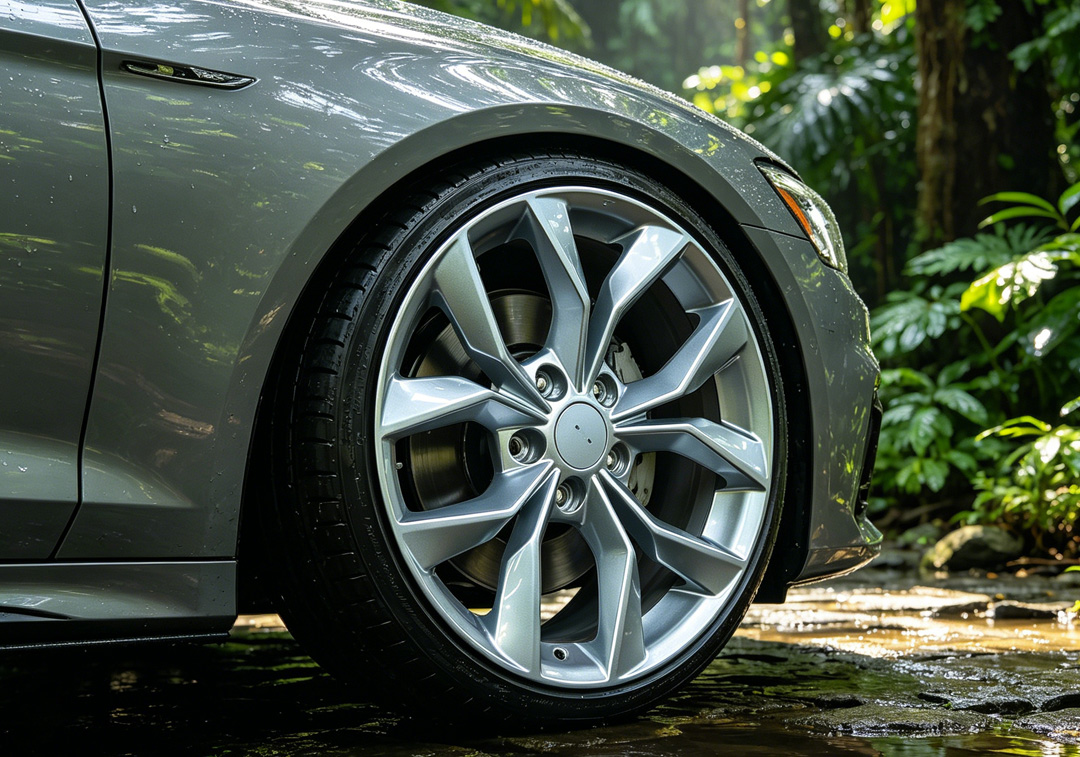
4.Performance Impacts: Dynamic Handling, Comfort, and Speedometer Precision
Altering overall wheel dimensions and switching to lower-profile tires directly influences everyday driving dynamics, steering response, and power delivery.
-
Unsprung Weight Dynamics: Reducing rotating unsprung mass using lightweight flow-formed or forged builds allows suspension dampers and springs to compress and rebound faster over surface bumps. This optimizes tire tread contact patches with the road surface, improving throttle response, reducing braking distances, and sharpening chassis agility.
-
Handling vs. Ride Quality: Increasing wheel diameter necessitates lower-profile tire sidewalls to preserve overall outer rolling circumference. Reduced tire sidewalls lower flex during lateral cornering, delivering crisp steering feedback at the cost of transmitting slightly more vibration into the passenger cabin over harsh pavement.
-
Speedometer and Drive Ratio Accuracy: Maintaining total rolling circumference within a 1-3% tolerance of original factory specifications ensures accurate speedometer readings, correct automatic transmission shift points, and proper ABS/traction control system sensor inputs.
5.Essential Installation Steps: Lug Hardware and Assembly Safety
Achieving safe, reliable installation requires specialized hardware configured specifically for aftermarket wheel geometry.
-
Lug Seat Geometry: Original equipment wheels frequently utilize flat-washer or ball-style lug seating surfaces. Aftermarket wheels generally specify 60-degree conical (acorn) seats or small-diameter tuner lug hardware to match smaller lug hole wells.
-
Torque Protocol and Cross-Pattern Tightening: Always hand-thread all hardware onto studs to avoid thread cross-threading, then torque to vehicle manufacturer specifications using a calibrated torque wrench following a cross-pattern star sequence.
-
Re-Torque Maintenance: Check and re-torque all lug nuts or bolts after driving the initial 50 to 100 miles on new assemblies to account for initial mechanical settling.
FAQ
1. What is the difference between cast and forged custom wheels?
Cast wheels are formed by pouring liquid aluminum alloy into molds, making them cost-effective with diverse design choices. Forged wheels are compressed from solid metal blocks under extreme pressure, rendering them significantly stronger, lighter, and more durable, though at a higher price point.
2. What parameters are essential to check for custom wheel fitment?
Key parameters include overall diameter, width, bolt pattern (PCD), offset (ET), center bore diameter, and load capacity rating. Confirming these measurements prevents inner suspension rubbing, fender contact, and unsafe mounting.
3. How does wheel offset affect performance and stance?
Offset defines where the wheel sits relative to the axle mounting hub. A lower or negative offset pushes the assembly outward toward the fenders for a wider stance, while a higher positive offset pulls the wheel inward toward the inner suspension components.
4. Can factory lug nuts be reused with custom wheels?
Usually no. Most aftermarket custom wheels require conical (acorn) or tuner-style lug hardware featuring specific seat profiles and narrower socket dimensions to properly clamp the wheel onto the hub.
5. How do larger custom wheels impact driving quality and speedometer accuracy?
Increasing wheel size requires lower-profile tire sidewalls to maintain overall rolling circumference. This sharpens steering response and cornering stability but yields a firmer ride. Substantial overall diameter changes alter drive gear ratios and skew speedometer readings.
Elevate Vehicle Performance and Aesthetics
Selecting premium custom wheels successfully pairs striking visual styling with improved handling performance. By matching manufacturing builds to your daily driving demands and carefully evaluating key fitment dimensions like offset, bolt pattern, and hub tolerances, you ensure an exceptionally reliable driving experience.
Ready to find the perfect fitment for your vehicle? Explore engineered wheel options at ATK Wheels and elevate your driving experience today.