
Custom Vehicle Wheels: How to Choose the Right Fit, Material, and Style
Custom Vehicle Wheels: How to Choose the Right Fit, Material, and Style
Whether you are driving a lifted truck through muddy backroads, carving canyon corners in a high-performance sports car, or simply rolling through city streets in a daily commuter, your wheels are the single most influential modification you can make to your vehicle. They dictate your stance, define your curb appeal, and directly govern your vehicle’s safety and dynamics.
However, stepping into the world of custom vehicle wheels can feel overwhelming. With endless terminology like bolt patterns, offset, backspacing, hub bore, and manufacturing methodologies tossed around by automotive enthusiasts, making an informed buying decision takes real clarity.
This comprehensive overview cuts through the jargon. From manufacturing techniques to precision fitment formulas, here is everything you need to know before investing in a new set of aftermarket wheels.
1. Manufacturing Methods: How Custom Vehicle Wheels Are Made
Not all custom wheels are built equal. The way a wheel is manufactured directly impacts its structural integrity, total weight, resistance to impacts, and retail price.
Cast Wheels
Gravity casting and low-pressure casting are the most widespread production methods for aftermarket wheels. Molten aluminum alloy is poured into a pre-shaped mold. Once cooled, the metal takes the shape of the wheel face and rim barrel.
-
Best For: Everyday daily driving, budget-conscious builds, and cosmetic enhancements.
-
Pros: Highly affordable, available in hundreds of intricate spoke designs and finishes.
-
Cons: Heavier weight, lower tensile strength, susceptible to cracking under severe impact.
Flow-Formed (Rotary Forged) Wheels
Flow-forming is a hybrid technique where a specially cast wheel preform is placed over a mandrel and spun while high-pressure rollers stretch and compress the aluminum barrel. This alters the grain structure of the metal, making it similar to a forged rim at a fraction of the cost.
-
Best For: Enthusiasts wanting a balance between track performance and daily affordability.
-
Pros: Noticeably lighter and stronger than standard cast wheels, improved shock resistance.
-
Cons: Pricier than cast options, though still far more accessible than fully forged alternatives.
Forged Wheels
Forged custom wheels represent the pinnacle of wheel engineering. A solid billet block of 6061-T6 aerospace-grade aluminum is subjected to immense heat and pressure (thousands of tons) to compress the metal fibers. The final design is then precision CNC-machined out of this ultra-dense block.
-
Best For: High-horsepower sports cars, heavy-duty off-roading, track racing, and uncompromising custom builds.
-
Pros: Maximum tensile strength, lowest rotational weight, unmatched durability under harsh stress.
-
Cons: Premium price tag due to intensive labor and high material costs.
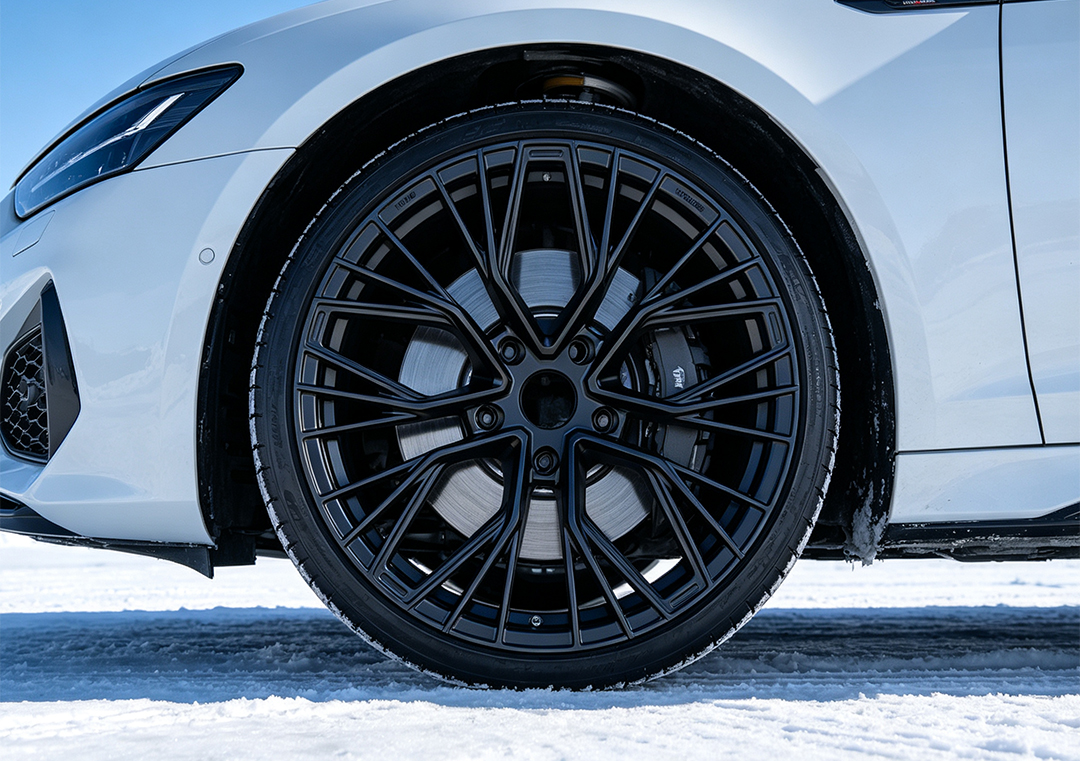
2.Direct Comparison: Cast vs. Forged Custom Wheels
To help you decide which structure aligns with your vehicle setup and budget, here is a quick breakdown:
| Feature | Cast Custom Wheels | Forged Custom Wheels |
|---|---|---|
| Manufacturing Process | Molten aluminum poured into molds | Machined from a solid block of compressed metal |
| Structural Density | Porous, lower tensile strength | Ultra-dense, maximum structural integrity |
| Weight | Moderate to Heavy | Lightweight |
| Impact Resistance | Prone to cracking under sharp impacts | Bends under extreme stress rather than shattering |
| Price Range | Budget-Friendly ($150 – $400 / wheel) | Premium Investment ($800 – $2,500+ / wheel) |
| Ideal Application | Daily street driving & appearance upgrades | Track racing, off-road, high-performance vehicles |
3. Understanding Wheel Fitment: The 5 Key Specifications
Achieving that flush, aggressive stance without causing tires to rub against fenders, inner wheel wells, or suspension components requires measuring five core parameters.
1. Bolt Pattern (PCD – Pitch Circle Diameter)
The bolt pattern consists of two numbers: the number of lug holes and the diameter of the imaginary circle they form. For example, a 5×114.3 pattern means 5 lug holes arranged around a 114.3mm circle. Always verify your vehicle’s factory lug specification before purchasing.
2. Wheel Diameter & Width
Expressed in inches (e.g., 18×9.5), the diameter measures the wheel face across, while width measures the distance between the inner wheel lips where the tire bead seats.
3. Offset (ET) & Backspacing
-
Offset (ET): The distance in millimeters from the mounting surface of the wheel to its true structural centerline.
-
Positive Offset: The mounting pad is closer to the front face of the wheel. The wheel sits deeper inside the fender well (common in modern front-wheel-drive and AWD vehicles).
-
Negative Offset: The mounting pad sits closer to the back side of the wheel. The wheel extends outward for a wider, aggressive stance (common on lifted trucks and classic muscle cars).
-
-
Backspacing: The distance from the back edge of the wheel rim to the mounting pad surface, measured in inches.
4. Hub Bore & Hub-Centric Rings
The hub bore is the central hole on the back of the wheel that slides over your car’s axle hub.
-
Hub-Centric: The wheel center bore matches your vehicle’s hub diameter exactly, centering the wheel perfectly.
-
Lug-Centric: The center bore is larger than the hub, relying on lug nuts to center the wheel. Using hub-centric adapter rings is strongly recommended for lug-centric wheels to prevent steering wheel vibrations at highway speeds.
5. Brake Clearance (X-Factor)
Brake clearance accounts for the space between the back of the wheel spokes and the outer edge of your brake calipers. If you have upgraded to a Big Brake Kit (BBK) or drive a vehicle with large multi-piston calipers, spoke curvature and caliper clearance are critical factors.
4. Performance Impacts of Upsizing Custom Wheels
Upsizing—often called “Plus-Sizing”—involves installing a larger diameter wheel paired with a lower-profile tire to maintain the same overall tire rolling diameter. While this dramatically transforms your car’s side profile, it comes with distinct dynamic trade-offs.
The Benefits
-
Sharper Steering Response: Lower-profile tires have stiffer sidewalls, reducing flex during quick turn-ins.
-
Enhanced Lateral Grip: Wider wheels allow for wider tire contact patches, improving cornering stability.
-
Aggressive Aesthetics: Fills out empty fender gaps for a custom look.
The Trade-offs
-
Stiffer Ride Quality: Less rubber sidewall means less cushion over bumps, potholes, and expansion joints.
-
Increased Rotational Mass: Larger wheels can add unsprung weight, slightly dampening acceleration and increasing fuel consumption.
-
Impact Vulnerability: Thin sidewalls provide less protection for your wheel rims when hitting severe road hazards.
5. Maintenance & Finish Care
To maintain the pristine shine and protective clear coat on custom vehicle wheels, proper cleaning techniques are essential:
-
Avoid Acidic Cleaners: Harsh acid-based wheel cleaners can strip clear coats, tarnish anodized finishes, and pit raw aluminum. Use pH-neutral wheel cleaners.
-
Cool Down Before Washing: Never spray cold water onto hot wheels immediately after driving; rapid thermal shock can cause clear coats to crack or warp brake rotors.
-
Apply Ceramic Coating: Adding a ceramic sealant or specialized wheel wax repels stubborn brake dust, road grime, and salt, making weekly washes effortless.
Frequently Asked Questions(FAQ)
1.What is the difference between cast and forged custom wheels?
Cast wheels are produced by pouring molten aluminum into a pre-shaped mold. They are cost-effective and available in many styles, but are heavier and less impact-resistant. Forged wheels are CNC-machined from a solid, compressed block of aluminum, making them significantly lighter, stronger, and more durable, though at a higher price point.
2.How do I choose the correct fitment for custom vehicle wheels?
To guarantee precise fitment without rubbing against suspension arms or fenders, you must align five critical measurements: Bolt Pattern (PCD), Wheel Diameter & Width, Offset (ET) & Backspacing, Hub Bore size, and Brake Caliper Clearance.
3.What is wheel offset and why does it matter?
Wheel offset is the distance (in millimeters) between the wheel’s hub mounting pad and its geometric centerline. Positive offset draws the wheel inward toward the suspension, while negative offset pushes the wheel outward toward the fender edge. Incorrect offset can cause tires to scrub against fenders, compromise handling stability, and accelerate wheel bearing wear.
4.Will changing to custom vehicle wheels affect tire pressure monitoring (TPMS)?
Yes, changing wheels disrupts your factory pressure sensors if they are left behind. However, your TPMS system will operate normally as long as you swap your factory OEM sensors into the new wheels or install compatible aftermarket TPMS sensors programmed to your vehicle’s ECU.
5.What are the pros and cons of upsizing custom wheels?
Upsizing improves visual stance, cornering stability, and steering sharpness. Conversely, it requires lower-profile tires, which can yield a firmer ride, higher vulnerability to pothole damage, and minor hits to fuel efficiency if the total wheel weight increases.
Upgrade Your Ride with Precision Fitment
Finding the ideal set of custom vehicle wheels is an art form backed by exact engineering. Whether you want lightweight forged monoblock rims for track day performance or a rugged set of flow-formed wheels for off-road durability, getting your fitment right the first time is essential.
Ready to transform your vehicle’s stance and performance? Explore high-quality aftermarket wheels at ATK Wheels to browse custom fitments, premium finishes, and durable wheel designs built for your drive.

