
Custom Rims for the Right Fit, Style & Performance
Custom Rims for the Right Fit, Style & Performance
Upgrading your vehicle with a set of custom rims is one of the most impactful modifications you can make. Beyond transforming your car or truck’s aesthetic profile, aftermarket wheels directly affect handling, braking efficiency, fuel economy, and overall driving dynamics. However, choosing the right set involves navigating complex technical specifications, manufacturing options, structural differences, and fender clearances.
Whether you want sleek aftermarket forged rims for a track-focused sports sedan or heavy-duty flow-formed wheels for an off-road truck build, understanding how wheel specs work together ensures your investment delivers both eye-catching style and safe performance.
1.What Are Custom Rims?
Custom rims are aftermarket wheels crafted to offer superior customization in styling, sizing, finishes, and technical dimensions compared to factory-installed original equipment (OE) wheels. While stock wheels are engineered as generic solutions to balance production costs across tens of thousands of mass-market vehicles, custom rims cater to distinct driver preferences and specific vehicle platforms.
Drivers choose custom options for various practical and aesthetic reasons:
-
Distinctive Aesthetics: Unique finishes like satin black, gloss gunmetal, brushed aluminum, custom bronze, and multi-piece chrome designs that elevate vehicle styling.
-
Enhanced Performance: Lightweight construction methods reduce un-sprung weight, yielding crisper steering response, reduced rotational inertia, and faster acceleration.
-
Tailored Stance: Precise offsets allow for flush fender alignment, wide-track fitments, or aggressive off-road stances without needing unsafe spacing adapters.
-
Upgraded Hardware Accommodation: Customized inner barrel profiles accommodate larger aftermarket big brake kits (BBKs) that standard factory wheels cannot clear.
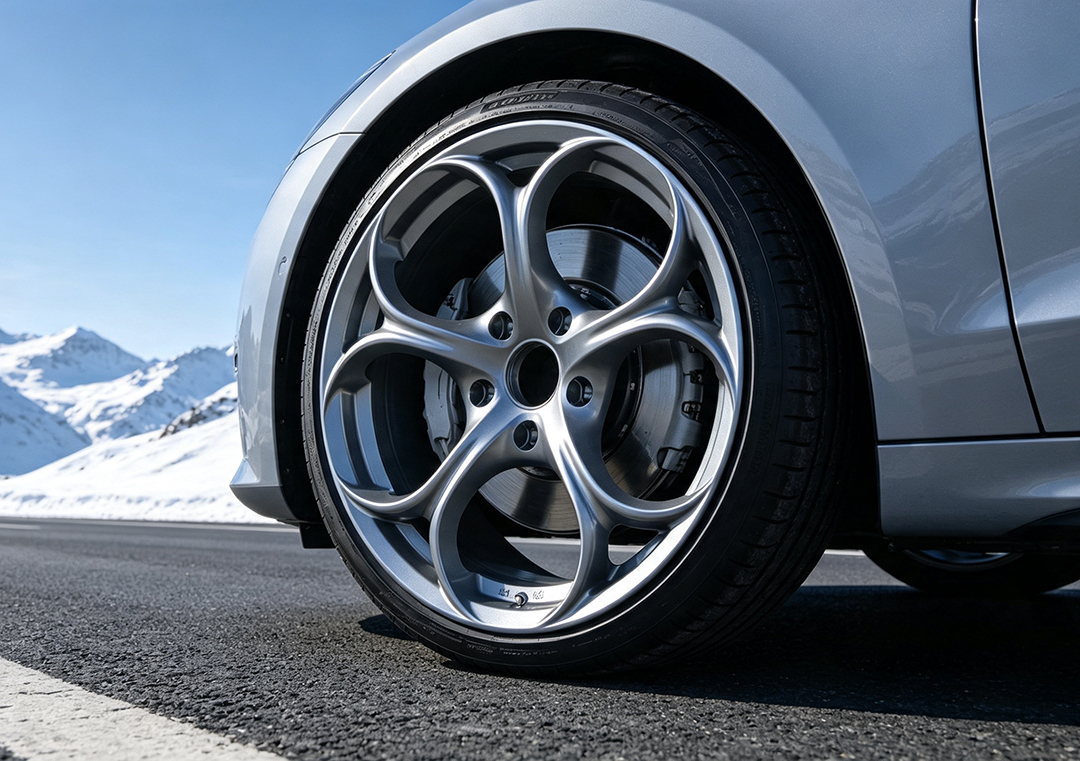
2.Manufacturing Process Comparison: Cast vs. Flow-Formed vs. Forged
The way a custom rim is manufactured dictates its structural integrity, total weight, impact resistance, and overall price point. Understanding these three core manufacturing methods helps you select the ideal option for your driving style and budget.
Cast Rims        ──► Molten aluminum poured into molds (Affordable, heavier)
Flow-Formed Rims ──► Compressed barrel via high-speed rollers (Stronger, lightweight)
Forged Rims      ──► Machined solid aerospace aluminum (Maximum strength, ultra-light)
1. Cast Rims
Casting is the most traditional wheel manufacturing technique. Molten aluminum is poured into a pre-shaped mold and left to cool. Once solidified, the wheel is trimmed, CNC-machined, and painted or powder-coated.
-
Pros: Highly affordable, available in an endless array of stylistic choices and finishes.
-
Cons: Lower structural density requires thicker material, making cast wheels heavier and less resistant to severe road impacts compared to other options.
2. Flow-Formed Rims
Flow forming (sometimes called flow forging or rim rolling) begins with a specially cast aluminum preform. High-pressure hydraulic rollers stretch and compress the outer rim barrel along a spinning mandrel under intense heat. This mechanical process aligns the aluminum’s internal grain structure similarly to forged metal.
-
Pros: Up to 15% to 25% lighter than standard cast wheels, significantly higher tensile strength, excellent shock resistance, mid-range pricing.
-
Cons: More expensive than basic cast options, though significantly cheaper than fully forged wheels.
3. Forged Rims
Forged custom rims represent the pinnacle of automotive wheel engineering. Machined from a single solid billet block of aerospace-grade 6061-T6 aluminum subjected to immense heat and high pressure, forged wheels possess an exceptionally dense, continuous grain structure.
-
Pros: Unmatched strength-to-weight ratio, maximum resistance to bending or cracking under heavy cornering or high-speed track loads, full structural customizability.
-
Cons: Higher initial cost due to specialized CNC machinery, high-grade raw materials, and precision labor requirements.
Manufacturing Breakdown
| Feature | Cast Rims | Flow-Formed Rims | Forged Rims |
|---|---|---|---|
| Material Strength | Standard | High | Maximum |
| Structural Weight | Moderate to Heavy | Lightweight | Ultra-Lightweight |
| Impact Resistance | Basic | Enhanced | Exceptional |
| Typical Application | Daily Commuting / Budget Upgrades | Track Days / Performance Driving | Supercars / Luxury Builds / Heavy Duty Off-Road |
| Price Range | Low to Moderate | Mid-Range | Premium |
3.Critical Wheel Specifications for Proper Fitment
Installing custom rims isn’t just about picking an attractive spoke pattern; it requires precise mechanical engineering. An incorrect dimension can cause tire rubbing against inner fender liners, brake caliper lockup, or dangerous suspension interference.
1. Wheel Diameter and Width
Measured in inches (e.g., 18×8.5 or 20×10), diameter refers to the distance across the wheel face, while width measures the distance between the inner and outer tire mounting flanges. Expanding rim width allows you to fit wider tires, creating a larger contact patch with the road for enhanced cornering traction.
2. Pitch Circle Diameter (PCD) / Bolt Pattern
The bolt pattern consists of two crucial numbers: the number of lug holes and the diameter of the imaginary circle they form. For example, a “5×114.3” pattern means 5 lug holes positioned around a 114.3mm circle. Your custom rims must match your vehicle’s hub layout precisely to bolt on safely.
3. Wheel Offset (ET)
Measured in millimeters, offset is the distance from the wheel’s physical mounting face to its true centerline:
-
Positive Offset: The mounting face sits toward the front of the wheel, pulling the rim inward toward the suspension (common on modern front-wheel-drive and all-wheel-drive passenger cars).
-
Zero Offset: The mounting face aligns perfectly with the geometric centerline of the wheel.
-
Negative Offset: The mounting face sits deep inside the wheel barrel, pushing the rim outward away from the body for a deep-dish profile (common on lifted trucks, SUVs, and widebody builds).
4. Center Bore (CB)
The center bore is the machined hole on the back face of the rim that slides directly over the vehicle’s hub snout. For smooth, vibration-free operation at highway speeds, wheels should be hub-centric (matching the vehicle hub diameter exactly) or equipped with aluminum/polycarbonate hub-centric rings to bridge any structural gap.
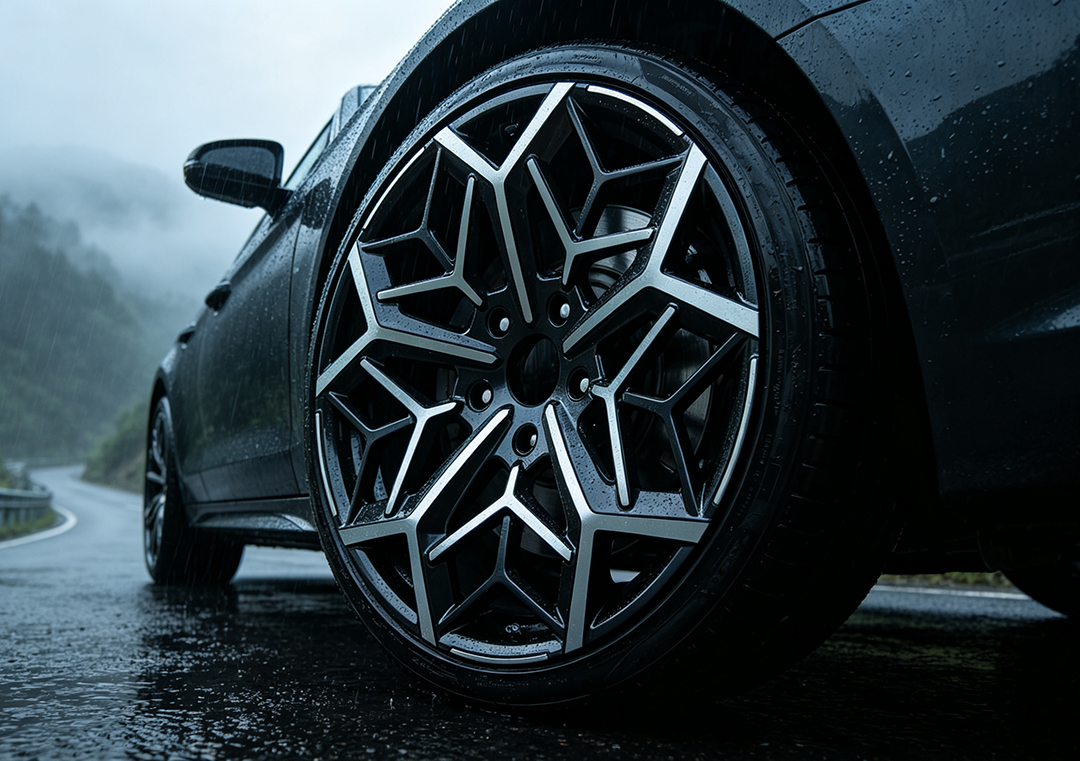
4.How Custom Rims Impact Vehicle Performance
Upgrading your wheels fundamentally changes your vehicle’s physical dynamics and chassis feedback. Key performance aspects to evaluate include:
Un-Sprung Weight and Rotational Mass
Un-sprung weight includes components not supported by your vehicle’s suspension springs—such as wheels, tires, wheel bearings, and brake rotors. Reducing un-sprung mass with lightweight flow-formed or forged custom rims allows suspension components to react faster to pavement dips and road imperfections, dramatically refining tire contact and chassis stability.
Lower rotational inertia also means your engine uses less torque to spin the wheels, directly improving throttle responsiveness, accelerating times, and city fuel efficiency.
Steering Response vs. Ride Comfort
Plus-sizing your setup (e.g., moving from a 17-inch factory wheel to a 19-inch or 20-inch custom rim) requires fitting a lower-profile tire to maintain the total rolling circumference. A shorter sidewall flexes less under lateral acceleration, delivering immediate steering precision and sharper feedback during tight cornering. However, less rubber cushioning means more road imperfections and pavement expansion joints transfer directly into the vehicle cabin.
Braking Efficiency and Cooling
Many performance-oriented custom rims feature open-spoke engineering that significantly increases airflow around the brake assemblies. Superior ventilation dissipates thermal buildup faster during spirited driving, keeping brake fluid cool and delaying brake fade under repeated heavy deceleration.
5.Choosing Finishes and Maintenance Tips
The surface finish of your custom rims defines the overall visual personality of your vehicle while providing protection against road salts, moisture, and debris. Popular finish options include:
-
Powder Coating: A durable, baked-on finish that resists chipping, road gravel, and harsh weather conditions better than traditional paint.
-
Machine-Faced Finishes: Precise CNC cutting exposes raw aluminum beneath clear coat layers for a striking dual-tone contrast.
-
Anodized Finishes: Chemical treatments that color the metal surface without adding heavy liquid paint layers, widely used on high-end forged wheels.
-
Chrome Plating: Electroplated metallic coatings that provide a mirror-like shine, requiring regular cleaning to prevent pitting in humid or cold climates.
To maintain your investment, clean custom rims using pH-neutral wheel cleaners and microfiber brushes to prevent stripping protective clear coats or marring delicate finishes with harsh acidic solutions. Applying a ceramic coating layer further repels brake dust and makes routine wash cycles effortless.
6.Cost Overview: What to Expect
Pricing for custom rims varies based on sizing, material selection, finish complexity, and manufacturing techniques. Below is a standard market overview:
-
Entry-Level Cast Rims: $150 – $300 per wheel ($600 – $1,200 set of four)
-
Mid-Range Flow-Formed Rims: $250 – $500 per wheel ($1,000 – $2,000 set of four)
-
High-End Forged Rims: $600 – $2,500+ per wheel ($2,400 – $10,000+ set of four)
When establishing your modification budget, factor in supporting accessories such as high-performance tires, mounting and balancing services, specialized lug nuts or bolts, and fresh TPMS (Tire Pressure Monitoring System) sensors.
Frequently Asked Questions(FAQ)
1.What are custom rims?
Custom rims are aftermarket wheels engineered to provide broader design choices, varied finishes, lighter construction, and tailored technical specifications compared to standard factory wheels.
2.How do I choose the right custom rims for my vehicle?
You must verify five critical specifications: wheel diameter, width, bolt pattern (PCD), offset (ET), and center bore. Matching these parameters ensures safe clearance past suspension arms, fender liners, and brake calipers.
3.Do custom rims affect vehicle performance?
Yes. Wheel weight, diameter, and offset influence handling agility, ride comfort, acceleration efficiency, and braking performance. Lightweight wheels reduce un-sprung weight, improving suspension tracking and overall response.
4.What wheel specifications are most important for custom rims?
The primary parameters are bolt pattern (PCD), offset, center bore, rim diameter, and rim width. Together, these numbers determine physical fitment and operational safety on your vehicle’s hubs.
5.How much do custom rims cost?
Prices range widely based on construction and design. Cast wheels start around $150 per wheel, while advanced flow-formed options cost between $250 and $500. Fully custom forged rims typically start at $600 each and can exceed $2,500 depending on size and finish complexity.
Ready to Elevate Your Drive?
Transform your vehicle with custom rims designed for superior fitment, lightweight performance, and striking style. Explore complete aftermarket forged and flow-formed collections today to find the perfect wheel build for your ride.

