
Custom Rim: How to Choose the Right Wheels for Your Car
Custom Rim: How to Choose the Right Wheels for Your Car
Upgrading your vehicle with a set of aftermarket wheels is one of the most effective ways to elevate its aesthetic appeal, refine its stance, and sharpen its handling dynamics. However, navigating the world of wheels involves far more than simply selecting a design that looks sharp in a digital catalog or showroom.
Choosing the right custom rim setup requires a clear understanding of wheel engineering, precise fitment dimensions, manufacturing technologies, and real-world performance trade-offs. Whether you are aiming for a track-ready stance, an aggressive flush fitment, or an everyday upgrade, this walkthrough breaks down everything you need to know before making an investment.
1.What Is a Custom Rim and How Does It Differ From OEM?
Before diving into specifications and engineering details, it helps to understand what separates an aftermarket wheel from what came on your car from the factory.
An OEM (Original Equipment Manufacturer) rim is designed by the vehicle manufacturer to meet broad production standards. These wheels prioritize cost efficiency, mass durability, and conservative fitment suitable for average driving conditions. They are engineered to accommodate snow chains, standard tire sizes, and high ground clearance.
A custom rim, by contrast, is an aftermarket wheel designed to provide custom sizing, unique aesthetic styles, improved strength-to-weight ratios, and tailored fitment specifications.
Key Differences At a Glance
| Feature | OEM Rims | Custom Rims |
|---|---|---|
| Primary Focus | General durability, standard styling, low unit cost | Visual distinction, weight reduction, tailored fitment |
| Material Options | Heavy cast aluminum or steel | Flow-formed aluminum, forged 6061-T6 aluminum, composite |
| Fitment | High-offset, tucked inside fender wells | Custom offsets, flush or stance options, concave profiles |
| Weight | Moderate to heavy | Optimized for reduced unsprung mass |
| Price Point | High dealership replacement cost | Scalable from budget cast to premium forged |
2.5 Critical Fitment Specs You Must Verify Before Buying
Nothing ruins the excitement of unboxing new wheels like realizing they rub against your brake calipers or stick out past your fenders illegally. To ensure flawless execution, you must verify five core technical dimensions matching your vehicle’s hub and suspension assembly.
1. Bolt Pattern (PCD)
Pitch Circle Diameter (PCD) refers to the diameter of an imaginary circle drawn through the center of all lug holes. It is expressed as the number of lug holes multiplied by the diameter in millimeters (e.g., 5×114.3, 5×120, or 6×139.7). A wheel will not physically mount onto your hub unless the bolt pattern matches exactly.
2. Wheel Diameter and Width
Wheel dimensions are measured in inches (e.g., 19×9.5).
-
Diameter: The distance across the face of the wheel rim from bead seat to bead seat.
-
Width: The distance between the inner and outer tire mounting flanges.
Increasing width allows you to mount wider tires for a larger contact patch, but requires careful calculation to avoid hitting inner suspension struts.
3. Offset (ET)
Measured in millimeters, offset is the distance from the wheel’s true centerline to its hub mounting surface:
-
Positive Offset (High ET): The mounting surface is closer to the front face of the wheel. Common on modern front-wheel-drive and all-wheel-drive vehicles.
-
Zero Offset: The mounting surface lines up directly with the wheel’s physical center.
-
Negative Offset (Low ET): The mounting surface sits closer to the back of the wheel, pushing the face outward to create a deep lip or aggressive stance.
4. Center Bore and Hub-Centric Rings
The center bore is the machined opening on the back of the wheel that slips over the vehicle’s axle hub. Vehicles rely on a hub-centric connection, where the hub carries the weight of the car. Many aftermarket wheels feature a larger universal center bore to fit various vehicle models. When installing universal wheels, you must use hub-centric rings to eliminate high-speed vibrations.
5. Brake Caliper Clearance (X-Factor)
The X-factor measures the distance between the back of the spokes and the mounting surface. High-performance braking systems with multi-piston calipers require wheels with high spoke clearance to prevent contact.
3.Cast vs. Flow-Formed vs. Forged Manufacturing Explained
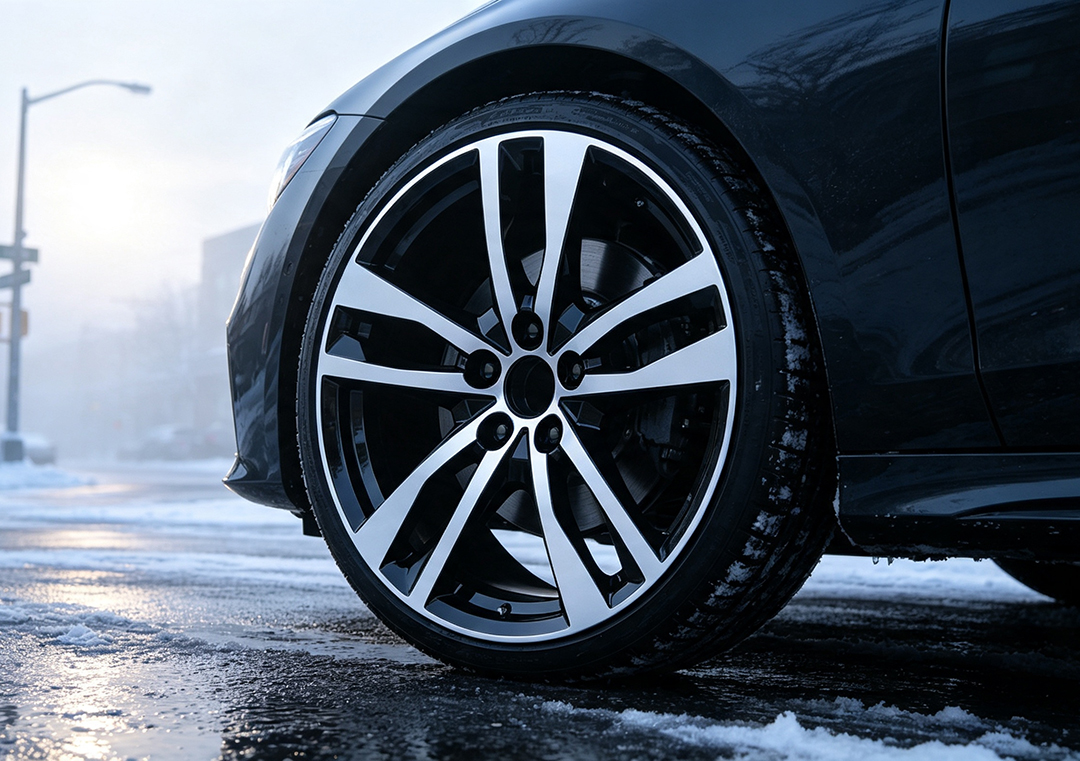
How a wheel is manufactured directly dictates its structural integrity, total mass, impact resistance, and price point. Understanding these three primary production techniques helps align your budget with your driving needs.
Gravity and Low-Pressure Casting
Casting is the most common and economical production method. Molten aluminum alloy is poured or pulled under low pressure into a mold shaped like the finished wheel. Once cooled, the wheel is trimmed and finished.
-
Pros: Highly affordable, endless stylistic possibilities.
-
Cons: Porous grain structure, requiring thicker aluminum to maintain strength, resulting in heavier wheels.
Flow-Forming (Rotary Forging)
Flow-forming bridges the gap between casting and true forging. The process begins with a specially cast aluminum preform. The barrel portion is heated and spun at high speeds while hydraulic rollers apply intense pressure to stretch and compress the aluminum along the barrel.
-
Pros: Increases tensile strength in the barrel, reduces weight by 15-20% compared to cast options, highly cost-effective for street and track use.
-
Cons: The wheel face remains cast, meaning spoke strength is lower than a fully forged wheel.
Monoblock Forged (6061-T6 Aluminum)
Forged wheels represent the pinnacle of wheel technology. A solid billet of aerospace-grade 6061-T6 aluminum is subjected to extreme thermal pressure (often exceeding 10,000 tons) to align the metal’s grain structure. CNC machines then mill the final design out of this dense block.
-
Pros: Maximum structural density, ultimate weight savings, superior resistance to severe road impacts.
-
Cons: Premium price point due to intensive machining and material costs.
+-------------------------------------------------------------------+
|                  MANUFACTURING PROCESS COMPARISON                 |
+-------------------+--------------------+--------------------------+
|  Cast Wheels      |  Flow-Formed       |  Forged Wheels           |
|  - Lowest Cost    |  - Mid-tier Cost   |  - High Investment       |
|  - Standard Weight|  - Lighter Barrel  |  - Featherweight Mass    |
|  - Everyday Use   |  - Street/Track    |  - Ultimate Performance  |
+-------------------+--------------------+--------------------------+
4.How Upgrading Your Wheels Impacts Vehicle Performance
Replacing factory wheels with a lightweight custom rim setup does far more than alter appearance—it fundamentally changes vehicle dynamics by altering rotational mass.
Unsprung Mass and Rotational Inertia
In automotive engineering, unsprung mass includes all components not supported by the suspension springs (wheels, tires, brakes, and control arms). Reducing unsprung mass yields disproportionately large performance gains compared to reducing weight inside the cabin:
-
Sharper Acceleration: Lighter wheels require less kinetic energy to start spinning, allowing engines to transfer power to the road more efficiently.
-
Shorter Braking Distances: Decreased rotational inertia means brake rotors exert less force to slow down the wheel assemblies.
-
Enhanced Suspension Responsiveness: When tires hit bumps, lighter wheel packages allow dampers and springs to manage surface variations faster, keeping the tire contact patch firmly planted on the tarmac.
Fuel Economy Considerations
Selecting ultra-lightweight wheels reduces rolling resistance and rotational drag, leading to subtle improvements in city fuel economy. Conversely, fitting oversized, heavy setups increases engine load, stiffens ride quality, and reduces miles per gallon.
5.Maintenance and Finish Care Best Practices
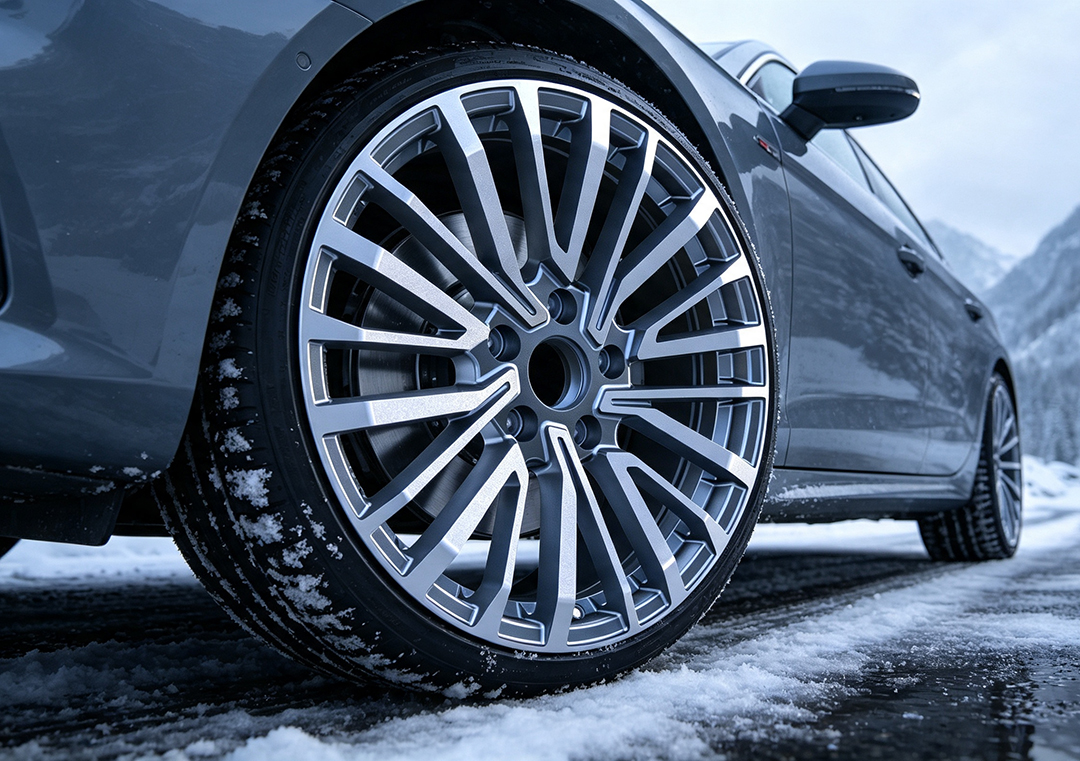
To keep your aftermarket investment looking immaculate over years of exposure to road debris, brake dust, and changing weather conditions, follow these tailored maintenance habits:
-
Avoid Automatic Car Washes: Harsh chemical detergents and stiff rotary brushes at drive-through car washes can scratch clear coats and pit exposed lip finishes.
-
Use pH-Neutral Cleaners: Iron deposits and corrosive brake dust should be removed using pH-neutral wheel cleaners rather than acidic solutions.
-
Apply Ceramic Coatings: Protecting clean surfaces with a dedicated quartz or ceramic coating prevents hot brake dust from embedding directly into the finish, making subsequent washes simple.
-
Mind Torque Specifications: Always use a calibrated torque wrench when securing lug nuts to factory-recommended foot-pounds. Over-tightening with impact guns can distort wheel mounting seats or warp brake rotors.
Frequently Asked Questions(FAQ)
1.What is the difference between custom rims and OEM rims?
OEM (Original Equipment Manufacturer) rims are factory-installed wheels designed for standard fitment and daily driving. Custom rims are aftermarket wheels built to enhance vehicle aesthetics, reduce unsprung weight, or optimize performance for specific offset and fitment needs.
2.How do I know what size custom rims fit my car?
To ensure correct fitment, verify five key specifications matching your vehicle: bolt pattern (PCD), wheel diameter and width, offset (ET), center bore, and brake caliper clearance.
3.What is the difference between cast, forged, and flow-formed custom rims?
-
Cast: Molten aluminum poured into molds; affordable but heavier and less durable.
-
Flow-Formed: Compressed under heat during casting; lighter and stronger than cast wheels.
-
Forged: Machined from solid aluminum blocks; offers maximum strength and the lightest weight at a higher price.
4.Do custom rims affect gas mileage and vehicle performance?
Yes. Lightweight custom rims reduce unsprung mass, improving acceleration, braking, and fuel efficiency. Conversely, oversized or excessively heavy rims increase rolling resistance, reducing fuel economy and stiffening ride quality.
5.Will installing custom rims void my car warranty?
Installing custom rims does not void your entire vehicle warranty. Under laws like the Magnuson-Moss Warranty Act, dealership claims can only be denied if the custom rims directly cause damage to related components (e.g., suspension or bearings).
Transform Your Ride Today
Upgrading your vehicle with precision-engineered wheels is a straightforward way to achieve the exact stance, balance, and visual authority your car deserves. By keeping bolt patterns, offsets, hub clearance, and manufacturing methods top of mind, you can select a setup that runs smooth and vibration-free for thousands of miles.
Ready to find the ideal wheel setup tailored specifically to your vehicle’s specifications? Explore the full lineup of precision-engineered wheel options, custom finishes, and fitments at ATK Wheels to start building your vehicle’s new look today.

