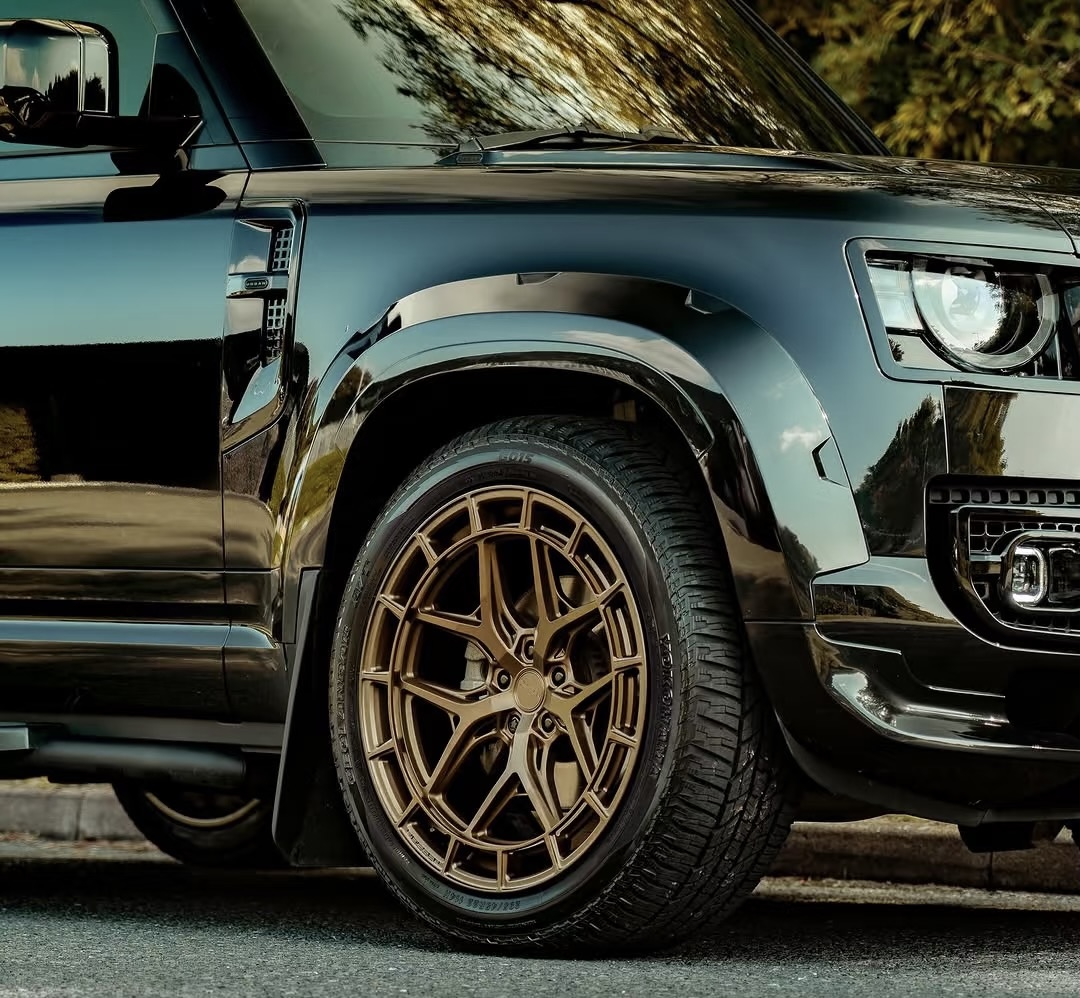
Choosing the Right Offroad Wheels for Better Strength, Clearance, and Trail Performance
Choosing the Right Offroad Wheels for Better Strength, Clearance, and Trail Performance
When taking your truck, SUV, or Jeep off the pavement, few modifications impact vehicle dynamics as drastically as your choice of offroad wheels. While an aggressive set of wheels instantly transforms the curb appeal of your rig, selecting the right set is far more than an aesthetic upgrade. It is an essential engineering choice that dictates trail traction, suspension clearance, brake cooling, and overall structural durability when crawling over granite ledges or blasting across washboard desert trails.
The market is saturated with options—ranging from ultra-tough steel rims to lightweight flow-formed alloys and heavy-duty beadlocks. Making an uninformed decision can lead to severe tire rubbing, ruined wheel bearings, degraded fuel economy, or even catastrophic wheel failure miles away from cell service.
This deep dive breaks down the technical details, material trade-offs, geometry calculations, and real-world mechanics you need to understand to choose the ideal set of offroad wheels for your specific driving style.
1. Wheel Diameter: Why Smaller Rims Rule the Trail
In modern automotive design, road vehicles trend toward massive 20-, 22-, or even 24-inch wheels fitted with ultra-low-profile tires. Off-road, however, the exact opposite principle applies.
For true off-road performance, 16-inch to 17-inch wheels are universally considered the sweet spot for 33-inch, 35-inch, and 37-inch tires.
The Mechanics of Sidewall Flex
When navigating technical terrain, your tire acts as the primary suspension component before impacts ever reach your springs and shocks. A smaller wheel diameter paired with a large overall tire height yields a taller sidewall (higher aspect ratio).
Taller sidewalls offer three crucial advantages:
-
Impact Protection: Rocks, ledges, and tree roots hit the cushioned rubber tire body rather than slamming directly into the metal wheel lip, preventing bent rim edges or cracked barrels.
-
Airing Down Traction: Lowering tire pressure (to 12–15 PSI) allows the flexible sidewall to squat and elongate the contact patch. This creates a massive footprint that molds over uneven obstacles like sticky fingers.
-
Ride Comfort: Additional rubber cushioning absorbs high-frequency trail chatter, reducing fatigue inside the cabin over long days on washboard roads.
When Are 18-Inch or 20-Inch Wheels Acceptable?
While 17-inch wheels remain the gold standard, modern heavy-duty trucks (such as Ford F-250s or Ram 2500s) often feature enlarged brake calipers that physically require at least an 18-inch wheel barrel for clearance.
If you choose an 18-inch or 20-inch wheel, balance the setup by running a larger 37-inch or 40-inch tire. Maintaining a high ratio of rubber sidewall to metal rim is the key to preserving off-road performance.
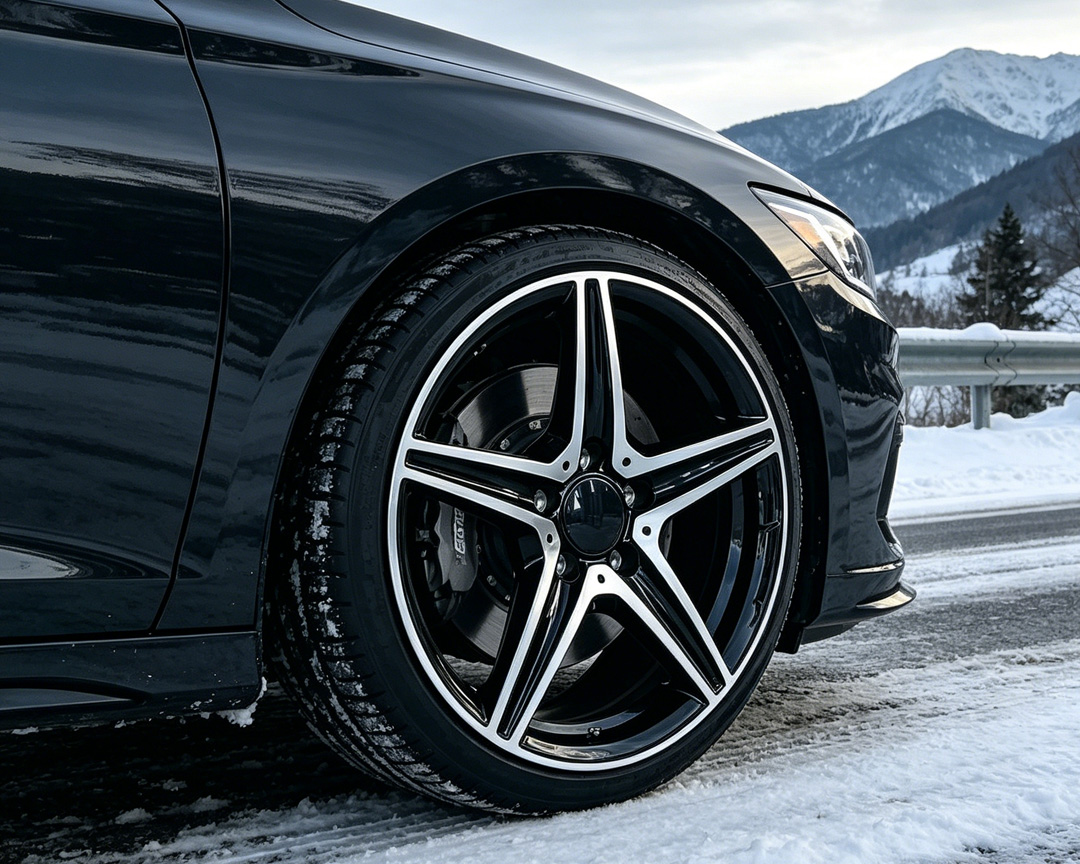
2. Construction Methods: Steel vs. Cast Aluminum vs. Flow-Formed vs. Beadlocks
The construction method of an offroad wheel determines its weight, structural rigidity, cost, and how it behaves under severe kinetic impact. Understanding these physical properties ensures you select a wheel capable of withstanding the specific hazards of your favorite terrain.
Offroad Wheel Performance & Technical Comparison
| Technical Feature | Steel Wheels | Cast Aluminum Wheels | Flow-Formed Alloy Wheels | True Beadlock Wheels |
|---|---|---|---|---|
| Primary Construction | Heavy-gauge stamped steel | Molten aluminum poured into molds | Cast center + hydraulic spun barrel | Heavy-duty alloy + bolted outer clamp ring |
| Structural Weight | Very Heavy | Moderate | Lightweight | Heavy (due to hardware) |
| Impact & Failure Mode | Bends under impact (Field repairable) | Cracks or shatters under severe impact | High tensile strength / Resists deformation | High strength (Prevents tire bead unseating) |
| Off-Road Airing Down | Standard (12–15 PSI min) | Standard (12–15 PSI min) | Standard (12–15 PSI min) | Extreme low pressure (3–5 PSI safe) |
| Typical Offset Ranges | Neutral to Mild Negative | Wide range (+40mm to -44mm) | Performance negative & zero offsets | Deep negative offsets for wide stances |
| Highway / DOT Legality | 100% Street Legal | 100% Street Legal | 100% Street Legal | Non-DOT Approved (Off-road only) |
| Maintenance Level | Low (Inspect for rust) | Low (Routine cleaning) | Low (Routine cleaning) | High (Frequent bolt torque re-checks) |
| Fuel Economy Impact | High MPG drop (High unsprung mass) | Moderate MPG impact | Minimal MPG impact | High MPG drop (Heavy rotating weight) |
| Cost Range | Budget-Friendly | Mid-Range Premium Specialized High-End | ||
| Best Suited Application | Hardcore Rock Crawling & Utility | Daily Driving, Trails & Overlanding | High-Speed Desert Racing & Overland | Severe Rock Crawling & Trophy Trucks |
Steel Wheels: Heavy-Duty and Field-Repairable
Steel wheels are stamped and welded from heavy gauge sheet metal. They represent the classic budget-friendly choice for rock crawlers and utility rigs.
-
Pros: Steel is extremely malleable. If you smash a steel rim against a rock apex and bend the bead flange, you can take a sledgehammer and hammer it back into shape right on the trail to reseal the tire bead and keep driving home.
-
Cons: Steel wheels are substantially heavier than aluminum equivalents. High rotational mass strains your axle shafts, reduces braking performance, slows acceleration, and hurts fuel economy. They are also prone to surface rust if paint chips off.
Cast Aluminum Wheels: The Versatile Industry Standard
Cast aluminum wheels are made by pouring molten aluminum alloy into a mold. They dominate the aftermarket due to their balance of aggressive styling, manageable weight, and rust resistance.
-
Pros: They are lighter than steel, improving suspension responsiveness and saving fuel. Aluminum allows for intricate designs, deep-dish profiles, and precise bead seats.
-
Cons: Cast aluminum is brittle compared to steel or forged metal. Under extreme high-energy side impacts, a cast wheel will crack or shatter rather than bend, rendering it unrepairable on the trail.
Flow-Formed (Rotary Forged) Wheels: High-Strength Performance
Flow-forming is an advanced hybrid manufacturing technique. The wheel center is cast normally, but the outer barrel is heated and spun while high-pressure hydraulic rollers stretch and compress the aluminum grain structure.
-
Pros: Flow-formed wheels approach the tensile strength of fully forged wheels while keeping weight to a minimum. They resist severe impact deformation far better than standard cast aluminum.
-
Cons: Higher price point than standard cast wheels.
True Beadlocks vs. Simulated Beadlocks
When airing down offroad tires to single-digit pressures (below 10 PSI) for maximum traction in soft sand or steep rock faces, internal pressure pushing the tire bead against the inner wheel rim drops dramatically. Under hard side-loading, the tire can slide off the rim flange, causing immediate pressure loss.
-
True Beadlock Wheels: Feature a specialized outer rim flange where an external ring bolts down with 24 to 36 grade-8 bolts to physically clamp the rubber tire lip to the wheel body. They offer unmatched security at 3–5 PSI but are generally not DOT-approved for highway use and require frequent bolt torque checks.
-
Simulated Beadlock Wheels: Provide the rugged tactical appearance of a beadlock ring using non-structural decorative bolts while retaining a standard internal safety hump bead seat. They are 100% street-legal, maintenance-free, and lighter than true beadlocks.
3. Demystifying Wheel Offset and Backspacing
Getting wheel fitment wrong leads to tires rubbing on inner fender liners, frame rails, or control arms—or pushes tires so far out that they crush outer fender flares during suspension articulation.
To achieve proper clearance, you must master two geometric measurements: Offset and Backspacing.
-
Offset: The distance from the hub mounting surface to the wheel’s true centerline, measured in millimeters (mm).
-
Backspacing: The distance from the hub mounting surface to the back inner edge of the rim barrel, measured in inches.
Positive vs. Negative Offset Mechanics
Offset determines how far inward or outward your wheel sits relative to your vehicle’s body lines:
-
Negative Offset (e.g., -12mm to -44mm): Pushes the wheel mounting surface inward toward the vehicle center, causing the wheel face to sit deeper and the overall wheel/tire package to stick out wide from the body.
-
Zero Offset (0mm): The mounting hub sits dead center with the centerline of the rim barrel.
-
Positive Offset (e.g., +12mm to +40mm): Tucks the wheel inward closer to the frame and suspension components. Factory stock wheels almost always feature high positive offsets to keep tires tucked inside the fender wells.
How Offset Affects Trail Traction and Scrub Radius
Installing wider aftermarket offroad tires (such as a 12.50-inch wide tire) on factory positive-offset wheels causes the inside tire shoulder to rub against control arms, sway bar links, and shock absorbers during full steering lock.
Switching to a negative offset wheel:
-
Pushes the tire outboard, clearing interior suspension components.
-
Broadens the vehicle’s overall track width, lowering the center of gravity and improving stability on off-camber side slopes.
-
Gives the rig an aggressive, wide-stance aesthetic.
Crucial Tech Note on Scrub Radius: Pushing wheels too far out with extreme negative offsets (-44mm or wider) increases your vehicle’s scrub radius. This places extra mechanical leverage on ball joints, tie rods, wheel bearings, and steering racks, causing accelerated wear.
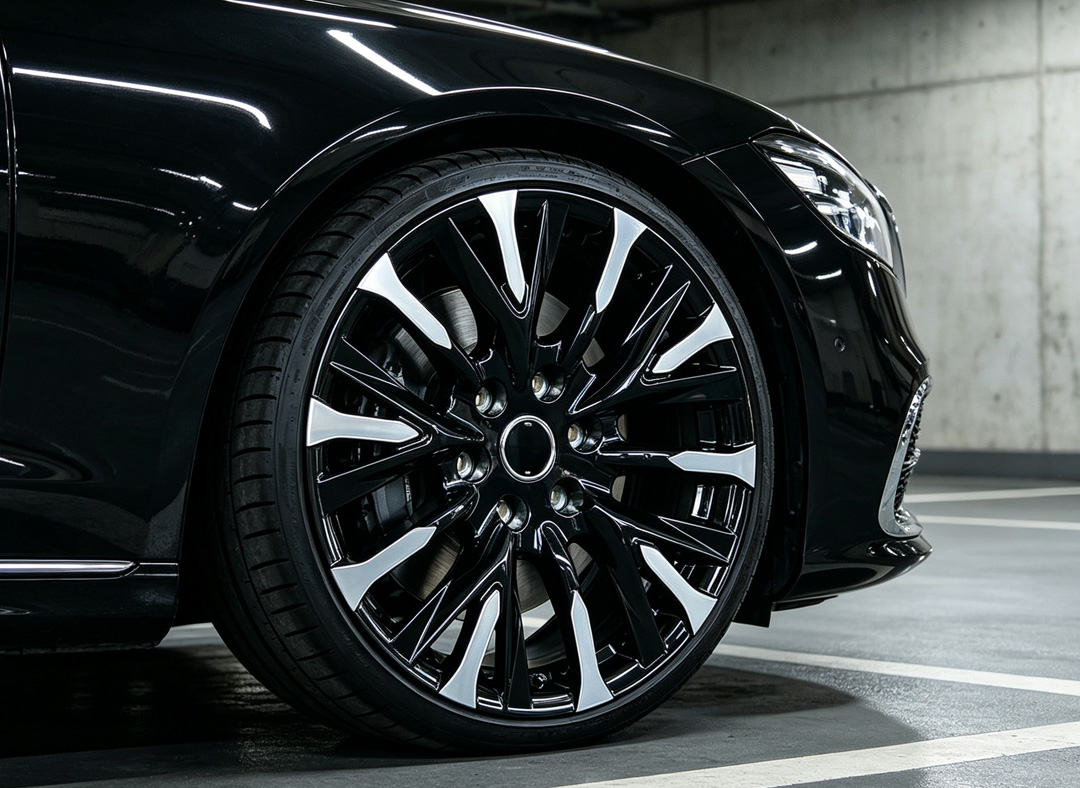
4. How Offroad Wheels Affect Fuel Economy (MPG) and Drivetrain Performance
Upgrading to heavy-duty offroad wheels and oversized all-terrain or mud-terrain tires introduces physical mechanical trade-offs that directly affect your vehicle’s daily driving characteristics.
Unsprung Weight and Rotational Inertia
Standard factory wheels and passenger tires are engineered for low rolling resistance and minimal weight. Switching from a stock 28 lb wheel to a 45 lb heavy-duty offroad wheel adds unsprung mass—weight not supported by your vehicle’s suspension springs.
Because this weight rotates, every extra pound of wheel weight acts like roughly 3 to 4 pounds of static weight in terms of kinetic energy. Your engine must work harder to spin the assembly up to speed, and your brakes must exert far more thermal force to bring it to a stop.
Aerodynamic Drag and Track Width
Negative offset wheels push your tires outside the factory body envelope. Open tire treads catching highway air currents disrupt laminar airflow beneath and around the vehicle, significantly increasing aerodynamic drag.
Fuel Economy Impact: Expect a decrease of 1.5 to 3.5 MPG when stepping up from stock road wheels to an aggressive negative-offset wheel and heavy M/T tire combination.
Mitigating Performance Losses Through Re-Gearing
To recover lost acceleration and prevent gear-hunting in automatic transmissions after installing heavier wheel and tire packages, consider re-gearing your differential axle ring-and-pinions to a higher numerical ratio (e.g., swapping 3.55 factory gears for 4.56 or 4.88 aftermarket gears). This restores the engine’s optimal RPM range at highway speeds.
5. Essential Technical Checklist Before Purchasing Offroad Wheels
Before clicking “Order” on a set of new wheels, verify these five critical technical specifications on your vehicle:
-
Bolt Pattern (PCD): Ensure the lug count and pitch circle diameter match your vehicle (e.g., 6×139.7 / 6×5.5″ for Toyota Tacoma/Ford Bronco, 5×127 / 5×5″ for Jeep Wrangler JL, 8×165.1 / 8×6.5″ for heavy-duty trucks).
-
Center Bore & Hub-Centricity: Verify whether the wheel is Hub-Centric (the center hole matches your vehicle’s hub snout perfectly to transfer vehicle weight) or Lug-Centric (uses conical lug nuts to center the wheel). If using lug-centric aftermarket wheels, install hub-centric centering rings to prevent high-speed steering wheel vibrations.
-
Load Rating: Offroad wheels are subjected to severe kinetic shock loads when dropping off rock ledges or hitting dips in high-speed desert washes. Ensure the wheel’s certified load rating exceeds your vehicle’s Gross Axle Weight Rating (GAWR). Look for load ratings of at least 2,200 lbs per wheel for mid-size rigs and 3,500+ lbs for 3/4-ton trucks.
-
Backspacing Clearance: Check if your aftermarket suspension lift kit specifies a maximum allowable backspacing (e.g., “Requires 4.5 inches of backspacing or less”) to avoid rubbing against newly installed high-clearance upper control arms.
-
Lug Nut Style: Factory lug nuts often feature flat seats or oversized washers that will not fit into the tight, narrow lug wells of aftermarket offroad rims. Purchase a matching set of spline-drive or conical-seat extended thread (ET) lug nuts.
Frequently Asked Questions(FAQ)
Q1: What is the best wheel size for off-roading?
For off-roading, 16-inch to 17-inch wheels are widely considered the ideal size. Smaller wheel diameters allow for tires with taller sidewalls (higher aspect ratio), which provide better shock absorption, improved traction when aired down, and greater protection against rim damage on rocky terrain.
Q2: What is the difference between positive and negative offset for offroad wheels?
Wheel offset measures the distance from the wheel’s mounting hub surface to its centerline:
-
Negative Offset: Pushes the wheel outward away from the suspension, creating a wider stance, increased vehicle stability, and extra clearance for larger offroad tires.
-
Positive Offset: Tucks the wheel inward closer to the vehicle body, which is standard for stock factory setups.
Q3: Steel vs. Cast Aluminum Offroad Wheels: Which is better?
It depends on your priority:
-
Steel Wheels: Heavier and cheaper, but extremely durable. If bent on the trail, steel can often be hammered back into shape with a sledgehammer to get you home.
-
Cast Aluminum Wheels: Lighter and visually versatile, improving fuel economy and suspension responsiveness, but they can crack or shatter under severe, heavy impact.
Q4: Are beadlock wheels legal for street driving?
In most regions, traditional beadlock wheels are not DOT-approved for highway use because they rely on external bolts to clamp the tire bead, requiring frequent torque checks and risking pressure loss if improperly maintained. However, many brands offer “beadlock-look” (simulated beadlock) wheels that provide rugged styling while remaining fully street-legal.
Q5: How do offroad wheels affect fuel economy (MPG)?
Offroad wheels reduce fuel efficiency (MPG) due to increased rotational weight and aggressive geometry. Heavier wheels require more engine power to accelerate, while lower offsets widen the vehicle’s track and raise rolling resistance, ultimately increasing aerodynamic drag and fuel consumption.
Q6: Do I need an alignment immediately after installing new offroad wheels?
If you are changing only the wheels and tires without altering suspension height, your toe and camber angles technically remain unchanged. However, because wider offsets exaggerate existing alignment imperfections and increase tire wear, getting an alignment check after mounting new offroad wheels is highly recommended.
Ready to Upgrade Your Rig’s Trail Capabilities?
Choosing the right offroad wheels is an investment in your vehicle’s safety, trail capability, and overall driving dynamics. Balancing rim diameter, material strength, proper offset, and load ratings ensures your vehicle is prepared for tough conditions without compromising road safety.
Explore precision-engineered wheel designs built specifically for rugged terrain and severe off-grid use at ATK Wheels. Find the precise bolt pattern, offset, and load rating tailored to your rig’s next expedition.