
Car Wheel Rims: Sizes, Materials, Fitment and Performance
Car Wheel Rims: Sizes, Materials, Fitment and Performance
Upgrading or replacing your car wheel rims is one of the most impactful decisions you can make for your vehicle. Beyond the immediate aesthetic transformation, the right set of rims influences handling dynamics, fuel efficiency, braking performance, and ride comfort. Whether you are searching for lightweight aluminum alloy options for spirited weekend drives, heavy-duty steel options for harsh winter conditions, or custom forged setups for competitive track days, selecting the ideal fitment requires a thorough understanding of materials, mechanical dimensions, and clearance requirements.
This complete reference covers structural designs, material compositions, crucial fitment parameters like PCD and offset, real-world performance impacts, and routine maintenance techniques to keep your vehicle performing at its best.
1.What Is the Difference Between Car Wheels and Wheel Rims?
In everyday conversation, automotive enthusiasts and daily drivers alike often use the terms “wheels” and “rims” as synonyms. However, from an engineering standpoint, they describe distinct components within the overall wheel assembly.
-
The Rim: The outer circular lip or edge of the metal structure. Its primary job is to support the tire bead, maintain an airtight seal for tubeless tires, and handle lateral forces while cornering.
-
The Wheel: The complete metallic unit comprising the outer rim barrel, the central hub interface, the lug holes, and the structural spokes that connect the center to the outer edge.
-
The Hub: The center mechanical section that mounts directly to your vehicle’s axle rotor using wheel studs or lug bolts.
When drivers talk about upgrading their car wheel rims, they are generally referring to replacing the full metal wheel assembly to enhance visual appeal, lower rotational mass, or optimize fitment.

2.Main Materials Used for Car Wheel Rims
Selecting the right material determines overall curb weight, structural resilience, impact absorption, and long-term durability.
1. Steel Rims
Steel rims are manufactured by stamping heavy-duty sheet steel into shape and welding the components together. They represent the standard equipment on budget commuter models, commercial fleet vehicles, and winter tire packages.
-
Pros: Exceptionally durable, low cost, and easy to repair using basic bending tools if damaged by severe curb strikes.
-
Cons: High weight increases unsprung mass, styling options are limited, and exposure to road salt can lead to surface rust if the finish is scratched.
2. Aluminum Alloy Rims
Made by blending aluminum with trace amounts of metals like silicon, nickel, or magnesium, alloy rims are the most popular choice for modern passenger cars, crossovers, and SUVs.
-
Pros: Excellent balance of light weight and structural strength, sharp aesthetic choices, superior heat dissipation from brake calipers, and enhanced fuel economy.
-
Cons: Higher purchase cost than steel and susceptible to cosmetic curb damage or cracking when hitting deep potholes at speed.
3. Carbon Fiber Rims
Designed primarily for hypercars, luxury sports vehicles, and dedicated track applications, carbon fiber delivers an exceptional strength-to-weight ratio.
-
Pros: Extremely lightweight, significantly reduces rotational inertia, and sharpens steering feel.
-
Cons: Premium price point, non-repairable if structurally damaged, and requires specialized tire mounting equipment.
Material Performance Comparison
| Rim Material | Average Weight | Relative Cost | Structural Strength | Primary Application |
|---|---|---|---|---|
| Steel | Heavy | Budget-Friendly | High Bend Resistance | Winter Driving & Fleet Vehicles |
| Cast Aluminum Alloy | Moderate | Mid-Range | Standard Daily Use | Passenger Cars & SUVs |
| Forged Aluminum Alloy | Light | Upper Mid-Range | High Impact Resistance | Performance Cars & Off-Road |
| Carbon Fiber | Ultra-Light | Premium | High Stiffness / Zero Flex | Track Racing & Exotic Cars |
3.Manufacturing Methods: Cast, Flow-Formed, and Forged Rims
Beyond basic material selection, how an alloy rim is manufactured directly dictates its weight, density, and structural integrity.
-
Gravity Casting: Molten aluminum is poured into a mold relying solely on gravity. This method is cost-effective but produces a denser, heavier wheel structure with modest strength.
-
Low-Pressure Casting: Liquid metal is pumped into the mold under pressure, reducing air pockets and creating a denser grain structure than gravity casting.
-
Flow-Forming (Rotary Forging): The rim barrel is heated and stretched using high-speed rollers while spinning. This aligns the aluminum grain structure, yielding a much lighter and stronger rim that approaches forged performance at a lower price point.
-
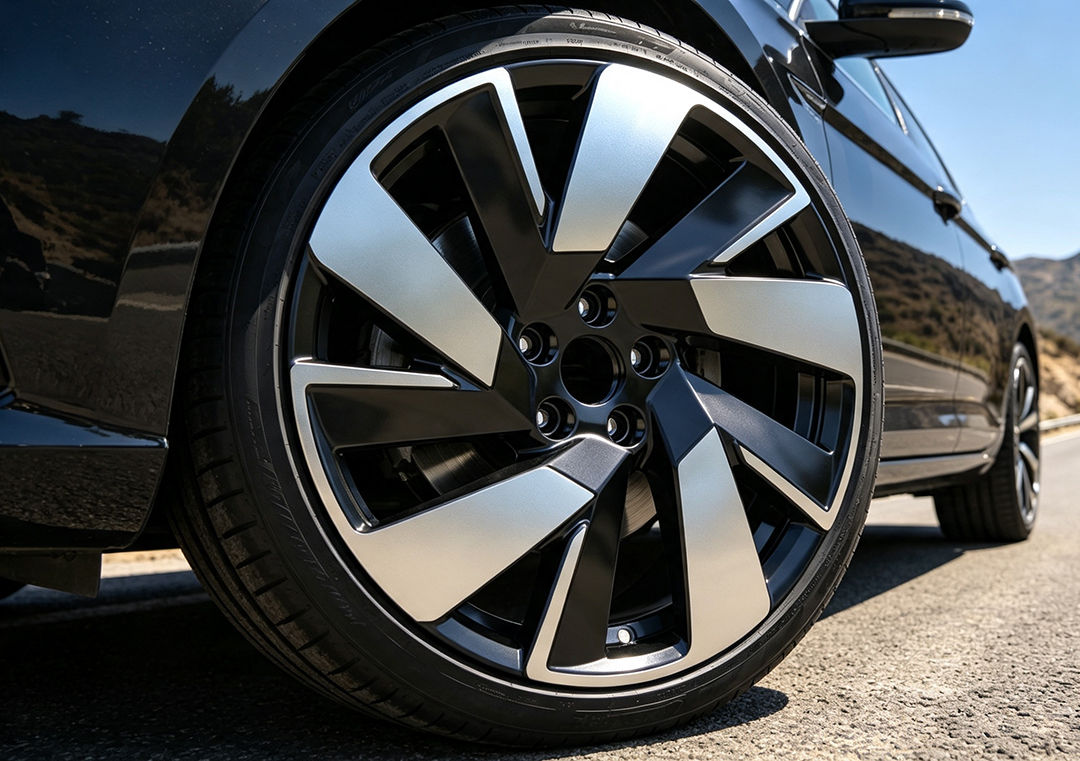
Precision Forging: A solid block of aerospace-grade aluminum is subjected to extreme heat and massive hydraulic pressure before being CNC-machined into the final design. Forged rims deliver maximum strength, high impact resistance, and minimum weight.
4.How to Determine Proper Rim Sizing and Fitment
Installing new aftermarket rims requires matching four essential technical specs to ensure proper clearance around suspension components, brake calipers, and wheel arches.
1. Rim Diameter and Width
Expressed in inches (such as
18 x 8.5), the first number indicates the diameter from bead seat to bead seat, while the second measures the width across the inner barrel.2. Bolt Pattern (Pitch Circle Diameter / PCD)
The bolt pattern specifies the number of lug holes and the diameter of the circle they form. A common rating like
5x114.3 indicates 5 lug holes spaced around a 114.3mm circle. Always match this measurement to your axle hub.3. Offset (ET Measurement)
Measured in millimeters, offset describes the distance from the wheel’s true mechanical centerline to its mounting surface:
-
Positive Offset (+ET): The mounting hub sits closer to the outer face, tucking the wheel inward toward the suspension. Common on modern front-wheel-drive cars.
-
Zero Offset (0 ET): The mounting hub aligns directly with the center of the rim barrel.
-
Negative Offset (-ET): The mounting hub sits closer to the rear edge, pushing the wheel outward for a wide, aggressive stance. Common on off-road trucks and widebody builds.
4. Center Bore and Hub-Centric Rings
The center bore is the machined opening on the rear of the rim that mounts onto the vehicle’s axle hub snout. Modern vehicles rely on hub-centric fitment, where the center bore bears the vehicle weight rather than the lug studs alone. If an aftermarket rim features a larger center bore than your factory hub, install high-quality hub-centric rings to prevent vibrations at highway speeds.
5.How Changing Car Wheel Rims Affects Vehicle Performance
Upgrading your wheels alters more than just appearance—it directly changes unsprung mass and rotational inertia.
       [ Lighter Alloy Rims ]                           [ Larger / Heavier Rims ]
                 │                                                 │
 ┌───────┴───────┐                 ┌───────┴────────┐
 ▼                              ▼                 ▼                                ▼
Faster Acceleration &       Smoother Ride    Tighter High-Speed       Stiffer Ride Quality &
Quicker Braking Response   Quality & Range   Cornering Grip           Increased Fuel Use
The Role of Unsprung Mass
Unsprung mass includes components not supported by the car’s suspension springs (such as tires, brake rotors, bearings, and rims). Equipping lighter alloy rims allows the suspension to react faster over bumps, keeping the tire contact patch firmly planted on the road surface.
-
Improved Acceleration: Lower rotational mass means the engine spends less energy spinning up the wheels.
-
Shorter Braking Distances: Lighter wheels reduce kinetic momentum, lowering stopping effort for brake pads.
-
Refined Steering Feedback: Steering response becomes crisp, predictable, and more agile during quick maneuvers.
Oversized Rims vs. Ride Quality
Up-sizing to larger rim diameters with lower-profile tires reduces sidewall flex during hard cornering, improving lateral stability. However, thinner tire sidewalls offer less cushioning against road imperfections, leading to a firmer ride and an increased risk of rim damage from deep potholes.
6.How to Clean and Maintain Car Wheel Rims
Corrosive brake dust consists of hot metallic particles, carbon compounds, and adhesive resins that can etch into protective clear coats if left unwashed.
Step-by-Step Maintenance Routine
-
Cool Down First: Avoid spraying cold water or cleaners on hot rims immediately after driving to prevent warping brake rotors or damaging clear coats.
-
Apply pH-Neutral Cleaners: Use pH-neutral, iron-decontaminating spray cleaners to lift embedded metallic particles safely.
-
Use Non-Abrasive Brushes: Clean the faces and inner barrels using soft microfiber wash mitts and non-scratch wheel brushes. Keep these tools separate from your main paint-washing supplies.
-
Protect with Sealants: Apply synthetic wheel wax or spray ceramic coatings to create a protective barrier that repels brake dust and makes future cleaning effortless.
Frequently Asked Questions(FAQ)
1.What is the difference between car wheels and wheel rims?
Technically, the rim is only the outer edge of the wheel that holds the tire in place. The wheel includes the entire metal piece, including the hub and spokes. However, in casual terms, people often use both words interchangeably.
2.What are the main materials used for car wheel rims?
Steel is heavy, durable, and low-cost (common for budget or winter use). Aluminum Alloy is lightweight, stylish, and improves handling and fuel efficiency (the most popular choice). Carbon Fiber is ultra-lightweight and strong, but expensive and mainly used for high-performance sports cars.
3.How do I know what size wheel rims fit my car?
Check the sticker inside the driver’s side door jamb or your owner’s manual for factory specs. To ensure proper fitment for aftermarket rims, you must match four key parameters: rim diameter, rim width, bolt pattern (PCD), and offset (ET).
4.Does changing car wheel rims affect vehicle performance?
Yes. Lighter alloy rims improve acceleration, handling, braking efficiency, and fuel economy. Installing larger or heavier rims may enhance high-speed cornering grip but can lead to a stiffer ride and slightly higher fuel consumption.
5.How do I clean and maintain car wheel rims to prevent damage?
Clean rims regularly using a pH-neutral wheel cleaner and a soft brush to remove corrosive brake dust and road grime. Avoid harsh acids or abrasive pads that can strip the protective clear coat or cause metal corrosion.
Ready to Upgrade Your Vehicle’s Stance?
Choosing the ideal car wheel rims requires balancing personal style with precise fitment specs. Finding the right combination enhances curb appeal while delivering improvements in acceleration, cornering stability, and braking response.
Explore our comprehensive selection of high-performance alloy wheels, flow-formed models, forged builds, and factory-style replacements at ATK Wheels today! Use our intuitive vehicle filter to find options designed specifically for your vehicle’s make, model, and offset requirements.

