Build Custom Wheels: How to Create the Right Fit, Style, and Performance
Build Custom Wheels: How to Create the Right Fit, Style, and Performance
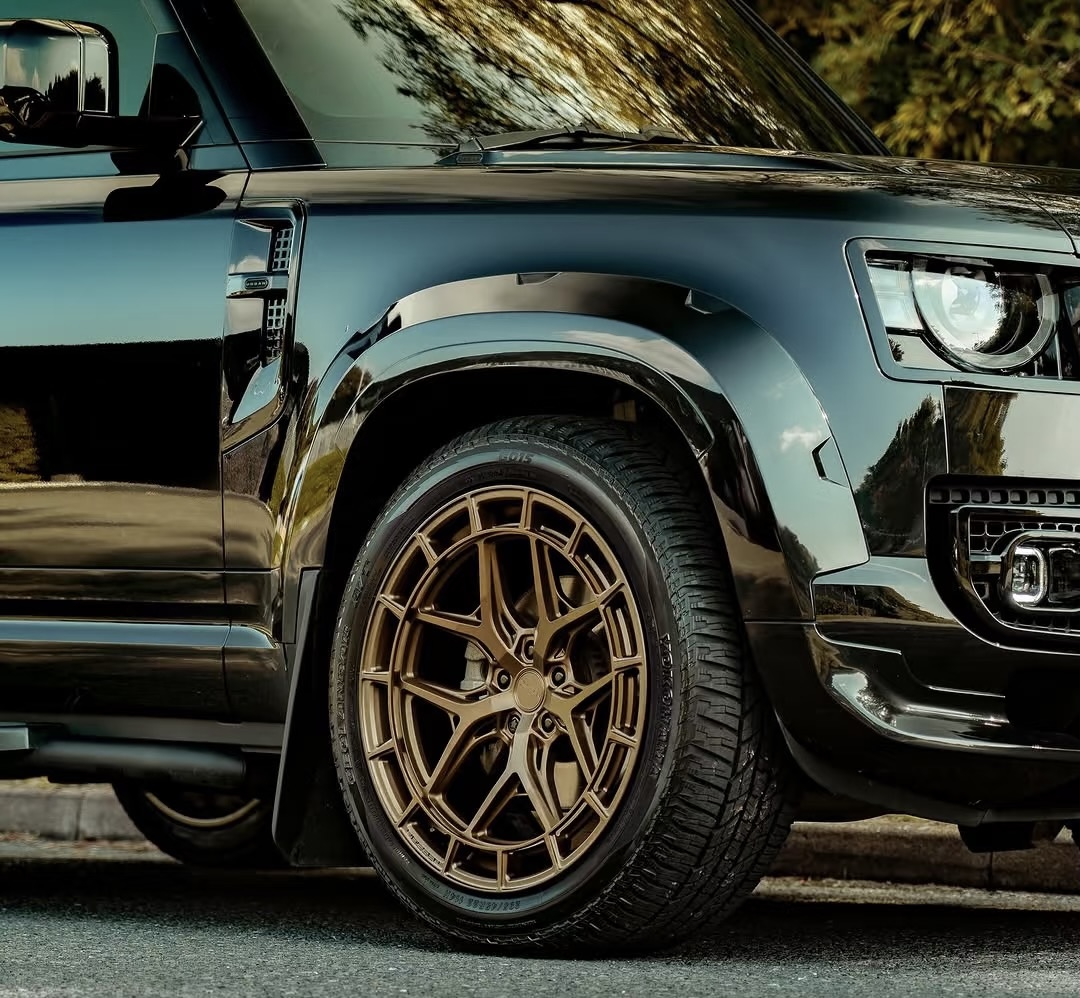
Mass-produced wheels are built for compromise. Auto manufacturers design factory wheels to fit standard suspension geometries, conservative tire profiles, and low manufacturing cost targets. But when you modify your suspension, upgrade to a big brake kit, or demand a distinct stance that sits completely flush with your fenders, off-the-shelf fitments fall short.
To achieve true mechanical balance and personalized aesthetics, enthusiasts and performance drivers choose to build custom wheels.
Building tailor-made wheels combines aerospace engineering, advanced metallurgy, and artistic finishing. Whether you are aiming to reduce rotational mass for track days or seeking a striking multi-piece design for a luxury build, understanding the engineering process ensures you select the optimal specs for your application.
+-----------------------------------------------------------------------+
|                 CUSTOM WHEEL MANUFACTURING WORKFLOW                   |
+-----------------------------------------------------------------------+
|  1. Engineering Analysis & CAD Design (Vehicle Specs & Caliper Data)  |
|                                  ↓                                   |
|  2. Finite Element Analysis (FEA Testing for Load Ratings)            |
|                                  ↓                                   |
|  3. Precision CNC Machining (6061-T6 Forged Aluminum Solid Blocks)    |
|                                  ↓                                   |
|  4. Surface Finishing & Hand-Polishing (Powder Coat / Anodizing)      |
|                                  ↓                                   |
|  5. Multi-Piece Assembly & Runout Inspection (Radial & Lateral Check) |
+-----------------------------------------------------------------------+
1.6 Essential Parameters Required to Build Custom Wheels
Achieving a seamless fitment requires exact measurements. A discrepancy of just a few millimeters can lead to brake caliper interference, inner barrel contact with suspension struts, or tire rubbing against the fender lining.
When configuring a custom build, engineers calculate six critical dimensions:
                  +-----------------------------------+
                  |        WHEEL PROFILE CROSS-SECTION|
                  +-----------------------------------+
                  |                                   |
    OUTER LIP     |    [Center Bore]   [Bolt Pattern] |     INNER BARREL
   +-----------+  |          |               |        |  +-----------+
   |           |  |          v               v        |  |           |
   |           +--+-------+-----+\       /+-----+-----+--+           |
   |                      |     | |     | |     |                    |
   |   <--- Offset (ET)   |  O  | |  O  | |  O  |   Brake Clearance  |
   |   [Hub Mounting Pad] |     | |     | |     |        --->        |
   |                      +-----+--------+------+                    |
   |           +--+-------+     |/       \|     +-----+--+           |
   |           |  |                                   |  |           |
   +-----------+  | <------- Wheel Width -----------> |  +-----------+
                  +-----------------------------------+
1. Bolt Pattern (Pitch Circle Diameter – PCD)
The PCD indicates the number of lug holes and the diameter of the imaginary circle they form. While common setups include 5×112, 5×114.3, or 5×120, custom forging allows for exact hub drilling engineered specifically to your vehicle’s original equipment specs.
2. Wheel Diameter and Width
Diameter dictates tire sidewall height and overall rolling radius, directly impacting speedometer accuracy and gear ratios. Width determines tire contact patch area and stretch profiles. Custom builds allow driver-specific width adjustments in half-inch or full-inch increments.
3. Offset (ET)
Offset is the distance from the wheel’s hub mounting surface to its true centerline, measured in millimeters.
-
Positive Offset: Pushes the mounting surface toward the front face, tucking the wheel inward.
-
Negative Offset: Deepens the wheel face, pushing the lip outward for a aggressive stance.
4. Center Bore Size
The center bore is the machined opening on the back of the wheel that seats directly on the vehicle’s hub. Custom wheels are precision-machined to be hub-centric, eliminating the need for plastic hub-centric rings and preventing high-speed steering wheel vibrations.
5. Brake Caliper Clearance (Backspacing & X-Factor)
Upgrading to aftermarket big brake kits (BBK) requires specific caliper clearance. Custom engineering accounts for caliper profile depth and profile width, placing the spoke contours far enough outward to clear multi-piston calipers without requiring spacers.
6. Structural Load Rating Requirements
Vehicle gross axle weight ratings determine structural requirements. A heavy SUV requires higher load capacity per wheel than a lightweight sports coupe. Forged solid blocks are structural rated specifically to exceed target vehicle weight thresholds safely.
2.Materials & Construction: Cast vs. Rotary Forged vs. Fully Forged
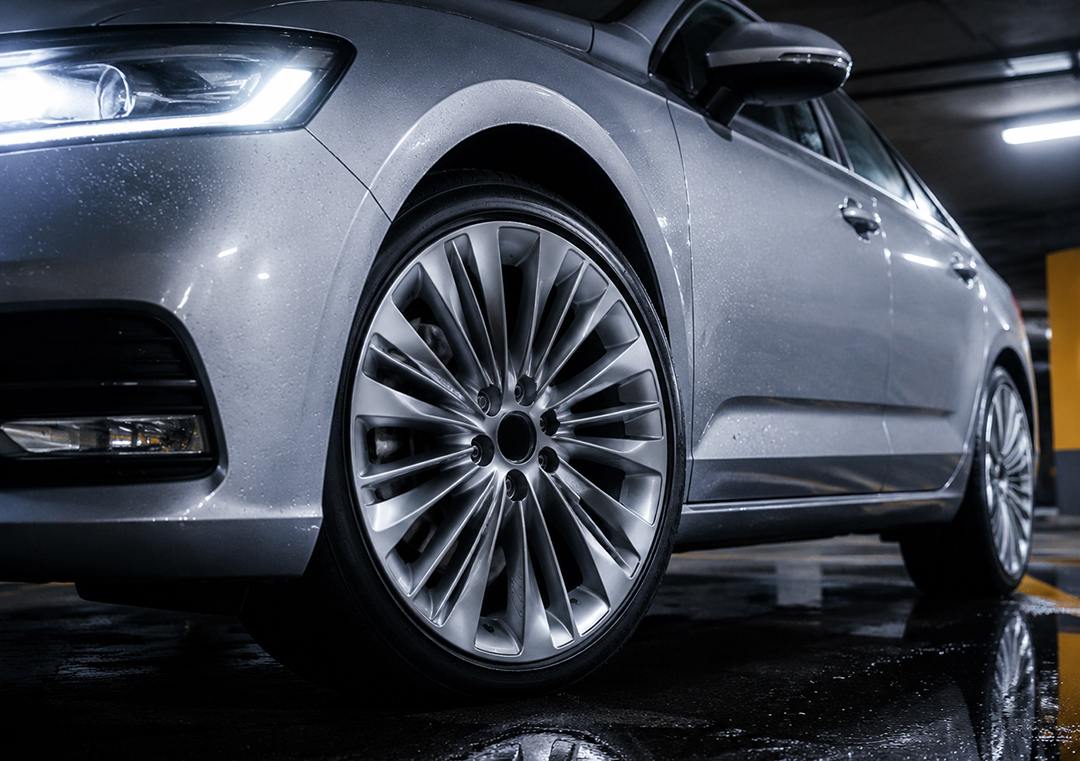
Understanding material differences is vital when deciding how to build custom wheels. The manufacturing method determines tensile strength, unsprung weight, and overall durability under track or daily driving stress.
+---------------------------------------------------------------------------------------+
|                            STRUCTURAL STRENGTH COMPARISON                             |
+---------------------------------------------------------------------------------------+
|  CAST ALUMINUM       |  Porously Grain Structure   |  Base Structural Rating          |
+----------------------+-----------------------------+----------------------------------+
|  ROTARY FORGED       |  Flow-Formed Outer Barrel   |  Medium Structural Rating        |
+----------------------+-----------------------------+----------------------------------+
|  6061-T6 FULL FORGED |  Compressed Directional Grain|  Maximum Structural Rating      |
+---------------------------------------------------------------------------------------+
Cast Aluminum
Molten aluminum is poured into a mold cavity. While cost-effective, cast structures require thicker material profiles to achieve baseline structural ratings, adding significant unsprung weight and remaining susceptible to cracking under harsh impact.
Rotary Forged (Flow-Formed)
The center disc is cast, while the outer barrel is spun, heated, and stretched using high-pressure rollers. This realigns the aluminum grain structure in the barrel, increasing strength and reducing weight compared to standard casting.
6061-T6 Aerospace-Grade Fully Forged Aluminum
Solid billets of 6061-T6 aluminum are subjected to intense hydraulic pressure (up to 10,000 tons) to compact the metal’s grain structure along continuous flow lines.
Machined on multi-axis CNC mills, fully forged wheels deliver exceptional strength-to-weight ratios, high crack resistance, and structural resilience under heat and heavy cornering loads.
3.1-Piece Monoblock vs. 2-Piece vs. 3-Piece Modular Configurations
Choosing structural geometry is a balance between weight performance, aesthetic depth, and modular versatility.
| Feature | 1-Piece Monoblock | 2-Piece Modular | 3-Piece Modular |
|---|---|---|---|
| Construction | Single forged billet block | Forged face + welded/bolted barrel | Forged face + inner barrel + outer lip |
| Unsprung Weight | Lowest (Maximum weight reduction) | Moderate | Standard |
| Fitment Flexibility | Fixed offset and width options | High width variations | Maximum width, lip depth, & offset control |
| Structural Rigidity | Highest stiffness level | High structural stability | Requires periodic seal maintenance |
| Ideal Application | Track days, high-speed performance | Custom street setups, deep concavity | Widebody builds, extreme offsets, stance |
4.Step-by-Step: The Manufacturing Process Behind Custom Wheels
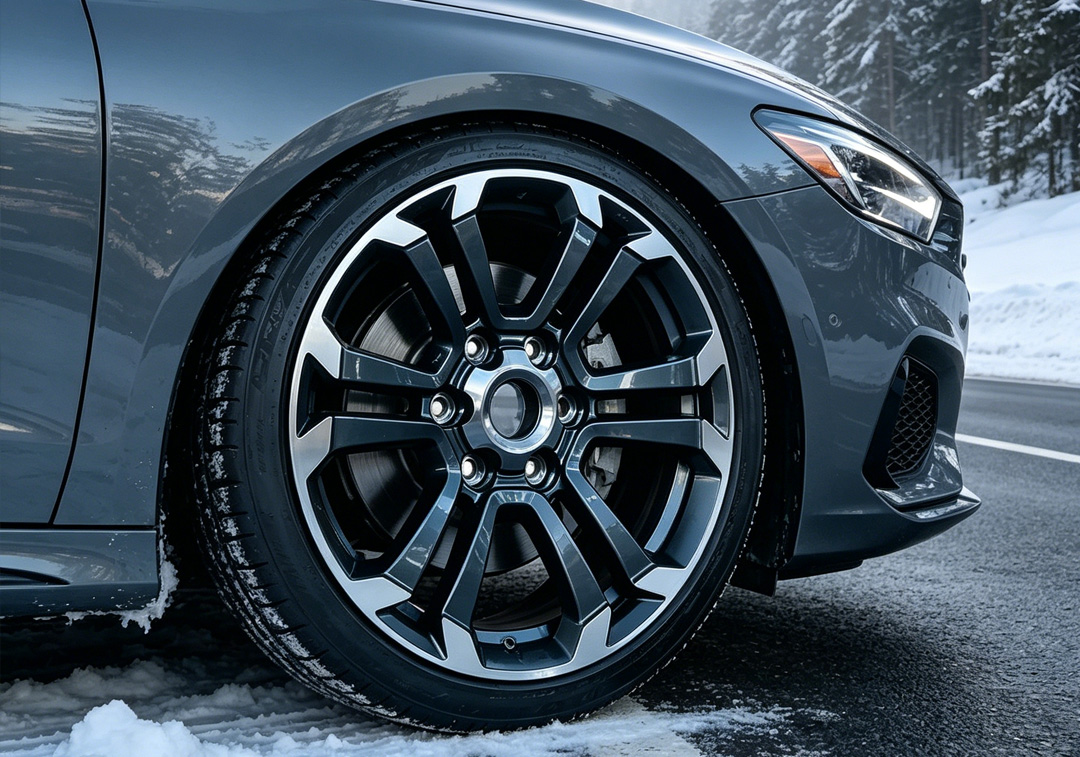
Transforming raw aluminum into high-performance rolling art involves rigorous engineering stages:
[Vehicle CAD Data] ---> [FEA Stress Analysis] ---> [CNC Milling] ---> [Finishing & Quality Control]
Step 1: CAD Blueprinting & Brake Clearance Simulation
Engineers collect exact vehicle hub measurements, caliper dimensions, and fender clearances. Using specialized 3D CAD software, technicians map out structural spoke geometry to optimize brake airflow and hub clearance.
Step 2: Finite Element Analysis (FEA) Stress Testing
Before physical metal cutting begins, digital wheel models undergo FEA simulations. Computer programs simulate severe cornering forces, radial load stresses, and dynamic impact angles to identify stress concentrations, allowing engineers to remove excess material without compromising load capacity.
Step 3: Precision Multi-Axis CNC Machining
The 6061-T6 forged aluminum billet is placed into multi-axis CNC milling centers. High-speed carbide bits carve out spoke geometry, lug pockets, lightening pockets, and center bore paths with micrometer-level precision.
Step 4: Hand Finishing and Surface Coating
Once machined, the rough surface is prepped via hand sanding, deburring, or media blasting. Finishing technicians apply durable surface coatings:
-
Powder Coating: High-durability electrostatically applied baked finish.
-
Brushed Finishes: Hand-brushed metallic directional grain underneath clear coat.
-
Polished Finishes: Mirror-like metallic polish for visual depth.
-
Anodizing: Chemical oxidation layer delivering rich color vibrancy.
Step 5: Assembly, Sealing, and Runout Testing
Multi-piece models are hand-assembled using aerospace-grade hardware (titanium or stainless steel bolts) torqued to precise foot-pound specifications. Modular assemblies receive perimeter sealant applications, followed by dial indicator testing to ensure zero lateral or radial runout.
5.Key Benefits of Custom Built Forged Wheels
Investing in custom engineering delivers advantages beyond simple appearance changes:
-
Enhanced Unsprung Mass Dynamics: Reducing weight at the four corners reduces rotational inertia, improving acceleration response, braking distances, and suspension damping speed.
-
Tailored Flush Fitments: Eliminates wheel poke or inner wheel well rubbing by setting offsets down to fractional millimeter levels.
-
Accommodates Aftermarket Big Brake Systems: Custom backspacing allows large multi-piston calipers to clear spoke backings cleanly without needing dangerous wheel spacers.
-
Personalized Surface Aesthetics: Broad color palettes, brushed clear coats, dual-tone finishes, and custom center cap engraving.
Frequently Asked Questions(FAQ)
1. What parameters are required to build custom wheels?
To build custom wheels with precise fitment, you must specify six core parameters: bolt pattern (PCD), wheel diameter and width, offset (ET), center bore size, brake caliper clearance, and the vehicle’s load rating requirement.
2. What is the average lead time to build custom forged wheels?
The standard lead time for custom forged wheels typically ranges from 4 to 8 weeks. This timeline accounts for engineering CAD design, finite element analysis (FEA), precision CNC machining, custom finishing, and final quality control.
3. Are custom built wheels safer than cast factory wheels?
Yes, high-quality custom wheels—especially those machined from 6061-T6 aerospace-grade forged aluminum—are significantly stronger and lighter than standard cast factory wheels, offering higher structural integrity and structural load capacity.
4. What is the difference between 1-piece, 2-piece, and 3-piece custom wheels?
A 1-piece (monoblock) wheel is machined from a single forged block for maximum strength and light weight. 2-piece and 3-piece wheels assemble separate barrels, lips, and centers, offering greater flexibility in custom widths, offsets, and color combinations.
5. Why build custom wheels instead of buying off-the-shelf fitments?
Building custom wheels allows for tailored fitment flush with the fenders, proper clearance for aftermarket big brake kits, optimized wheel weight, and fully personalized designs and finishes that mass-produced wheels cannot accommodate.
Experience Precision Forging Tailored to Your Build
Ready to elevate your vehicle’s stance, strength, and performance? Off-the-shelf fitments always force compromise, but your vehicle deserves engineering tailored to its exact structural metrics.
At ATK Wheels, we specialize in precision-engineered, 6061-T6 forged aluminum custom wheels designed specifically for performance, luxury, and exotic applications. Explore our extensive design catalog, consult with our fitment engineers, and configure your dream setup today.