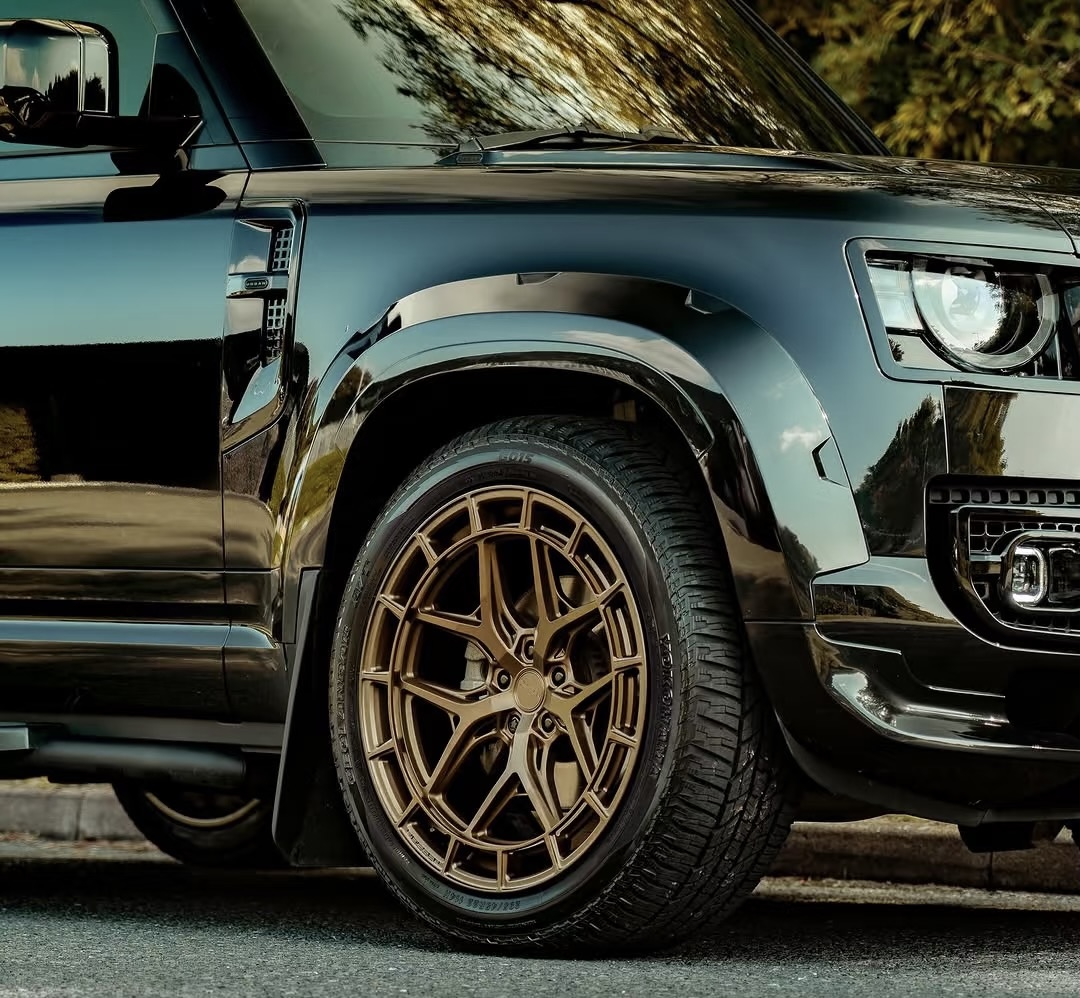
Automotive Custom Wheels: Fitment, Performance, Materials, and Sizing
Automotive Custom Wheels: Fitment, Performance, Materials, and Sizing
Upgrading your vehicle with high-quality automotive custom wheels is one of the most effective ways to enhance both aesthetics and driving dynamics. Whether you want a aggressive stance for a modern muscle car, lightweight strength for track days, or rugged durability for off-road trails, changing your stock factory rims alters how your car looks, handles, and performs.
However, selecting the right set involves much more than picking an attractive design. Navigating specifications like bolt patterns, offset, backspacing, and manufacturing methods can feel overwhelming. Choosing incorrect dimensions risks brake interference, suspension rubbing, and compromised safety.
This comprehensive publication breaks down everything you need to know about aftermarket wheels. We will explore manufacturing technologies, fitment math, performance impacts, and maintenance strategies so you can make an informed investment.
1.Why Upgrade to Automotive Custom Wheels?
Factory original equipment manufacturer (OEM) wheels are designed for broad appeal, low manufacturing costs, and basic daily commuter needs. While functional, they rarely optimize a vehicle’s true capabilities or visual potential.
[ Stock OEM Wheels ] ---> Mass-Produced / Heavy / Generic Fitment
        vs.
[ Custom Wheels ]    ---> Tailored Fitment / Reduced Weight / Enhanced Aesthetics
Here is why car enthusiasts and practical drivers alike invest in aftermarket wheel upgrades:
-
Enhanced Visual Appeal: Custom finishes—such as gloss black, brushed bronze, hyper silver, and dual-tone machined faces—instantly elevate your vehicle’s curb appeal.
-
Sharper Handling and Braking: Premium aftermarket wheels reduce overall unsprung mass. Lower unsprung weight allows your vehicle’s suspension to react faster to road imperfections, improving tire contact, cornering grip, and braking responsiveness.
-
Customized Stance and Fitment: Aftermarket options allow you to choose precise widths and offsets, achieving a flush fitment with the fenders without needing unsafe wheel spacers.
-
Brake Clearance for Upgrades: If you plan to install big brake kits (BBK) with larger calipers and rotors, custom aftermarket designs provide the necessary backspacing and barrel clearance.
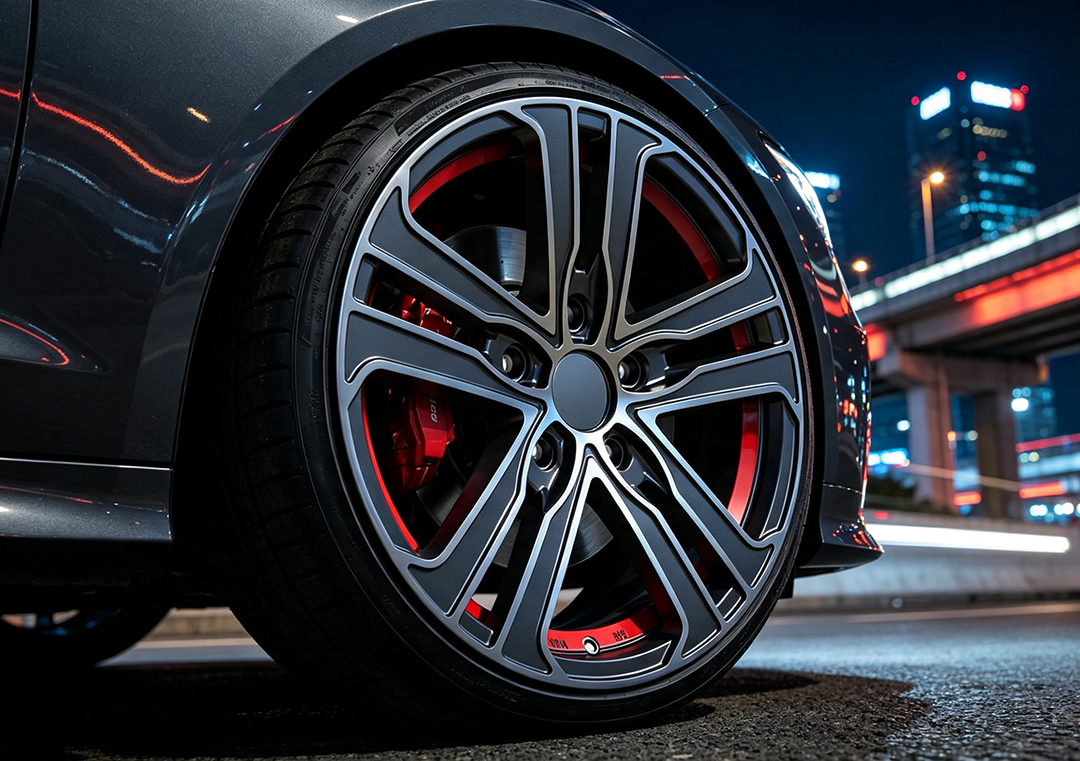
2.Wheel Manufacturing Technologies: Cast vs. Flow-Formed vs. Forged
Understanding how automotive custom wheels are manufactured helps explain the differences in price, structural integrity, and weight. Three primary production methods dominate the modern automotive market.
Strength & Cost Spectrum:
[ Cast Wheels ] ------------> [ Flow-Formed Wheels ] ------------> [ Forged Wheels ]
(Lower Cost / Heavier)        (Mid-Range / Balanced)             (Highest Strength / Ultra-Light)
1. Cast Aluminum Wheels
Casting is the most common and cost-effective manufacturing process. Liquid aluminum is poured or vacuum-drawn into a mold shaped like the final wheel design. Once cooled, the wheel is trimmed and finished.
-
Pros: Highly affordable, wide variety of intricate designs.
-
Cons: Heavier structural density; requires more metal volume to achieve adequate strength.
-
Best For: Daily drivers on a budget who prioritize appearance over high-speed track performance.
2. Flow-Formed (Rotary Forged) Wheels
Flow-forming bridges the gap between casting and full forging. The process begins with a specially cast aluminum wheel preform. The inner barrel is then mounted on a mandrel and spun at high speeds while heat and hydraulic rollers apply intense pressure to stretch and compress the aluminum grain structure.
-
Pros: Significantly lighter and stronger than standard cast wheels; excellent balance of cost and high performance.
-
Cons: Slightly more expensive than traditional cast options.
-
Best For: Performance street cars, autocross enthusiasts, and drivers seeking tangible handling improvements without forged-level pricing.
3. Fully Forged Custom Wheels
Forged wheels represent the pinnacle of automotive engineering. A solid billet block of aerospace-grade 6061-T6 aluminum is subjected to extreme heat and massive pressure (often exceeding 10,000 tons) to forge a dense, highly refined grain structure. CNC machinery then mills the exact design out of this ultra-dense metal.
-
Pros: Maximum structural strength, superior impact resistance, and extremely low weight.
-
Cons: Premium price point due to intensive labor and raw material costs.
-
Best For: High-performance sports cars, luxury vehicles, heavy-duty trucks, and competitive track racing.
Quick Comparison Matrix
| Feature / Property | Cast Custom Wheels | Flow-Formed Custom Wheels | Forged Custom Wheels |
|---|---|---|---|
| Manufacturing Process | Molten aluminum poured in mold | Cast preform stretched under heat/pressure | CNC milled from solid aluminum billet |
| Material Density | Standard | High (Refined Grain Structure) | Maximum (Ultra-Dense Grain Structure) |
| Weight | Heavy | Moderate to Light | Ultra-Lightweight |
| Structural Strength | Baseline | High | Extreme |
| Price Point | Budget-Friendly | Mid-Tier / Premium | |
| Primary Use Case | Daily commuters, aesthetic upgrades | Performance street driving, track days | Track racing, supercar builds, heavy hauling |
3.The Math of Fitment: 5 Critical Measurements You Must Get Right
Selecting aftermarket wheels requires absolute precision. Even a fraction of an inch error can cause tires to rub against fender liners or brake calipers to scrape the inner wheel barrel.
To ensure proper fitment, pay close attention to these five core specifications:
1. Bolt Pattern (Pitch Circle Diameter – PCD)
The bolt pattern indicates the number of lug holes and the diameter of the imaginary circle they form. Expressed as
5x114.3 or 5x120 (5 bolts spaced across a 114.3mm or 120mm circle), this measurement must match your vehicle’s hub exactly.2. Wheel Diameter and Width
Expressed in inches (e.g.,
19x9.5), the first number is the overall rim diameter, and the second is the inner width where the tire bead sits. Broader widths allow wider tires for increased contact patch and traction.3. Offset (ET)
Wheel offset is the distance from the hub mounting surface to the true centerline of the wheel, measured in millimeters:
-
Positive Offset (+ET): The mounting hub sits closer to the front face. Common on modern front-wheel-drive and modern performance cars.
-
Zero Offset (ET0): The mounting hub aligns directly with the wheel’s centerline.
-
Negative Offset (-ET): The mounting hub sits inward toward the vehicle chassis, pushing the outer rim lip outward. Popular on lifted trucks and off-road builds.
Key Takeaway: Lowering your offset pushes the wheel further out toward the fender. Raising the offset pulls the wheel inward toward the suspension struts.
       [ Inside Suspension ]              [ Outside Fender ]
                |                                  |
  Negative Offset (-ET) <--- [ Hub ] ---> Positive Offset (+ET)
4. Backspacing
Backspacing measures the distance from the rear mounting face to the back edge of the inner wheel rim, expressed in inches. It determines whether a wider wheel will clear internal suspension arms, tie rods, and inner fender wells.
5. Center Bore and Hub-Centric Rings
The center bore is the machined hole on the back of the wheel that centers it on the car’s wheel hub.
-
Hub-Centric Wheels: Machined to fit your specific vehicle’s hub diameter precisely, taking load stress off the lug studs.
-
Lug-Centric Wheels: Feature a larger center bore to fit multiple car models. These require hub-centric rings (polycarbonate or aluminum adapters) to center the wheel and prevent severe highway-speed steering vibrations.
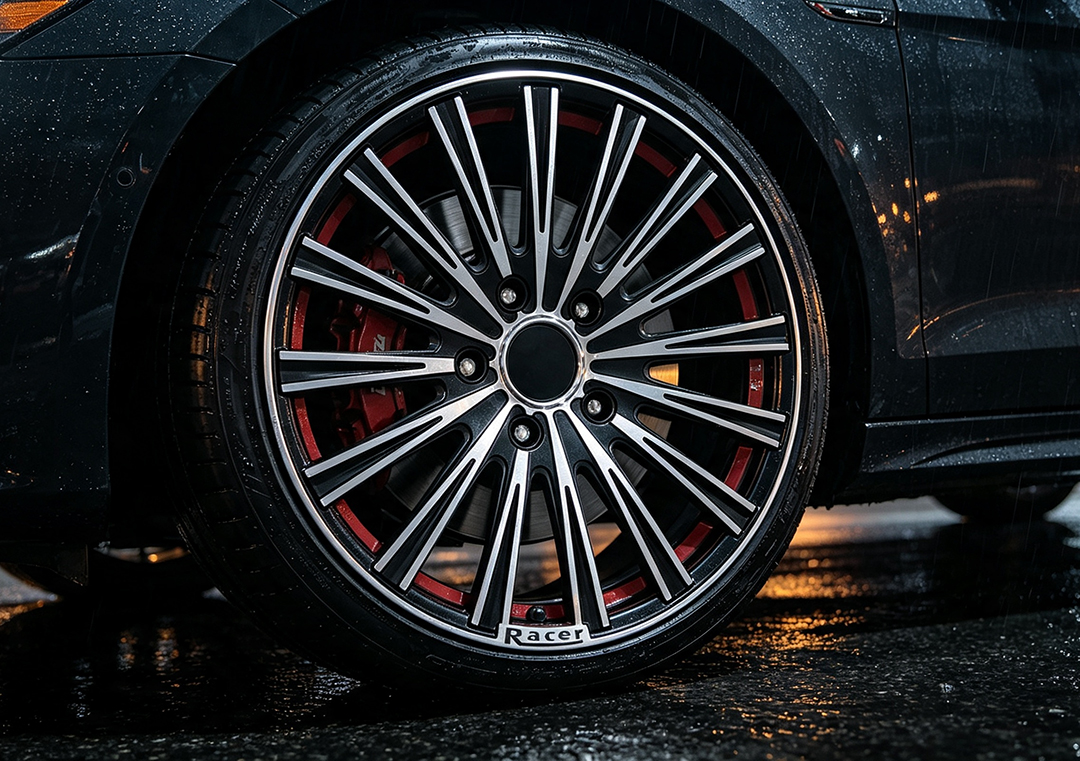
4.How Custom Wheels Impact Performance and Fuel Economy
Upgrading your setup involves physical changes that affect vehicle dynamics, fuel consumption, and speedometer calibration.
Unsprung Weight Drop ---> Faster Suspension Response ---> Superior Cornering & Braking
Unsprung Mass and Rotational Mass
Unsprung mass includes components not supported by the vehicle suspension springs—such as wheels, tires, brake rotors, and wheel bearings.
Because wheels are rotating mass, reducing weight at the wheel hub delivers a compound benefit. Removing 5 lbs of rotational unsprung weight from each corner can feel like clearing 80 lbs of static cargo from your trunk during hard acceleration and braking.
Fuel Efficiency and Electric Vehicle Range
-
Lighter Wheels: Lower overall rotational inertia, requiring less engine torque (or electric motor energy) to start spinning. This yields measurable improvements in urban fuel economy and electric vehicle (EV) driving range.
-
Oversized or Heavy Wheels: Installing significantly wider or heavier wheels increases rolling resistance and aerodynamic drag. This raises fuel consumption and reduces total battery range on modern EVs.
Understanding “Plus-Sizing”
Plus-Sizing is an established fitment strategy where you upgrade to a larger wheel diameter while fitting lower-profile tires.
Standard Fitment: [ 17" Wheel ] + [ Tall Sidewall Tire ] = 25.5" Overall Diameter
Plus-1 Upgrade:    [ 18" Wheel ] + [ Short Sidewall Tire ] = 25.5" Overall Diameter
-
Plus-One Fitment: Upgrades a 17-inch wheel to an 18-inch wheel paired with a lower-profile tire.
-
Plus-Two Fitment: Upgrades a 17-inch wheel to a 19-inch wheel paired with an ultra-low-profile tire.
The Goal: Maintain the exact outer rolling diameter of the tire. This preserves accurate speedometer readings and transmission shift points while reducing tire sidewall flex during aggressive cornering.
5.Caring for Your Custom Wheels: Cleaning and Protection Strategies
High-end custom finishes—whether powder-coated, anodized, or diamond-cut clear coat—require dedicated care to prevent pitting, brake dust etching, and road salt damage.
Proper Maintenance Workflow:
Cool Wheels Down ---> pH-Neutral Cleaner ---> Soft Microfiber Wash ---> Ceramic Sealant Coating
-
Avoid Acidic Wheel Cleaners: Harsh commercial cleaners containing hydrofluoric acid or strong alkalis can strip clear coats and ruin raw or brushed aluminum finishes. Always select a pH-neutral, color-changing wheel cleaner.
-
Never Clean Hot Wheels: Allow your brakes and rims to cool completely before spraying water or cleaning solutions. Applying cold water to hot alloy wheels can cause thermal shock, warping rotors or cracking fragile finishes.
-
Apply Ceramic Coatings: Protecting your custom wheels with a high-temperature ceramic sealant forms a hydrophobic barrier. This shields against hot, metallic brake dust and makes routine wash cycles significantly easier.
-
Use Dedicated Cleaning Tools: Microfiber wheel wands and soft-bristle brushes prevent swirl marks on high-gloss finishes. Never use abrasive sponges or steel wool.
6.Safety Certifications: Ensuring Compliance and Road Readiness
When shopping for automotive custom wheels, looking beyond visual styling is essential. Low-grade, uncertified replica wheels can crack under moderate pot-hole impacts, endangering you and your passengers.
Look for recognized international safety standards stamped into the rear of the wheel casting or forging:
-
JWL (Japan Light Alloy Wheel Standard): A mandatory technical standard set by the Japanese government ensuring wheels meet strict radial fatigue and impact resistance criteria.
-
VIA (Vehicle Inspection Association of Japan): An independent testing body that verifies whether a wheel complies with official JWL standards through rigorous laboratory testing.
-
TÜV (Technischer Überwachungsverein, Germany): One of the world’s strictest automotive safety certifications. TÜV approval ensures structural integrity and vehicle-specific engineering compliance under high Autobahn speeds.
-
SAE J2530 (Society of Automotive Engineers, USA): Outlines performance testing requirements for aftermarket wheels intended for passenger cars and light trucks on North American roadways.
Buying certified custom wheels ensures peace of mind, highway safety, and structural dependability over thousands of driving miles.
Frequently Asked Questions (FAQ)
1.What is the difference between cast, flow-formed, and forged custom wheels?
The main difference lies in manufacturing process, weight, and strength. Cast wheels are poured into molds, making them affordable but heavier. Flow-formed wheels use pressure to stretch the aluminum, offering better strength and lighter weight at a mid-tier price. Forged wheels are machined from solid billet aluminum, providing maximum strength and the lightest weight for high performance, though at the highest cost.
2.How do custom wheels affect vehicle performance and fuel economy?
Custom wheels affect performance primarily through weight and size. Lighter wheels (e.g., forged aluminum) reduce unsprung weight, improving acceleration, handling, and fuel efficiency. Conversely, oversized or heavier custom wheels increase rolling resistance, which can slow down acceleration, increase braking distances, and lower fuel economy.
3.What critical measurements are needed to ensure custom wheels fit properly?
To guarantee proper fitment, you must verify five main specifications: Bolt Pattern (PCD), Wheel Diameter and Width, Offset (ET), Backspacing, and Center Bore. Incorrect measurements can lead to brake clearance issues, suspension rubbing, or dangerous vibrations while driving.
4.What is “Plus-Sizing” when upgrading to custom wheels?
Plus-Sizing is increasing the wheel diameter (e.g., from 17″ to 18″ or 19″) while pairing it with lower-profile tires. This maintains the overall rolling diameter of the tire to keep the speedometer accurate, while improving steering response and giving the vehicle a sportier look.
5.Are aftermarket custom wheels safe and street-legal?
Yes, high-quality aftermarket wheels are completely safe and street-legal, provided they carry official safety certifications (such as JWL, VIA, or TÜV). Safety risks only arise when using uncertified budget knockoffs or installing wheels with incorrect fitment specifications.
Transform Your Vehicle Today
Upgrading your vehicle with the ideal set of automotive custom wheels balances precise engineering, technical fitment, and personalized styling. By selecting high-quality structural builds—whether flow-formed for street efficiency or forged for maximum track performance—you unlock better handling dynamics while making a bold visual statement on the road.
Ready to find the perfect fitment for your vehicle? Explore engineered wheel lineups at ATK Wheels to discover hub-centric designs, premium finishes, and performance-tested custom wheels tailored specifically for your car, truck, or SUV.