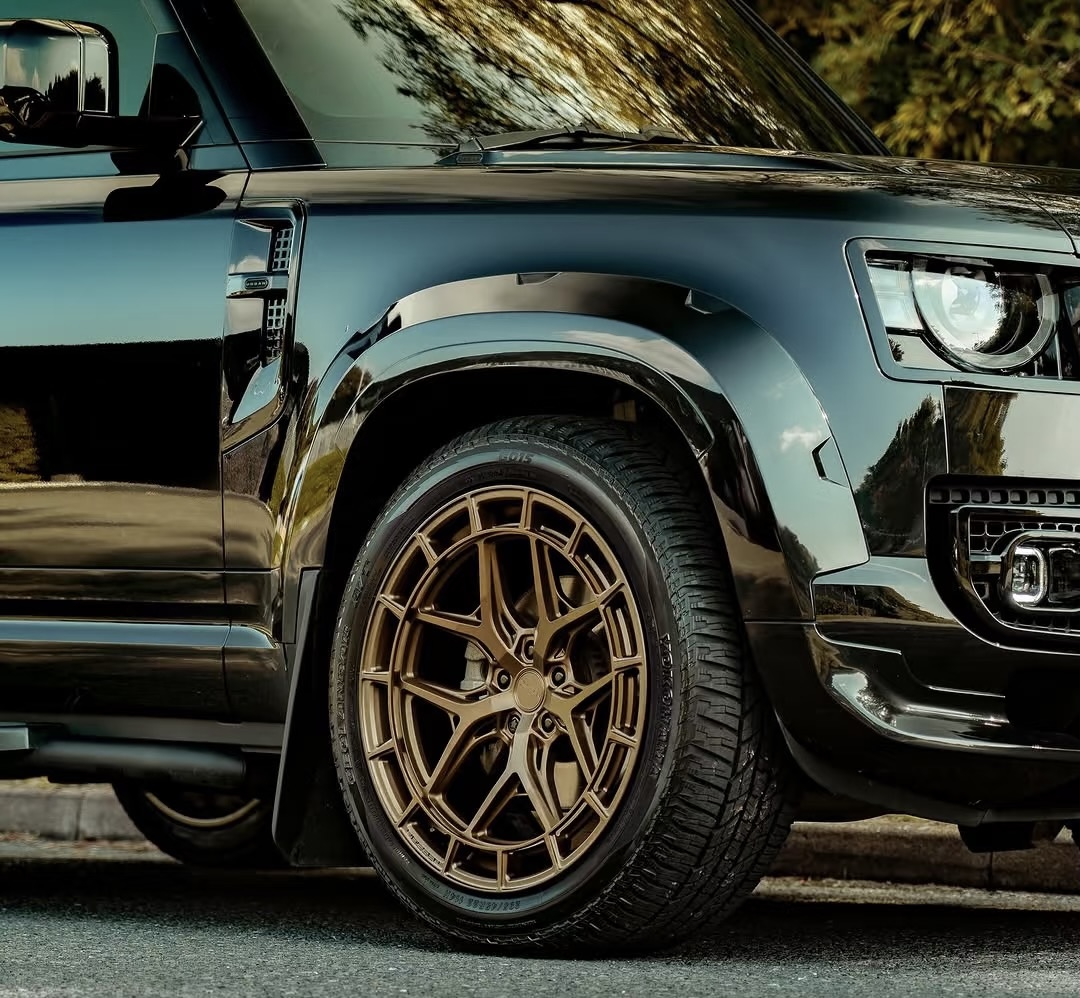
Aftermarket Pickup Wheels: Choosing the Right Wheels for Your Truck
Aftermarket Pickup Wheels: Choosing the Right Wheels for Your Truck
Upgrading to a set of high-performance aftermarket pickup wheels is one of the most effective ways to transform both the stance and capability of your truck. Factory wheels are designed for broad mass-market appeal, which often leaves half-ton and heavy-duty trucks looking tucked-in and under-equipped for serious work or trail riding.
Modern truck owners demand more than just visual appeal. Whether you operate a Ford F-150, Chevrolet Silverado, RAM 1500, or a heavy-duty 2500/3500 platform, selecting custom wheels requires balancing payload ratings, clearance geometry, and construction methods. Installing an incorrectly rated wheel can lead to structural failure under load, steering vibrations, or costly tire rubbing.
This technical breakdown explains how wheel manufacturing affects structural integrity, how offset and backspacing dictate clearance, and how wheel dimensions impact real-world towing performance.
1. Manufacturing Methods: Cast vs. Flow-Formed vs. Forged Wheels
The manufacturing process determines a wheel’s structural limit, impact resistance, and weight. When selecting aftermarket pickup wheels, understanding these methods ensures your wheel choice matches your truck’s operational demands.
Cast Aluminum Wheels
Cast wheels are produced by pouring molten aluminum into a pre-shaped mold. Once cooled, the rough wheel is trimmed and CNC-machined.
-
Low-Pressure Casting: The standard industry method for reliable entry-level wheels. Liquid aluminum is drawn into the mold under mild pressure, reducing internal porosity.
-
Pros: Highly cost-effective, wide range of aesthetic designs.
-
Cons: Lower tensile strength; thicker metal walls are required to achieve safe load ratings, making them noticeably heavier.
Flow-Formed (Rotary Forged) Wheels
Flow-forming bridges the gap between casting and full forging. The wheel face is cast using low-pressure methods, but the inner barrel is spun under high heat and pressure rollers. This process stretches and compresses the aluminum’s grain structure along the barrel.
-
Pros: Increased barrel tensile strength, lower unsprung weight than traditional cast options.
-
Cons: Mid-tier price point; the face retains standard cast properties.
Full Forged Aluminum Wheels
Forged wheels are engineered from a solid 6061-T6 aluminum billet. Under intense mechanical pressure (often 8,000 to 10,000 tons), the billet is compressed into shape before being precision-milled on a CNC machine.
-
Pros: Exceptionally dense molecular grain structure. Forged wheels offer maximum strength with minimal weight, making them ideal for heavy-duty towing, extreme payload hauling, and harsh off-road impacts.
-
Cons: Higher initial investment due to manufacturing complexity.
Construction Method Comparison
| Feature / Property | Cast Wheels | Flow-Formed Wheels | Forged Wheels |
|---|---|---|---|
| Manufacturing Process | Molten metal poured into mold | Cast face + heat-pressure spun barrel | Machined from solid 6061-T6 billet |
| Structural Density | Standard | High barrel density | Maximum overall density |
| Relative Weight | Heavy | Moderate | Lightweight |
| Impact Resistance | Moderate | High | Superior |
| Typical Load Rating | 2,100 – 2,500 lbs/wheel | 2,500 – 3,200 lbs/wheel | 3,500 – 4,500+ lbs/wheel |
| Primary Use Case | Daily driving, light highway work | Mixed street and light trail use | Heavy towing, commercial, off-road |
2. Fitment Science: Offset, Backspacing, and Bolt Patterns
Getting the correct fitment prevents inner suspension rubbing, protects your fenders, and maintains proper vehicle tracking. Fitment centers around three core dimensions: Offset, Backspacing, and Bolt Pattern (PCD).
   [ INSIDE SUSPENSION ]                 [ OUTSIDE FENDER ]
             |                                  |
             |     <--- Backspacing --->        |
             +-----------------------+----------+
             |                       |          |
             |     Wheel Barrel      | Rim Face |
             |                       |          |
             +-----------------------+----------+
             |         |     ^                  |
                       |     |
                       |  Centerline
                       |<---->|
                       Positive/Negative Offset
Wheel Offset Explained
Offset measures the distance (in millimeters) from the wheel’s true centerline to the mounting surface that seats against the brake rotor:
-
Positive Offset (+mm): The mounting pad sits toward the front face of the wheel. Common on stock late-model trucks, keeping tires tucked neatly under fender wells.
-
Zero Offset (0mm): The mounting pad aligns directly with the wheel’s centerline.
-
Negative Offset (-mm): The mounting surface retreats toward the back of the wheel. This pushes the wheel outward, creating a wider track, aggressive stance, and clearance for wide off-road tires.
Backspacing Explained
Backspacing measures the physical distance (in inches) from the back edge of the wheel lip to the back of the mounting pad.
While offset determines tire placement relative to the centerline, backspacing dictates suspension clearance. If backspacing is too deep, the inner tire sidewall or wheel rim will rub against control arms, tie rods, or sway bar links.
-
Rule of Thumb: Upgrading to wider tires typically requires less backspacing to keep the inner tire wall clear of suspension components.
Common Pickup Bolt Patterns (PCD)
The Pitch Circle Diameter (PCD) describes the number of lug studs and the diameter of the circle they form. Truck bolt patterns generally align with vehicle payload classes:
-
6-Lug Patterns (Half-Ton Trucks):
-
6x139.7mm(6x5.5"): Ford F-150 (2021+), Chevrolet Silverado 1500, GMC Sierra 1500, Toyota Tundra (2022+), RAM 1500 (2019+). -
6x135mm: Ford F-150 (2004–2020).
-
-
8-Lug Patterns (Heavy-Duty 2500/3500 Trucks):
-
8x170mm: Ford F-250 / F-350 Super Duty (1999–Present). -
8x180mm: Chevrolet Silverado 2500/3500 HD & GMC Sierra HD (2011–Present). -
8x165.1mm(8x6.5"): RAM 2500/3500 (All years), older Chevy/GM HD trucks.
-
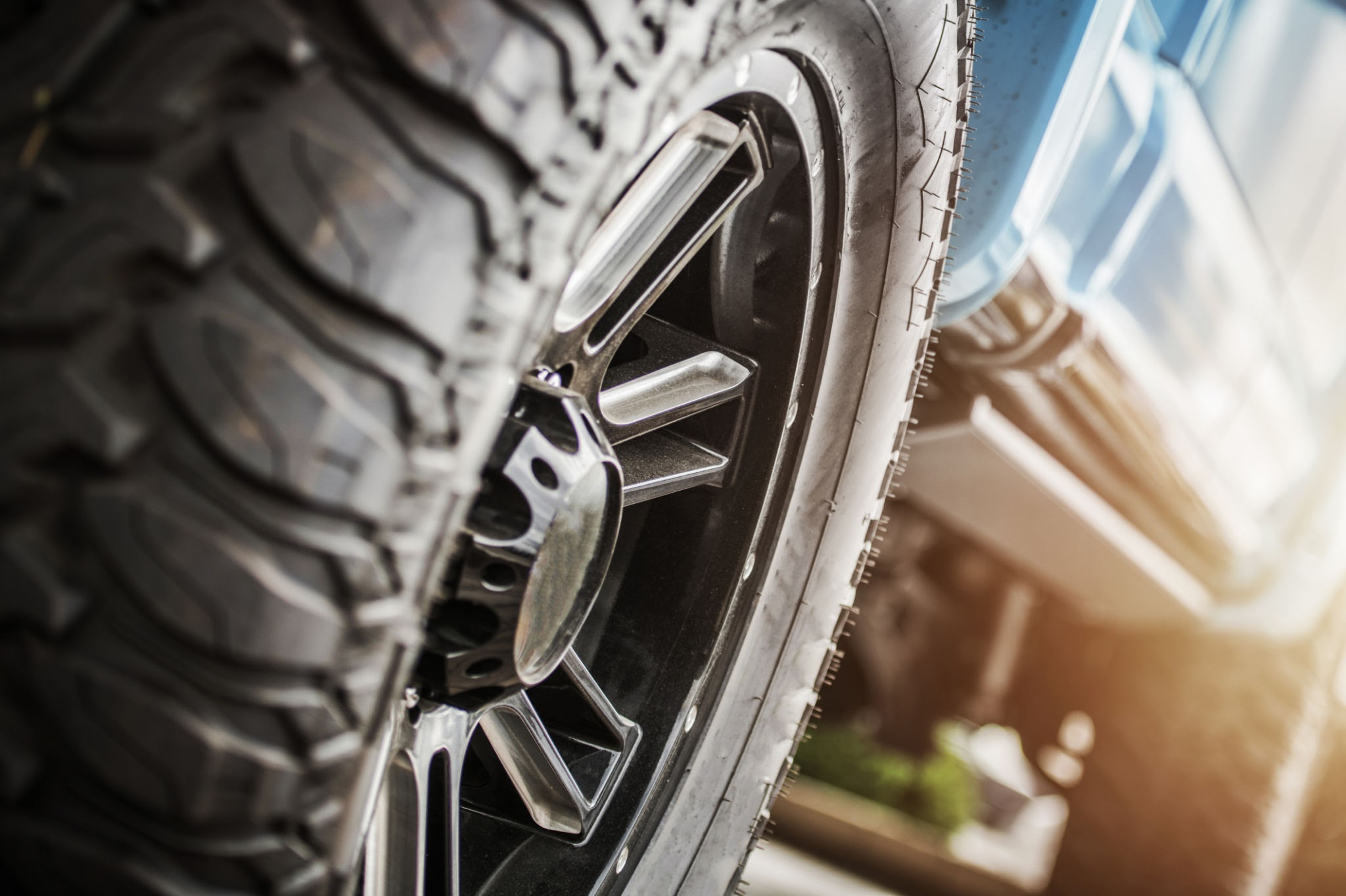
3. Hubcentric vs. Lugcentric Fitment
When mounting truck aftermarket rims, how the wheel centers on the axle hub is critical for ride quality.
Hubcentric Setup (Axle Centered)     Lugcentric Setup (Stud Centered)

      +-----------------+                  +-----------------+
      |    Wheel Bore   |                  |    Wheel Bore   |
      +--------+--------+                  +--------+--------+
               |                                    |
     [===== AXLE HUB =====]               [   Axle Hub Gap   ]
               |                                    |
      +--------+--------+                  +--------+--------+
      |  Carries Load   |                  | Lugs Carry Load |
      +-----------------+                  +-----------------+
Hubcentric Wheels
Hubcentric wheels feature a center bore engineered to match the pickup’s axle hub diameter precisely down to the millimeter.
The vehicle’s weight rests directly on the axle hub flange rather than the lug studs. This ensures perfect concentric rotation, eliminating high-speed steering wheel vibrations and reducing stress on wheel studs.
Lugcentric Wheels
Lugcentric wheels are built with larger, universal center bores designed to fit multiple vehicle applications. The wheel relies entirely on the tapered seats of the lug nuts to center itself during torquing.
If installed without precise star-pattern torquing, lugcentric wheels can seat slightly off-center, causing persistent highway vibrations.
-
The Fix: When running lugcentric aftermarket pickup wheels, always install hubcentric rings (polycarbonate or aluminum adapters) to bridge the gap between the vehicle’s hub snout and the wheel’s center bore.
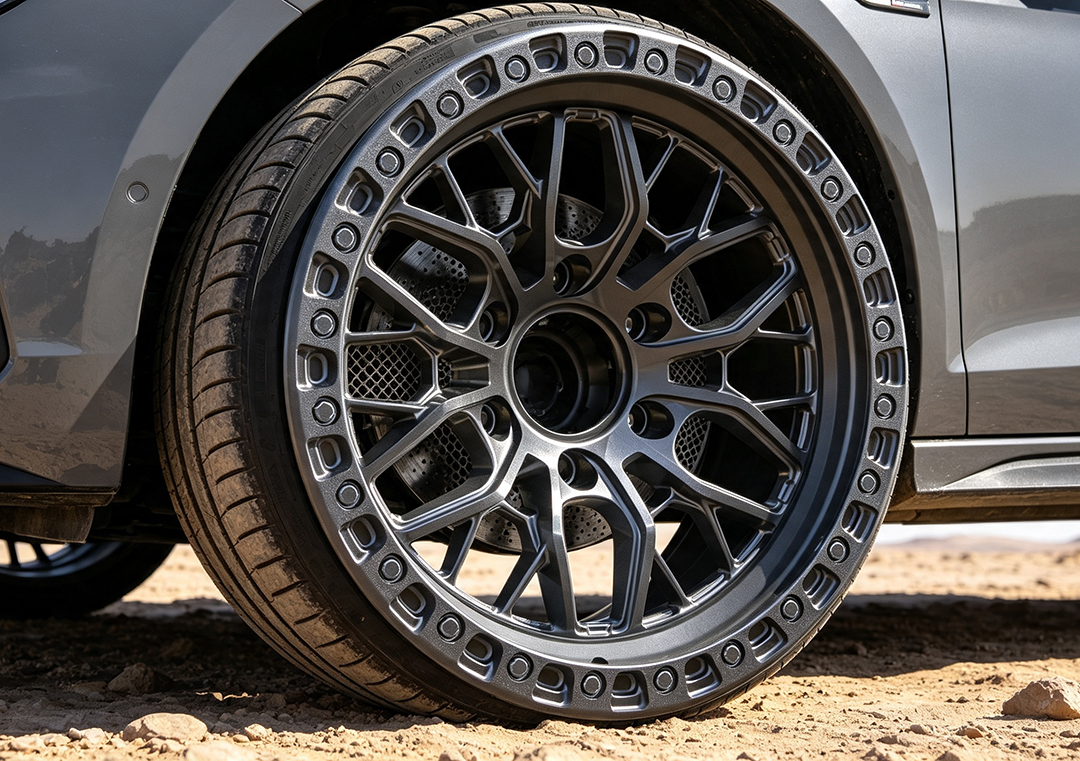
4. Performance Impact: Towing Capacity, Gear Ratios, and Load Ratings
Upgrading wheels directly alters vehicle dynamics. Understanding the trade-offs between aesthetics, rim diameter, and vehicle capability ensures your truck stays safe and effective under load.
Load Ratings Must Match Gross Axle Weight Ratings (GAWR)
Every wheel carries a stamped maximum load rating on its inner barrel (e.g., 2,500 lbs, 3,600 lbs, 4,500 lbs).
To ensure safety when carrying payloads or hauling heavy trailers, the combined load rating of the two wheels on an axle must exceed that axle’s Gross Axle Weight Rating (GAWR), which can be found on your driver’s side door jamb sticker.
Combined Wheel Capacity = Wheel Load Rating x 2 ≥ Axle GAWR
Unsprung Weight and Rotating Mass
Heavy cast wheels increase unsprung mass—the weight not supported by the vehicle’s suspension system.
Adding weight to rotating components requires more energy to accelerate and more braking force to stop. For daily driving and heavy towing, lighter forged or flow-formed wheels help maintain acceleration response, lower brake operating temperatures, and extend component life.
Tire Overall Diameter and Effective Gear Ratios
Moving to a larger wheel size often leads truck owners to install taller overall tire profiles. Increasing tire height alters your truck’s effective final drive gear ratio.
Larger Tire Diameter ---> Reduces Effective Axle Ratio ---> Lowers Towing Torque & Causes Transmission Hunting
-
The Result: A taller tire cover more distance per revolution, which lowers engine RPM at highway speeds but decreases low-end torque available for pulling heavy loads up steep grades.
-
Correction: If increasing tire size significantly, consider re-gearing your differential ring and pinion sets to restore original power bands.
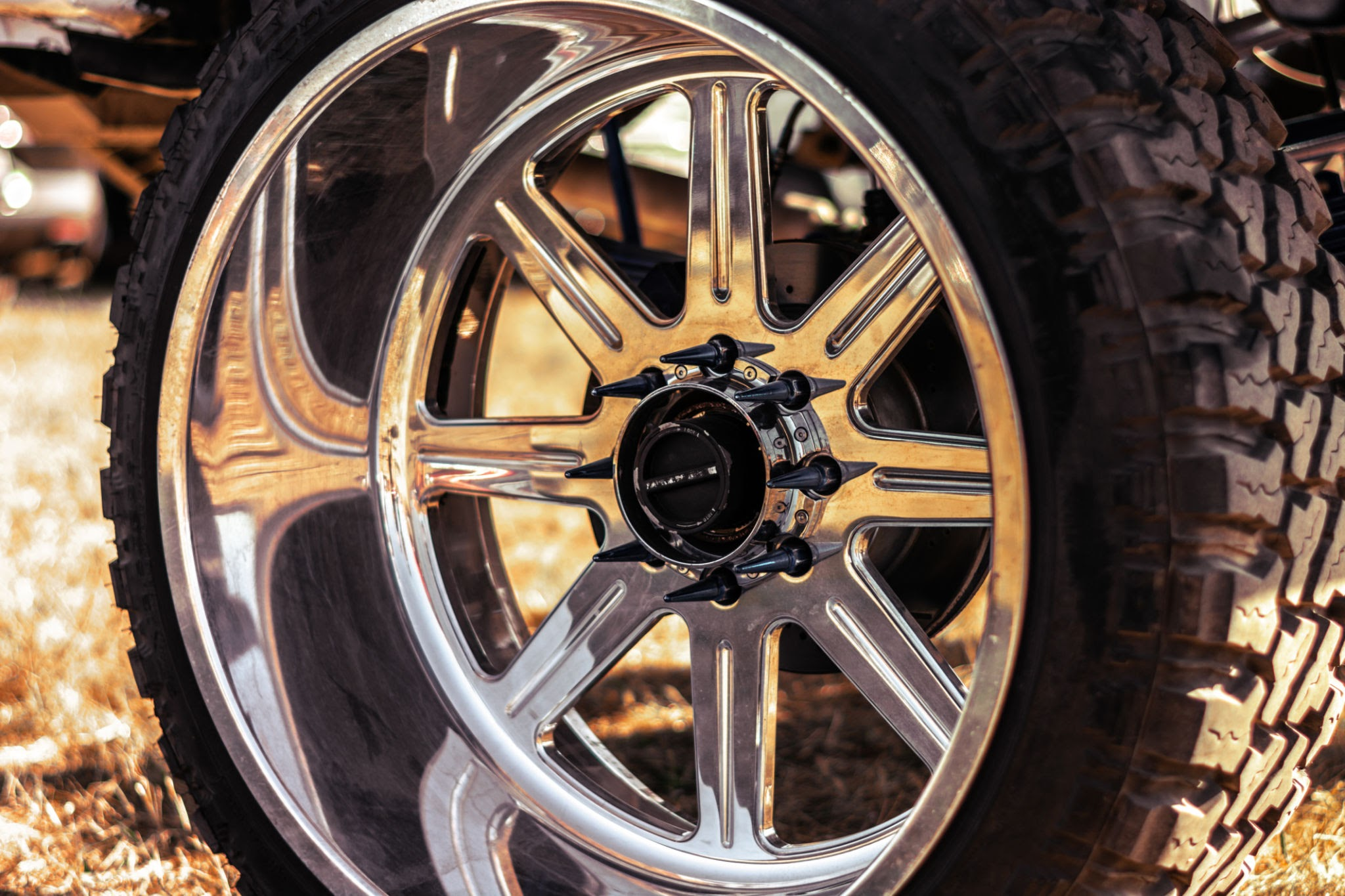
Frequently Asked Questions
What is the difference between cast and forged aftermarket pickup wheels?
Cast wheels are made by pouring molten aluminum into a mold; they are cost-effective but heavier and less durable under extreme stresses. Forged wheels are machined from a solid aluminum block under intense pressure, making them significantly stronger, lighter, and better equipped for heavy towing and off-roading.
How do offset and backspacing affect aftermarket pickup wheel fitment?
Both dimensions dictate where the wheel sits relative to the inner suspension and outer fender. Offset (mm) measures distance from the wheel centerline—negative offset pushes wheels outward for a wider stance. Backspacing (inches) measures distance from the rear lip to the mounting pad—proper backspacing ensures the wheel won’t rub against inner control arms or shocks.
Are hubcentric aftermarket wheels better than lugcentric ones for trucks?
Yes. Hubcentric wheels match the pickup’s exact hub snout diameter, supporting the vehicle’s weight directly on the axle for smooth, vibration-free operation. Lugcentric wheels rely solely on lug nuts for alignment; they often require hubcentric adapter rings to eliminate high-speed shaking.
Will installing larger aftermarket pickup wheels affect towing capacity?
Yes. Pairing larger wheel diameters with taller tires alters the effective final drive ratio, which can reduce low-end towing torque and slow acceleration. Additionally, heavier wheels increase unsprung weight, placing extra strain on brakes and suspension components during heavy hauling.
What wheel bolt pattern size is most common on aftermarket pickup wheels?
Bolt patterns depend on the truck’s payload class. Half-ton trucks (1500 series) typically use 6-lug patterns like
6x139.7mm (6x5.5"), while heavy-duty trucks (2500/3500 series) use 8-lug patterns like 8x170mm or 8x180mm. Always confirm your vehicle’s exact PCD before purchasing.Upgrade Your Truck with Confidence
Selecting the right set of aftermarket pickup wheels comes down to matching engineering specifications with your specific truck usage:
-
Verify Load Ratings: Ensure selected wheels exceed your truck’s rear GAWR.
-
Calculate Fitment: Balance offset and backspacing to avoid inner suspension rubbing and unwanted body trimming.
-
Prioritize Hubcentric Mounting: Use hub-centric designs or add high-quality hub rings for smooth highway performance.
-
Choose Construction Based on Use: Opt for quality low-pressure cast wheels for standard street driving, or select flow-formed/forged wheels for aggressive off-roading and heavy towing applications.
Explore fully rated, precision-engineered truck wheel fitments at ATK Wheels to find options matched to your vehicle’s make, model, and performance requirements.