
Aftermarket Car Rims: What to Know Before You Buy
Aftermarket Car Rims: What to Know Before You Buy
Upgrading your vehicle is a deeply personal journey, and few modifications alter both aesthetics and street capability as dramatically as a new set of wheels. Whether you are daily driving a sleek sedan, building a track-focused sports car, or prepping an off-road rig, switching out factory equipment for custom wheels opens up a world of personalization.
The automotive specialty equipment market has evolved far beyond simple cosmetic upgrades. Today, selecting the right wheels requires a balance of engineering precision, structural knowledge, and stylistic vision.
This deep dive covers everything you need to know about aftermarket car rims. We will break down manufacturing methods, demystify complex fitment metrics like offset and bolt patterns, evaluate real-world performance impacts, and provide actionable maintenance steps to protect your investment.
1.What Are Aftermarket Car Rims?
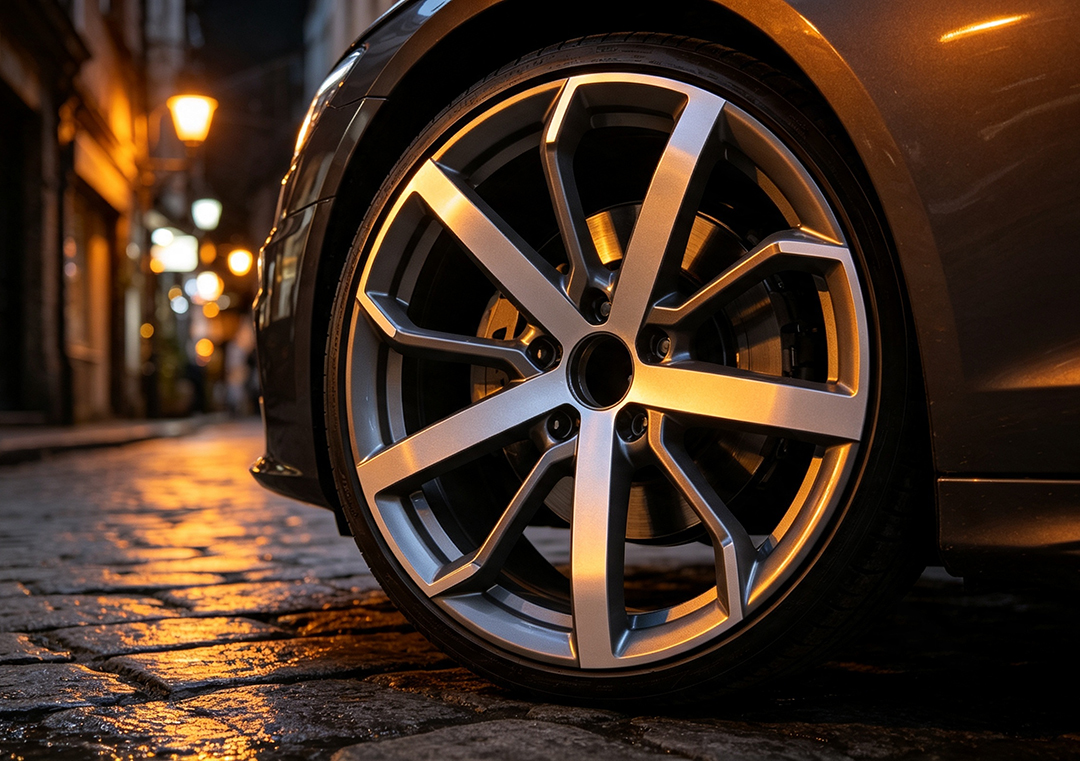
Aftermarket car rims are custom wheels engineered and manufactured by independent third-party automotive companies rather than your vehicle’s original equipment manufacturer (OEM). While factory wheels are mass-produced to meet broad, cost-effective standards across thousands of identical models, custom wheels offer virtually unlimited choices in sizing, finish, weight, and structural design.
Factory Equipment vs. Custom Alloy Upgrades
Vehicle owners no longer have to settle for boring, heavy alloy wheels that look like every other car in the parking lot. Modern third-party wheel producers utilize advanced alloy metallurgy and computer-aided design (CAD) to engineer products that rival—and frequently surpass—stock components.
-
Primary Purpose: Factory wheels focus purely on low-cost mass production, while custom rims prioritize tailored performance and striking aesthetics.
-
Sizing Options: OEM wheels keep you locked into standard factory sizes, whereas aftermarket options open up endless combinations of diameters and widths.
-
Structural Engineering: Independent wheel brands offer specialized manufacturing processes—such as rotary forming and solid forging—that drastically reduce weight without sacrificing strength.
-
Fitment Freedom: Custom offsets allow you to widen your track width and achieve a aggressive fender-flush stance that factory wheels cannot match.
When you purchase custom wheels from specialized brands like those featured on ATK Wheels, you gain access to targeted engineering that caters directly to your driving goals, whether that means reducing unsprung weight for track days or gaining ground clearance for rugged trails.
2.Why Upgrade to Aftermarket Wheels?
Drivers choose to replace their stock wheels for three primary reasons: distinct aesthetic style, enhanced handling performance, and structural strength.
Expressing Unique Style
Factory wheels are designed to appeal to the widest possible audience, which often results in plain, conservative styling. Custom wheels allow you to completely alter your car’s character.
From aggressive concave profiles and classic deep-lip designs to modern mesh patterns, the visual choices are endless. Finishes have also expanded beyond basic silver to include:
-
Gloss, satin, and matte black
-
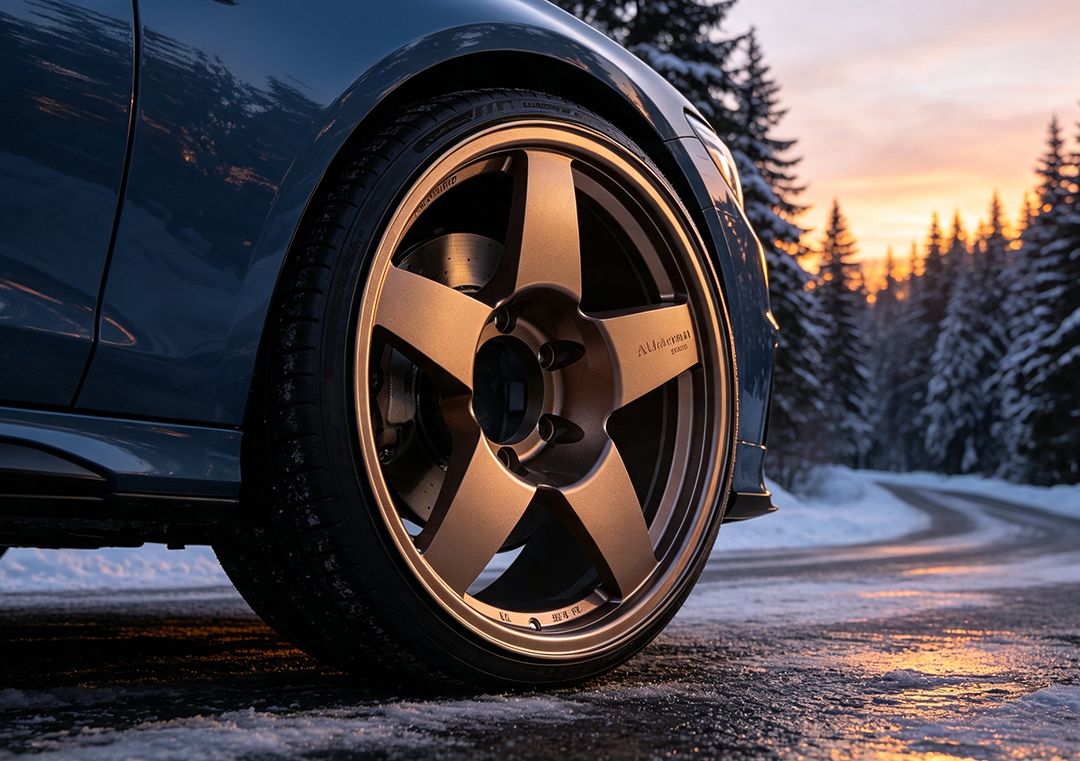
Brushed gunmetal and bronze
-
Multi-tone machined faces
-
Custom powder-coated hues
Unlocking Performance Benefits
Beyond looks, changing your wheels directly impacts how your vehicle drives, steers, and stops.
Reduced Unsprung Weight
Components not supported by your vehicle’s suspension system—such as tires, brakes, and wheels—are classified as unsprung mass. Reducing unsprung mass allows your suspension system to react faster to bumps, dips, and road imperfections, keeping the tire in contact with the pavement more consistently.
Rotational Mass Reduction
Because wheels spin, their weight counts as rotational mass. Lightening this rotational mass reduces kinetic resistance, allowing your engine to rev freer, accelerate faster, and bring the vehicle to a stop with less force required from the braking system.
Broader Contact Patch
Upgrading to wider custom wheels lets you run wider performance tires. A larger contact patch improves lateral grip during hard cornering, increases launch traction from a dead stop, and shortens overall braking distances.
3.Understanding Manufacturing Methods: Cast vs. Flow-Formed vs. Forged
Not all custom wheels are built the same way. The construction process directly influences structural strength, total weight, impact resistance, and price point. Understanding these three manufacturing methods is essential before buying.
| Attribute | Gravity / Low-Pressure Cast | Flow-Formed (Rotary) | Forged |
|---|---|---|---|
| Structural Grain | Porous, non-directional | Stretched, refined barrel | Dense, continuous flow |
| Weight Rating | Moderate to Heavy | Lightweight | Ultra-Lightweight |
| Impact Strength | Standard | High | Maximum |
| Price Level | Budget-Friendly | Mid-Tier / Premium | |
| Best Application | Daily commuters, styling | Street performance, track | High-end racing, luxury |
1. Cast Alloy Wheels
Casting is the most common and budget-friendly manufacturing method.
-
Gravity Casting: Molten aluminum alloy is poured into a mold using only gravity to fill the cavity. While inexpensive, it requires thicker metal walls to ensure structural strength, making the wheel heavier.
-
Low-Pressure Casting: Molten alloy is drawn into a mold under hydraulic pressure from below. This eliminates internal air pockets, creating a denser, stronger wheel than gravity casting at a minor increase in cost.
2. Flow-Formed (Rotary Forged) Wheels
Flow-forming represents a hybrid technology that combines casting with pressure-stretching.
The wheel center is low-pressure cast, then mounted onto a specialized spinning machine. High-pressure hydraulic rollers press against the wheel barrel as it heats up, stretching and compressing the aluminum alloy. This alters the molecular structure of the metal, creating a thin, resilient barrel with mechanical properties similar to a fully forged wheel—at a fraction of the price.
3. Forged Wheels
Forged wheels represent the peak of wheel engineering.
A single solid block of aerospace-grade 6061-T6 aluminum is subjected to extreme pressure (often over 10,000 tons) and heat to compress the metal grain structure into a dense billet. CNC mills then carve the wheel design out of this ultra-dense block.
-
Maximum Strength: Forged metal resists cracking and bending under intense loads.
-
Minimum Weight: Because the material is so dense, structural spokes can be machined much thinner without losing rigidity.
-
Tailored Applications: Frequently custom-carved for extreme exotic sports cars, heavy trucks, and professional motor racing.
4.Critical Sizing and Fitment Specifications Explained
Selecting aftermarket car rims requires exact technical measurements. Installing an improperly sized wheel can cause tire rubbing against inner fender wells, suspension interference, inaccurate speedometer readings, and even suspension failure.
Bolt Pattern (PCD)
The Pitch Circle Diameter (PCD) indicates the number of bolt holes on the wheel and the diameter of the imaginary circle they form.
For example, a 5×114.3 pattern means the wheel has 5 bolt holes spaced across a circle with a diameter of 114.3 millimeters. You must match your vehicle’s exact bolt pattern or use precision-engineered hub adapters.
Wheel Diameter and Width
Wheel dimensions are measured in inches (e.g., 18×8.5).
-
Diameter: The distance across the face of the wheel rim where the tire bead seats.
-
Width: The distance between the inner and outer bead flanges.
Changing diameter alters your tire sidewall profile. Upgrading from a stock 17-inch wheel to a 19-inch setup requires a lower-profile tire to maintain the overall rolling diameter of your wheel-and-tire package.
Wheel Offset (ET)
Wheel offset—measured in millimeters (ET)—defines the distance between the wheel’s geometric centerline and its hub mounting surface.
-
Positive Offset (+): The mounting hub sits closer to the outer face of the wheel. The wheel sits tucked deeper inside the fender well, which protects outer clearance but requires checking for inner suspension strut clearance.
-
Zero Offset (0): The mounting hub aligns perfectly with the true centerline of the wheel width.
-
Negative Offset (-): The mounting hub sits inward toward the back of the wheel, pushing the outer rim face far outward. This creates an aggressive, wide stance commonly seen on deep-dish muscle cars and off-road trucks, but requires checking for fender rubbing risks.
Center Bore and Hub-Centric Rings
The center bore is the machined hole on the backside of the wheel that sits directly over your vehicle’s axle hub.
-
Hub-Centric Wheels: Built with an exact center bore diameter matching a specific vehicle brand. The vehicle weight rests directly on the axle hub flange, ensuring vibration-free rolling.
-
Lug-Centric Wheels: Built with a larger center bore to fit multiple vehicle applications. The wheel relies on lug nuts to center itself.
To eliminate highway speed steering wheel vibrations on lug-centric aftermarket car rims, you must install hard plastic or aluminum hub-centric rings to fill the gap between the vehicle hub and the wheel center bore.
Brake Caliper Clearance
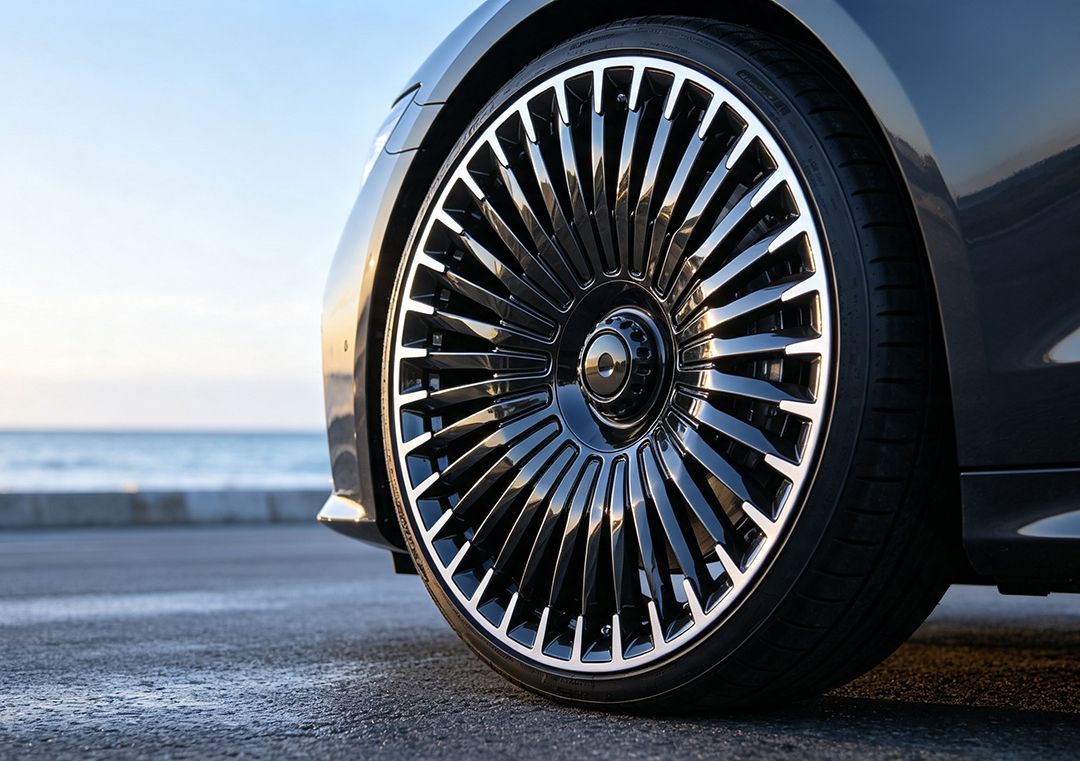
Big brake kits (BBKs) feature multi-piston calipers that project outward farther than standard factory brakes. The inner profile and spoke curvature (X-factor) of your chosen custom wheels must offer adequate space to clear these larger brake assemblies without contact.
5.How Wheel Upgrades Affect Vehicle Dynamics
Installing wider, lighter, or larger wheels changes your vehicle’s dynamics in noticeable ways.
Upsizing (Plus-Sizing)
“Plus 1” or “Plus 2” fitting involves increasing your wheel diameter by one or two inches while pairing it with a lower-profile tire to keep total diameter equal.
-
Pros: Shorter, stiffer tire sidewalls reduce flexing under hard cornering, providing sharper turn-in response and superior steering feedback.
-
Cons: Less rubber cushion means road impacts, potholes, and expansion joints feel stiffer inside the cabin, slightly increasing rim damage risk on rough roads.
Unsprung Weight Savings
Replacing heavy 28-lb factory cast wheels with 19-lb flow-formed alternatives removes 36 lbs of total unsprung weight across all four corners.
Because unsprung rotational mass feels heavier to a vehicle’s dynamic system than static cabin mass, this change yields noticeable improvements:
-
Faster throttle pickup off the line
-
Reduced suspension deflection over rippled road surfaces
-
Shorter stopping distances under hard braking
-
Reduced power steering pump effort and cooler brake temperatures
Ultra-Wide Wheel Width
Running wider rims allows you to mount wider tires, yielding maximum cornering traction and high-speed cornering grip. However, wider front tires can slightly increase tramlining—the tendency for wide tires to track along grooves or ruts in worn highway pavement.
6.Step-by-Step Fitment Verification Walkthrough
Before committing to a set of new wheels, follow this step-by-step verification checklist to ensure a perfect fit on the first try.
-
Verify Factory Specs: Confirm exact factory Bolt Pattern (PCD) and Center Bore (CB).
-
Document Stock Dimensions: Check current stock Wheel Diameter, Width, and Offset (ET).
-
Select Target Stance: Choose between Stock Flush, Aggressive, or Deep Dish profiles.
-
Calculate Suspension Gap: Confirm inner suspension clearance with proposed width/offset.
-
Check Fender Clearance: Verify outer fender lip clearance under full suspension compression.
-
Order Centering Rings: Procure Hub-Centric Rings if wheel center bore is larger than vehicle hub.
-
Match Lug Hardware: Confirm correct Lug Nut / Bolt seat style (Conical, Ball, or Flat).
7.Essential Care, Maintenance, and Protection Practices
Keeping custom finishes looking brand new requires specialized maintenance routines. Harsh road salts, airborne brake dust, and improper washing chemicals can dull or strip protective clear coats over time.
Approved Cleaning Routine
-
Pre-Rinse Phase: Use a cool water pressure washer to knock away loose grit. Never apply cold water directly onto hot brake rotors immediately after driving, as rapid thermal changes can warp rotors or shock clear coats.
-
Chemical Soak: Apply a dedicated pH-neutral brake dust remover. Completely avoid acidic or harsh alkaline wheel cleaners, as they can etch polished aluminum, clear coats, and anodized finishes.
-
Agitation Method: Gently scrub inner barrels and outer spokes using a soft microfiber wheel brush. Avoid stiff bristles or wire brushes that scratch painted surfaces.
-
Protective Coating: Finish with a coat of high-temp synthetic wheel wax or ceramic coating rather than harsh rubbing compounds.
Apply Ceramic Coatings
Apply a dedicated heat-resistant ceramic coating or synthetic wheel sealant before installing your new wheels. This creates a clear hydrophobic shield that keeps iron brake dust from baking into the paint, making future maintenance washes effortless.
Frequently Asked Questions(FAQ)
1.What are aftermarket car rims?
Aftermarket car rims are wheels engineered and produced by independent third-party manufacturing companies rather than your vehicle’s original manufacturer. They offer broader variety in size, offset, width, finishes, and structural construction compared to stock factory equipment.
2.How do I know if aftermarket car rims will fit my car?
To guarantee proper fitment, you must match five key metrics: correct bolt pattern (PCD), rim diameter, wheel width, wheel offset (ET), and center bore size. The wheel must also offer adequate clearance for brake calipers, suspension struts, and outer fender lips.
3.Can aftermarket car rims improve overall vehicle performance?
Yes. Installing lightweight custom wheels reduces unsprung and rotational mass. This reduction enables faster engine acceleration, crisper suspension response over bumps, improved tire traction, and shorter braking distances when matched with appropriate performance tires.
4.Does wheel offset matter when choosing aftermarket car rims?
Yes, wheel offset is critical. Offset determines how deep inside the wheel well or how far outward toward the fender the wheel sits. An incorrect offset can cause severe inner tire rubbing against suspension components, outer fender interference, or altered steering stability.
5.Are aftermarket car rims safe for daily driving?
High-quality custom wheels are safe for daily road use provided they are purchased from structural brands that meet recognized quality standards (such as JWL, VIA, or TÜV certification). Always verify that the wheel load rating meets or exceeds your vehicle’s gross axle weight rating.
Ready to Upgrade Your Ride’s Stance and Performance?
Elevating your vehicle’s appearance and driving dynamics starts with choosing the right set of custom wheels. From track-proven lightweight flow-formed setups to head-turning forged designs, finding the perfect match transforms your driving experience every single time you hit the road.
Explore our curated selection of high-performance custom wheels, precise fitment packages, and industry-leading designs over at ATK Wheels today. Upgrade your ride with confidence!

