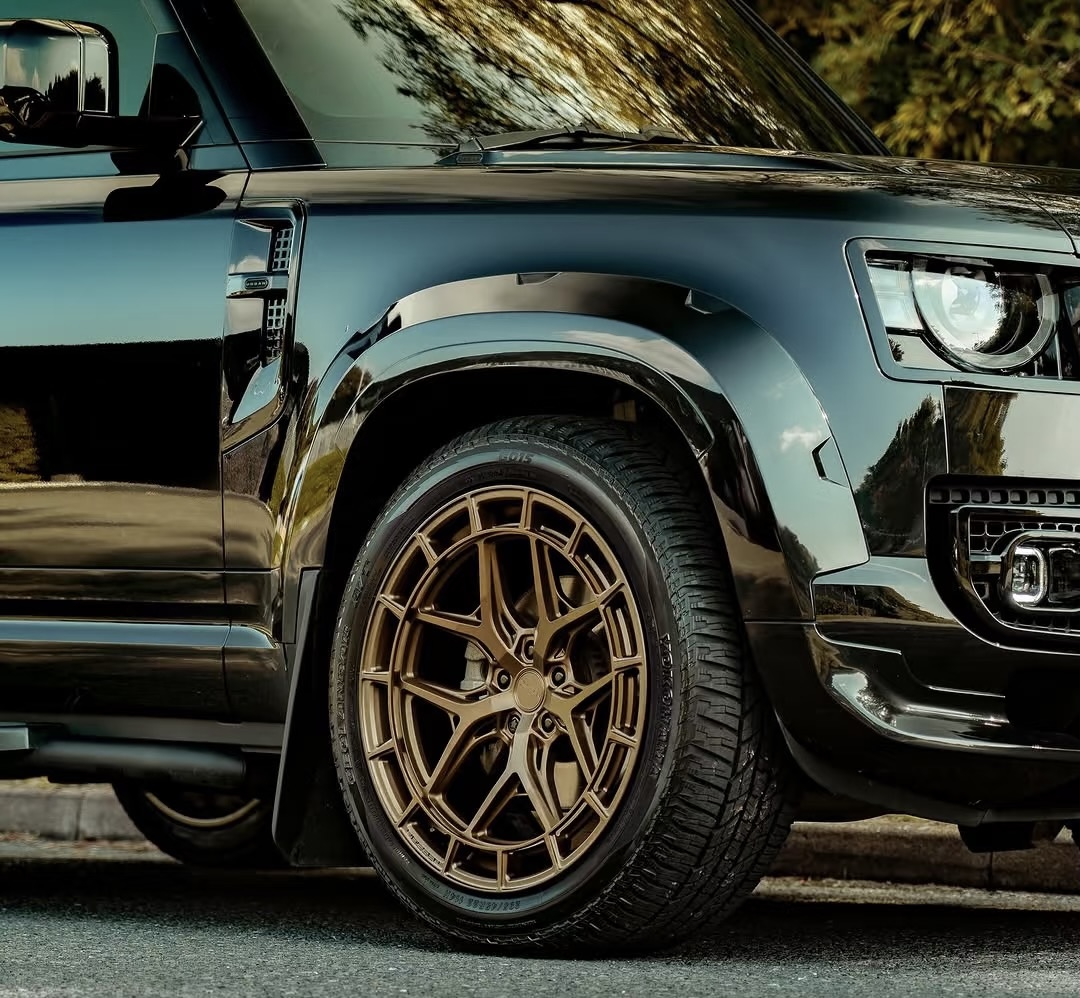
Forged Racing Wheels: The Performance Upgrade Every Serious Driver Should Consider
Forged Racing Wheels: The Performance Upgrade Every Serious Driver Should Consider
Every fraction of a second counts when you are chasing the perfect line on the track. Whether you are building a dedicated time-attack weapon, preparing for a weekend autocross, or upgrading your high-performance street car, few modifications yield as many tangible benefits as a set of premium wheels.
Among motorsport enthusiasts and professional race teams, forged racing wheels represent the absolute pinnacle of performance hardware.
But what exactly makes a forged wheel worth the premium price tag compared to standard cast options? How do they affect your vehicle’s driving dynamics, and which configuration is right for your specific racing discipline? This comprehensive breakdown covers the engineering, science, and practical realities of upgrading to forged technology.
1.What Are Forged Racing Wheels?
To understand why forged racing wheels dominate grid walks and paddock bays worldwide, you first have to look at how they are made. The magic isn’t just in the material; it is in the molecular transformation that occurs during manufacturing.
Most premium wheels start as high-grade 6061-T6 aluminum. However, the way this raw material is shaped determines its final structural integrity.
The Forging Process Explained
Unlike cast wheels, which are made by pouring molten metal into a mold, forged wheels are born from intense mechanical pressure.
-
The Billet: A solid cylinder of aerospace-grade 6061-T6 aluminum alloy is heated to an exact temperature where it becomes malleable but remains solid.
-
The Press: Massive hydraulic presses (often exerting 10,000 to 20,000 tons of pressure) crush the solid billet into a rough wheel blank.
-
Grain Realignment: This immense pressure forces the aluminum molecules into a dense, continuous grain structure. The grain flows naturally along the shape of the wheel radial, eliminating internal voids, porosity, and microscopic air bubbles.
-
CNC Machining: The dense wheel blank is then placed into a precise CNC machine where the final spoke designs, bolt patterns, and weight-saving pockets are carved out.
The result is an incredibly dense, ultra-strong piece of metal that can be machined into thin, aggressive spoke designs without sacrificing structural safety.
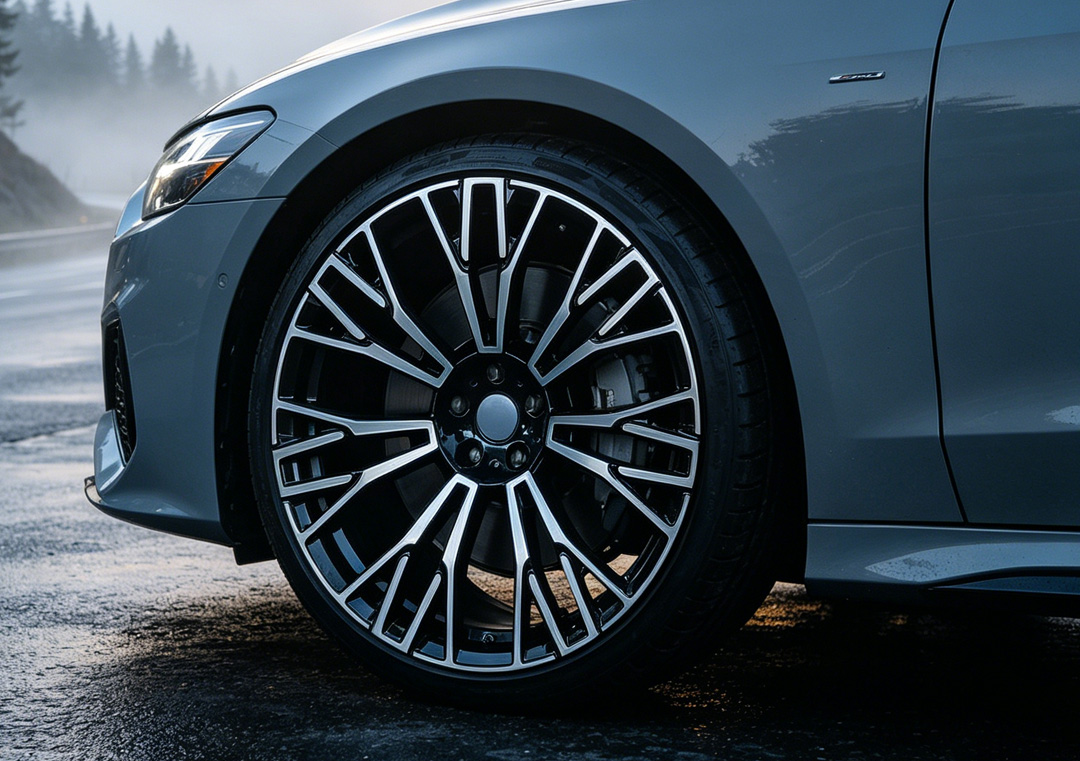
2.The Critical Differences: Forged vs. Cast Racing Wheels
If you are shopping for track wheels, you will inevitably compare forged options with cast and flow-formed alternatives. Choosing the wrong one can mean the difference between setting a personal best or suffering a catastrophic wheel failure mid-corner.
Cast Wheels: The Budget Baseline
Cast wheels are the most common wheels on the market because they are inexpensive to mass-produce. Liquid aluminum is poured into a mold and cooled. Because the metal settles naturally, the internal molecular structure is random and porous. To make a cast wheel strong enough to handle high loads, manufacturers must add more material, making the wheel significantly heavier and bulkier.
Flow-Formed Wheels: The Middle Ground
Often marketed as “rotary forged” or “flow-forged,” these wheels start as a cast face. The barrel is then heated and spun over a mandrel to stretch and compress the aluminum. While the barrel achieves a grain structure similar to forging, the face of the wheel remains cast, making it a hybrid option that bridges the gap in weight but not total structural strength.
Forged Wheels: The Premium Standard
A fully forged racing wheel features a compressed grain structure throughout the entire unit—from the hub to the outer lip. This allows engineers to shave away every unnecessary gram of aluminum, creating a wheel that is both lighter and stronger than anything a casting mold could produce.
Quick Comparison Table
| Feature | Cast Wheels | Flow-Formed Wheels | Forged Racing Wheels |
|---|---|---|---|
| Manufacturing Method | Pouring molten aluminum | Casting face + stretching barrel | Compressing solid aluminum billet |
| Material Density | Low (prone to porosity) | Medium (dense barrel, porous face) | Extremely High (uniform grain) |
| Weight | Heavy | Moderate | Ultra-Lightweight |
| Structural Strength | Low to Moderate | Moderate to High | Maximum |
| Failure Mode | Tends to shatter under extreme impact | Can crack or bend depending on zone | Tends to bend rather than shatter |
| Price Point | Budget-friendly | Mid-tier | Premium investment |
3.Why Forged Wheels Are Preferred for Racing
In racing, everything comes down to physics. Installing lightweight forged racing wheels alters your vehicle’s dynamics in ways that a simple horsepower upgrade never can.
1. Drastic Reduction in Unsprung Mass and Rotational Inertia
Your vehicle’s suspension manages two types of weight: sprung mass (the chassis, engine, and interior) and unsprung mass (wheels, tires, brakes, and suspension arms).
Reducing unsprung mass allows your suspension components to react faster to bumps, imperfections, and curb strikes on the track, keeping your tire’s contact patch firmly planted on the tarmac.
Furthermore, because wheels rotate, they represent rotational mass. Accelerating a heavy wheel requires energy from the engine; braking a heavy wheel requires more friction from the brakes. Dropping just 5 lbs per wheel via forging drastically reduces rotational inertia, which translates directly to:
-
Snappier throttle response and faster acceleration.
-
Shorter braking distances due to less kinetic energy storage.
-
Sharper, more immediate steering turn-in.

2. Exceptional Strength-to-Weight Ratio
When pulling high g-forces through a sweeping corner, your wheels undergo incredible lateral loads. A weak wheel will flex under this pressure. Wheel flex distorts the tire alignment mid-corner, reducing your mechanical grip and causing vague steering feedback.
Forged wheels withstand extreme cornering forces without deforming. They retain their geometric integrity under heavy loads, providing predictable, razor-sharp handling handling at the limit.
3. Superior Thermal Efficiency
Track driving generates immense heat within your braking system. Rotors can easily glowing red hot under repeated heavy braking zones. Because forged 6061-T6 aluminum is incredibly dense, it acts as an excellent heat sink. Forged wheels help draw heat away from your brake calipers and rotors, dissipating it into the airflow more efficiently to prevent brake fade and fluid boiling.
4.1-Piece (Monoblock) vs. 3-Piece Forged Wheels
When browsing premium wheel catalogs, you will generally run into two distinct structural design configurations: Monoblock and multi-piece layouts. Both use forged aluminum, but they serve different racing applications.
[Monoblock Wheels]                     [3-Piece Wheels]
Single solid forge                    Modular Assembly
  ├── Maximum stiffness                 ├── Outer Lip
  └── Lowest total weight               ├── Inner Barrel
                                        └── Center Face
1-Piece (Monoblock) Forged Wheels
As the name implies, Monoblock wheels are carved from a single, continuous forged aluminum blank.
-
The Pros: This is the stiffest and lightest configuration possible. Because there are no assembly bolts or seams, structural integrity is perfectly uniform.
-
Best For: Time attack, wheel-to-wheel road racing, autocross, and any discipline where absolute weight reduction and stiffness are paramount.
3-Piece Forged Wheels
A 3-piece wheel consists of three distinct components bolted together: a forged center face, an inner barrel, and an outer lip.
-
The Pros: Unmatched modularity. You can customize widths, offsets, and lip depths to the millimeter to fit custom widebody setups. If you hit a barrier or curb, you don’t have to replace the whole wheel; you can unbolt the damaged lip or barrel and replace that single section.
-
Best For: Drifting, competitive show setups, and vintage racing where custom, hard-to-find wheel fitments are required.
5.Weight Expectations: What Do True Forged Wheels Weigh?
Weight varies depending on spoke design, load rating, and width, but forged options consistently undercut cast equivalents by 20% to 30%.
-
A standard cast 18-inch track wheel often weighs anywhere from 23 to 26 lbs (10.4 to 11.8 kg).
-
A high-end forged racing wheel of the exact same 18-inch dimensions typically tips the scales between 16 to 20 lbs (7.2 to 9.1 kg).
Shaving roughly 5 to 6 lbs per corner removes up to 24 lbs of rotational unsprung weight from your vehicle. On the track, this structural diet feels like removing 100+ lbs of dead weight from the cabin.
6.Reality Check: Are Forged Wheels Unbreakable?
A common myth in car culture is that forged wheels are completely indestructible.
To be direct: No wheel is completely unbreakable. Physics always wins in a high-speed accident. If you drop a wheel off the track and slam into an aggressive inside curbing or a concrete barrier at 90 mph, a forged wheel can and will suffer damage.
However, the vital safety distinction lies in how they fail:
-
Cast wheels tend to be brittle. Under catastrophic loads, they shatter or crack completely, which can cause instantaneous loss of tire pressure and sudden loss of vehicle control.
-
Forged wheels are ductile. Because of their aligned grain structure, they tend to bend, deform, or warp rather than snap in half. In a racing scenario, a bent wheel that holds air for a few extra corners is infinitely safer than a shattered wheel that sends you directly into a wall.
FAQs About Forged Racing Wheels
1.Are forged wheels worth the investment for a street car?
Yes, if you value performance, fuel economy, and durability. While designed for the track, their high fatigue resistance makes them incredibly resilient against daily driving hazards like deep potholes, which easily bend or crack cheap cast wheels.
2.How can I spot fake forged wheels?
Real forged wheels feature crisp, sharp machining lines on the back of the spokes and hubs because they are cut via CNC machinery. Cast wheels often have softer, rounded edges inside the barrel and raised casting marks. Always look for certifications like JWL, VIA, or TUV stamped into the metal, and purchase from reputable manufacturers.
3.Do forged wheels require special maintenance?
The structural metal itself does not require special care, but the finish does. Many racing wheels feature anodized or raw finishes to keep weight to an absolute minimum. Use pH-balanced wheel cleaners and avoid harsh acids or abrasive brushes that could score the surface or ruin the protective coating.
4.Why do some race teams use flow-formed wheels instead of forged?
It often comes down to budget constraints and replacement frequencies. Grassroots teams or drift drivers who frequently destroy wheels on barriers may opt for flow-formed wheels as a cost-effective compromise between weight savings and replacement costs.
5.Can a bent forged wheel be safely repaired for track use?
It depends entirely on the extent of the deformation. Minor cosmetic flat spots on the lip can sometimes be professional straightened by specialists. However, if the wheel has sustained deep structural bends, cracks, or stress fractures near the spokes or hub area, it should be permanently retired from track use, as heating and reshaping the metal can compromise its original structural integrity.
Elevate Your Track Setup
Upgrading to premium wheels isn’t just about transforming the stance and aesthetics of your car—it is a calculated performance decision. By minimizing unsprung mass, eliminating wheel flex, and ensuring structural reliability at high speeds, a set of high-caliber wheels unlock the true mechanical potential of your vehicle’s chassis.
Are you looking to optimize your lap times and transform your driving experience? Check out the precision-engineered collection of lightweight, high-strength options at ATK Wheels and find the perfect fitment tailored for your build.