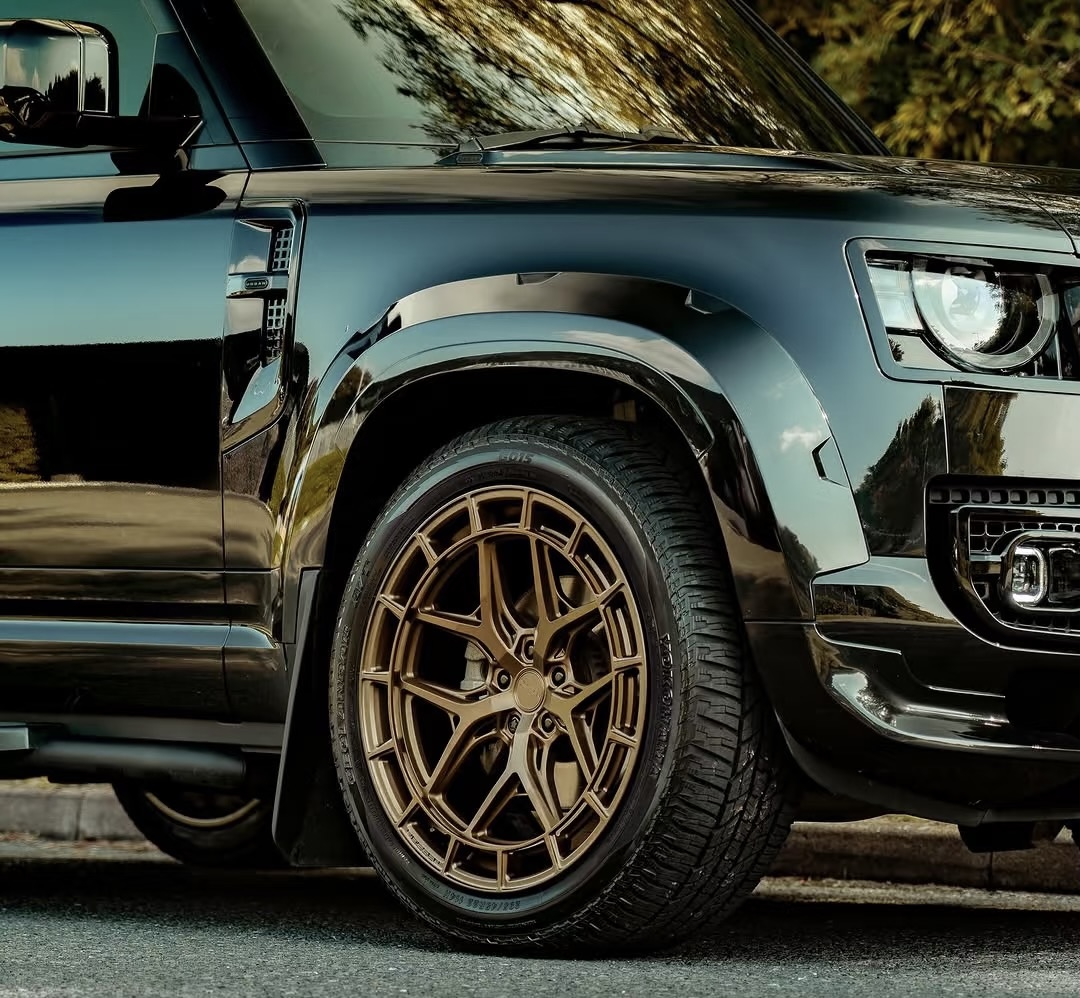
Concave Wheels: The Modern Choice for Style and Performance
Concave Wheels: The Modern Choice for Style and Performance
When car enthusiasts talk about upgrading their vehicles, concave wheels often become one of the first topics of discussion. These wheels are known for their deep, aggressive appearance, unique spoke design, and ability to transform the overall look of a vehicle.
Unlike traditional flat wheels, concave rims create a noticeable inward curve from the outer edge toward the center hub. This design gives the wheel a deeper visual profile while adding a premium, performance-inspired appearance.
For many drivers in the United States, choosing the right wheels is not only about appearance. Wheel design affects handling feel, brake clearance, fitment, weight balance, and driving confidence. This is why concave wheels have become popular among sports cars, luxury vehicles, SUVs, and custom builds.
Modern wheel manufacturers such as ATK Wheels focus on creating designs that combine visual impact with engineering requirements, helping drivers achieve a personalized look without sacrificing reliability
1.What Are Concave Wheels?
At its core, the term concave wheels refers to a custom rim design where the spokes curve inward, starting from the outer edge of the rim barrel and dropping deep toward the center hub. This creates a bowl-like, sunken, or three-dimensional appearance that draws the eye directly into the center of the wheel.
Standard/Flat Wheel:      [ | ]  (Spokes are flush with the outer edge)
Concave Wheel:           [ \_/ ] (Spokes curve deeply inward toward the hub)
The magic of this design lies in how it plays with light and shadow. By creating physical depth within the wheel itself, it gives your vehicle a wider, more planted, and aggressive profile—even when the car is completely stationary.
The Anatomy of Concave Depth
The severity of the inner slope is generally categorized into three levels:
-
Mild Concave: A subtle inward dip. This is ideal for front wheel fitments or vehicles with limited fender space and massive factory brake calipers.
-
Deep Concave: A pronounced, dramatic drop from the outer lip to the lug pocket. This is highly popular for staggered rear wheel setups on rear-wheel-drive sports cars and muscle cars.
-
Super Deep Ultra-Concave: The absolute limit of wheel engineering. These feature an aggressive, steep plunge toward the center hub, commonly seen on widebody builds, exotic supercars, and customized trucks.
2.Concave vs. Non-Concave Wheels: Understanding the Difference
To truly appreciate what a concave setup offers, it helps to compare it to traditional wheel configurations. Standard wheels typically fall into two categories: flat-faced or convex.
-
Flat-faced wheels feature spokes that run completely parallel to the outer lip of the rim, offering a clean but ultimately two-dimensional look.
-
Convex wheels feature spokes that bow outward toward the street, maximizing internal space. This design is common on front-wheel-drive economy cars and the front axles of heavy-duty dually trucks.
Here is a side-by-side comparison to highlight how concave engineering differs from traditional designs:
| Feature | Concave Wheels | Non-Concave (Flat/Convex) Wheels |
|---|---|---|
| Spoke Profile | Curve inward from outer rim to center hub | Run flat/flush or bow outward toward the face |
| Visual Effect | Creates a deep, sunken, bowl-like dimension | Flat, clean, or flush appearance |
| Primary Appeal | Aggressive stance, muscular aesthetics | Classic look, predictable fitment |
| Brake Clearance | Requires careful measurement near the hub | Maximum clearance for large brake calipers |
| Common Application | Performance cars, modern tuners, trucks | Daily drivers, OEM replacements, vintage builds |
| Fitment Complexity | High (Requires precise offset calculation) | Low to Medium (Standard factory specs work) |
3.The Science Behind the Stance: Offset and Backspacing
You cannot talk about concave wheels without discussing offset and backspacing. These two engineering measurements dictate whether a wheel will beautifully tuck under your fenders or disastrously rub against your brake calipers and suspension components.
What is Wheel Offset?
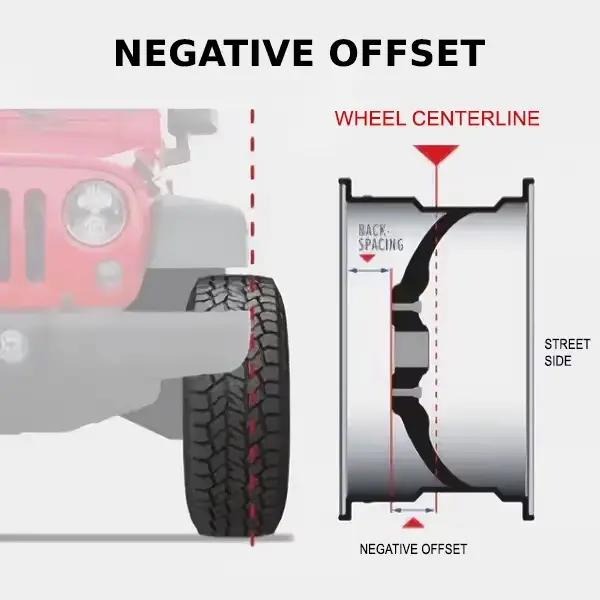
Offset is the distance (measured in millimeters) from the wheel’s true centerline to the mounting surface that bolts to your vehicle’s hub.
-
Positive Offset: The mounting surface is pushed toward the front/street side of the wheel. This keeps the wheel tucked inside the fender but flattens out the face.
-
Zero Offset: The mounting surface is perfectly aligned with the exact center of the wheel barrel.
-
Negative Offset: The mounting surface is pulled deep into the back of the wheel, closer to the brakes. This pushes the entire wheel outward away from the car, allowing the spokes to plunge deeply inward to meet the hub.
To achieve that highly sought-after deep concave look, engineers utilize a low positive, zero, or negative offset. However, because every vehicle platform has unique physical limitations, getting this right requires a delicate balancing act.
4.Are Concave Wheels Stronger?
A common question among car enthusiasts is whether the sweeping design of a concave spoke compromises structural integrity. The short answer is: Strength depends entirely on how the wheel is manufactured, not just its shape.
Because concave spokes experience unique torsional and lateral stresses—especially at the point where the spoke bends toward the hub—manufacturing quality is paramount.
1. Cast Concave Wheels
Gravity or low-pressure casting involves pouring molten aluminum into a mold. While casting allows manufacturers to create highly complex concave shapes at an affordable price point, cast aluminum is inherently more porous. To make a cast concave wheel safe, manufacturers must use more material, which makes the wheel significantly heavier.
2. Flow-Formed Wheels
Flow forming starts with a specialized cast wheel preform. The barrel is then heated and spun over a mandrel while high-pressure hydraulic rollers stretch and compress the aluminum. This alters the molecular structure of the aluminum, giving the rim barrel forged-like strength and significantly reducing weight while retaining an affordable cast face.
3. Forged Concave Wheels
If you want the ultimate combination of jaw-dropping depth, featherlight weight, and track-ready durability, forged concave wheels are the gold standard.
Forged wheels are CNC-machined from a solid block of aerospace-grade 6061-T6 aluminum that has been subjected to intense heat and immense pressure. This process aligns the grain structure of the metal perfectly with the design of the wheel.
Because forged metal is incredibly dense and mechanically stronger than cast aluminum, engineers can carve out ultra-deep, razor-thin concave spokes that handle high-horsepower tracking and heavy vehicle weights without breaking a sweat.
5.Why Do Dually Truck Front Wheels Stick Out?
If you look at heavy-duty dually pickup trucks (like a Ford F-350, Chevy Silverado 3500, or Ram 3500), you will notice a fascinating design choice that seems like the exact opposite of a concave wheel: the front wheels protrude outward significantly with a massive convex, dished-out face.
Why do manufacturers design them this way? It comes down to two major practical reasons: wheel interchangeability and steering geometry.
-
Complete Rotation Interchangeability: A dually truck features four wheels on the rear axle clamped together in pairs. To make this work, the rear wheels must have a dramatic convex/concave offset so they can face each other without their sidewalls rubbing. By utilizing that exact same highly dish-shaped wheel design on the front axle, manufacturers allow truck owners to use the exact same wheel and tire specification at all six corners. This means you can freely rotate your tires—including your spare—anywhere on the truck.
-
Front-End Steering Mechanics: The heavy-duty front suspension, massive brake setups, and steering linkages of a 1 ton truck require massive internal clearance. The outward-bowing convex design ensures the wheel clears these mechanical components smoothly while maintaining a stable track width for heavy towing.
6.The Pros and Cons of Upgrading to Concave Wheels
Before pulling the trigger on a new set of rims from a premium retailer like ATK Wheels, it is wise to weigh the benefits against the technical challenges.
The Advantages
-
Unmatched Visual Presence: Nothing alters the personality of a modern vehicle faster or more effectively than a well-measured concave setup. It adds premium, high-end curb appeal.
-
The Illusion of Width: Because the center hub is recessed, the wheel visually reads as much wider than a flat wheel of identical dimensions, giving your vehicle a powerful profile.
-
Staggered Customization: It allows for a dynamic “staggered fitment” (narrower, milder concave wheels up front for steering, and wider, deeper concave wheels in the rear to highlight rear-wheel-drive power).
The Considerations
-
Brake Caliper Clearance: Because the spokes sweep inward toward the center, they can occasionally make contact with the outer face of large multi-piston brake calipers (such as Brembo, Wilwood, or Akebono systems). Clearances must be verified at the drawing board.
-
Increased Curb Exposure: On ultra-deep configurations, the outer rim lip or the outermost curve of the spokes may sit proud of the tire’s sidewall. This means you must be exceptionally cautious when parking near curbs to avoid unsightly curb rash.
-
Calculated Maintenance: Keeping deep, sloping wheel barrels clean requires a bit more effort. Dust from your brake pads tends to settle directly into the deep, bowl-shaped valleys of the rim face.
7.Technical Check: How to Choose the Perfect Setup
To ensure your transition to a concave setup goes smoothly without tire rubbing or structural interference, keep this precise sequence in mind:
-
Step 1: Check your factory brake profile. Look at how much clearance exists between your current wheels and the brake calipers. If you have big brakes, you will need a wheel designed with high-pad clearance or a slightly milder concavity up front.
-
Step 2: Know your fender limitations. Measure the distance from your hub mounting surface to the inside edge of your outer fender. This dictates the maximum width and minimum offset you can safely run without needing to roll your fenders or pull your body lines.
-
Step 3: Decide on square vs. staggered. If your vehicle is all-wheel-drive (AWD) or front-wheel-drive (FWD), a “square” setup (identical widths and mild concavity on all four corners) maintains factory drivetrain harmony. For rear-wheel-drive (RWD) applications, a staggered setup yields the absolute best visual rewards.
-
Step 4: Pick your construction style. Match your wheels to your lifestyle. Daily commuting and casual local car meets? A quality flow-formed wheel is fantastic. Spirited track days, high-horsepower builds, or rugged off-road trucking? Invest in premium forged construction.
Frequently Asked Questions(FAQ)
1.What does “concave” mean versus “convex”?
Concave means “hollowed out or rounded inward” and is easily remembered because these surfaces “cave” in. The opposite is convex, meaning “curved or rounded outward” like the surface of a ball or a dome.
2.Can I put concave wheels on a front-wheel-drive (FWD) car?
Yes, you absolutely can. However, because FWD vehicles inherently require high positive offsets to maintain correct steering geometry, the amount of concavity you can safely achieve will be much milder compared to a rear-wheel-drive sports car or a widebody truck.
3.Do concave rims require special lug nuts?
Because the lug pockets on deep concave wheels are often recessed deep inside the center hub cavity, standard factory lug nuts may be difficult to reach with a traditional socket wrench. Most aftermarket configurations utilize slim, extended “tuner-style” lug nuts or spline-drive lugs that require a specialized thin-walled tool.
4.Will concave wheels affect my vehicle’s handling?
If the overall rolling diameter, weight, and track width remain close to your vehicle’s factory specifications, your day-to-day handling will feel completely natural. However, if you opt for much wider wheels with a lower offset, your car will feature a wider track width, which can actually increase cornering stability at the cost of slightly increased steering effort.
Elevate Your Ride’s Stance Today
Upgrading your vehicle with a set of concave wheels is one of the most impactful aesthetic decisions you can make. By shifting away from flat profiles and choosing structural depth, you instantly give your car or truck a tailored, high-performance look that stands out in any crowd.
Ready to find the ideal match for your vehicle? Explore a curated collection of premium designs, cutting-edge engineering, and precise fitments over at ATK Wheels to take your automotive build to the next level.