
Custom Forged Wheels: Performance, Design, and Fitment Explained
Custom Forged Wheels: Performance, Design, and Fitment Explained
Custom forged wheels are a popular option for drivers who want a distinctive appearance, precise fitment, and potential performance benefits. From sports cars and luxury sedans to modified SUVs, custom wheels allow owners to choose dimensions, spoke designs, and finishes that suit their vehicles and personal preferences.
However, choosing custom forged wheels involves more than selecting an attractive design. Wheel construction, weight, load capacity, offset, brake clearance, and manufacturing quality all influence the final result.
Understanding these factors helps buyers compare products more effectively and avoid common fitment mistakes. Whether you are upgrading a personal vehicle or sourcing aftermarket wheels for your business, knowing what to look for can make the purchasing process more straightforward.
This article explains how custom forged wheels are made, what benefits they offer, how much they may cost, and which specifications to confirm before placing an order.
1. What Are Custom Forged Wheels?
Custom forged wheels are automotive wheels manufactured from forged metal blanks and precision-machined to meet specific requirements for dimensions, design, and finish.
Many forged aluminum wheels use 6061 aluminum alloy, although the exact material and heat treatment depend on the manufacturer. During production, pressure is applied to shape the metal into a forged blank. CNC machining then creates the wheel’s final profile, spoke pattern, mounting surface, and other required features.
Unlike standard wheels produced in predetermined configurations, custom forged wheels may offer greater flexibility in dimensions and appearance. The available options depend on the manufacturer, wheel construction, and production capabilities.
Common customization options include:
- Wheel diameter: Options such as 18-inch, 19-inch, 20-inch, or larger sizes, subject to vehicle compatibility.
- Wheel width: Selected according to tire requirements, clearance, and intended use.
- Bolt pattern (PCD): The number of mounting holes and their pitch circle diameter.
- Offset (ET): The position of the mounting face relative to the wheel centerline.
- Center bore (CB): The diameter of the wheel’s center opening.
- Spoke design: Multi-spoke, split-spoke, directional, and other visual styles.
- Surface finish: Gloss black, matte black, brushed aluminum, polished surfaces, and two-tone finishes.
These choices allow buyers to develop a wheel setup that reflects their preferred appearance while meeting the vehicle’s technical requirements.
It is important to distinguish customization from manufacturing method. A wheel can have a custom design without being forged. Buyers should confirm the actual construction process with the supplier rather than assuming that every custom wheel is a forged wheel.
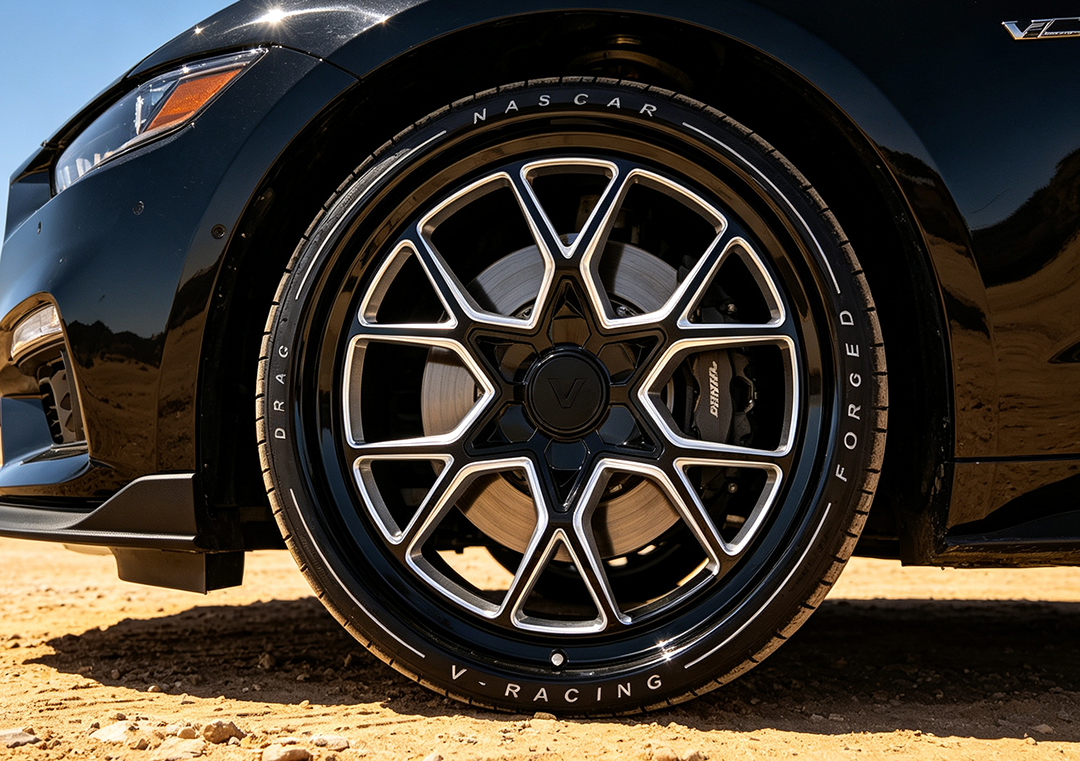
2. Are Custom Forged Wheels Stronger Than Cast Wheels?
Well-engineered forged aluminum wheels can offer a favorable strength-to-weight ratio compared with comparable cast wheels. However, forging alone does not guarantee that every forged wheel is stronger, lighter, or safer than every cast alternative.
The main difference lies in how the metal is formed.
Forged wheels begin with a solid metal blank that is shaped under substantial pressure and then machined. Cast wheels are formed by pouring molten metal into a mold and allowing it to solidify. Each process has different manufacturing characteristics, design possibilities, and cost considerations.
The final performance of a wheel depends on more than its manufacturing method. Material selection, heat treatment, spoke geometry, load rating, machining quality, and testing all matter.
Custom Forged Wheels vs. Cast Wheels
| Comparison Factor | Custom Forged Wheels | Cast Wheels |
|---|---|---|
| Manufacturing Process | Forged metal blank followed by precision machining | Molten metal formed in a mold |
| Weight Potential | Can be optimized for a favorable strength-to-weight ratio | Depends on casting method, material, and design |
| Design Flexibility | Suitable for specialized dimensions and detailed customization | Often available in established designs and sizes |
| Initial Cost | Generally higher | Generally lower |
| Production Considerations | May require additional machining and engineering work | Often efficient for larger production runs |
| Common Applications | Premium builds and performance-focused projects | Daily driving and a wide range of aftermarket applications |
Neither construction method is automatically the best choice for every driver. A well-manufactured cast wheel may be suitable for everyday driving, while a forged wheel may be worth considering when weight targets, specialized fitment, or extensive customization are priorities.
When comparing products, buyers should examine documented specifications, load ratings, testing information, and actual wheel weights rather than relying on marketing terms alone.
3. What Are the Main Benefits of Custom Forged Wheels?
Custom forged wheels offer three main advantages: design flexibility, potential weight optimization, and the ability to accommodate specific vehicle requirements.
Potential Weight Reduction
Wheel weight can influence vehicle behavior because wheels and tires contribute to unsprung mass. Reducing unsprung mass may help suspension components respond to changes in road surfaces, although the actual effect depends on the complete vehicle setup.
A well-designed forged wheel can achieve a useful balance between weight and structural requirements. However, not every forged wheel is lighter than every cast wheel. Diameter, width, spoke design, material, and load capacity all affect the final weight.
If weight is a priority, ask the supplier for the actual weight of the wheel in your required specification.
Greater Design Flexibility
Custom forged wheels provide opportunities to personalize the appearance of a vehicle. Depending on the manufacturer’s capabilities, buyers may be able to select spoke arrangements, concavity, face profiles, and finishing details.
For example, a sports coupe may suit a lightweight multi-spoke design, while a luxury sedan may look better with a refined split-spoke pattern and a polished or two-tone finish.
The goal is to find a design that complements the vehicle without compromising structural requirements or component clearance.
Specialized Fitment
Custom dimensions can be useful for vehicles with nonstandard fitment requirements, aftermarket brake systems, modified suspension, or wider bodywork.
A properly specified wheel can help achieve the intended wheel position while maintaining suitable clearance around the suspension, brake calipers, and fenders.
However, a wheel that matches the bolt pattern is not necessarily compatible with the vehicle. Diameter, width, offset, center bore, brake clearance, and load capacity must also be verified.
Personalized Finishes
The finish can significantly change the overall appearance of a wheel.
Popular choices include:
- Gloss black: A clean, contemporary appearance.
- Matte black: A restrained finish that suits many vehicle colors.
- Brushed aluminum: A metallic surface with a visible directional texture.
- Machined face: A contrasting finish that highlights selected surfaces.
- Two-tone finishes: A combination of colors or surface treatments for added visual depth.
Finish durability depends on the coating system, preparation process, environmental exposure, and maintenance. Ask the supplier about cleaning recommendations, corrosion resistance, and warranty coverage before purchasing.
4. How Much Do Custom Forged Wheels Cost?
Custom forged wheels generally cost more than comparable cast wheels because forging, machining, engineering, and finishing can involve additional materials, specialized equipment, and production time.
There is no universal price for custom forged wheels. The final cost depends on the specification, manufacturing process, order quantity, and supplier.
Key Factors That Affect Pricing
Wheel diameter and width
Larger or wider wheels may require more raw material and additional machining. The exact cost difference depends on the design and production process.
Design complexity
Intricate spoke patterns, specialized concavity, and unusual wheel profiles may require additional engineering and machining work.
Wheel construction
One-piece forged wheels and multi-piece wheel assemblies involve different production processes. Multi-piece designs may require additional components and assembly.
Surface finish
Custom colors, polished surfaces, brushed finishes, and multi-stage treatments can affect production costs.
Order quantity
The number of wheels ordered can influence unit pricing. Some suppliers may offer different pricing for individual sets, larger orders, or production runs.
Quality assurance
Inspection procedures, engineering validation, testing, and documentation may also affect the total cost.
When requesting a quotation, provide the complete wheel specification and confirm whether the price is per wheel or per set. Also ask whether center caps, packaging, shipping, taxes, and duties are included.
A lower price does not necessarily represent better value. Fitment accuracy, product consistency, load capacity, and after-sales support should also influence the decision.
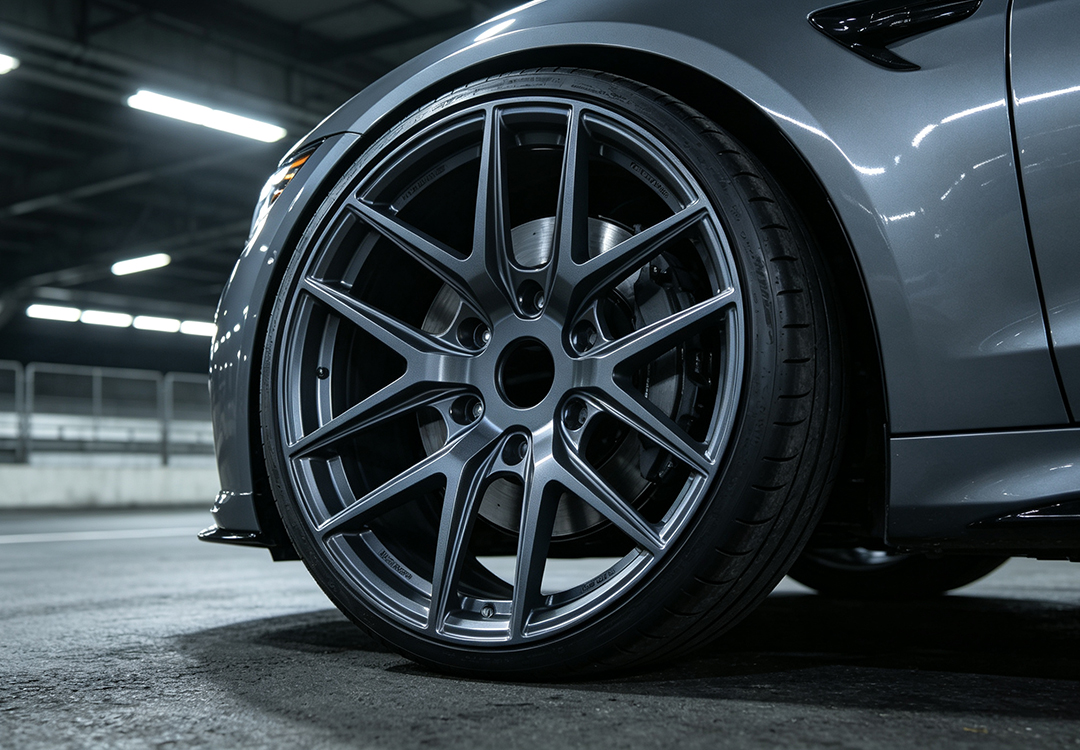
5. What Specifications Are Needed to Order Custom Forged Wheels?
Accurate specifications are essential when ordering custom forged wheels. Providing only the vehicle model or wheel diameter may not be sufficient to confirm compatibility.
Essential Fitment Information
Vehicle make, model, and year
These details provide a starting point for identifying the original wheel configuration and vehicle requirements. If the vehicle has been modified, those changes should also be disclosed.
Wheel diameter and width
Diameter affects tire selection, brake clearance, and overall wheel fitment. Width influences tire compatibility and the wheel’s position within the available space.
Bolt pattern (PCD)
PCD identifies the mounting-hole arrangement. The wheel’s bolt pattern must match the vehicle’s hub specifications.
Offset (ET)
Offset determines the position of the mounting face relative to the wheel centerline. An unsuitable offset may cause interference with suspension components or the fender and may affect vehicle handling.
Center bore (CB)
The center bore must provide the appropriate hub fitment. Depending on the vehicle and wheel design, additional fitment components may be required.
Load capacity
The wheel’s rated load capacity must meet the requirements of the intended vehicle and application. Appearance and dimensions alone do not establish whether a wheel is suitable.
Tire size and brake clearance
The intended tire dimensions and brake configuration should be checked alongside the wheel specifications. Two wheels with the same diameter, width, PCD, and offset can have different internal profiles and therefore different brake clearance.
Why Fitment Verification Matters
Consider a buyer looking for 20-inch wheels. Knowing the diameter alone does not establish compatibility. The correct PCD, offset, center bore, width, tire dimensions, and brake clearance must also be confirmed.
A wheel with an unsuitable offset may sit too far inward or outward. A wheel with insufficient brake clearance may interfere with the caliper even if the mounting holes fit correctly.
Before approving production, provide the supplier with the exact vehicle information and any aftermarket brake, suspension, or body modifications. For complex applications, request a fitment drawing or another suitable verification method before manufacturing begins.
6. How Long Does It Take to Manufacture Custom Forged Wheels?
The manufacturing time for custom forged wheels depends on design complexity, wheel construction, finish, order quantity, and the manufacturer’s production schedule.
An established design with confirmed specifications may require less preparation than a new design involving engineering changes, prototype approval, or specialized finishing.
The process typically includes several stages:
- Specification confirmation: Establish the required dimensions, vehicle application, load capacity, and finish.
- Design approval: Confirm the spoke design, wheel profile, and fitment requirements.
- Production preparation: Finalize material selection and machining arrangements.
- Manufacturing and finishing: Complete forging, machining, surface treatment, and assembly where applicable.
- Quality inspection: Check the finished wheels according to the manufacturer’s procedures before dispatch.
The exact sequence may differ between manufacturers. Some orders require additional testing or engineering approval before production can begin.
When requesting a lead time, ask whether the estimate covers manufacturing only or includes delivery. International shipping may take additional time because of transportation schedules, customs clearance, and other logistical factors.
A clear production schedule helps buyers plan vehicle projects, retail inventory, and wholesale orders more effectively.
7. How to Choose the Right Custom Forged Wheels
The best custom forged wheels are not necessarily the most expensive or visually aggressive. They are the wheels that meet the vehicle’s requirements, suit the intended driving conditions, and deliver the desired appearance within budget.
Consider Your Driving Needs
For daily driving, prioritize correct fitment, appropriate load capacity, durability, and ease of maintenance.
For performance-oriented applications, consider wheel weight, brake clearance, tire selection, and the manufacturer’s supporting test documentation. Track driving may place different demands on wheels than normal road use.
For show cars or modified vehicles, design, concavity, finish, and wheel position may be major considerations. These preferences should still be balanced with engineering requirements.
Check Manufacturing Quality
Before purchasing, ask the supplier for relevant technical information, such as:
- Material grade and construction details.
- Rated load capacity.
- Applicable testing standards and supporting documentation.
- Quality inspection procedures.
- Warranty terms and damage assessment policies.
- Installation and maintenance recommendations.
Testing requirements vary by market and application. Do not assume that a wheel complies with a particular standard simply because it is described as forged.
Evaluate the Complete Wheel and Tire Setup
Wheel selection should account for the tires, suspension, braking system, and vehicle load requirements as a complete package.
A larger diameter does not automatically improve performance. Depending on the application, a larger wheel may increase overall wheel-and-tire weight or reduce tire sidewall height, potentially affecting ride comfort.
Compare the complete setup instead of making a decision based on appearance or diameter alone.
Frequently Asked Questions About Custom Forged Wheels(FAQ)
1.What are custom forged wheels?
Custom forged wheels are automotive wheels made from forged metal blanks and precision-machined to meet specific requirements for size, offset, design, and finish. They are commonly chosen for specialized fitment and premium customization.
2.Are custom forged wheels stronger than cast wheels?
Well-engineered forged wheels can offer a favorable strength-to-weight ratio compared with comparable cast wheels. Actual performance depends on material, design, load capacity, manufacturing quality, and testing.
3.How much do custom forged wheels cost?
Prices depend on wheel dimensions, construction, design complexity, finish, quantity, and supplier. Request an itemized quotation based on the complete specification.
4.What specifications are needed to order custom forged wheels?
Provide the vehicle make, model, and year, along with wheel diameter, width, PCD, offset, center bore, load requirements, preferred finish, and quantity. Include tire dimensions and any brake or suspension modifications.
5.How long does it take to manufacture custom forged wheels?
Lead times vary with design complexity, finishing requirements, order quantity, and production schedules. Confirm manufacturing and shipping estimates directly with the supplier before placing an order.
Conclusion
Custom forged wheels offer drivers an opportunity to combine personalized styling with specialized fitment and potential performance benefits. Their appeal lies in design flexibility, weight optimization possibilities, and the ability to develop dimensions for particular vehicle requirements.
However, forging is only one part of the purchasing decision. Correct fitment, load capacity, manufacturing quality, testing, and suitability for the intended application remain essential.
Buyers should begin with accurate vehicle specifications, compare construction methods and documented product information, and then evaluate designs, finishes, and pricing.
Explore Aftermarket Wheel Options with ATK Wheels
ATK Wheels offers a range of aftermarket alloy wheel styles for different vehicle applications and visual preferences. Whether you are sourcing wheels for a personal vehicle, retail business, or wholesale order, identifying the required sizes, bolt patterns, offsets, finishes, and quantities is a practical first step.
Visit ATK Wheels to explore available designs and contact the team to discuss your requirements. Confirm the manufacturing method, technical specifications, customization options, and production availability directly with the supplier before placing an order.
Choose wheels with the right combination of fitment, quality, and design to meet your needs.

