
The Complete Standard for Selecting Aftermarket Car Wheels: Fitment, Performance, and Construction Explained
The Complete Standard for Selecting Aftermarket Car Wheels: Fitment, Performance, and Construction Explained
When auto enthusiasts look to personalize their vehicle or boost track capabilities, replacing factory rims is almost always the first major modification on the checklist. Custom rims do far more than change a car’s side profile—they dictate unsprung mass, steering feedback, acceleration response, and cornering stability.
However, stepping into the custom rim industry can feel overwhelming. With thousands of styles, complex fitment math, and varying manufacturing methods, making the wrong choice can compromise vehicle safety, cause harsh rubbing against suspension components, or degrade ride quality.
This comprehensive standard walks you through everything you need to know about aftermarket car wheels: from structural engineering methods and critical offset calculations to aesthetic finishes and tire integration.
1.What Are Aftermarket Car Wheels?
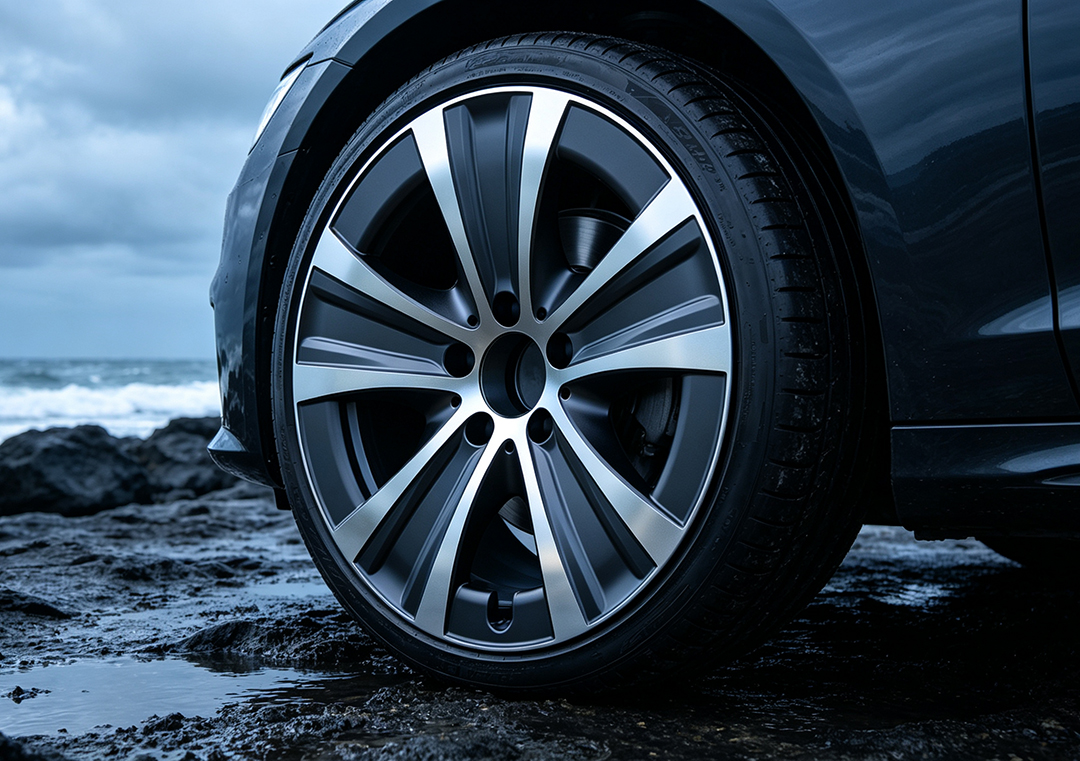
Aftermarket car wheels are wheels manufactured by independent companies rather than the original equipment manufacturer (OEM) that built the vehicle. While OEM rims prioritize low production costs, broad mass-market appeal, and universal comfort metrics, custom aftermarket options focus on distinct styling, specialized fitment, enhanced brake clearance, and weight reduction.
Vehicles come off the assembly line tuned for the average driver. OEM rims are designed with conservative offsets and generic alloy compositions to withstand varied road conditions globally. Custom wheel manufacturers step in to fill the gap for drivers seeking tailored fitment, aggressive stances, lightweight forged durability, or unique finishes like bronze, brushed clear, or satin black.
       Factory OEM Wheels                     Aftermarket Car Wheels
+-------------------------------+      +-------------------------------+
| * Mass-produced for cost      |      | * Tailored fitment & stance   |
| * Conservative fitment/offset |  vs  | * Lightweight options (Forged)|
| * Heavier cast construction   |      | * Enhanced brake clearance    |
| * Standard factory finishes   |      | * Premium custom aesthetic    |
+-------------------------------+      +-------------------------------+
2.Why Drivers Upgrade: Style, Weight, and Performance Benefits
Upgrading your vehicle with custom rims goes beyond surface-level aesthetics. Here is how high-performance custom rims alter your driving experience:
1. Unsprung Mass and Rotational Inertia Reduction
Unsprung weight includes every component not supported by the vehicle’s suspension springs—wheels, tires, brake assemblies, and hub bearings. Reducing unsprung mass yields exponential improvements in handling response:
-
Suspension Efficiency: Lighter rims allow dampeners and springs to keep tires planted over uneven pavement.
-
Acceleration and Braking: Less rotational inertia means the engine requires less torque to spin the wheels forward, and the brake rotors require less effort to bring the vehicle to a complete stop.
2. Enhanced Brake Clearance and Cooling
Performance brake upgrades—such as multi-piston big brake kits (BBKs)—frequently clash with OEM rim spoke profiles. Custom aftermarket rims are engineered with concave or high-pad spoke architectures designed explicitly to clear wider calipers while maximizing airflow to dissipate brake fade under heavy track use.
3. Customized Stance and Track Width
Factory setups often leave rims tucked deep inside the fender wells. Custom offsets and wider rim widths allow drivers to push the wheel face flush with the fender lip, widening the car’s overall track width. A wider track reduces body roll during aggressive cornering and produces an assertive, planted road presence.
3.Manufacturing Methods: Cast vs. Flow-Formed vs. Forged
Understanding how custom rims are manufactured helps you evaluate structural durability, weight metrics, and price points. The industry relies on three primary construction methods:
Manufacturing Hierarchy: Weight vs. Strength vs. Cost

[Cast Aluminum]      ---> Lowest Cost | Heaviest | Standard Strength
       |
[Flow-Formed]        ---> Mid Price   | Lightweight | High Barrel Strength
       |
[Forged Monoblock]   ---> Premium Cost| Ultra-Light | Maximum Grain Alignment
Gravity and Low-Pressure Casting
Casting involves pouring liquid molten aluminum into a wheel mold. Low-pressure casting uses positive pressure to push metal into the mold faster, reducing porosity compared to basic gravity casting.
-
Pros: Highly affordable, allows intricate decorative spoke designs.
-
Cons: Heavier grain structure requires thicker material to ensure safety, resulting in increased unsprung weight.
Flow-Forming (Rotary Forging)
Flow-forming begins with a low-pressure cast preform. The inner barrel is then mounted onto a spinning mandrel while high-pressure hydraulic rollers heat, stretch, and compress the aluminum grain structure along the outer rim.
-
Pros: Yields barrel tensile strength comparable to fully forged rims at a fraction of the cost.
-
Cons: The front spoke face remains cast; weight savings are concentrated primarily in the rim barrel.
Precision Forged Aluminum
Forged rims begin as solid aerospace-grade 6061-T6 aluminum billets. Under extreme hydraulic pressure (often 10,000+ tons), the metal is compressed into shape before being CNC-machined into intricate spoke profiles.
-
Pros: Exceptional structural density, supreme impact resistance, minimal unsprung weight.
-
Cons: Higher manufacturing costs and longer production lead times.
Manufacturing Comparison Matrix
| Feature / Metric | Cast Wheels | Flow-Formed Wheels | Forged Wheels |
|---|---|---|---|
| Material Density | Standard grain structure | Compacted barrel grain | Ultra-dense, aligned grain flow |
| Weight | Heavy | Moderate / Lightweight | Ultra-lightweight |
| Structural Impact Resistance | Moderate | High (Barrel) | Maximum structural integrity |
| Price Point | Budget-friendly ($100 - $250/wheel) | Mid-range ($250 - $600/wheel) | Premium ($700 - $2,000+/wheel) |
| Best Application | Daily driving, winter setups | Street performance, light track | Racing, luxury performance, heavy track |
4.Critical Fitment Geometry: Decoding Wheel Specifications
Selecting custom rims requires precise measurements. A deviation of just a few millimeters can lead to fender rubbing, suspension interference, or unsafe hub engagement.
       WHEEL CROSS-SECTION FITMENT DIAGRAM

         Outer Lip            Center Bore           Inner Lip
           |                      |                     |
           v                      v                     v
     +-----------+         +-------------+         +-----------+
     |           |         |             |         |           |
     |           |         |      |      |         |           |
     |           +---------+      |      +---------+           |
     |                            |                            |
     |   [Negative Offset] <---  |  ---> [Positive Offset]    |
     |                            |                            |
     |           +---------+      |      +---------+           |
     |           |         |      |      |         |           |
     |           |         |      |      |         |           |
     +-----------+         +-------------+         +-----------+
                                  ^
                           Centerline (0 ET)
1. Bolt Pattern (Pitch Circle Diameter – PCD)
The PCD consists of two numbers: the count of lug holes and the diameter of the invisible circle they form (e.g., 5×114.3 or 5×120).
-
5: Indicates five lug studs.
-
114.3: Represents a 114.3 millimeter circle pitch across the lug centers.
-
Note: Never attempt to force mismatching bolt patterns without engineered hub-centric adapters.
2. Wheel Diameter and Width
Expressed in inches (e.g., 19×9.5J):
-
19: Total wheel diameter measured across the tire seating bead.
-
9.5: Total width between the inner flange surfaces where the tire bead rests.
3. Offset (ET) and Backspacing
Offset is measured in millimeters and defines the distance from the mounting hub face to the absolute centerline of the rim width.
-
Positive Offset (+ET): The mounting hub sits toward the front face of the wheel. Common on front-wheel drive and modern sports sedans.
-
Negative Offset (-ET): The mounting hub sits deep toward the rear lip, creating a deep-dish profile. Common on off-road trucks and widebody builds.
-
Zero Offset (0 ET): The mounting face aligns exactly with the rim centerline.
Backspacing Equation:
Backspacing = (Wheel Width + 1 inch Flange Allowance) / 2 + (Offset / 25.4)
4. Center Bore and Hub-Centric Rings
The center bore is the machined aperture on the back of the rim that slides over the vehicle’s wheel hub snout.
-
Hub-Centric Fitment: The center bore matches the car’s hub diameter precisely, centering the load along the vehicle hub rather than relying strictly on lug studs.
-
Lug-Centric Fitment: The center bore is larger than the hub snout to accommodate multiple car platforms.
-
Best Practice: When running lug-centric aftermarket setups, always install polycarbonate or aluminum hub-centric rings to eliminate high-speed vibrations.
5. Load Rating and Structural Safety Certifications
Every rim must carry a structural rating that exceeds half of your vehicle’s heaviest axle gross weight rating (GAWR). Look for recognized international safety stamps cast into the rear wheel face:
-
JWL / VIA (Japan): Rigorous structural testing standards covering cornering fatigue and dynamic radial impact tests.
-
TÜV (Germany): Stringent European manufacturing auditing and road safety approval.
-
SAE J2530 (USA): Aftermarket wheel testing standard for radial fatigue, cornering stress, and impact resistance.
5.Popular Styles, Finishes, and Care Protocols
Aesthetic styling dictates how your vehicle’s overall character translates on the road. Matching the rim style to your vehicle’s body lines ensures a cohesive look.
Major Spoke Designs
-
Mesh & Y-Spoke: Classic European styling; distributes cornering loads across multiple thin spokes.
-
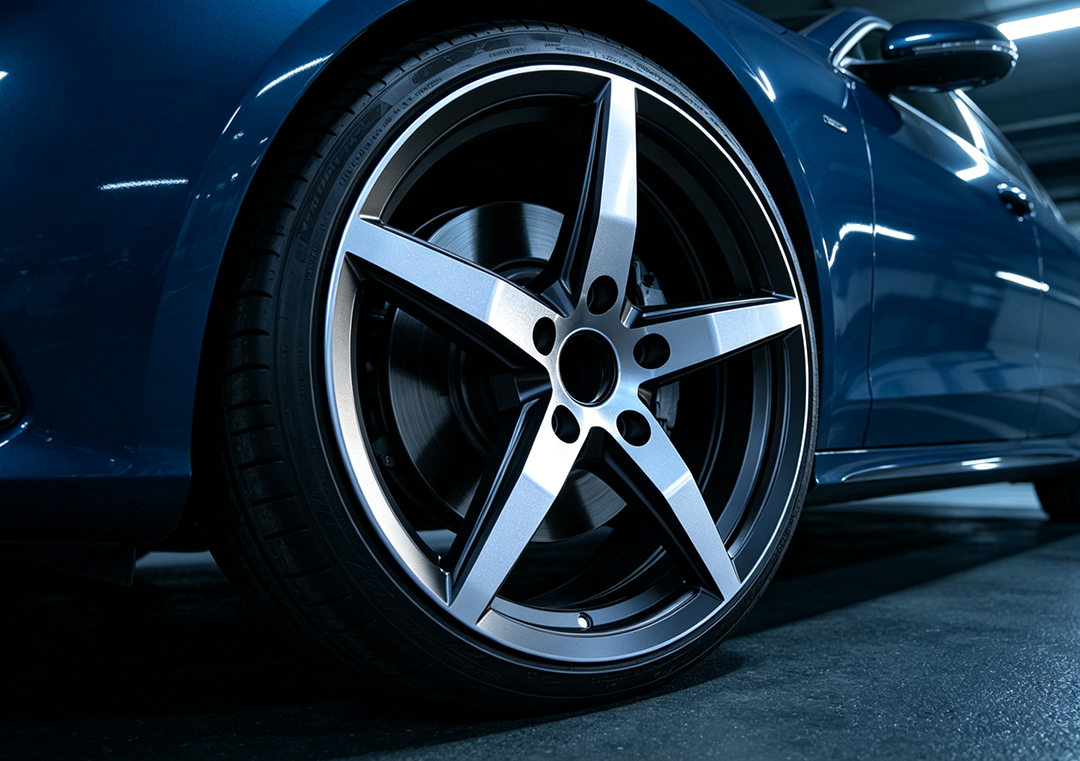
5-Spoke / 6-Spoke: Timeless Japanese tuner and American muscle design; provides max visibility for upgraded brake setups.
-
Concave Architecture: Spoke faces sweep inward toward the center bore, creating dramatic dynamic shadows.
-
Multi-Piece (2-Piece / 3-Piece): Modular construction featuring spun barrels bolted to a forged center face with titanium hardware.
Visual Profile Comparison:

Flat Profile:       [===|===]   (Standard OEM flush look)
Deep Lip Profile:   [|==|==|]  (Modular 3-piece dish look)
Concave Profile:    [\  |  /]  (Aggressive deep center sweep)
Durable Finishes and Surface Treatments
-
Powder Coating: Electrostatically applied polymer powder cured under high heat; yields superior chip resistance over wet paint.
-
Brushed Clear: Hand-brushed metal directional lines covered by a protective clear coat for an industrial metallic sheen.
-
Physical Vapor Deposition (PVD): Eco-friendly alternative to traditional heavy-metal chrome plating that resists flaking and pitting from road salt.
Maintenance & Cleaning Protocol
To preserve custom finishes and clear coats over time:
-
Never clean hot rims: Allow brake rotors and alloy surfaces to cool before applying liquids to avoid thermal shock or finish spotting.
-
Use pH-neutral cleaners: Avoid acid-based or heavy degreasing chemical sprays that can strip protective clear coats or discolor aluminum lug nuts.
-
Apply protective ceramic coatings: Sealing the wheel surface with a high-heat ceramic coating prevents hot metallic brake dust from embedding into the finish.
Frequently Asked Questions(FAQ)
1.What are aftermarket car wheels?
Aftermarket car wheels are wheels produced by independent manufacturers rather than the original vehicle manufacturer (OEM). They offer broader flexibility in sizes, offsets, spoke designs, structural finishes, and price points.
2.How do I know if aftermarket car wheels will fit my vehicle?
You must verify six critical parameters against your vehicle’s factory specifications: bolt pattern (PCD), rim diameter, rim width, offset (ET), center bore diameter, and brake caliper clearance.
3.Are aftermarket car wheels safe for daily driving?
Yes, provided they are engineered correctly for your vehicle’s load capacity and carry certified structural safety stamps such as JWL, VIA, TÜV, or SAE J2530.
4.Are aftermarket car wheels better than OEM wheels?
Neither is universally superior across every metric. OEM wheels provide guaranteed factory fitment and standard comfort parameters, whereas high-quality aftermarket options deliver superior weight reduction, customized aesthetics, wider track stance, and enhanced brake clearance.
5.Do larger aftermarket car wheels affect driving performance?
Yes. Increasing overall rim diameter with lower-profile tires quickens steering turn-in response and updates the stance, but it can also firm up ride compliance and increase vulnerability to pothole impacts if proper tire sidewall ratios are not maintained.
Elevate Your Ride with Custom Wheels
Finding the perfect balance between style, strength, and precise fitment is what turns a standard build into a standout creation. Whether you are aiming for a track-focused lightweight setup or an aggressive street stance, selecting quality engineered wheels ensures long-lasting safety and peak road performance.
Ready to transform your driving experience? Explore our curated catalog of custom wheel fitments, flow-formed designs, and forged options engineered specifically for your vehicle platform today at ATK Wheels.

