
Chrome Wheels: What Drivers Should Know Before Buying
Chrome Wheels: What Drivers Should Know Before Buying
Few aftermarket automotive upgrades command visual attention quite like a fresh set of chrome wheels. That deep, liquid-mirror reflection instantly elevates the stance of heavy-duty trucks, classic muscle cars, and modern luxury sedans. However, vehicle owners often encounter conflicting advice when shopping for aftermarket setups: Are chrome rims worth the premium aesthetic investment, or do they inevitably become a high-maintenance headache?
Understanding how chrome plating is applied, how it resists harsh road hazards, and how modern manufacturing techniques differ from older generations helps drivers choose the right aftermarket wheels for their driving habits and geographic conditions.
1.What Makes Chrome Wheels Different?
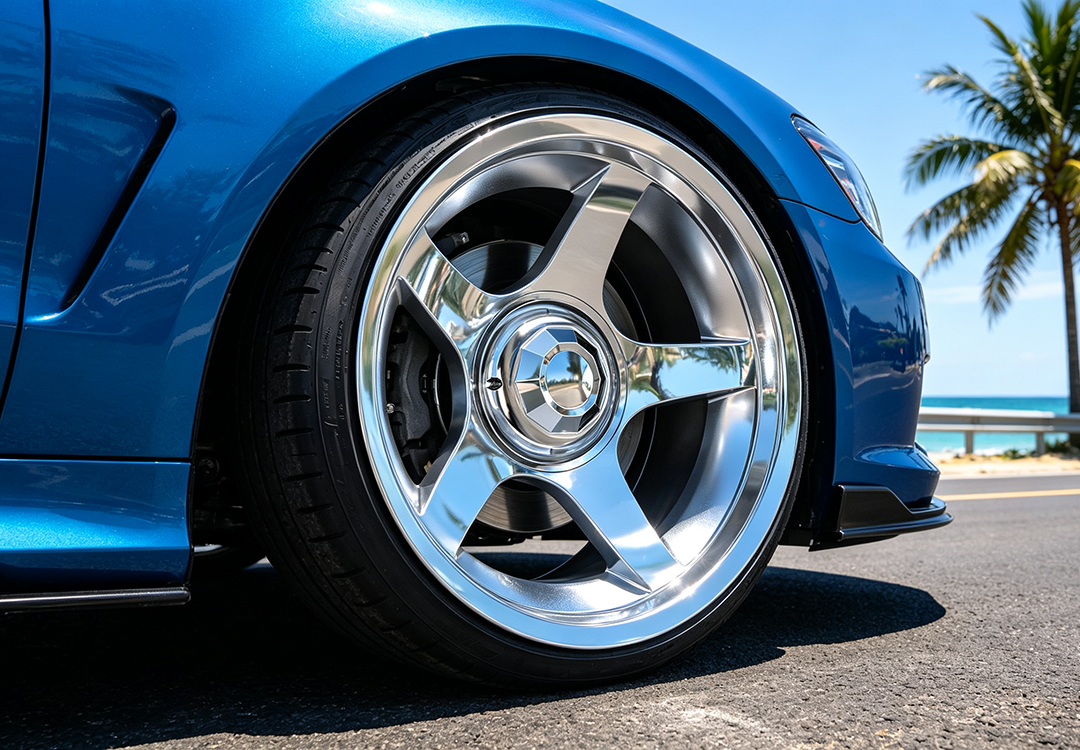
When automotive enthusiasts talk about chrome wheels, they are referring to a specialized metallic finishing process rather than a solid metallic alloy. Beneath that brilliant mirror layer lies a cast or forged structural wheel core—most commonly an aluminum alloy or steel base.
The Electroplating Architecture
Unlike standard painted, clear-coated, or mechanically buffed aluminum wheels, authentic electroplated chrome is created through a rigorous multi-stage chemical and electrical dipping process:
-
Copper Undercoating Layer: Serves as a flexible leveling primer. It seals tiny microscopic pores, surface imperfections, and casting grain in the base aluminum alloy to establish a perfectly flat, uniform foundation.
-
Semi-Bright & Bright Nickel Layers: Applied in sequence to give the wheel its primary structural barrier strength, corrosion prevention properties, and the deep, rich luster that illuminates from beneath the topcoat.
-
Micro-Thin Chromium Topcoat: A hard, protective final layer applied via electrical current. Though thin, this chromium coating provides high reflectivity, scratch resistance, and the unmistakable bright silver aesthetic.
Because this multi-layer metallic bond seals the wheel core completely, high-grade electroplated chrome delivers a level of visual depth and mirror reflection that spray-applied liquid paint, polished bare metal, or standard clear coats cannot duplicate.
2.Chrome Plating vs. Alternative Wheel Finishes
Choosing between traditional electroplated chrome, Physical Vapor Deposition (PVD), polished aluminum, and powder-coated finishes depends on your local climate, driving frequency, maintenance preference, and total budget.
| Feature / Finish Type | Electroplated Chrome Wheels | PVD Chrome Finish | Polished Bare Aluminum | Powder Coated Finish |
|---|---|---|---|---|
| Visual Appearance | Deepest mirror reflection with maximum brilliance | Near-chrome mirror look, slightly darker silver tint | Warm metallic luster without true mirror reflection | Wide variety of colors in gloss, satin, or matte |
| Weight Profile | Adds slight weight due to dense electroplated metallic layers | Extremely lightweight (powder base with vacuum plating) | Lightest option (uncoated or bare metal surface) | Very light (thin resin coat) |
| Corrosion Resistance | Superior durability as long as the seal stays intact | Highly resilient against environmental salt exposure | Low (rapid surface oxidation without constant polishing) | High resistance to road debris, chips, and oils |
| Winter Salt Tolerance | Moderate to Low (susceptible to bead edge lifting) | High (durable protective top coat layer) | Very Low (quick dulling, white rust pitting) | High |
| Refinishing Complexity | Complex (requires chemical stripping and full replating) | Moderate (can be stripped and re-powder coated) | Low (can be re-sanded and hand-buffed) | Moderate |
3.Do Chrome Wheels Rust or Corrode?
A frequent query among truck owners and custom car builders is whether chrome wheels rust over time.
Direct Answer: Chrome wheels do not rust in the traditional sense because aluminum base alloys and chromium plating do not contain iron. However, the underlying metal structure can still suffer from serious corrosion. When moisture, brake dust, and road salt enter through tiny stone chips or micro-cracks in the outer layer, underlying oxidation causes the chrome plating to blister, pit, or peel away.
Moisture / Road Salt Entry ➔ Micro-Fissure in Chrome ➔ Sub-layer Oxidation ➔ Plating Pitting & Peeling
Key Triggers That Accelerate Plating Degradation
-
Corrosive Brake Dust Accumulation: Metallic brake dust particles shed from brake pads cling to the wheel face. When exposed to humidity, these hot iron fragments oxidize, burning into the protective finish and breaking the seal.
-
De-icing Salt & Chemical Slurry: Highways treated with sodium chloride, calcium chloride, or magnesium chloride create an aggressive corrosive brine that penetrates micro-fissures in the outer plating.
-
Bead Seat Corrosion and Tire Pressure Loss: Trapped moisture between the rubber tire bead and the inner wheel rim flange can cause quiet oxidation under the plating. This results in plating flaking along the bead line, leading to slow, persistent tire air leaks.
-
Harsh Acid-Based Cleaners: Washing chrome wheels with aggressive, non-pH-balanced wheel cleaners or harsh degreasers can chemically etch the thin chromium topcoat, leaving a cloudy, permanent haze.
4.Caring for Chrome Rims in Cold Climates
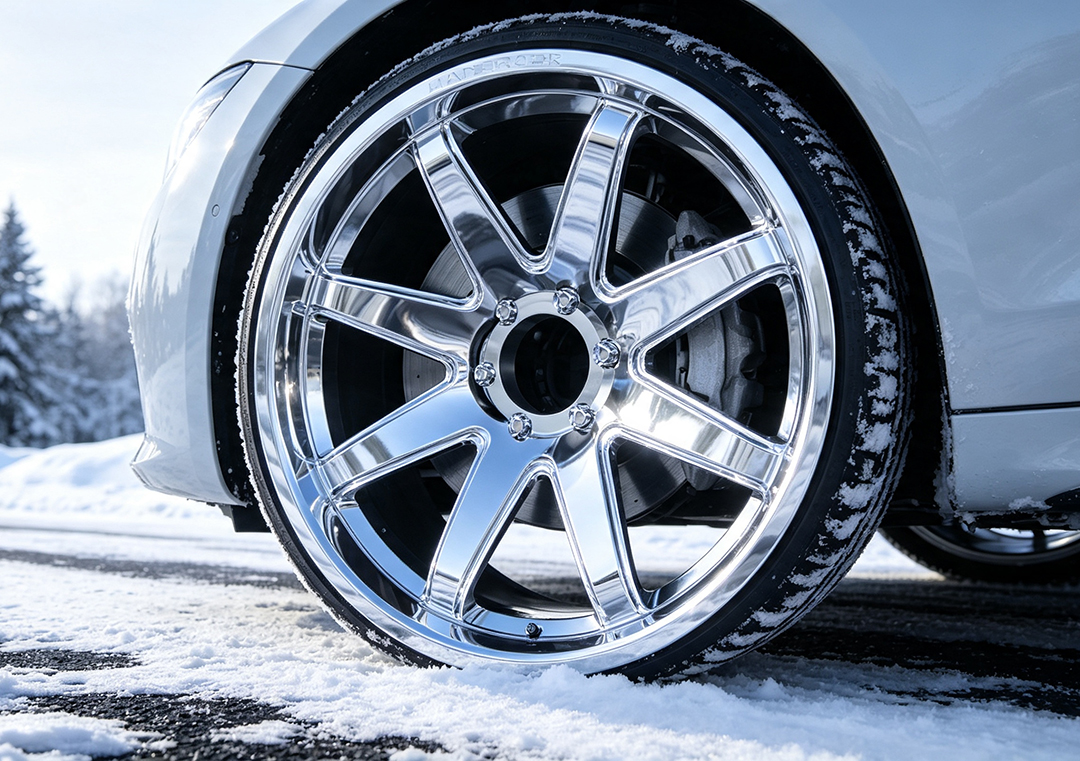
Operating vehicles equipped with chrome rims during freezing winter months demands deliberate preventative strategies.
While cold ambient air temperatures do not damage metal plating, the chemical de-icers applied across North American roadways act as severe corrosive agents. Once liquid brine seeps underneath the rim edges and oxidizes the nickel base layer, the electroplated bond loses adhesion.
-
Seasonal Wheel Swapping: Vehicle owners living in severe snow zones frequently remove custom chrome wheels before the first winter freeze, replacing them with painted, powder-coated, or factory OEM wheels until spring.
-
Applying Protective Sealants: Coating chrome wheels with a hydrophobic ceramic coating or synthetic polymer wheel sealant before winter creates a clear sacrificial barrier that repels salt brine and road grime.
-
Frequent Underbody Rinsing: If driving on salted winter roads is unavoidable, rinse the wheels weekly using cold, high-pressure water to flush out trapped road salt from inner wheel barrels, spoke cavities, and lug nut seats.
5.Essential Cleaning and Maintenance Routine
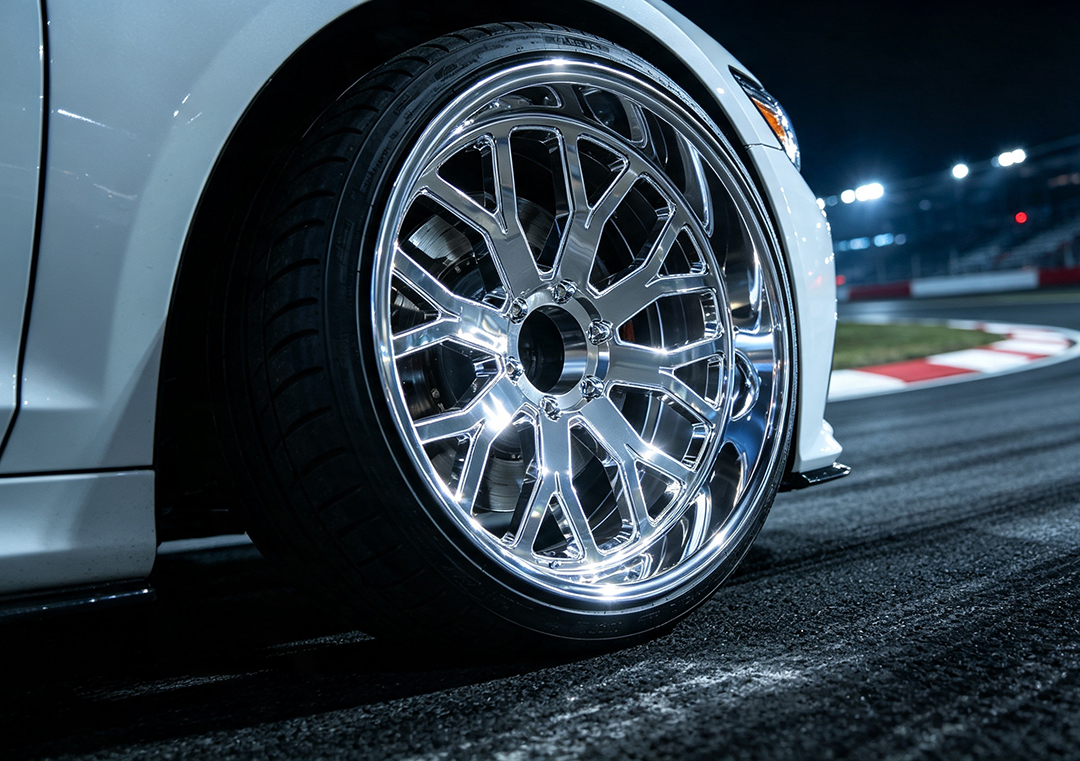
To protect the reflective brilliance of your chrome rims and prevent pitting, clear away road grime, road oils, and iron brake dust every two weeks using safe, non-abrasive techniques.
-
Allow Wheels to Cool Completely: Never spray cold water or liquid cleaners onto hot wheels immediately after driving. Sudden thermal shock can stress the metal layers and compromise electroplated bonds.
-
Pre-Rinse Loose Grime: Blast away heavy sand, loose dirt, and brake dust using a pressure washer or hose nozzle before touching the wheel surface with towels or mitts.
-
Select Non-Acidic Cleaners: Use a pH-balanced, non-acidic wheel cleaner specifically formulated for chrome finishes. Avoid harsh acid-based alloy cleaners or general household degreasers.
-
Agitate Gently with Soft Tools: Use a plush microfiber wash mitt or ultra-soft natural wheel brush to gently lift stubborn brake dust from spoke corners and around valve stems without scratching the finish.
-
Rinse and Hand-Dry Thoroughly: Flush away all soap residue completely. Dry the wheel face and barrel with a fresh microfiber towel to eliminate mineral water spots and chemical water rings.
-
Apply Chrome Polish or Sealant: Coat the wheels every three months with a dedicated chrome polish or synthetic wheel sealant. This seals microscopic pores, restores mirror shine, and leaves a hydrophobic surface that makes future washing much easier.
6.Critical Factors When Choosing Aftermarket Chrome Wheels
Upgrading your vehicle with aftermarket wheels involves evaluating several crucial technical specifications to ensure safe handling, correct clearance, and proper load ratings:
1. Bolt Pattern (PCD) Accuracy
The Pitch Circle Diameter (PCD) represents the number of lug holes and the diameter of the imaginary circle they form (e.g., 5×114.3 or 6×139.7). Selecting the exact factory bolt pattern guarantees the wheel seats flat against the brake rotor hub without placing uneven stress on wheel studs.
2. Wheel Offset and Backspacing
Wheel offset determines how far inward or outward the wheel sits relative to the mounting hub:
-
Positive Offset: Pushes the wheel face outward, common on modern front-wheel drive cars and crossovers.
-
Negative Offset: Pulls the wheel face inward toward the axle, giving trucks and muscle cars a deep-dish profile.
-
Backspacing: Measures the distance from the mounting surface to the back edge of the rim, ensuring clearance for brake calipers, shocks, and steering linkages.
3. Hub-Centric vs. Lug-Centric Design
Hub-centric wheels feature a center bore sized precisely to match the vehicle’s axle hub, centering the wheel’s weight perfectly. Lug-centric aftermarket options rely on lug nuts for alignment, which can introduce minor high-speed steering wheel vibrations unless hub-centric adapter rings are installed.
Frequently Asked Questions(FAQ)
1. Do chrome wheels rust?
Chrome wheels do not rust like bare steel, but the underlying metal can corrode. Corrosion may cause chrome plating to pit, peel, or lose its shine over time if exposed to moisture, brake dust, and road salt.
2. How do you clean chrome wheels?
Rinse off loose dirt, then clean the wheels with mild soap or a chrome-safe wheel cleaner and a soft brush or microfiber cloth. Rinse thoroughly and dry completely to prevent water spots and chemical staining.
3. Are chrome wheels good for winter?
Chrome wheels can be used in winter, but road salt and de-icing chemicals can accelerate corrosion and damage the chrome finish. Frequent cleaning and protective sealants are recommended in salted areas.
4. Are chrome wheels harder to maintain?
They require regular maintenance to preserve their reflective finish. Brake dust, road salt, chemicals, and improper cleaning can dull or damage the chrome surface faster than painted finishes.
5. Can damaged chrome wheels be repaired?
Minor surface scratches and light dullness can be polished out, but severe peeling, deep pitting, or structural chrome damage usually requires professional chemical stripping and full electroplating refinishing.
Finding Quality Fitments for Your Vehicle
Choosing premium wheel manufacturing ensures precise structural engineering, proper load capacities, and durable surface plating that resists environmental wear over long distances. High-standard alloy casting and strict quality testing protect your vehicle investment while elevating its visual presence.
Explore high-performance wheel options, custom offsets, and durable aftermarket finishes at ATK Wheels to find the ideal stance and fitment for your vehicle setup today.

