
Custom Cars Wheels: How to Choose the Right Fit, Size and Style
Custom Cars Wheels: How to Choose the Right Fit, Size and Style
Whether you want to sharpen cornering response, fit wider performance rubber, or transform your vehicle’s stance, choosing the right custom cars wheels is one of the most impactful upgrades you can make. Factory wheels are designed around lowest-cost mass production and broad comfort compromises. In contrast, aftermarket aftermarket wheels let you tailor weight, strength, width, and backspacing directly to your driving demands.
This complete resource breaks down custom wheel engineering, fitment mathematics, construction methodologies, and maintenance protocols so you can make an informed, precise investment in your vehicle.
1.Why Upgrade to Custom Cars Wheels?
Upgrading your vehicle with aftermarket custom wheels delivers immediate aesthetic, dynamic, and financial advantages over stock setups.
+-------------------------------------------------------------------+
|                  PRIMARY UPGRADE ADVANTAGES                       |
+-------------------------------------------------------------------+
|  [1] Dynamic Weight Reduction  --> Lower unsprung mass & inertia  |
|  [2] Precision Fitment & Stance --> Ideal flush or aggressive look|
|  [3] Enhanced Brake Clearance  --> Space for Big Brake Kits (BBK) |
|  [4] Superior Structural Rigidity--> Better cornering feedback    |
+-------------------------------------------------------------------+
1. Reduced Unsprung Mass & Rotational Inertia
Unsprung weight includes everything not supported by your vehicle’s suspension springs—wheels, tires, brake rotors, and hubs. Replacing heavy OEM steel or cast aluminum wheels with lightweight alloy or forged alternatives yields significant mechanical advantages:
-
Sharper Suspension Response: Lighter wheels allow shock absorbers and springs to damp road imperfections faster, keeping tire contact patches firmly planted.
-
Quicker Acceleration & Braking: Lower rotational inertia requires less torque to spin up or slow down, shortening stopping distances and improving throttle reaction.
-
Improved Fuel Economy: Reduced rotational mass decreases engine workload during stop-and-go driving.
2. Tailored Stance and Vehicle Geometry
OEM wheels usually sit tucked deep inside fender wells to accommodate snow chains and clearance margins. High-quality aftermarket wheels allow you to customize width and offset, delivering a flush, aggressive fitment that improves track width, lowers center of gravity, and increases lateral stability during aggressive cornering.
3. Increased Brake Clearance & Heat Dissipation
Performance drivers upgrading to Big Brake Kits (BBK) require extra clearance around calipers and rotors. Custom wheels feature revised barrel profiles and spoke concavity specifically engineered to clear large multi-piston calipers while enhancing airflow to cool braking surfaces.
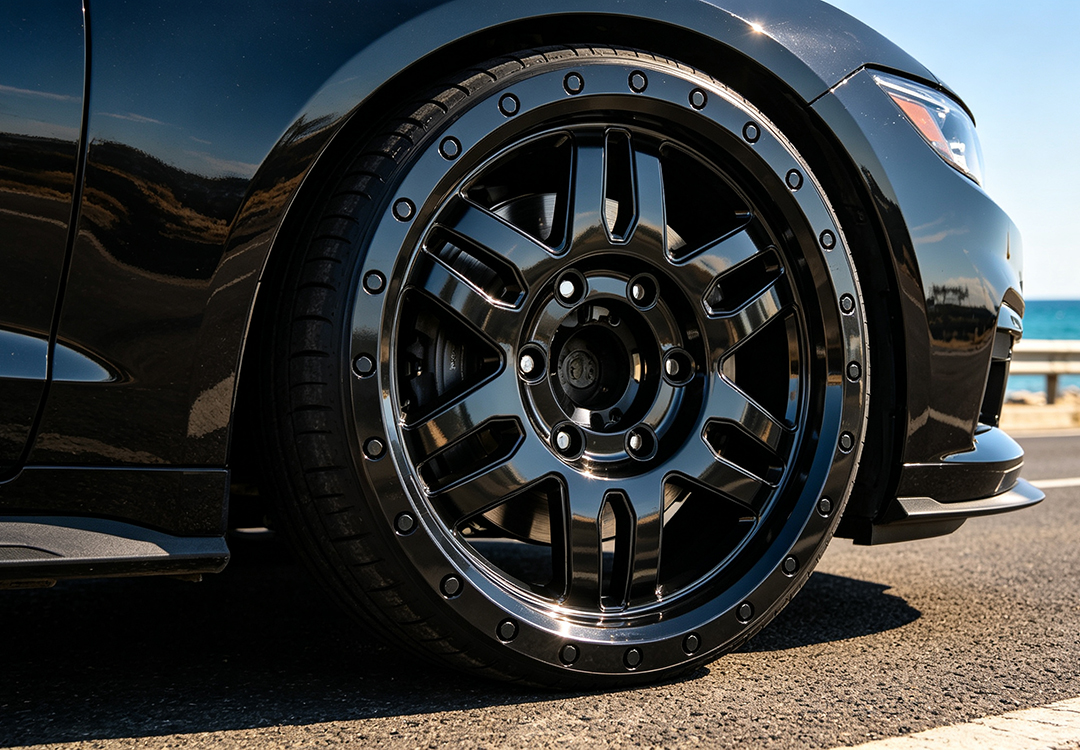
2.Wheel Construction Methods Compared
Not all wheels are created equal. Manufacturing technique dictates structural integrity, total weight, impact resistance, and overall price point.
               [ LIQUID ALUMINUM ]
                        |
        +---------------+---------------+
        |                               |
  [ Gravity / Low-Pressure ]    [ Solid Billet Block ]
        |                               |
   ( Cast Wheels )              ( High-Pressure Forging )
        |                               |
  [ Flow-Forming Barrel ]               |
        |                               |
( Flow-Formed Wheels )         ( Forged Wheels )
Cast Wheels
Molten aluminum alloy is poured or pulled under low pressure into a wheel mold. Once cooled, the wheel is trimmed and finished.
-
Pros: Highly cost-effective; endless cosmetic design options.
-
Cons: Heavier grain structure requires thicker material, increasing overall weight; lower impact resistance compared to forged options.
Flow-Formed Wheels
Flow-forming (also known as rotary forging or flow-forging) starts with a specialized cast wheel blank. The outer barrel is spun at high speeds while hydraulic rollers apply extreme pressure, stretching and compressing the aluminum grain structure.
-
Pros: Strengthens the barrel to near-forged levels; saves up to 15–20% weight over traditional casting; excellent strength-to-cost ratio.
-
Cons: Center face retains a cast structure, though structural loads are primarily carried by the barrel.
Forged Wheels
Forged wheels begin as solid blocks of aerospace-grade 6061-T6 aluminum billet. Extreme heat and pressure (often up to 10,000 tons) press the metal into shape before CNC machinery carves out the final spoke architecture.
-
Pros: Maximum tensile strength; lowest unsprung weight; exceptional resistance to cracks and bends under track abuse.
-
Cons: Highest manufacturing cost due to complex machinery and raw material overhead.
Technical Comparison Matrix
| Wheel Construction Type | Manufacturing Process | Weight Profile | Impact Strength | Ideal Application | Relative Cost |
|---|---|---|---|---|---|
| Cast Aluminum | Low-Pressure / Gravity Pour | Moderate to Heavy | Standard | Daily Commuting, Winter Sets | $150 – $350 |
| Flow-Formed | Cast Face + Roll-Formed Barrel | Lightweight | High Barrel Density | Street Performance, Canyon Driving | $300 – $650 |
| Monoblock Forged | 1-Piece CNC Billet Machining | Ultra-Lightweight | Extreme | Track Days, Sports Cars, Heavy SUVs | $800 – $2,000+ |
| Multi-Piece Forged | 2-Piece or 3-Piece Assembly | Customizable | Extreme | Ultra-Wide Customs, Restoration | $1,200 – $3,000+ |
3.Critical Fitment Parameters: Understanding the Math
A custom wheel installation requires accurate measurements. Ordering incorrect dimensions can result in tire rubbing against fender arches, contact with internal strut housings, or unsafe vibration at highway speeds.
       +---------------------------------------------+
       |             WHEEL OFFSET DIAGRAM            |
       +---------------------------------------------+
       |  OUTSIDE          CENTERLINE        INSIDE  |
       |  (Fender)            |              (Strut) |
       |                      |                      |
       |       Negative <---  0  ---> Positive       |
       |                      |                      |
       |                   [Hub Face]                |
       +---------------------------------------------+
1. Bolt Pattern (PCD)
The Pitch Circle Diameter (PCD) represents the number of lug holes and the diameter of the invisible circle they form.
-
Examples:
5x114.3(common on Japanese and American vehicles) or5x120(frequent on European models). -
Measurement: On an even-numbered pattern (4 or 6 lug), measure center-to-center across opposite holes. On a 5-lug setup, measure from the back of one hole to the center of the second hole across from it.
2. Wheel Offset (ET)
Wheel offset is measured in millimeters from the wheel’s true mounting centerline to the back mounting face that contacts the brake hub.
-
Positive Offset (+ET): The mounting face sits toward the front (street side) of the wheel. Typical on modern front-wheel-drive and all-wheel-drive vehicles.
-
Zero Offset (ET0): The mounting face aligns perfectly with the true geometric center of the barrel.
-
Negative Offset (-ET): The mounting face sits toward the back (brake side) of the wheel, creating a deep-dish appearance. Common on lifted trucks, rear-wheel-drive muscle cars, and widebody builds.
3. Backspacing
Backspacing is the physical distance from the inner rim edge (strut side) to the hub mounting face, measured in inches. While offset isolates position relative to the wheel centerline, backspacing gives a direct reading of how deep the wheel reaches into the wheel well toward internal suspension components.
4. Center Bore & Hub-Centric Rings
The center bore is the machined hole on the back of the wheel that slips over the vehicle hub.
-
Hub-Centric Wheels: The center bore matches your vehicle’s hub diameter precisely (e.g., 66.6mm or 73.1mm), bearing structural vehicle weight directly on the hub ridge.
-
Lug-Centric Wheels: The center bore is larger than the hub to fit multiple vehicle applications.
-
Solution: When installing lug-centric wheels on a smaller hub, high-grade polycarbonate or aluminum hub-centric rings fill the gap. This prevents micro-shifts during rotation that lead to severe steering wheel vibrations at highway speeds.
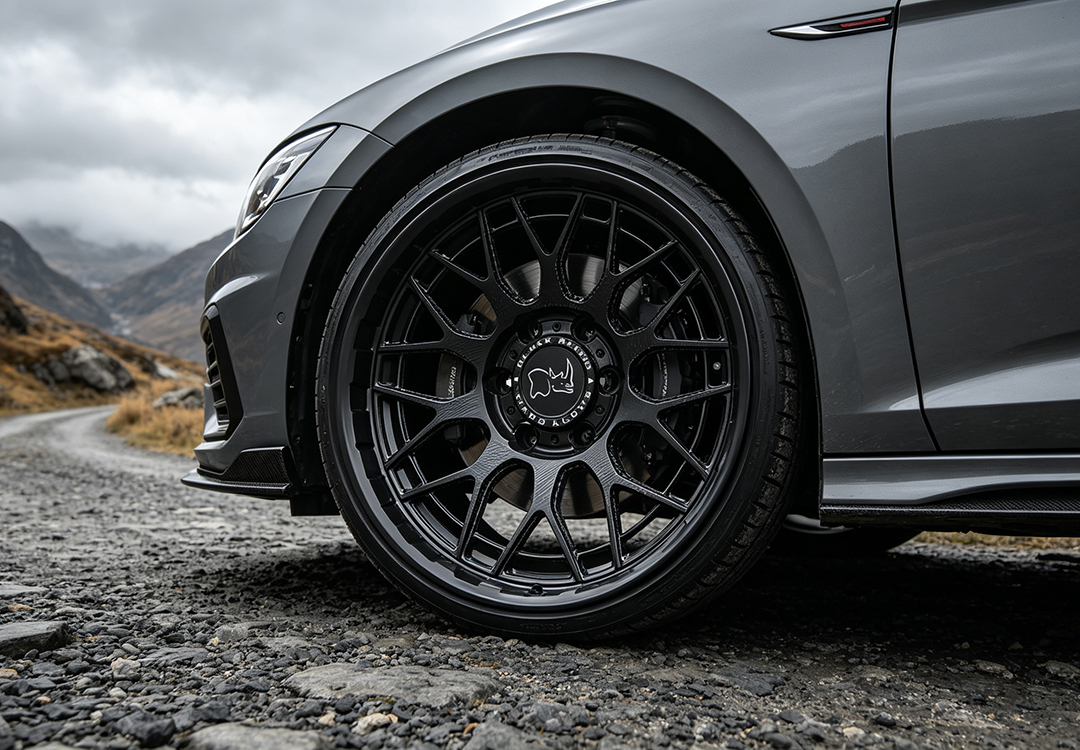
4.Key Steps to Select Custom Cars Wheels
Follow this step-by-step procedure to ensure a hassle-free ordering and installation process:
+-----------------------------------------------------------------+
|                       FITMENT FLOWCHART                         |
+-----------------------------------------------------------------+
| [Step 1] Determine Vehicle Specs (PCD, Bore, Factory Offset)    |
|   |                                                             |
|   v                                                             |
| [Step 2] Select Driving Purpose (Daily / Performance / Show)    |
|   |                                                             |
|   v                                                             |
| [Step 3] Choose Construction (Cast / Flow-Formed / Forged)      |
|   |                                                             |
|   v                                                             |
| [Step 4] Calculate Offset & Tire Profile Variations             |
|   |                                                             |
|   v                                                             |
| [Step 5] Verify Caliper & Suspension Clearances                 |
+-----------------------------------------------------------------+
Step 1: Document Your Baseline Specifications
Locate your vehicle’s factory wheel dimensions inside the driver-side door jamb, owner manual, or manufacturer documentation. Note down:
-
Factory Wheel Diameter and Width (e.g., 18×8.0J)
-
Factory Offset (e.g., ET45)
-
Center Bore (e.g., 67.1mm)
-
Bolt Pattern (e.g., 5×114.3)
Step 2: Establish Your Primary Driving Goal
Determine how you intend to use the vehicle:
-
Daily Commuting: Prioritize standard sizing or mild upsizing with durable cast or flow-formed wheels that accept readily available tire sizes.
-
Track / Canyon Driving: Choose lightweight flow-formed or monoblock forged wheels to maximize unsprung weight reduction and brake cooling.
-
Aggressive Stance / Show: Select wider wheel profiles with lower offsets or multi-piece configurations designed to sit flush with modified fender wells.
Step 3: Match Tire Profiles to Wheel Width
When changing wheel diameter or width, maintain an overall rolling tire diameter within 1.5% of factory specs. Deviating beyond this threshold can disrupt speedometers, ABS wheel speed sensors, and traction control algorithms.
       +---------------------------------------------+
       |             TIRE WALL PROFILES              |
       +---------------------------------------------+
       |  [Standard Fit]     [Mild Stretch]          |
       |  +-----------+      +-----------+           |
       |  |  TIRE     |      /  TIRE     \           |
       |  |-----------|     /-------------\          |
       |  |  RIM      |    |    RIM        |         |
       +---------------------------------------------+
5.Essential Care & Maintenance Protocols
Protecting your investment requires appropriate cleaning schedules and mechanical torquing procedures.
Cleaning and Finish Preservation
-
Avoid Acidic Cleaners: Harsh chemical solvents strip protective clear coats and cause pitting on polished or anodized surfaces. Use pH-neutral automotive wheel cleaners paired with soft microfiber brushes.
-
Cool Down Before Washing: Never spray cold water onto hot wheels immediately after driving. Rapid thermal shock can crack clear coatings or warp underlying brake rotors.
-
Apply Ceramic Protective Coatings: Applying a quality SiO2 ceramic sealant creates a hydrophobic barrier that prevents hot brake dust from embedding in the wheel finish.
Mechanical Installation Safety
-
Torque to Spec: Always use a calibrated torque wrench rather than an pneumatic impact gun to install lug nuts.
-
Star Pattern Sequence: Tighten lug nuts in a crisscross or star pattern to distribute clamping force evenly across the brake rotor surface.
-
Re-Torque Interval: Re-torque all lug nuts after the first 50 to 100 miles of driving following wheel installation or tire rotation.
          5-LUG TORQUE PATTERN
                  (1)
               o       o
           (4)           (3)
              o         o
                (5)   (2)
6.Explore Premium Engineered Wheels at ATK Wheels
When sourcing custom setups engineered for exact fitments, high structural integrity, and contemporary styling, explore the catalog at ATK Wheels. ATK offers precision-designed wheel options tailored across street, performance, and custom applications, helping you achieve ideal stance without sacrificing safety or performance.
Frequently Asked Questions(FAQ)
1.What are the main benefits of upgrading to custom car wheels?
Upgrading to custom wheels enhances vehicle aesthetics, sharpens handling response, and increases resale appeal. Replacing heavy factory steel or cast wheels with lightweight alloy, flow-formed, or forged wheels reduces unsprung weight. This reduction provides faster throttle response, improved braking performance, and better overall suspension tracking over uneven surfaces.
2.What is wheel offset, and why is it important for custom wheels?
Wheel offset is the distance in millimeters from the wheel’s hub mounting surface to its geometric centerline. Choosing the correct offset ensures your new setup clears internal struts, control arms, and outer fender arches, maintaining proper driving stability without unwanted rubbing.
3.How do I determine what bolt pattern fits my car?
A bolt pattern consists of the total lug count and the diameter of the imaginary circle they form (such as 5×114.3 or 5×120). You can check your owner manual, consult manufacturer fitment databases, or physically measure across lug studs to confirm your exact vehicle pattern before purchasing.
4.Do I need hub-centric rings when installing aftermarket wheels?
Yes, if the center bore of your custom wheels is larger than your car’s wheel hub. Hub-centric rings fill this clearance gap, centering the wheel precisely on the hub axis to prevent steering wheel vibrations and uneven tire wear at elevated highway speeds.
5.What is the difference between cast, flow-formed, and forged wheels?
Cast wheels are budget-friendly and durable for daily driving, though they carry more weight. Flow-formed wheels utilize high-pressure rolling to stretch and strengthen the barrel, giving near-forged strength at a moderate price. Forged wheels are machined from solid blocks of aerospace-grade aluminum, delivering the ultimate combination of structural strength and low weight for high-performance applications.
Transform Your Ride Today
Ready to upgrade your vehicle with a engineered set of custom cars wheels? Visit ATK Wheels to browse fitment-verified wheel styles, compare finishes, and find the perfect set tailored to your build.

