
Auto Wheel: What to Know About Size, Fitment, Materials and Performance
Auto Wheel: What to Know About Size, Fitment, Materials and Performance
Every vehicle’s handling, safety profile, fuel efficiency, and stance depend directly on the engineering under its fenders. While tires supply essential traction on asphalt or dirt, an auto wheel serves as the central structural platform that supports vehicle payload, manages thermal energy from high-performance brakes, and transfers rotational torque from the drivetrain to the road.
Whether you want to upgrade your daily commuter, restore factory aesthetics with OE replica wheels, or outfit an off-road truck for severe terrain, navigating auto wheel specifications requires clear technical understanding. Selecting the wrong wheel size, bolt layout, or offset parameter compromises vehicle safety, accelerates component wear, and degrades overall ride dynamics.
This thorough overview covers auto wheel structural materials, manufacturing processes, key sizing metrics, and critical safety indicators—helping you select the perfect wheel setup with absolute precision.
1.Auto Wheel vs. Tire: Defining Core Structural Roles
Drivers frequently conflate the auto wheel with the tire, referring to both combined as a “wheel.” However, from an automotive engineering perspective, these two components perform completely distinct, complementary functions.
+-------------------------------------------------------------------+
|                        COMPLETE ASSEMBLY                          |
|                                                                   |
|   +-----------------------------------------------------------+   |
|   |                        TIRE                               |   |
|   |  Flexible rubber ring providing road contact & traction   |   |
|   |                                                           |   |
|   |   +---------------------------------------------------+   |   |
|   |   |                   AUTO WHEEL                      |   |   |
|   |   |   Rigid metal structure attached to vehicle axle  |   |   |
|   |   |   Supports weight, transfers torque, clears brakes|   |   |
|   |   +---------------------------------------------------+   |   |
|   +-----------------------------------------------------------+   |
+-------------------------------------------------------------------+
What Is an Auto Wheel?
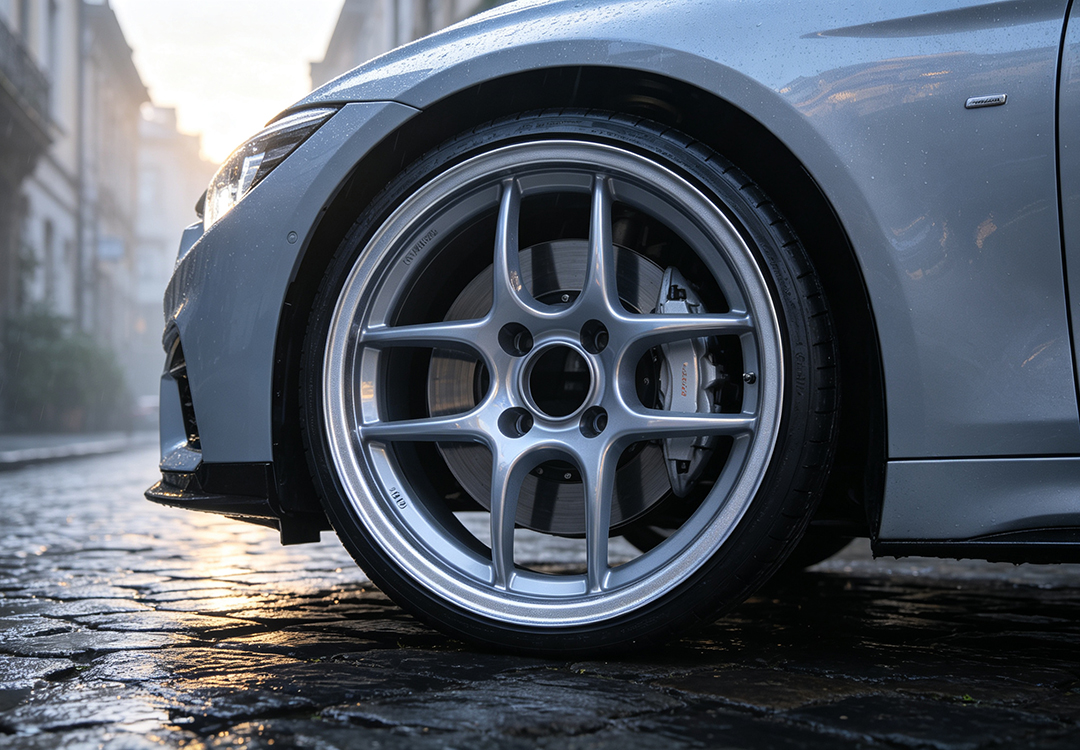
An auto wheel (commonly referred to as a rim or wheel hub assembly) is the rigid metal structural ring attached directly to a vehicle’s axle hub via lug nuts or bolts. Constructed from steel, aluminum alloy, or carbon fiber composite, the auto wheel maintains structural shape under immense static and dynamic loads. It houses brake components, manages heat transfer from rotors, and provides an airtight seal along its outer lip (the bead seat) for tubeless tires.
What Is a Tire?
A tire is a flexible, pneumatic rubber ring mounted onto the outer rim of the auto wheel. Made from natural and synthetic rubber compounds, steel belts, and fabric cords, the tire acts as the primary contact patch between the automobile and the pavement. Its primary job is absorbing minor surface imperfections, generating cornering grip, and channeling water away from tread blocks to prevent hydroplaning.
Summary Comparison:
-
Auto Wheel: The rigid internal metal superstructure that mounts to the hub.
-
Tire: The pliable outer rubber boundary that wraps around the wheel.
2.Key Materials Used in Auto Wheel Manufacturing
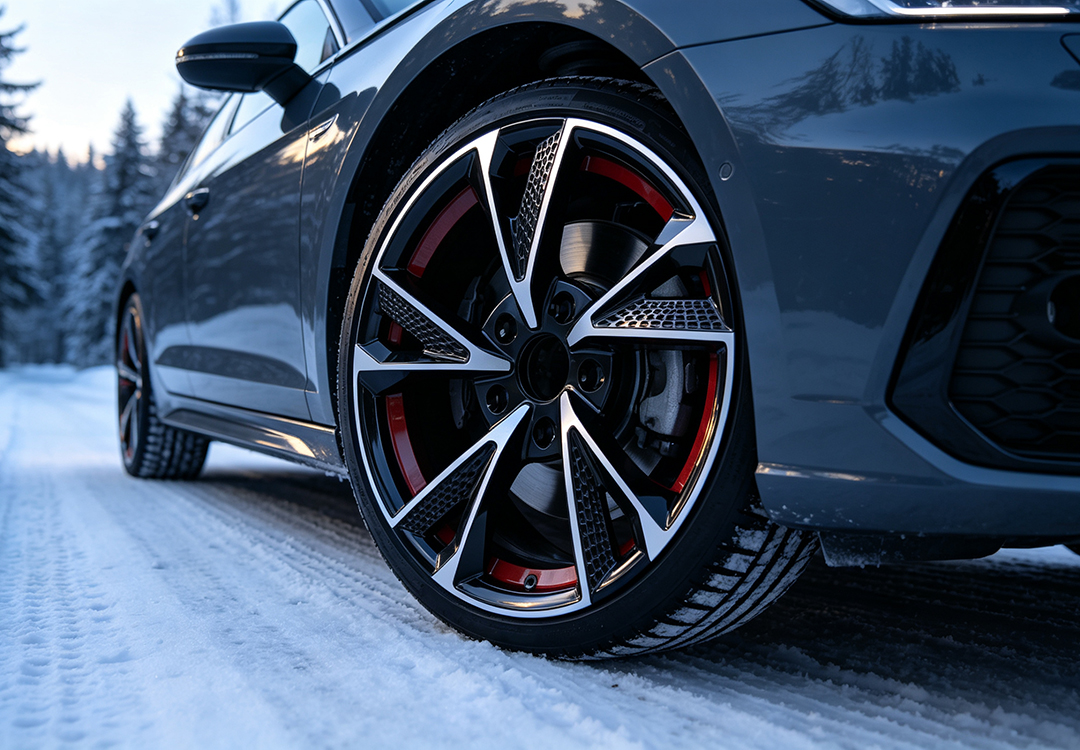
The structural composition of an auto wheel determines its tensile strength, overall weight, impact resistance, and visual appeal. Modern auto wheels are built across three primary material categories, each suited to specific driving demands and budgets.
1. Steel Auto Wheels
Steel auto wheels are fabricated by stamping heavy-gauge carbon steel sheet metal into rims and faces, which are then welded together.
-
Pros: Extremely durable, resistant to cracking under heavy impact, highly economical, and easy to bend back into shape if deformed.
-
Cons: High rotational mass, which slows acceleration and increases unsprung weight; basic visual appearance; limited design versatility.
-
Best Uses: Base-trim passenger vehicles, heavy-duty commercial trucks, winter tire setups, and fleet vehicles where utility trumps aesthetics.
2. Aluminum Alloy Auto Wheels
Aluminum alloy auto wheels dominate modern OEM and aftermarket production. They blend primary aluminum metal with strengthening elements such as silicon, magnesium, and manganese.
-
Pros: Significantly lighter than steel, excellent thermal conductivity for quick heat dissipation from brake rotors, improved acceleration and fuel economy, and available in virtually endless custom finishes and spoke patterns.
-
Cons: More expensive than stamped steel; prone to cracking rather than bending under severe curb impacts.
-
Best Uses: Everyday passenger sedans, luxury SUVs, performance coupes, and everyday aftermarket upgrades.
3. Carbon Fiber & Composite Auto Wheels
Engineered primarily for hypercars, track vehicles, and motorsport platforms, carbon fiber auto wheels represent the cutting edge of modern chassis componentry.
-
Pros: Ultra-lightweight construction dramatically reduces unsprung rotational mass, delivering instantaneous throttle response, reduced steering effort, and unmatched structural stiffness.
-
Cons: Exceptionally high replacement cost; vulnerable to sudden catastrophic failure upon direct impact with harsh road debris or track curbs.
-
Best Uses: High-performance supercars, dedicated track vehicles, and elite racing applications.
3.Auto Wheel Manufacturing Methods Compared
Beyond pure raw materials, the mechanical process used to form an auto wheel directly impacts its structural density, grain alignment, and load capacity. Understanding how an auto wheel is manufactured helps explain price variations and performance traits across various product lines.
| Manufacturing Process | Production Technique | Structural Strength | Unsprung Weight | Relative Price |
|---|---|---|---|---|
| Gravity Casting | Molten aluminum poured into a mold using Earth's gravity | Standard | Higher | Budget-Friendly |
| Low-Pressure Casting | Molten metal forced into a mold under positive pressure | Moderate to High | Medium | Moderate |
| Flow Forming / Spin Forging | Cast blank's barrel is stretched and compressed under high pressure | High | Light | Mid to High |
| Monoblock Forging | Solid aerospace billet aluminum compressed under thousands of tons of force | Exceptional | Ultra-Light | Premium |
Cast Auto Wheels (Gravity & Low-Pressure)
Casting involves melting aluminum alloy and introducing it into a precision-machined mold. Gravity casting relies on gravity alone to fill the cavity, occasionally leaving microscopic air pockets or inconsistent grain structure. Low-pressure casting injects liquid metal from below using positive pressure, producing a denser material with superior structural strength.
Flow-Formed Auto Wheels
Flow-forming (or spin-forging) starts with a specialized low-pressure cast wheel blank. The center face is cast, but the outer barrel is spun at high speeds while hydraulic rollers apply extreme pressure along the rim. This process stretches and compresses the aluminum alloy, aligning the metal’s internal grain structure much like a forged wheel.
The result is an auto wheel with high tensile strength and lower barrel weight, delivered at a fraction of the cost of a full forging.
Forged Auto Wheels
Forged auto wheels represent the gold standard of strength and weight reduction. A solid block of aerospace-grade 6061-T6 aluminum is subjected to immense pressure (often exceeding 10,000 tons), forcing the metal’s grain matrix into a continuous, dense pattern. CNC milling machines then shape the wheel face. Forged wheels deliver maximum load capacity, superior stiffness, and exceptional durability under severe driving stress.
4.Critical Specifications for Proper Auto Wheel Sizing
Installing new auto wheels requires exact technical alignment with your chassis. Deviating from factory tolerances without proper calculation causes suspension interference, speedometer inaccuracies, hub bearing strain, or tire rubbing against the fender liner.
       +---------------------------------------------------+
       |              AUTO WHEEL FITMENT METRICS            |
       +----------------------------------------------------+
       |  1. Wheel Diameter (e.g., 17", 18", 20")           |
       |  2. Wheel Width (e.g., 8.0", 8.5", 9.0")           |
       |  3. Bolt Pattern / PCD (e.g., 5x114.3, 6x139.7)    |
       |  4. Offset / ET (Positive, Zero, Negative)         |
       |  5. Center Bore Diameter (e.g., 66.1mm, 73.1mm)    |
       +----------------------------------------------------+
1. Wheel Diameter & Width
Auto wheel dimensions are expressed in inches (e.g., 18 x 8.5). The first number specifies the bead seat diameter across the face, while the second indicates the total width between the inner and outer rim flanges. When upsizing wheel diameter, you must decrease tire sidewall height (“plus-sizing”) to keep the overall rolling circumference identical to stock settings.
2. Pitch Circle Diameter (PCD / Bolt Pattern)
The bolt pattern indicates the number of lug holes and the diameter of the imaginary circle they form.
-
A 5×114.3 bolt pattern signifies 5 lug holes positioned across a 114.3mm circle.
-
A 6×139.7 pattern is common across light trucks and SUVs.You must match your vehicle’s PCD exactly; mismatched bolt patterns will not seat properly on the wheel studs.
3. Center Bore
The center bore is the machined hole located at the structural center of the wheel face that rests directly over the axle hub hub-lip.
-
Hub-Centric Wheels: Built with a center bore that matches the vehicle’s axle hub diameter precisely (e.g., 66.1mm). The weight of the car rests directly on the axle hub, ensuring perfect vibration-free rotation.
-
Lug-Centric Wheels: Feature a larger aftermarket center bore designed to fit multiple vehicle applications. These require specialized hub-centric rings to eliminate high-speed steering wheel vibrations.
5.Deciphering Auto Wheel Offset and Backspacing
Offset and backspacing define how deep inside or far outside the fender well an auto wheel sits. Getting these calculations right ensures proper clearance for suspension components, steering links, and brake calipers.
       INSIDE FENDER                      OUTSIDE FENDER
             |                                 |
      +------|-------[Centerline]--------------|------+
      |      |              |                  |      |
      |      |    Positive  |  Negative        |      |
      |      |    Offset    |  Offset          |      |
      |      |<------------>|<---------------->|      |
      |      |   (ET +35)   |   (ET -12)       |      |
      |      |              |                  |      |
      +------|--------------|------------------|------+
             |              |                  |
                    Mounting Pad Surface
Understanding Wheel Offset (ET)
Wheel offset—measured in millimeters and abbreviated as ET (from the German Einpresstiefe)—is the distance between the wheel’s true mechanical centerline and the rear mounting pad surface where it bolts against the brake rotor.
-
Positive Offset (e.g., +35mm to +50mm): The mounting pad surface sits forward toward the outer wheel face. This draws the wheel inward toward the suspension. Positive offset is standard on modern front-wheel drive and all-wheel drive passenger cars.
-
Zero Offset (ET 0mm): The mounting pad aligns directly with the wheel’s physical centerline.
-
Negative Offset (e.g., -12mm to -44mm): The mounting surface sits deep inside the wheel, closer to the inner lip. This pushes the wheel face outward beyond the fender line, creating a wide stance commonly seen on lifted off-road trucks and rock crawlers.
Understanding Backspacing
While offset measures from the centerline in millimeters, backspacing measures the distance in inches from the back edge of the inner rim flange to the rear mounting pad face. Off-road builders frequently use backspacing to confirm whether wide tires will clear control arms, shock bodies, and sway bars during full steering lock.
6.Recognizing When an Auto Wheel Requires Replacement
Driving over deep potholes, striking concrete curbs, or carrying excessive loads subjects auto wheels to heavy mechanical fatigue. Operating a vehicle with damaged auto wheels compromises chassis integrity and causes rapid tire wear.
       +---------------------------------------------------+
       |          SIGNS OF AUTO WHEEL DAMAGE                |
       +----------------------------------------------------+
       |  [!] Steering wheel shaking at highway speeds      |
       |  [!] Visible lip bends or structural cracks        |
       |  [!] Persistent slow pressure leaks from tire bead |
       |  [!] Irregular, scalloped tread wear patterns      |
       +----------------------------------------------------+
Key Warning Signs of Wheel Damage
-
Persistent Steering Wheel Vibration: Unexplained shaking through the steering wheel or chassis—especially at speeds between 45 mph and 70 mph—often points to a bent inner rim barrel or thrown balance weight.
-
Visible Rim Deformation or Hairline Cracks: Thoroughly inspect the inner and outer rim lips for flat spots, bends, or tiny hairline cracks. Aluminum alloy wheels that show visible cracking must be replaced immediately, as structural integrity is compromised.
-
Chronic Low Tire Pressure: If a tire continuously loses air despite showing no punctures, nail penetrations, or valve stem flaws, the inner rim flange is likely bent, breaking the airtight bead seal.
-
Uneven Tire Tread Wear: A bent or out-of-round wheel prevents the tire from treading flat against the road, causing premature wear along the tire tread blocks.

Essential FAQ: Common Auto Wheel Questions Answered(FAQ)
1.What is the difference between an auto wheel and a tire?
An auto wheel (or rim) is the rigid metal structural ring attached to the vehicle’s axle that supports payload weight and handles rotational forces. A tire is the flexible rubber ring wrapped around the wheel rim that makes contact with the road to provide traction, braking grip, and ride damping.
2.What are the main materials used for auto wheels?
The three primary manufacturing materials are steel (durable, heavy, budget-conscious), aluminum alloy (lightweight, strong, versatile styling), and carbon fiber (ultra-lightweight engineered composite reserved for high-performance supercars).
3.How do I choose the correct auto wheel size for my car?
Check your vehicle owner’s manual or read the tire specification placard located on the driver-side door jamb. Note the original equipment (OE) diameter, rim width, bolt pattern (PCD), center bore size, and offset range to guarantee seamless clearance and safe operating tolerances.
4.What is auto wheel offset and why does it matter?
Wheel offset is the distance from the wheel’s true centerline to its internal mounting face. Correct offset ensures that the wheel and tire clear internal suspension uprights, steering links, and brake calipers while preventing outer tire tread from rubbing against fender arches.
5.What are the signs that an auto wheel needs to be replaced?
Common indicators include visible rim lip bends or cracks, persistent high-speed chassis vibration, uneven tire tread wear, and slow air leaks caused by damaged bead seats.
Upgrade Your Drive with High-Performance Auto Wheels
Selecting the right auto wheel setup elevates your vehicle’s overall performance, handling precision, load capabilities, and curb appeal. Whether you need lightweight flow-formed wheels for dynamic street driving, rugged off-road options for tough trails, or exact OE-style replica wheels, precision fitment engineering is non-negotiable.
Explore engineered wheel collections designed for maximum structural safety, rigorous JWL/VIA standards compliance, and perfect vehicle fitment. Browse Precision Auto Wheels at ATK Wheels to find the ideal wheel setup for your vehicle today.

