
Aftermarket Aluminum Wheels: What to Know Before Choosing Your Next Set
Aftermarket Aluminum Wheels: What to Know Before Choosing Your Next Set
Upgrading your vehicle with aftermarket aluminum wheels remains one of the most effective modifications you can make to enhance both visual appeal and driving dynamics. Whether you want to achieve a flush stance, improve brake clearance, or reduce unsprung weight for sharper handling, switching out factory rollers for engineered aluminum alloys yields immediate performance dividends.
The custom wheel marketplace offers thousands of styles, finishes, and manufacturing standards. Selecting the correct setup requires understanding structural engineering, precise fitment dimensions, and maintenance protocols. Choosing the right set isn’t just about bold aesthetics; it directly impacts how your suspension responds to bumps, how efficiently your engine transfers power to the road, and how safely your vehicle operates under heavy payloads or hard cornering.
1.What Are Aftermarket Aluminum Wheels?
Aftermarket aluminum wheels are replacement or upgrade wheels manufactured by independent companies rather than supplied by the vehicle’s original equipment manufacturer (OEM). Constructed primarily from aluminum blended with secondary elements like silicon, nickel, or magnesium, these alloys provide superior strength-to-weight ratios compared to traditional stamped steel wheels.
Unlike stock wheels, which automakers design to meet broad production budgets and conservative styling targets, aftermarket alloy wheels offer diverse design languages, custom offsets, unique finishes, and specialized load ratings for sports cars, trucks, and everyday commuter vehicles.
When automakers assemble vehicles at scale, cost control and standard compliance drive their choices. Factory steel wheels, for example, are durable and inexpensive to produce, but they carry significant weight and offer limited visual variation. Factory aluminum wheels are often heavier than high-tier custom options because manufacturers cast them thicker to tolerate extreme neglect and broad manufacturing tolerances.
Aftermarket producers, by contrast, focus on specific driver demands. They utilize advanced engineering tools, computer-aided design (CAD), and finite element analysis (FEA) to reduce structural material where it isn’t needed while reinforcing high-stress areas like the wheel hub and rim flanges. This precision engineering creates a wheel tailored specifically for improved vehicle dynamics, eye-catching design, or rugged off-road endurance.
2.Key Benefits of Upgrading to Aftermarket Alloy Wheels
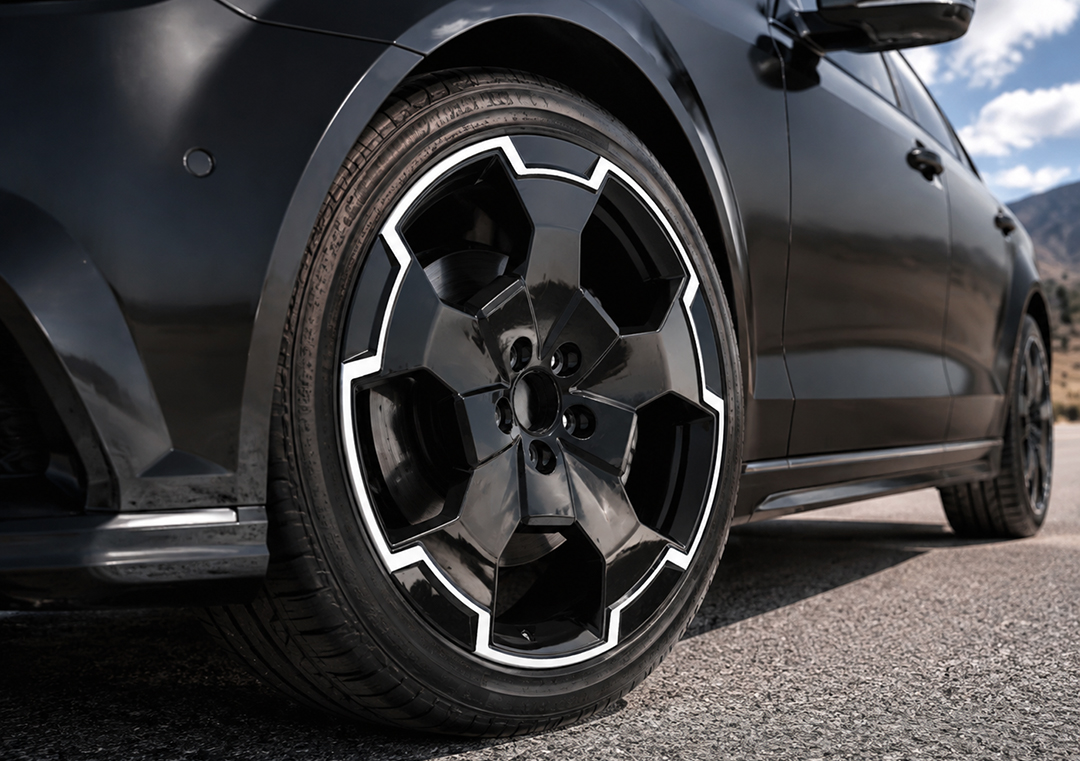
Investing in a high-grade set of aftermarket aluminum alloy wheels impacts aesthetics, fuel economy, and mechanical response. Drivers across all categories—from daily commuters and weekend track enthusiasts to off-road truck owners—realize noticeable advantages after swapping out standard factory wheels.
1. Reduced Unsprung Mass & Rotational Inertia
Every component not supported by your vehicle’s suspension system—such as tires, brakes, and wheels—is considered unsprung mass. Lowering unsprung mass allows suspension components to react faster to road imperfections, keeping tires firmly planted for improved traction and a smoother overall ride.
Rotational inertia also dictates how much energy your engine uses to spin the wheels and how much effort your brakes exert to bring the vehicle to a stop. Lighter aluminum alloys reduce this rotational effort, sharpening throttle response, improving initial acceleration, and shortening stopping distances.
2. Superior Brake Cooling & Thermal Dissipation
Aluminum is a naturally efficient thermal conductor, dissipating heat much faster than traditional steel. Combined with open-spoke profiles common in custom wheel designs, aftermarket alloy rims draw excess heat away from brake calipers and rotors. This constant air circulation prevents brake fluid overheating, minimizes brake fade during spirited canyon driving or heavy mountain towing, and extends the lifespan of your brake pads and rotors.
3. Unlimited Aesthetic Customization
Factory wheels are often mass-produced in neutral silver or grey finishes designed to appeal to a broad demographic. Aftermarket options deliver an extensive range of visual choices to match your vehicle’s unique personality:
-
Finishes: Gloss black, satin bronze, brushed clear, polished chrome, hyper silver, matte gunmetal, and multi-tone custom paint schemes.
-
Profiles: Deep concave faces, step lips, monoblock directional spokes, vintage mesh patterns, and beadlock-styled off-road rims.
-
Sizing Options: Staggered fitments (broader rear wheels for rear-wheel-drive traction) or oversized diameters for filled wheel arches and modern aggressive stances.
4. Optimized Fuel Efficiency & Range Performance
By paring down the weight at each corner of the vehicle, aftermarket aluminum wheels lower overall vehicle mass and reduce engine workload. On traditional gasoline and diesel vehicles, this translates to noticeable highway fuel savings over long distances. For electric vehicles (EVs), reduced wheel weight lowers energy consumption per mile, directly improving driving range while preserving responsive low-end torque.
3.Manufacturing Methods: Cast, Flow-Formed, and Forged
Not all aftermarket aluminum wheels share identical structural integrity. Manufacturing techniques determine strength, weight, dynamic fatigue resistance, and overall price points. Understanding these processes ensures you select wheels capable of handling your driving environment.
| Manufacturing Process | Production Method | Strength Level | Weight Characteristics | Relative Price |
|---|---|---|---|---|
| Gravity Casting | Molten aluminum poured directly into a mold using earth's natural gravity. | Standard / Entry-Level | Heavy wall density required for strength. | Budget-Friendly |
| Low-Pressure Casting | Molten metal injected into a sealed mold under low pneumatic pressure to reduce porosity. | Good Structural Integrity | Moderate weight savings over steel. | Mid-Range |
| Flow-Forming (Rotary Forged) | Cast wheel barrel stretched and pressurized using high-speed hydraulic rollers. | High Grain Density & Strength | Lightweight barrel profile with high impact resistance. | Great Value/Performance |
| Monoblock Forged | Solid T6-6061 aluminum billet pressed under extreme hydraulic pressure (up to 10,000 tons). | Exceptional Density & Impact Resistance | Ultra-Lightweight with maximum structural rigidity. | Premium Investment |
Gravity Casting
Gravity casting represents the most straightforward manufacturing method. Molten aluminum alloy flows into a mold relying entirely on gravity to fill the cavity. Because the metal flows without external pressure, structural density relies on thicker wheel walls to prevent void formation. Gravity cast wheels offer an affordable entry point for everyday street driving where weight reduction is secondary to cosmetic updates.
Low-Pressure Casting
Low-pressure casting uses controlled pneumatic pressure to push molten alloy into the mold from the bottom up. This pressure packs the aluminum molecules tighter, eliminating internal air pockets and porosity. The result is a stronger structure that requires less total material than gravity cast wheels, allowing for lighter designs without sacrificing load capacity.
Flow-Forming (Rotary Forged)
Flow-forming combines low-pressure casting with a mechanical spinning process. After the initial center face is cast, the wheel blank mounts on a specialized mandrel. Hydraulic rollers apply intense pressure to the spinning outer barrel, heating, stretching, and compressing the aluminum alloy. This alters the internal grain structure of the aluminum, aligning it in a dense pattern similar to fully forged wheels. Flow-formed wheels yield near-forged rim strength and impressive weight reduction at a fraction of forged production costs.
Monoblock Forged
Monoblock forged wheels represent the pinnacle of wheel engineering. Production begins with a solid cylinder of aerospace-grade T6-6061 aluminum alloy. Massive hydraulic presses apply up to 10,000 tons of force, compacting the metal grain into an extremely dense, uniform structure. CNC milling machines then carve out the spoke patterns and wheel contours. Forged wheels possess incredible tensile strength and crack resistance under severe impact, making them the top choice for motorsport competition, supercars, and heavy-duty off-road trucks.
4.Critical Wheel Fitment Parameters Explained
Achieving proper fitment without dynamic issues like fender rubbing, suspension interference, or unequal tire wear requires matching six critical dimensional parameters.
-
Wheel Diameter & Rim Width: Measured in inches (e.g., 18×8.5″). Increasing diameter usually requires lower-profile tires to maintain total rolling circumference, preserving correct speedometer calibration and transmission shift points.
-
Pitch Circle Diameter (PCD / Bolt Pattern): Expressed as the number of lug holes multiplied by the diameter of the bolt circle (e.g., 5×114.3 mm or 6×139.7 mm). The replacement wheel’s bolt pattern must match the hub precisely.
-
Wheel Offset (ET): The distance in millimeters from the hub mounting surface to the true structural centerline of the wheel rim.
-
Positive Offset: The hub mounting face sits toward the front face of the wheel (common on modern front-wheel-drive and all-wheel-drive passenger cars).
-
Zero Offset: The hub mounting face aligns directly with the center line of the barrel.
-
Negative Offset: The hub face sits toward the back of the wheel, pushing the rim face outward past the body fender (popular on lifted trucks and aggressive off-road rigs).
-
-
Center Bore & Hub-Centric Rings: The central hole behind the wheel hub that seats directly onto the vehicle axle snout. If the aftermarket wheel’s bore is larger than your vehicle’s factory hub diameter, install high-grade hub-centric rings to center the wheel perfectly and eliminate high-speed steering wheel vibration.
-
Load Rating: The maximum weight capacity a single wheel safely supports. Truck, SUV, and commercial vehicle owners must select wheels with load ratings matching or exceeding the vehicle’s Gross Axle Weight Ratings (GAWR).
5.Lug Nut Requirements for Aftermarket Alloy Rims
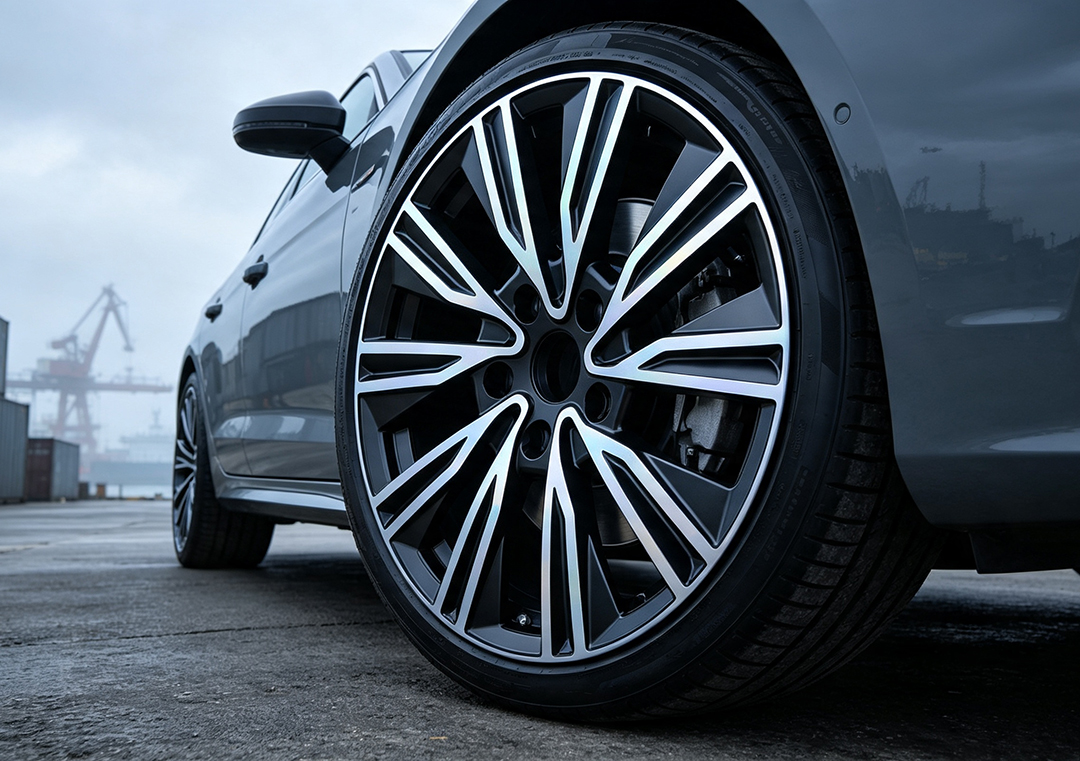
A widespread installation oversight involves reusing original factory hardware on custom aftermarket aluminum wheels. Modern vehicles typically leave the assembly line with one of three primary lug seating profiles:
-
Flat-Seat (Mag Seat): Features a flat washer base that clamps straight down (common on Toyota and Lexus factory alloys).
-
Ball-Seat (Spherical): Features a rounded, bowl-shaped seat (common on Honda, Volkswagen, and Audi factory wheels).
-
Conical-Seat (Tapered 60°): Features an angled cone shape that centers the mounting hole.
Most aftermarket aluminum wheels require 60-degree conical seat lug nuts or slender tuner-style spline lugs. Installing factory ball-seat or flat-seat hardware onto a conical aftermarket wheel socket prevents full surface clamping force. This mismatch causes lug nuts to back off during vehicle operation, damages the soft aluminum mounting seats, and creates severe safety hazards. Always purchase matching aftermarket hardware alongside your new wheel set.
6.Proper Cleaning, Maintenance, and Protective Care
Maintaining pristine custom finishes requires specialized maintenance habits. Harsh car-wash chemicals containing hydrofluoric acid or heavy caustic degreasers strip protective clear coats, dull polished metal surfaces, and trigger aluminum surface oxidation.
-
Enforce a Cool-Down Period: Never spray cold water or chemical cleaners directly onto warm wheels right after driving. Thermal shock warps protective clear coats, causes premature surface cracking, and damages hot brake rotors.
-
Use pH-Neutral Cleaners: Wash your wheels using pH-neutral automotive soap, dedicated soft microfiber wheel brushes, and synthetic wash mitts. Avoid stiff-bristled brushes that scratch delicate lacquer or painted surfaces.
-
Apply Protective Coatings: Protect your investment by applying a quality wheel wax or high-temperature ceramic coating every few months. This protective hydrophobic layer prevents hot metallic brake dust from burning into the clear coat, resists road salt corrosion, and makes routine cleaning effortless.
Frequently Asked Questions(FAQ)
1. What are aftermarket aluminum wheels?
Aftermarket aluminum wheels are replacement or upgrade wheels made from aluminum alloys rather than supplied as the vehicle’s original factory wheels. They are available in various sizes, designs, finishes, and fitment specifications.
2. What are the benefits of aftermarket aluminum wheels?
They can offer more design choices, different sizes and fitments, and lower weight than steel wheels. Reduced unsprung weight also benefits handling and ride characteristics.
3. How do I choose aftermarket aluminum wheels for my car?
Check the wheel diameter, width, bolt pattern (PCD), offset, center bore, and load rating to ensure proper fitment and safe operation.
4. Do aftermarket aluminum wheels require special lug nuts?
Yes, most aftermarket aluminum wheels require specialized aftermarket lug nuts. Factory wheels often use flat-seat or ball-seat lugs, whereas aftermarket aluminum wheels typically require a 60-degree conical seat or tuner-style lug nuts to seat properly and securely.
5. Are aftermarket aluminum wheels durable?
Quality varies by wheel design, material, manufacturing process, and load rating. Properly specified aluminum wheels provide long-term service, but they should be selected according to the vehicle’s intended use and required load capacity.
Transform Your Vehicle Setup
Selecting the perfect set of aftermarket aluminum wheels balances technical precision with personal style. By matching the correct bolt patterns, offset calculations, load ratings, and mounting hardware, you unlock sharper handling dynamics and transform your vehicle’s overall visual presence.
Are you ready to find the ideal wheel setup tailored to your specific make, model, and driving preferences? Contact our fitment specialists today or explore our curated collections at ATK Wheels to build your custom setup with guaranteed compatibility.

