
New Rims and Tires: What You Need to Know Before Buying
New Rims and Tires: What You Need to Know Before Buying
Upgrading your vehicle with a fresh set of wheels and rubber is one of the most effective ways to transform its appearance, handling, and overall driving dynamics. Whether you want to replace worn-out factory equipment, prepare your truck for off-road trails, or enhance the stance of a performance sedan, purchasing new rims and tires involves a mix of aesthetics, geometry, and mechanical compatibility.
Making the wrong choice can lead to speedometer inaccuracies, suspension rubbing, reduced fuel economy, or unsafe driving conditions. This detailed resource walks you through every technical consideration, financial decision, and installation detail needed to select the perfect wheel and tire package with confidence.
1.What Is the Difference Between Rims, Wheels, and Tires?
To make an informed purchase, it helps to start with the precise terminology used across the automotive industry:
-
Tire: The flexible, reinforced rubber ring that wraps around the wheel. It contacts the road surface, providing traction, braking capability, and shock absorption.
-
Rim: Technically, the rim is only the outer edge of the wheel that holds the tire bead in place. However, in casual everyday language, “rim” is frequently used to refer to the entire metal structure.
-
Wheel: The entire solid metal assembly (including the center hub, spokes, and outer rim) that bolts to your vehicle’s wheel hub.
-
Wheel and Tire Package: A bundled set containing both the metal wheel and rubber tire, often shipped pre-mounted, balanced, and ready to bolt onto your vehicle.
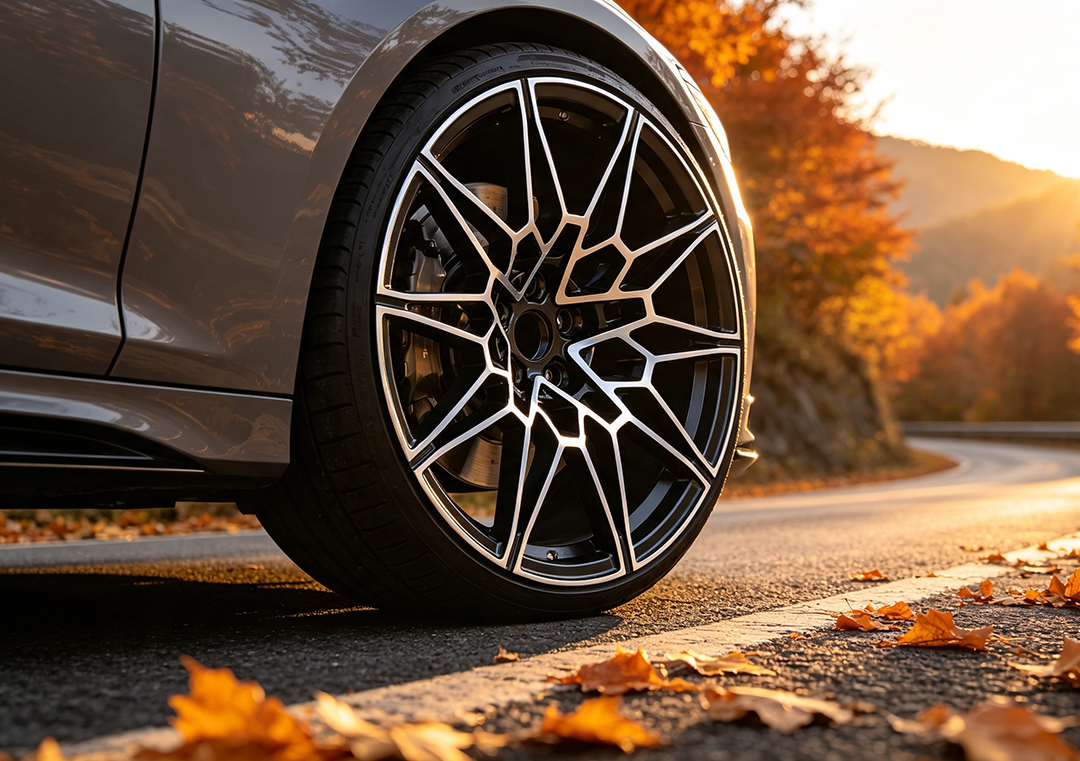
2.Key Benefits of Upgrading Your Setup
Replacing your factory setup offers clear functional and aesthetic advantages beyond simply changing the look of your vehicle.
Improved Performance and Road Handling
Upgrading to wider wheels and low-profile performance rubber increases the contact patch between your vehicle and the pavement. This extra surface area directly improves cornering stability, reduces body roll, shortens stopping distances, and sharpens steering feedback.
Tailored Aesthetics and Stance
Factory wheels are designed to appeal to a broad audience and often feature conservative designs tucked deep within the wheel wells. Aftermarket setups let you customize the finish (such as satin black, bronze, chrome, or brushed gunmetal) and adjust the offset to achieve a flush fitment with your fenders.
All-Terrain and Weather Capabilities
Switching from all-season factory rubber to specialized options—such as dedicated winter options or aggressive all-terrain designs—dramatically improves safety on snow, ice, mud, and loose gravel.
3.Do New Tires Come with New Rims?
No. Tires and rims are sold separately by default. When you buy a standard set of tires at a shop or online retailer, you receive only the rubber tires. The technician will stretch those new tires onto your existing metal wheels.
If you want both components replaced, you must order a complete wheel and tire package. Buying a package offers several distinct advantages:
-
Pre-Mounted and Balanced: Many suppliers will mount the rubber onto the metal structure and perform high-speed dynamic balancing before shipping them to your home.
-
Reduced Labor Costs: Installing a fully assembled package in your driveway requires basic hand tools, saving you the recurring cost of dismounting and remounting rubber at a tire shop every season.
-
Free Hardware Inclusion: Packages frequently bundle required mounting hardware, such as lug nuts, hub-centric rings, and tire pressure monitoring components.
4.How Much Does a Full Set of New Rims and Tires Cost?
The total investment required for a complete set of four ranges from $800 to $3,500+, depending on the manufacturing method, brand reputation, dimensions, and rubber compound.
Total Cost Breakdown by Category
| Category | Typical Price Range (Set of 4) | Common Material & Build | Ideal For |
|---|---|---|---|
| Budget / OEM Replacement | $800 – $1,200 | Cast Aluminum or Steel Wheels + Standard Touring Rubber | Everyday commuting, basic winter setups |
| Mid-Range / Aftermarket Street | $1,200 – $2,200 | Flow-Formed Aluminum + High-Performance / All-Terrain Rubber | Improved daily driving, light track use, leveled trucks |
| Premium / High-Performance | $2,200 – $4,000+ | Fully Forged Aluminum + Ultra-High Performance / Mud-Terrain Rubber | Sports cars, heavy off-road builds, show vehicles |
Hidden and Additional Installation Costs
When calculating your overall budget, account for these essential accessories and services:
-
TPMS Sensors: $120 – $250 for a full set of pre-programmed sensors.
-
Mounting and Dynamic Balancing: $80 – $150 if not included in a pre-assembled package.
-
Lug Nuts/Bolts & Hub-Centric Rings: $40 – $100 for proper installation hardware.
-
Vehicle Alignment: $100 – $180 (highly recommended after changing dimensions to prevent premature tread wear).
5.Essential Fitment Metrics You Must Match
Finding a set that visually matches your car is only half the battle. To guarantee physically safe fitment without mechanical interference, you must verify five core measurements.
       [ Outer Lip ]
            |
      +-----+-----+
      |     |     |  <-- Rim Width
      |  +--+--+  |
      |  | Center |  <-- Center Bore
      |  +--+--+  |
      |     |     |
      +-----+-----+
            |
     [ Mounting Pad ] <-- Offset (ET) measured from centerline
1. Bolt Pattern (Pitch Circle Diameter – PCD)
The bolt pattern determines whether the mounting holes line up with your vehicle’s wheel studs. It is expressed as the number of lug holes multiplied by the diameter of the imaginary circle they form (e.g., 5×114.3 or 6×139.7). You cannot mount a wheel with an incorrect bolt pattern without using specialized adapters.
2. Wheel Offset (ET)
Measured in millimeters, offset is the distance from the wheel’s true mounting pad to its mathematical centerline:
-
Positive Offset: The mounting pad faces toward the front side of the wheel (common on modern front-wheel-drive and all-wheel-drive cars).
-
Zero Offset: The mounting pad aligns directly with the centerline.
-
Negative Offset: The mounting pad sits deep toward the back, pushing the wheel outward away from the body (common on lifted trucks and aggressive off-roaders).
3. Center Bore and Hub-Centric Rings
The center bore is the machined opening on the back of the wheel that slides onto your vehicle’s hub snout.
-
Hub-Centric Fitment: The wheel’s center bore matches your hub’s diameter perfectly, carrying the weight of the vehicle directly on the hub.
-
Lug-Centric Fitment: Aftermarket designs often use a larger center bore to fit multiple vehicle models. In these cases, you must use hub-centric plastic or aluminum rings to center the wheel perfectly. Without these rings, you will experience severe high-speed vibrations.
4. Wheel Diameter and Width
Expressed in inches (e.g., 18×8.5), the first number indicates the diameter across the face, while the second number represents the width inside the beads where the rubber seats.
5. Load Rating
The structural weight limit designated by the manufacturer. Always ensure the combined load rating of your four choices exceeds the gross vehicle weight rating (GVWR) of your car, truck, or SUV.
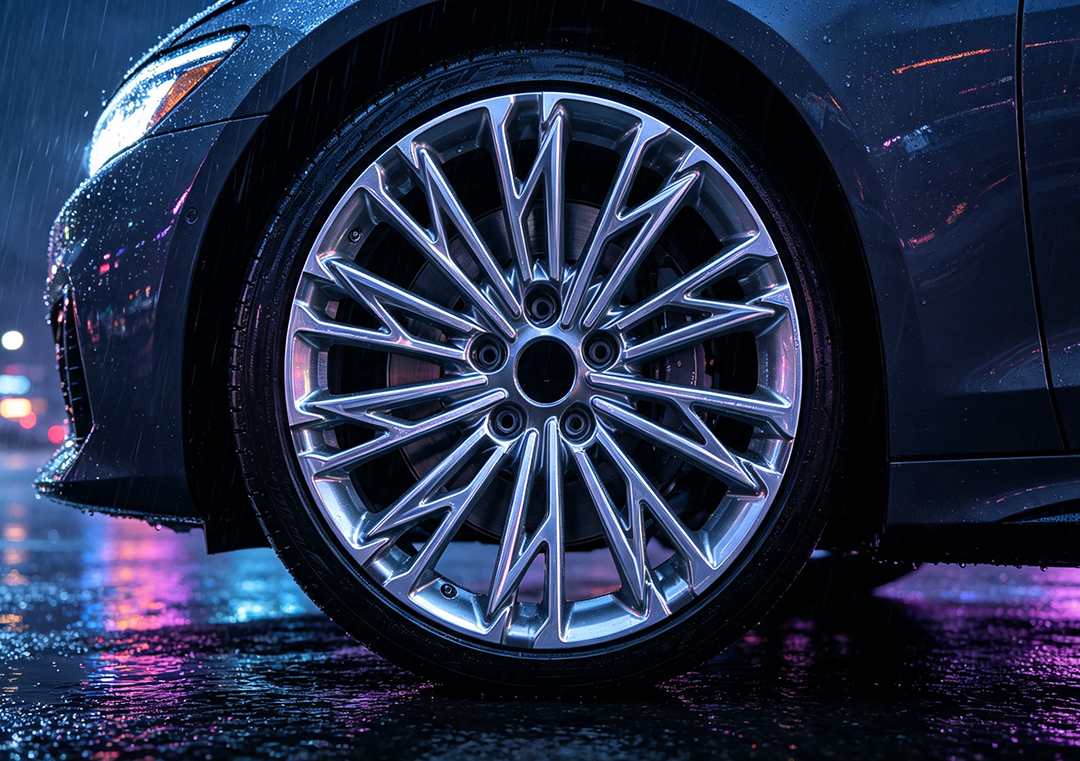
6.Can I Install Larger Rims and Tires on My Car?
Yes, through a process known in the industry as “Plus Sizing.”
Plus Sizing involves increasing the metal wheel diameter while simultaneously decreasing the sidewall height of the rubber. This keeps the total overall outer diameter of the assembly virtually identical to your original factory setup.
Factory Setup (e.g., 17" Wheel + Tall Sidewall)
[ Rubber ] --- [ 17" Wheel ] --- [ Rubber ]  --> Total Diameter: 26.0"

Plus One Setup (e.g., 18" Wheel + Short Sidewall)
[ Rubber ] ----- [ 18" Wheel ] ----- [ Rubber ]  --> Total Diameter: 26.0"
The Golden Rule: Maintain Within ±3% Outer Diameter
To preserve proper safety systems and mechanical clearances, the total rolling height of your new combination should stay within ±3% of the factory specification.
Why the ±3% Rule Matters:
-
Speedometer Accuracy: Larger overall diameters cause your speedometer and odometer to read slower than your actual road speed.
-
Transmission Shift Points: Automatic transmissions rely on precise wheel rotation speed data to shift smoothly.
-
Suspension and Fender Clearance: Exceeding diameter limits causes the rubber to rub against strut towers, inner fender liners, or frame rails during tight turns and heavy suspension compression.
-
Safety System Calibration: Modern Anti-lock Braking Systems (ABS), Electronic Stability Control (ESC), and traction control algorithms depend on accurate rotational speed calculations.
7.Do I Need New TPMS Sensors When Buying New Units?
Not strictly required, but highly recommended.
Your Tire Pressure Monitoring System (TPMS) alerts you to dangerous drops in inflation pressure. When upgrading, you have two primary options for handling these sensors:
Option A: Transfer Your Existing OEM Sensors
You can have a technician remove the original sensors from your old wheels and install them into the new set.
-
Pros: Saves money upfront on hardware costs.
-
Cons: Requires dismounting your old rubber (costing extra labor), and if your original vehicle is over 5 to 7 years old, the internal sensor batteries are likely nearing the end of their lifespan.
Option B: Purchase Pre-Programmed Aftermarket Sensors
Many buyers choose to purchase a brand-new set of pre-programmed TPMS sensors bundled directly with their order.
-
Pros: Leaves your original setup completely intact as a backup winter or spare set. Ensures fresh battery life (typically lasting 7–10 years) and simplifies home installation.
-
Cons: Incurs an added upfront hardware expense ($120–$250).
8.Step-by-Step Selection Workflow
To avoid costly return shipping fees or fitment issues, follow this structured process when shopping:
Step 1: Check Door Sticker (OEM Specs)
       │
       ▼
Step 2: Decide Setup Goal (Street, Track, Off-Road)
       │
       ▼
Step 3: Verify 5 Fitment Metrics (PCD, Offset, Bore, Width, Diameter)
       │
       ▼
Step 4: Select Rubber Compound & Load Index
       │
       ▼
Step 5: Bundle Hardware & Install (TPMS, Rings, Torque to Spec)
-
Locate Factory Specifications: Open your driver’s side door and read the Tire and Loading Information placard on the door jamb. Note down the original dimensions, load index, and inflation ratings.
-
Define Your Primary Use Case: Decide whether your build prioritizes quiet highway cruising, crisp track handling, heavy towing, or high-clearance off-roading.
-
Confirm Vehicle Parameters: Verify your bolt pattern, center bore, and maximum clearance limits before adding products to your cart.
-
Select Compatible Rubber: Ensure the tire width matches the recommended rim width range published by tire manufacturers to prevent dangerous sidewall stretch or ballooning.
-
Assemble Installation Accessories: Ensure your order includes matching lug nuts (conical, flat, or ball seat), hub-centric adapter rings, and TPMS sensors.
9.Maintenance Protocols After Installation
Once your new components are successfully installed on your vehicle, complete these critical post-installation steps to maximize performance and longevity:
-
Re-Torque Lug Nuts: After driving your first 50 to 100 miles, use a calibrated torque wrench to re-check all lug nuts or bolts to your manufacturer’s exact foot-pound (ft-lbs) specification. Thermal expansion and bedding can cause hardware to loosen slightly.
-
Perform a Full 4-Wheel Alignment: Installing different sizes or changing your vehicle’s track width alters alignment geometry. A fresh alignment prevents rapid, uneven tread wear.
-
Maintain Correct Cold Inflation Pressure: Always inflate according to the recommended pressure found on your vehicle’s door jamb sticker, not the maximum pressure stamped on the sidewall of the rubber.
-
Rotate Regularly: Rotate your setup every 5,000 to 7,500 miles to promote even tread wear across all four corners.
Frequently Asked Questions(FAQ)
1.How much does a full set of new rims and tires cost?
A complete set typically ranges from $800 to $2,500+, depending on the brand, size, and material. Standard OEM replacement packages cost around $800–$1,200, while custom, forged, or high-performance setups can exceed $3,000.
2.Can I install larger rims and tires on my car?
Yes, through a process called “Plus Sizing.” However, the total outer diameter of the new tire must remain within ±3% of the original factory size to prevent speedometer error, clearance issues, or suspension rubbing.
3.Do I need new TPMS sensors when buying new rims and tires?
Not necessarily, but recommended. You can transfer your existing TPMS sensors to the new setup if they are compatible and the batteries are good, or purchase new pre-programmed sensors for easier installation.
4.How do I know what size rims and tires will fit my car?
Check your car’s driver-side door jamb sticker or owner’s manual for OEM specifications. To ensure compatibility with aftermarket rims, you must match four key measurements: Bolt Pattern (PCD), Offset (ET), Center Bore, and Wheel Width.
5.Can I put wider options on the rear than the front?
Yes, this is known as a staggered fitment. It is common on rear-wheel-drive performance cars to maximize rear acceleration traction. However, staggered setups prevent traditional front-to-back rotations, which can shorten overall tread life. Staggered setups on AWD vehicles must maintain matching outer rolling diameters (within 1%) to prevent damaging the transfer case.
Transform Your Ride with Confidence
Upgrading your vehicle’s overall rolling setup delivers an unbeatable combination of head-turning style, sharper handling response, and specialized traction for any driving surface. By matching your bolt pattern, verifying offset and center bore, and staying within safe overall diameter limits, you ensure a smooth, worry-free transformation.
Explore detailed fitment databases, build custom pre-mounted packages, and consult fitment experts at industry suppliers like ATK Wheels to find the ideal match for your vehicle today.

