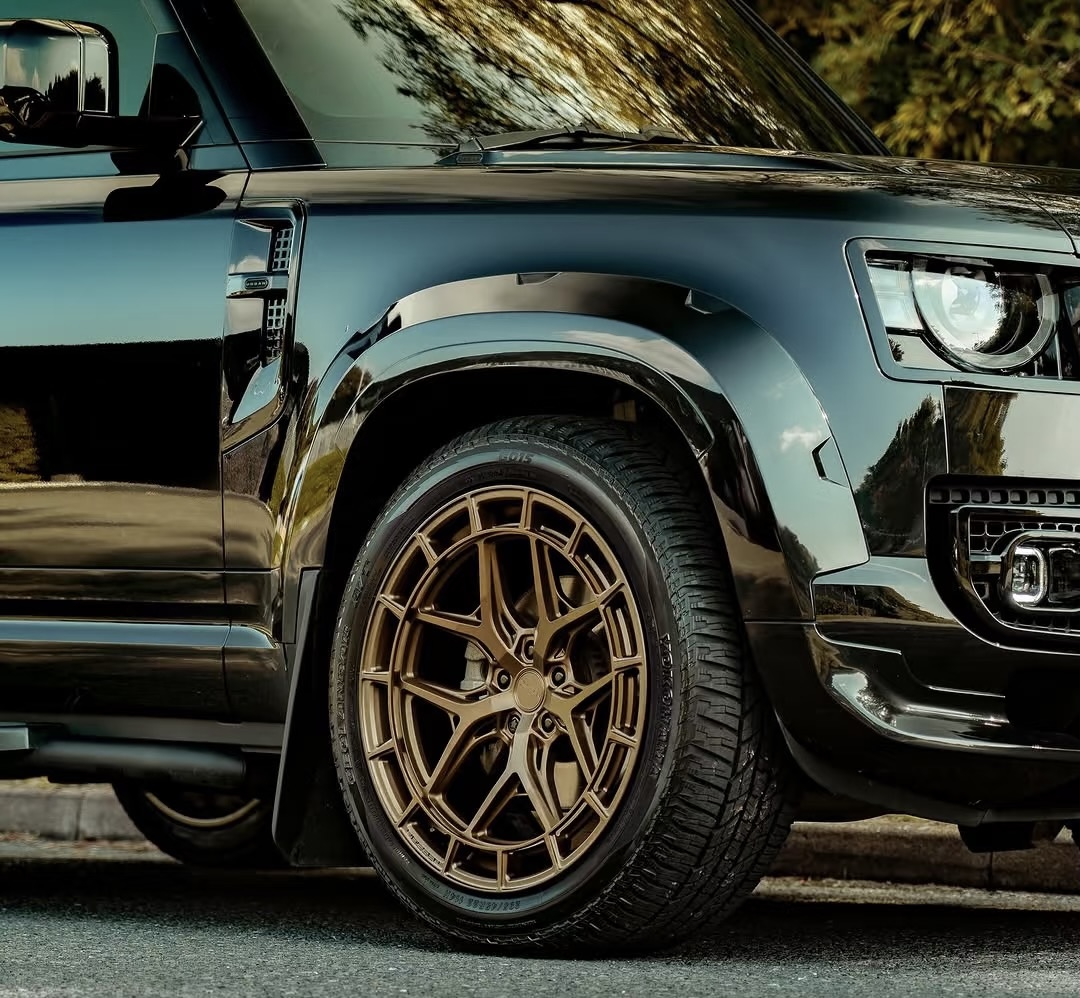
Truck Wheels and Tires: Choosing the Right Setup for Your Truck
Truck Wheels and Tires: Choosing the Right Setup for Your Truck
When you look at a full-size pickup truck sitting on a dealership lot, the factory stance often leaves a lot to be desired. Automakers build trucks to satisfy broad regulatory standards, quiet highway noise, and maximize basic fuel economy. But for truck owners who use their vehicles for heavy towing, overlanding, rock crawling, or simply achieving an aggressive street presence, upgrading your truck wheels and tires is the single most impactful modification you can make.
Changing your rolling stock isn’t just about looks. A proper wheel and tire package alters your vehicle’s center of gravity, scrub radius, payload distribution, unsprung weight, and ground clearance. Making an uninformed choice can lead to severe inner fender rubbing, compromised braking distance, and premature suspension wear. This deep-dive breakdown covers every critical element of wheel and tire engineering so you can build a setup customized to your driving demands.
1. Decoding Tire Tread Patterns: Highway, All-Terrain, and Mud-Terrain
The tire tread is your truck’s only point of contact with the ground. Selecting the correct tread compound and block pattern determines how your truck performs in rain, snow, deep mud, and high-speed highway cruising.
📌 Featured Summary: What are the main truck tire types?
Truck tires fall into three main categories: Highway-Terrain (H/T) for smooth, quiet, and fuel-efficient daily driving; All-Terrain (A/T) for a balanced 50/50 mix of quiet highway performance and trail traction; and Mud-Terrain (M/T) for aggressive off-road mud, rock, and trail biting power at the expense of highway noise and tread life.
Highway-Terrain (H/T) Tires
Designed primarily for suburban commuters and fleet commercial trucks, H/T tires feature continuous circumferential grooves and fine siping. These features channel water away rapidly to prevent hydroplaning while offering the lowest rolling resistance possible. If your truck spends 95% of its time on paved highways hauling light loads, H/T tires deliver the longest tread life (often 60,000 to 70,000 miles) and maximum fuel efficiency.
All-Terrain (A/T) Tires
All-Terrain tires represent the sweet spot for the vast majority of truck owners. Featuring deeper tread voids, reinforced sidewalls, and interlocking tread blocks, A/T tires handle gravel roads, loose dirt, and light snow without singing loudly on the freeway. Modern A/T tires frequently earn the 3-Peak Mountain Snowflake (3PMSF) rating, proving severe snow capability without requiring dedicated winter tires.
Mud-Terrain (M/T) Tires
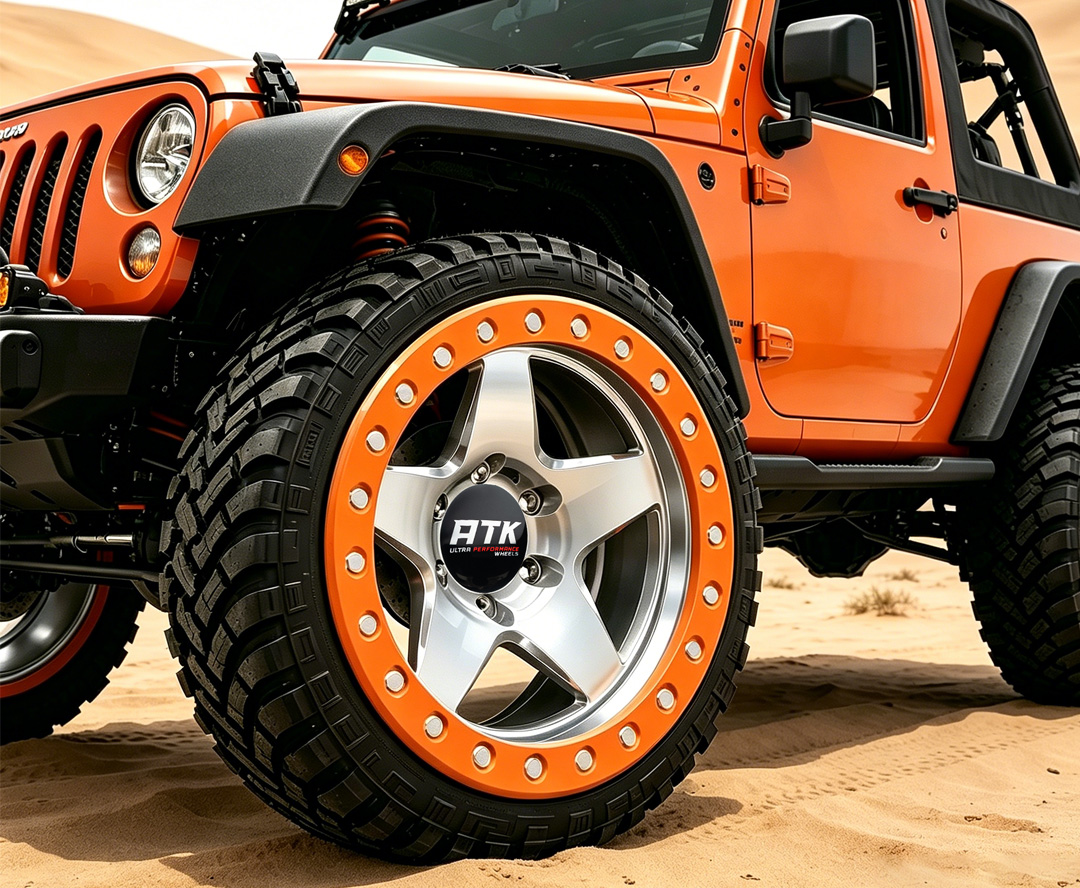
Mud-Terrain tires are built for extreme conditions. They feature massive, self-cleaning tread blocks designed to scoop out thick mud, sand, and loose rock. Their sidewalls incorporate heavy-duty rubber lugs to protect against sharp shale and tree roots during off-road crawling. However, on dry pavement, M/T tires generate noticeable hum, increase stopping distances, and reduce fuel economy due to high rotational mass.
2. Demystifying Wheel Offset and Backspacing
One of the most confusing aspects of purchasing custom truck wheels and tires is understanding wheel geometry. If you select the wrong offset, your aftermarket wheels may collide with your brake calipers or stick out so far that they destroy your wheel bearings.
📌 Featured Summary: What is the difference between wheel offset and backspacing?
Offset (measured in millimeters) is the distance from the wheel’s mounting hub surface to its true centerline. A negative offset pushes the wheel outward for a wide stance, while a positive offset pulls it inward toward the suspension. Backspacing (measured in inches) is the distance from the mounting surface to the back outer edge of the wheel, determining inner clearance for control arms and struts.
Positive vs. Negative Offset Explained
Factory truck wheels almost always feature a positive offset (typically +24mm to +44mm). This keeps the tire tucked neatly inside the fender well for aerodynamics and mud containment. When truck enthusiasts install suspension lift kits or wider tires, they transition to zero offset (0mm) or negative offset (such as -12mm or -24mm). Negative offset moves the tire rim outward, broadening the track width and creating an aggressive, muscular stance.
Why Backspacing Matters for Suspension Clearance
While offset calculates position relative to the wheel centerline, backspacing measures absolute physical depth from the back rim edge to the mounting pad. If you install an aftermarket upper control arm (UCA) or larger steering knuckles, you must verify the manufacturer’s maximum backspacing requirement (typically 4.5 inches to 5.0 inches). Excessive backspacing causes the tire inner sidewall to rub against the upper ball joint during full steering lock.
3. Material Comparison: Steel vs. Alloy Truck Wheels
Choosing between cast aluminum alloy and stamped steel wheels involves balancing strength, total weight, aesthetic preference, and overall budget.
📌 Featured Summary: Steel vs. Alloy truck wheels — which is better?
Steel wheels are heavier, highly durable, low-cost, and easy to bend back if damaged on off-road trails, making them perfect for work trucks and winter setups. Alloy wheels are significantly lighter, dissipate brake heat faster, offer vastly superior fuel efficiency and performance handling, and feature intricate styled finishes.
| Feature / Property | Stamped Steel Wheels | Cast / Forged Alloy Wheels |
|---|---|---|
| Structural Material | Heavy-duty ductile carbon steel | Aluminum alloy (Silicon/Magnesium blend) |
| Weight & Rotational Mass | High (35 - 50+ lbs per wheel) | Low to Moderate (20 - 35 lbs per wheel) |
| Impact Resistance | Bends under extreme impact; can be hammered back | Extremely strong; can crack under violent force |
| Brake Heat Dissipation | Slower cooling rate due to solid steel density | Rapid heat dissipation through porous aluminum |
| Style & Finish Options | Basic painted, powder-coated, or chrome caps | Matte black, bronze, machined face, custom tint |
| Best Application | Job sites, snow plow trucks, budget spare tires | Daily driving, performance off-roading, show trucks |
4. Sizing and Fitment Math: How to Measure for Perfect Fitment
Determining exactly what size truck wheels and tires will fit your specific vehicle without rubbing requires measuring three vital metrics: bolt pattern, overall tire diameter, and hub bore diameter.
📌 Featured Summary: How do I know what size wheels and tires fit my truck?
Start by checking your driver-side door jamb placard or owner’s manual for factory specifications. When upgrading, verify that the replacement wheel matches your truck’s exact bolt pattern (e.g., 6×139.7mm) and hub bore. Ensure the new tire’s overall diameter remains within 3% of OEM diameter unless you have installed a leveling kit or suspension lift.
Step 1: Verify Your Bolt Pattern
Truck wheel bolt patterns are expressed as the number of lug holes multiplied by the diameter of the imaginary circle they form. Common patterns include:
-
6×139.7mm (6×5.5″): Found on Toyota Tacoma/Tundra, Chevy Silverado 1500, GMC Sierra, and Ford Bronco.
-
5×139.7mm (5×5.5″): Common on classic Ram 1500 pickups.
-
8×165.1mm (8×6.5″) & 8x170mm: Standard on heavy-duty 2500/3500 workhorses (Ford F-250/F-350, Chevy 2500HD, Ram 2500).
Step 2: Calculating Overall Tire Diameter
Metric tire sizes (such as 275/70R18) can be converted to overall height in inches using standard dimensional formulas:
Overall Height (inches) = {Width X Aspect Ratio X 2}/2540 + Wheel Diameter
For example, a 275/70R18 tire has an overall height of approximately 33.2 inches. If upgrading from a factory 31-inch tire to a 33-inch or 35-inch setup, you must account for clearance inside the front bumper valance, body mount, and inner fender liner.
5. The Real-World Impact on Fuel Mileage, Braking, and Ride Quality
Upgrading to massive 35-inch off-road tires and wide negative-offset wheels dramatically alters your truck’s driving dynamics. Understanding these trade-offs ensures realistic expectations.
📌 Featured Summary: Do bigger truck wheels and tires affect gas mileage and ride quality?
Yes. Larger and heavier wheel-and-tire packages increase rolling resistance and un-sprung rotational mass, which decreases overall fuel efficiency by 1 to 4 MPG and slows acceleration. Larger wheels combined with lower-profile tires also create a stiffer, harsher ride, whereas smaller wheels with taller tire sidewalls absorb road bumps better.
Rotational Inertia and Drivetrain Strain
Adding just 15 lbs of extra mass to each wheel and tire corner equates to over 100 lbs of effective weight gain on the engine due to rotational inertia. Your transmission will shift more frequently under load, and your overall fuel economy will drop. To recover lost torque and acceleration after installing oversized tires, many truck owners re-gear their front and rear differentials (for instance, stepping up from a 3.55 gear ratio to a 4.10 or 4.56 ratio).
Speedometer Miscalibration
Because your vehicle’s computer calculates speed based on tire revolutions per mile, installing taller tires causes your speedometer to read lower than your actual road speed. A truck traveling at a true 70 MPH might only display 64 MPH on the dash. Utilizing an aftermarket OBD-II flash programmer allows you to recalibrate the Engine Control Module (ECM) for precise speed display and shift-point optimization.
Frequently Asked Questions(FAQ)
Q1: Can I put 35-inch tires on a stock truck without a lift kit?
A: On most modern half-ton trucks, 35-inch tires will cause heavy rubbing against the front bumper, inner plastic liners, and sway bar at full steering lock. Achieving clean clearance typically requires a minimum of a 2.5-inch to 3-inch leveling kit or suspension lift, combined with minor plastic trimming.
Q2: What is hub-centric vs. lug-centric fitment?
A: Hub-centric wheels feature a center bore that exactly matches the vehicle’s hub snout, centering the wheel perfectly on the axle. Lug-centric wheels rely on the tapered lug nuts to center the wheel. Hub-centric setups are preferred for trucks to eliminate high-speed steering wheel vibration.
Q3: How often should I rotate aggressive All-Terrain or Mud-Terrain tires?
A: Aggressive off-road tread designs are prone to uneven heel-toe wear if neglected. You should rotate truck tires every 3,000 to 5,000 miles using a cross-forward rotation pattern to maximize tread life and minimize cabin road noise.
Q4: What tire pressure (PSI) should I run on aftermarket truck tires?
A: Do not use the maximum PSI listed on the tire sidewall for daily driving. Check your truck’s door jamb card for base PSI. If you upgrade from Light-Duty (P-metric) to Heavy-Duty Load Range E (LT) tires, perform a chalk test to determine the optimal footprint pressure, usually between 40 and 50 PSI for daily unloaded street driving.
Q5: Do custom wheels void my truck’s factory manufacturer warranty?
A: Under the Magnuson-Moss Warranty Act in the United States, aftermarket wheels and tires cannot void your entire vehicle warranty. Dealerships can only deny coverage on specific components (like wheel bearings or power steering racks) if they can prove the aftermarket parts directly caused the failure.
Ready to Upgrade Your Ride with Premium Truck Wheels and Tires?
Transform your vehicle’s performance, stance, and off-road durability with precision-engineered fitments. Explore our extensive catalog of cast alloy, forged, and heavy-duty wheels paired with top-rated tires at ATK Wheels.