Custom Automotive Wheels: How to Choose the Right Fit, Size, and Construction
Custom Automotive Wheels: How to Choose the Right Fit, Size, and Construction
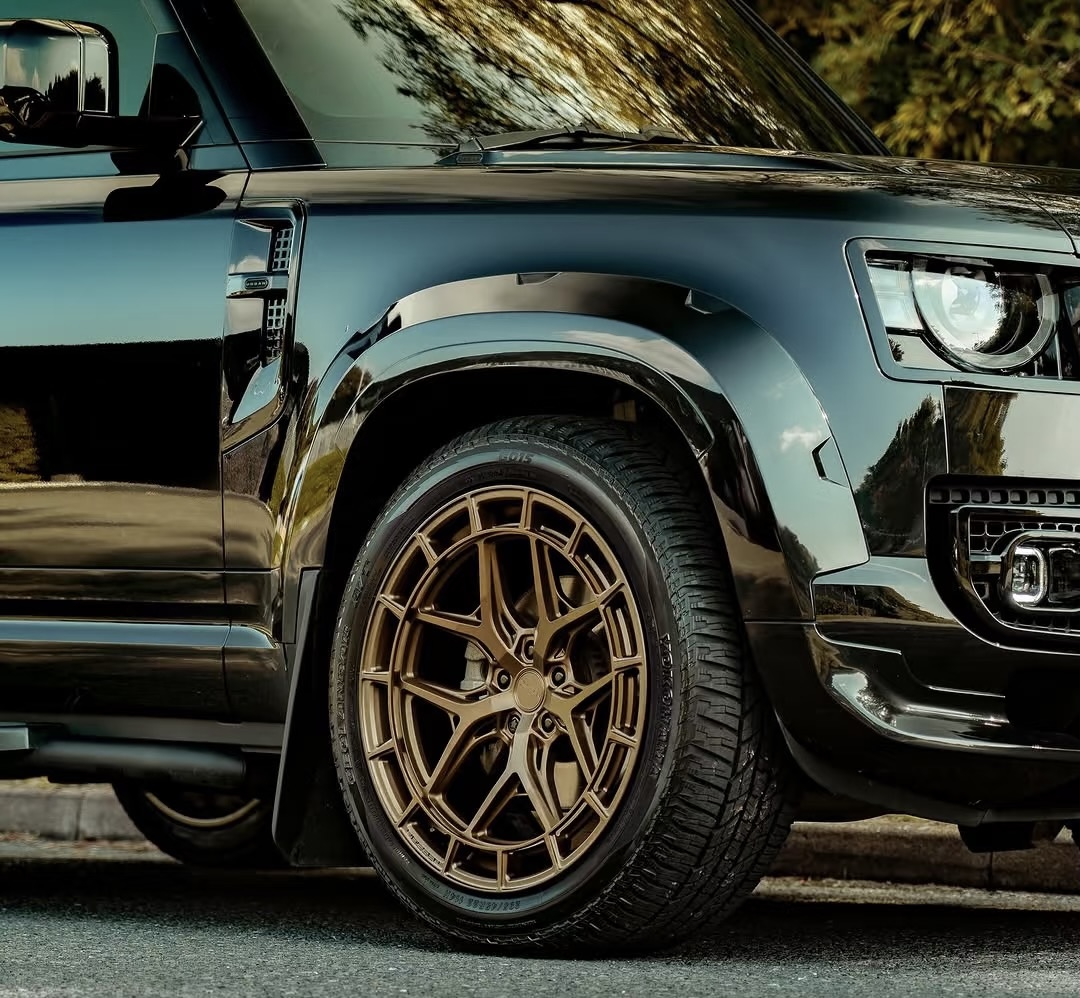
Upgrading your ride with custom automotive wheels is single-handedly the most impactful modification you can make to your vehicle. Beyond the immediate visual overhaul, the right set of aftermarket rims dramatically transforms steering feedback, cornering stability, and overall driving dynamics. However, navigating the endless sea of bolt patterns, offsets, and manufacturing methods often leaves drivers overwhelmed by choice or stuck with improper fitment.
Choosing aftermarket rims requires balancing aesthetic goals with mechanical reality. Whether you drive a daily commuter, a track-ready sports car, or a heavy-duty truck, understanding the nuances of custom wheel construction, sizing math, and clearance requirements ensures your investment pays off in both performance and longevity.
1.Why Upgrade to Custom Automotive Wheels?
Factory wheels are engineered to satisfy a wide range of basic requirements, prioritizing low manufacturing cost and acceptable comfort over peak performance or distinct styling. Upgrading to specialized custom automotive wheels solves these factory limitations while offering three distinct advantages:
-
Unsprung Weight Reduction: Replacing heavy factory cast rims with lightweight alternatives reduces unsprung mass—the weight not supported by your vehicle’s suspension system. This allows your shock absorbers and springs to react faster to road imperfections, dramatically improving tire contact and overall ride quality.
-
Enhanced Handling and Grip: Custom wheel fitment allows you to widen your tire contact patch. Wider rims combined with lower-profile tires reduce sidewall flex under heavy cornering, delivering crisp, instantaneous turn-in response.
-
Personalized Style and Stance: From aggressive flush fitments to classic deep-dish profiles, aftermarket rims allow car enthusiasts to tailor their vehicle’s stance to reflect their personal taste.
2.Wheel Construction Methods: Cast vs. Flow-Formed vs. Forged
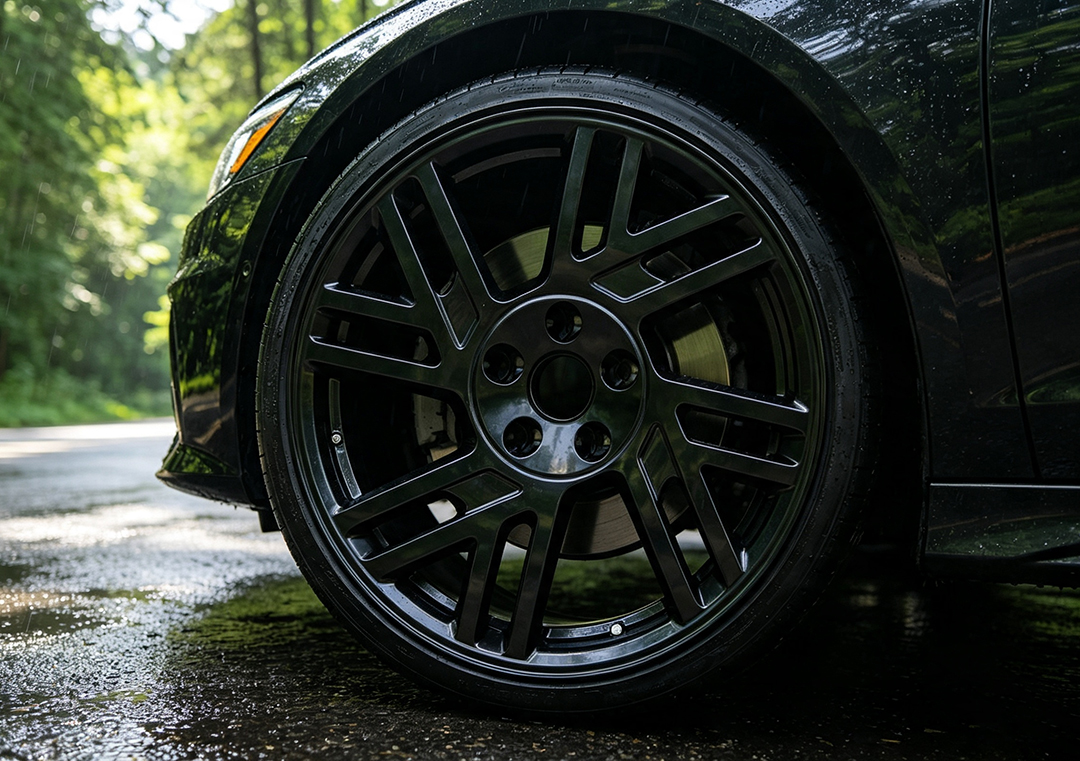
Understanding how custom wheels are built is the foundation of making a smart purchase. Manufacturing methods directly impact weight, structural integrity, and price.
+-----------------------------------------------------------------------+
|                      WHEEL MANUFACTURING PROCESSES                    |
+-------------------+-------------------+-------------------------------+
|    CAST WHEELS    | FLOW-FORMED WHEELS|         FORGED WHEELS         |
|  Molten aluminum  | Cast center with  | Solid aluminum block compressed|
|  poured into mold | heat-spun barrel  | under extreme hydraulic pressure|
+-------------------+-------------------+-------------------------------+
1. Cast Wheels
Gravity casting or low-pressure casting involves pouring molten aluminum alloy into a pre-shaped mold. As the metal cools, it forms the final wheel shape.
-
Pros: Highly cost-effective; endless design possibilities.
-
Cons: Heavier structure; lower tensile strength compared to processed alloys.
-
Best For: Daily commuters on a budget and drivers seeking standard styling updates.
2. Flow-Formed Wheels
Flow-forming (also called flow-forging or rotary forging) starts with a low-pressure cast wheel blank. The inner barrel is then heated and stretched using high-speed hydraulic rollers. This process rearranges the aluminum’s grain structure, increasing barrel strength while shedding weight.
-
Pros: Excellent strength-to-weight ratio; significantly lighter than standard cast; mid-tier pricing.
-
Cons: Slightly more expensive than traditional cast rims.
-
Best For: Performance-minded street drivers and weekend autocross enthusiasts.
3. Forged Wheels
Forged wheels are crafted from a solid billet of aerospace-grade 6061-T6 aluminum. Under immense hydraulic pressure (often exceeding 10,000 tons), the aluminum is pressed into shape before being CNC-machined. This process eliminates internal voids and creates an exceptionally dense, ultra-strong grain structure.
-
Pros: Maximum structural integrity; ultra-lightweight; extreme impact resistance; fully customizable offsets and widths.
-
Cons: Premium price point.
-
Best For: High-performance sports cars, track racing, and custom show builds.
Construction Comparison Overview
| Feature | Cast Wheels | Flow-Formed Wheels | Forged Wheels |
|---|---|---|---|
| Manufacturing Method | Molten alloy poured into molds | Cast preform stretched with heat rollers | Solid aluminum billet pressurized & CNC machined |
| Tensile Strength | Standard | High | Superior |
| Weight | Heavy | Moderate / Light | Ultra-Lightweight |
| Primary Application | Daily driving, winter setups | Performance street, light track | Racing, high-horsepower street, custom builds |
3.Mastering Custom Wheel Fitment Fundamentals
Installing custom automotive wheels is not a simple plug-and-play process. Achieving optimal fitment without tire rubbing, suspension interference, or braking issues requires precise calculations across four key metrics.
                [ WHEEL CROSS-SECTION FITMENT ]

                   Center Line
                        |
       <--- Negative    |    Positive --->
          Offset (-)    |    Offset (+)
                        |
     +------------------+------------------+
     |                  |                  |
     |   [Hub Mounting Surface]            |
     |          |                          |
     |          v                          |
     |        +---+                        |
     |        |   |                        |
     |        +---+                        |
     |                                     |
     +-------------------------------------+
     | <------------ Width --------------> |
1. Bolt Pattern (PCD)
The Pitch Circle Diameter (PCD) consists of two numbers: the number of lug holes and the diameter of the imaginary circle they form (e.g., 5×114.3 or 5×120). The aftermarket rim’s bolt pattern must match your hub assembly exactly.
2. Hub Bore and Hub-Centric Rings
The hub bore is the center hole on the back of the wheel that seats onto your vehicle’s axle hub.
-
Hub-Centric Wheels: Designed with a center bore that matches your vehicle’s specific hub diameter, ensuring perfect alignment and zero vibration.
-
Lug-Centric Wheels: Feature a larger universal center bore designed to fit multiple vehicles. These require aftermarket hub-centric rings to center the wheel precisely on the vehicle hub and prevent steering wheel wobble at high speeds.
3. Offset (ET) and Backspacing
Offset (measured in millimeters as ET) is the distance from the wheel’s true centerline to its hub-mounting surface.
-
Positive Offset (+): The mounting face is closer to the front face of the wheel (common on modern front-wheel drive and all-wheel drive cars).
-
Negative Offset (-): The mounting face sits deep inside the wheel, pushing the rim outward toward the fender (common on classic muscle cars and lifted trucks).
-
Zero Offset: The mounting face aligns perfectly with the geometric centerline.
4. Wheel Diameter and Width
Upgrading diameter and width changes tire clearance. Ensure your chosen dimensions accommodate both full-lock steering turns and total suspension compression.
4.Plus-Sizing: Weighing the Pros and Cons
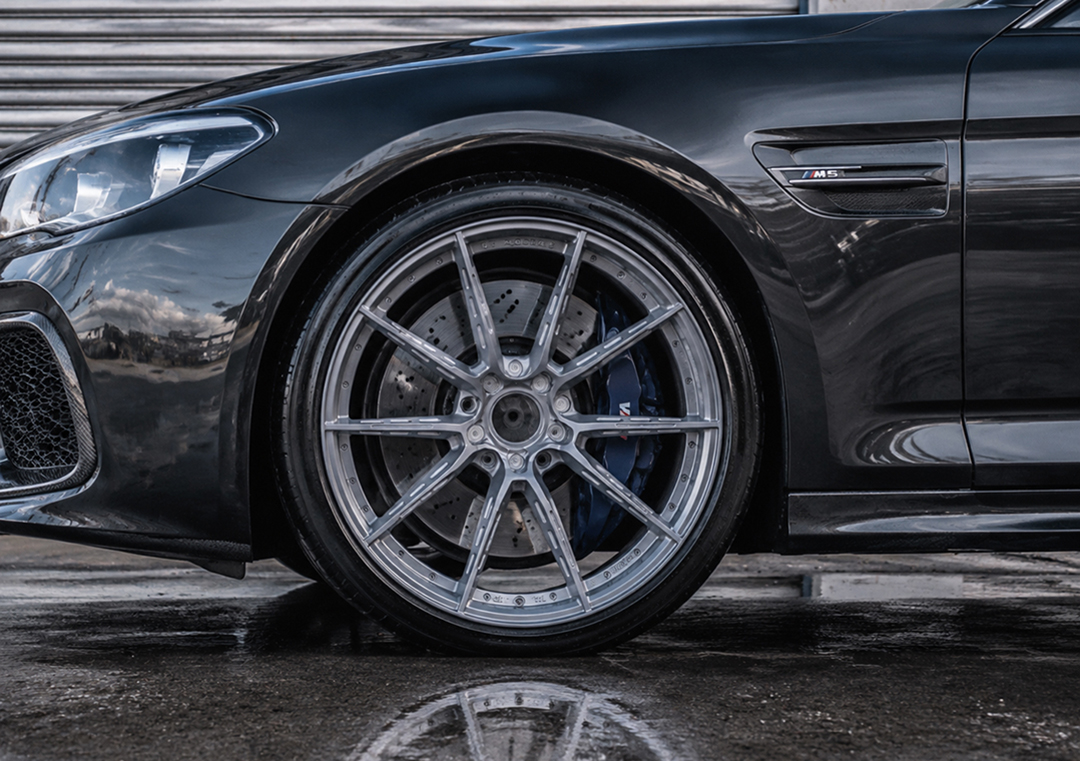
Plus-sizing involves increasing your wheel diameter (e.g., going from a 17-inch to an 18-inch or 19-inch setup) while decreasing the tire sidewall height to maintain the same overall tire rolling diameter.
Benefits of Plus-Sizing
-
Sharper Steering Response: Shorter tire sidewalls flex less during hard cornering, giving the driver immediate road feedback.
-
Aggressive Stance: Fills empty fender gaps cleanly, giving the vehicle a sleek, lower appearance.
-
Brake Clearance: Larger diameters provide room for upgraded rotors and multi-piston calipers.
Drawbacks of Plus-Sizing
-
Harsher Ride Quality: Thin sidewalls absorb less road impact, transferring potholes and rough pavement bumps directly into the cabin.
-
Increased Damage Risk: Low-profile tires provide minimal cushion, leaving aluminum rims vulnerable to bend or crack damage from severe impacts.
-
Added Unsprung Mass: Moving up in wheel diameter often adds total weight if you stay with basic cast construction.
5.Caliper Clearance: The X-Factor and Big Brake Kits
Upgrading your braking system with a Big Brake Kit (BBK) introduces major wheel clearance challenges. Many drivers mistakenly assume that if a wheel’s diameter and offset are correct, it will naturally clear larger brake calipers. This is a costly misconception.
           [ BRAKE CALIPER & SPOKE CLEARANCE ]

               +----------------------+
               |     Wheel Barrel     |
               +----------------------+
               |                      |
   Caliper --->| [BBK]   / <--- Spoke Profile (X-Factor)
               | [   ]  /
               | [   ] /
               +---+--+
                   |
            [Hub Mounting]
Calipers require internal depth clearance, known in the wheel industry as the X-Factor.
-
Spoke Profile Matters: Concave wheel spokes curve inward toward the hub, which can severely reduce clearance for wide, multi-piston calipers. Conversely, convex or flat-spoke profiles push outward, offering generous caliper space.
-
Always Use a Paper Template: Before ordering custom automotive wheels for a vehicle fitted with an aftermarket BBK, download the brake manufacturer’s printable clearance template to measure space between the hub face and the caliper edges accurately.
6.Essential Accessories: Lug Nuts and Center Caps
Installing aftermarket rims with standard hardware often leads to improper installation or wheel detachment hazards.
Lug Seats: Matching the Hardware
Original Equipment Manufacturer (OEM) lug nuts are engineered specifically for factory wheels. Installing factory hardware on aftermarket custom rims is dangerous because the mounting seats rarely match:
  Ball/Radius Seat        Conical Seat (60°)        Flat Mag Seat
      (OEM Style)            (Aftermarket)            (Truck/OEM)
       \       /               \       /               |       |
        \_____/                 \_____/                |_______|
-
Conical Seats (Tapered 60°): The universal standard for almost all custom automotive wheels. The 60-degree angled seat centers the wheel bolt hole precisely.
-
Ball/Radius Seats: Curved, dome-shaped seats primarily used on factory Honda, Audi, and Volkswagen setups.
-
Flat/Mag Seats: Flat-bottomed seats with a extended washer shank, common on Toyota and classic truck applications.
Never mix seat types. Using a ball-seat OEM lug nut inside a 60-degree conical aftermarket wheel hole leads to loose hardware, damaged threads, and potential wheel failure.
Frequently Asked Questions(FAQ)
1.How do I know if custom wheels will fit my vehicle?
Fitment depends on four critical metrics: bolt pattern, hub bore, offset (ET), and wheel dimensions (diameter and width). All must perfectly match your vehicle’s hub assembly and fender clearance to avoid rubbing or mechanical interference.
2.What is the difference between cast, flow-formed, and forged wheels?
Cast wheels are the most affordable but heavier and less durable, ideal for daily driving. Flow-formed wheels sit in the mid-tier price range, offering higher barrel strength and lighter weight. Forged wheels are premium options, providing maximum structural density, supreme durability, and ultra-lightweight performance.
3.What are the pros and cons of plus-sizing custom wheels?
Pros include enhanced visual appeal, improved cornering stability, and sharper steering response due to lower-profile tires. Cons include increased unsprung weight, harsher ride comfort, and potentially higher fuel consumption if total wheel weight increases.
4.Will aftermarket custom wheels clear my big brake kit?
Not automatically. Clearance depends heavily on the wheel’s spoke profile and X-factor (caliper clearance depth), not just overall wheel diameter. Always verify clearance against a physical or paper brake template before buying.
5.Can I use OEM lug nuts on custom aftermarket wheels?
Usually no. Factory lug nuts typically feature flat or ball seats, whereas most custom aftermarket wheels require 60-degree conical (tapered) seat lug nuts or specialized tuner-style bolts to secure properly.
Transform Your Ride’s Stance and Performance Today
Ready to elevate your vehicle’s styling and handling? Exploring specialized platforms like ATK Wheels gives you direct access to high-performance custom automotive wheels built to exacting engineering standards. Modernize your daily driver or complete your track build with precision-engineered fitments crafted for performance enthusiasts. Check out the latest wheel collections today to find the perfect match for your vehicle.