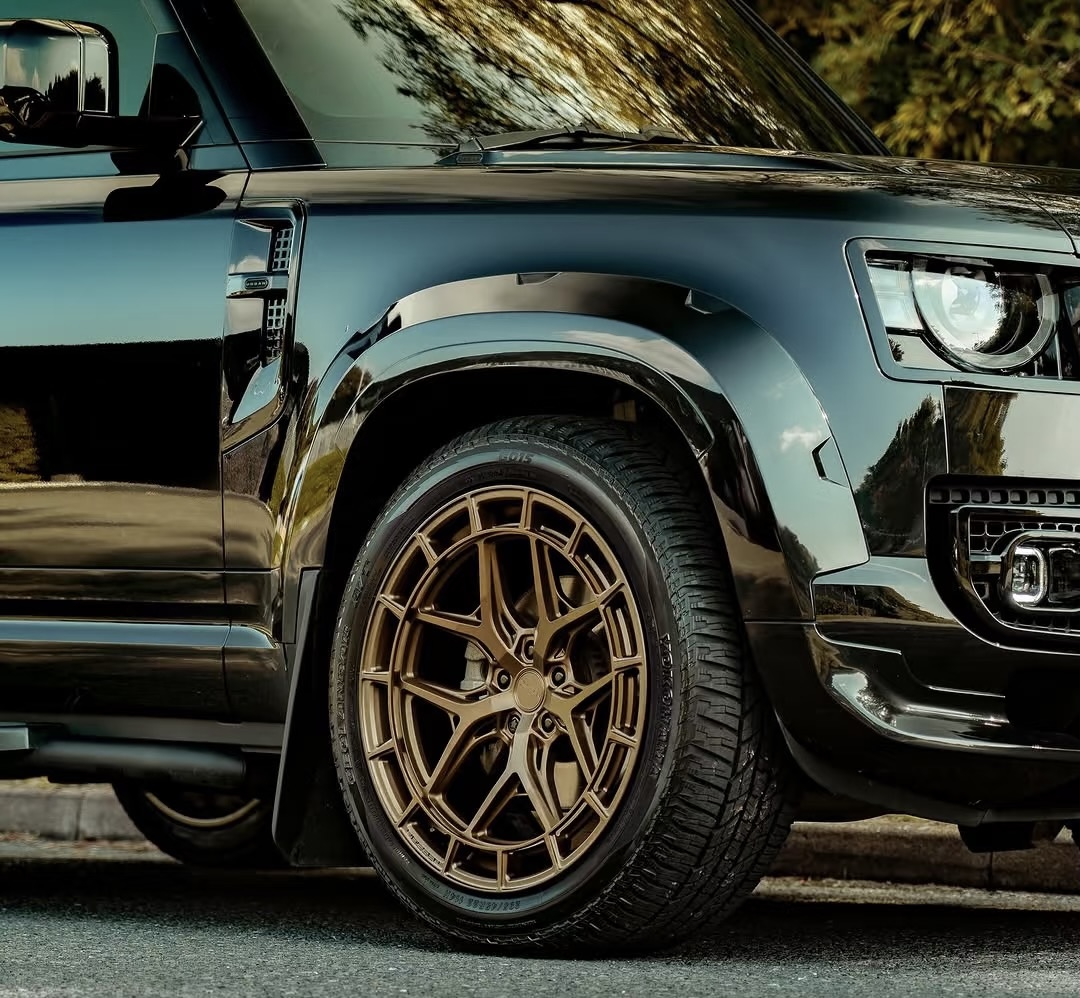
Wheel Factory: What Buyers Should Know Before Choosing a Manufacturer
Wheel Factory: What Buyers Should Know Before Choosing a Manufacturer
The global automotive market demands components that combine uncompromising safety, lightweight performance, and striking visual appeal. At the structural and cosmetic core of every vehicle is the wheel. Understanding the inner workings of an alloy wheel factory provides valuable clarity whether you are an automotive brand manager sourcing OEM production, a distributor expanding an aftermarket catalog, or an enthusiast seeking high-performance fitments.
A modern wheel factory is an advanced industrial facility that transforms raw aluminum alloy into engineered, load-bearing wheels through precision casting, flow forming, or forging. Beyond basic production, top-tier manufacturers offer end-to-end custom engineering, rigorous structural testing, and specialized surface finishing.
This comprehensive overview examines modern manufacturing techniques, essential quality standards, custom OEM/ODM capabilities, and the exact criteria for selecting a reliable global manufacturing partner.
1.What Is a Wheel Factory and How Does It Operate?
A wheel factory is an integrated manufacturing plant equipped with specialized machinery, engineering software, and testing laboratories designed to produce automotive wheels. These facilities process light alloys—primarily A356.2 aluminum—into finished products for passenger cars, SUVs, light trucks, and high-performance racing vehicles.
Modern facilities blend heavy metallurgical engineering with automation. From computerized molten metal delivery to automated CNC machining cells and multi-stage robotic painting lines, an industrial wheel factory operates under strict dimensional tolerances and safety protocols.
+-----------------------------------------------------------------------------------+
|                        TYPICAL WHEEL FACTORY WORKFLOW                             |
+-----------------------------------------------------------------------------------+
|  1. Raw Material Selection  -->  2. Primary Shaping (Casting / Forging)           |
|  3. Heat Treatment (T6)     -->  4. Precision CNC Machining                       |
|  5. Surface Finishing       -->  6. Rigorous QC & Structural Testing              |
+-----------------------------------------------------------------------------------+
Leading manufacturers, such as ATK Wheels, focus on specialized production lanes to deliver both high-volume OEM components and small-batch custom aftermarket designs.
2.Core Wheel Manufacturing Processes Explained
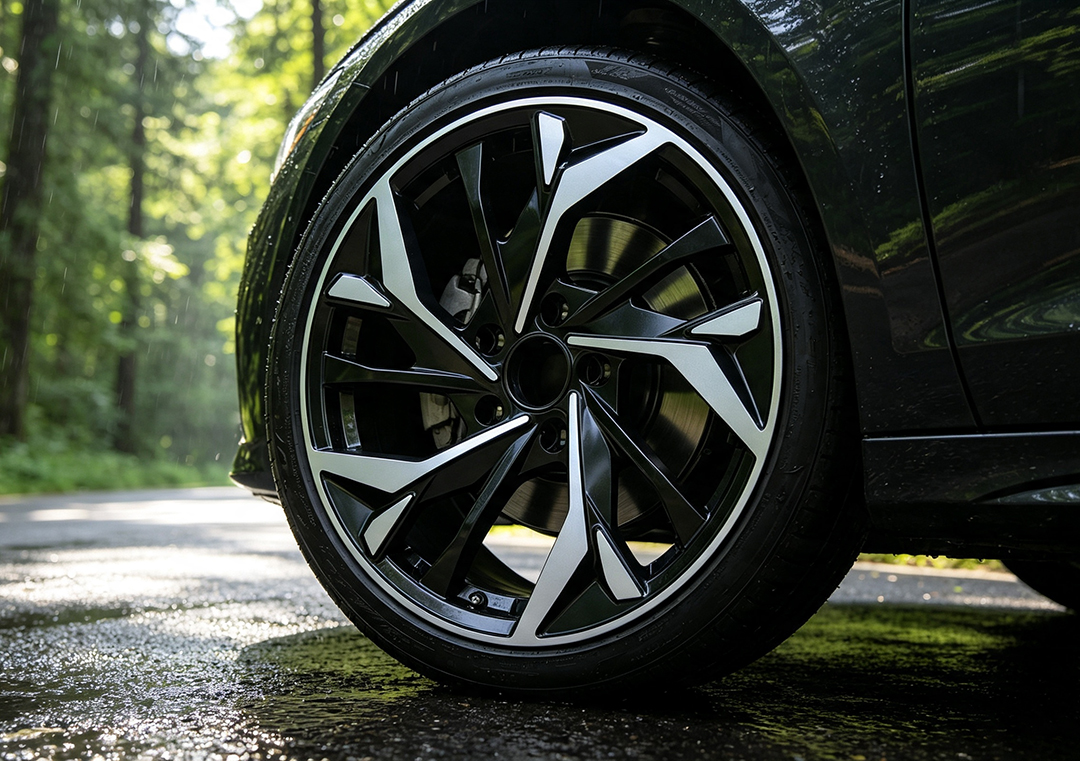
The mechanical properties, weight, and structural strength of an alloy wheel depend directly on the primary manufacturing method used inside the wheel factory. Three distinct technologies dominate modern automotive production.
+------------------------------------------------------------------------------------+
|                      MANUFACTURING PROCESS COMPARISON                              |
+------------------------------------------------------------------------------------+
| Method         Strength       Weight         Cost/Unit    Best Application         |
+------------------------------------------------------------------------------------+
| Low-Pressure   Standard       Standard       Cost-Effective Daily Drivers & OEM    |
| Flow Forming   Enhanced       Lightweight    Moderate     Performance & Aftermarket|
| Precision Forge Maximum       Ultra-Light    Premium      Motorsports & Luxury     |
+------------------------------------------------------------------------------------+
1. Low-Pressure Die Casting
Low-pressure casting is the standard production method for high-volume OEM and aftermarket wheels.
-
The Metallurgy: Molten A356 aluminum alloy is drawn upward into a sealed metallic mold using low pressurized gas (around 0.2 to 1 bar).
-
The Advantage: Solidification under continuous pressure minimizes internal air pockets and porosity compared to traditional gravity casting.
-
Best Use Case: High-volume, cost-effective wheel production that meets or exceeds standard road safety requirements.
2. Flow Forming Technology
Flow forming—sometimes referred to as spin forged or rotary forged—bridges the gap between cast economy and forged strength.
-
The Metallurgy: The process begins with a specially cast initial preform. The barrel portion is placed over a mandrel and spun while high-pressure hydraulic rollers stretch and compress the aluminum along the rim profile.
-
The Advantage: The mechanical pressure alters the grain structure of the aluminum, aligning metal fibers along the barrel. This increases tensile strength and grain density while drastically reducing barrel thickness and overall wheel weight.
-
Best Use Case: Performance street cars, track vehicles, and premium aftermarket setups requiring reduced unsprung weight without the premium price tag of a full forge.
3. Precision Forging
Forging represents the pinnacle of wheel manufacturing technology.
-
The Metallurgy: Instead of working with liquid metal, a solid billet of 6061-T6 aerospace-grade aluminum is subjected to extreme mechanical pressure (often 8,000 to 10,000 tons). This intense force compresses the crystalline grain structure into an ultra-dense, continuous matrix.
-
The Advantage: Forged wheels deliver maximum structural integrity with minimum material mass. They offer superior impact resistance and allow for intricate, slim spoke designs that are impossible to execute safely via casting.
-
Best Use Case: High-end sports cars, professional motorsports, heavy-duty off-road rigs, and bespoke luxury builds.
3.Comparative Breakdown: Manufacturing Technologies
Selecting the ideal product line requires balancing structural demands, weight constraints, and production budgets. The table below details the performance metrics of each manufacturing technique.
| Feature / Metric | Low-Pressure Cast Wheels | Flow-Formed Alloy Wheels | Precision Forged Wheels |
|---|---|---|---|
| Primary Material | A356.2 Aluminum Alloy | A356.2 (Modified Preform) | 6061-T6 Aluminum Billet |
| Structural Grain Density | Standard Cast Structure | Dense, Flow-Aligned Barrel | Ultra-Dense Continuous Grain |
| Weight Efficiency | Baseline | 15% – 20% Lighter than Cast | 25% – 35% Lighter than Cast |
| Impact Resistance | Good (Standard Road Use) | Very High (Enhanced Barrel) | Exceptional (Maximum Stress) |
| Design Flexibility | High (Complex Molds) | High (Cast Face Dynamics) | Maximum (Custom CNC Milled) |
| Tooling & Setup Cost | Moderate Mold Investment | Moderate Tooling Cost | Low Tooling (Direct CNC) |
| Unit Production Cost | Most Economical | Balanced Value | Premium Investment |
4.Engineering Customization: OEM and ODM Capabilities
A full-service wheel factory operates as a complete engineering partner rather than a simple assembly line. Automotive brands and private label distributors rely on two key custom manufacturing models:
OEM (Original Equipment Manufacturing)
The client provides exact technical blueprints, load specifications, and aesthetic designs. The wheel factory executes precise tooling, mold creation, casting/forging, machining, and finishing according to those exact client specifications.
ODM (Original Design Manufacturing)
The client outlines target vehicle applications, size constraints, and design preferences. The factory’s internal engineering team handles conceptual styling, Finite Element Analysis (FEA) computer modeling, mold engineering, and final safety certification.
+-----------------------------------------------------------------------------------+
|                        CUSTOMIZATION CAPABILITIES                                 |
+-----------------------------------------------------------------------------------+
|  [Fitment Specs]   --> Diameter (15"-26"), Width, PCD, Offset (ET), Center Bore   |
|  [Finishing]       --> Gloss, Matte, Satin, Machined Face, Brushed, Polished      |
|  [Coating Tech]    --> Powder Coating, Liquid Paint, PVD Chrome, Anodized Tint    |
|  [Branding]        --> Custom Cap Engraving, Wheel Lip Stamping, Box Design       |
+-----------------------------------------------------------------------------------+
By leveraging detailed engineering, an experienced facility can adapt structural spoke thicknesses and hub pockets to accommodate heavy brake calipers while retaining structural integrity.
5.Essential Quality Control and International Certifications
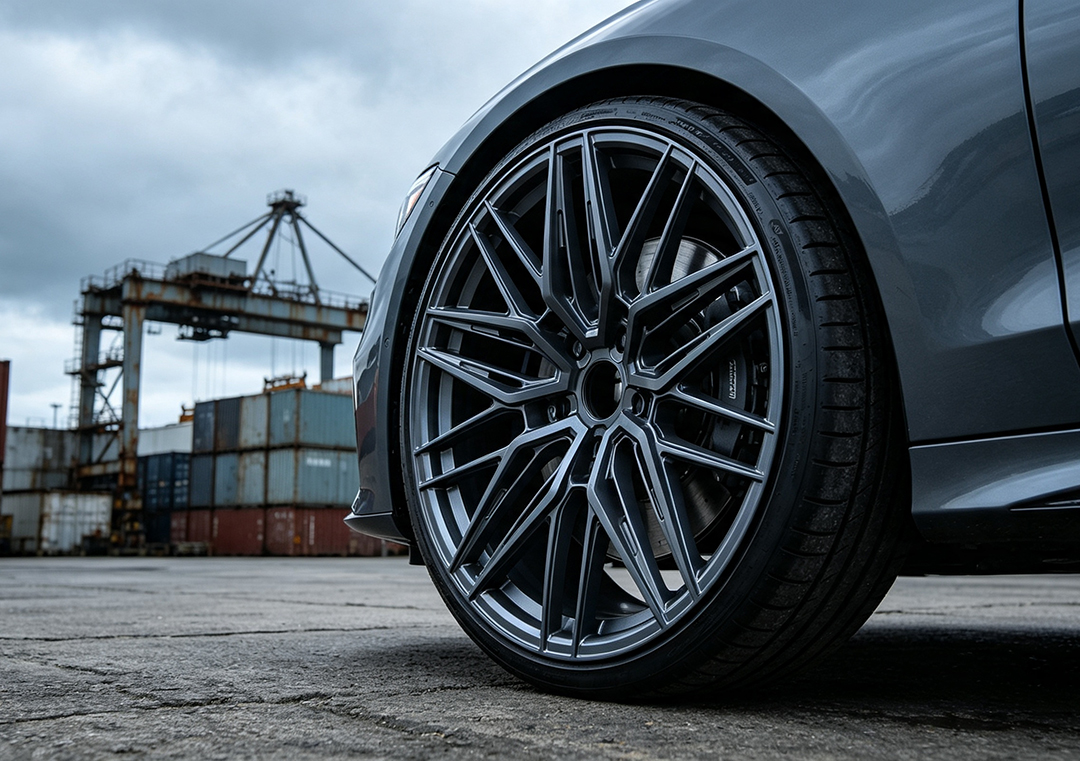
Automotive wheels are safety-critical components. A reputable wheel factory maintains comprehensive laboratory testing facilities to verify structural integrity long before any wheel reaches a customer vehicle.
+------------------------------------------------------------------------------------+
|                       CRITICAL QUALITY TESTING PROTOCOLS                           |
+------------------------------------------------------------------------------------+
| 1. Dynamic Bending Test   --> Simulates cornering stress on the wheel hub          |
| 2. Dynamic Radial Test    --> Tests continuous rolling load along the tire rim     |
| 3. Heavy Impact Test      --> Evaluates energy absorption during curb/pothole hits |
| 4. X-Ray & Air Inspection --> Identifies internal voids, micro-cracks, and leaks   |
+------------------------------------------------------------------------------------+
Key Safety Certifications
-
JWL / VIA (Japan): The JWL standard sets self-testing criteria for passenger car wheels in Japan, while the Vehicle Inspection Association (VIA) provides independent third-party verification.
-
TÜV (Germany): German TÜV certification requires rigorous factory audits, complete traceability, and strict stress-fatigue testing under continuous maximum load conditions.
-
SAE J2530 (United States): Promulgated by the Society of Automotive Engineers, this standard defines performance requirements and test procedures for aftermarket passenger car and light truck wheels.
-
ISO/IATF 16949: The gold standard for automotive quality management systems, ensuring consistent manufacturing standards, batch traceability, and continual process improvements.
6.How to Evaluate and Select a Reliable Wheel Manufacturing Partner
Partnering with the wrong manufacturer can lead to delivery delays, fitment inaccuracies, structural failures, or costly brand recalls. When evaluating potential supplier facilities, systematically audit the following six areas:
+-----------------------------------------------------------------------------------+
|                       FACTORY SELECTION AUDIT CHECKLIST                           |
+-----------------------------------------------------------------------------------+
|  [ ] In-House Metallurgical Testing & X-Ray Porosity Scans                        |
|  [ ] Verification of Valid JWL, VIA, TÜV, or ISO/IATF Certifications              |
|  [ ] Comprehensive Engineering Support (3D CAD, FEA Simulation Capabilities)      |
|  [ ] Scalable Production Capacity & Reliable Lead-Time Guarantees                 |
|  [ ] Clear Minimum Order Quantity (MOQ) Terms for Custom Runs                     |
|  [ ] Protective Export Packaging & Standardized Shipping Protocols                |
+-----------------------------------------------------------------------------------+
1. Metallurgical Testing and Inspection Equipment
Verify that the factory performs 100% X-ray inspection on cast blanks to catch internal porosity before machining. Inquire about dynamic balancing equipment, helium air-leak testing machines, and salt-spray corrosion chambers for painted finishes.
2. Engineering Support and FEA Simulation
A top-tier supplier does not rely on trial-and-error prototyping. Their engineering team uses Finite Element Analysis (FEA) software to simulate stress distribution, cornering fatigue, and impact forces digitally. This speeds up development and optimizes weight without compromising strength.
3. Clear MOQ and Lead-Time Structures
Custom mold development for casting typically requires longer lead times (45 to 60 days) and higher Minimum Order Quantities (MOQs). Conversely, custom forged wheel production offers lower MOQs with shorter lead times due to direct CNC machining from stock billets. Confirm these variables during initial planning.
4. Supply Chain Traceability and Raw Material Control
Inquire about raw material sourcing. High-grade facilities use primary A356.2 aluminum ingots rather than recycled scrap metal. Raw material batch tracking ensures consistent grain density, structural purity, and heat-treatment response across every production lot.
Frequently Asked Questions(FAQ)
1.What is a wheel factory?
A wheel factory is an industrial manufacturing facility that designs, casts, flow-forms, forges, machines, and finishes automotive wheels. These plants serve original equipment manufacturers (OEM) as well as the commercial automotive aftermarket.
2.How do I choose a reliable wheel factory?
Select a factory based on verifiable safety certifications (JWL, VIA, TÜV, ISO/IATF 16949), in-house quality control testing equipment (X-ray, impact, bending fatigue), engineering design support (FEA simulation), clear minimum order quantities (MOQs), and proven experience supplying international markets.
3.Can a wheel factory make custom wheels?
Yes. Professional manufacturers offer custom specifications including tailored diameter, rim width, bolt pattern (PCD), offset (ET), center bore, custom finishes, and engraved center caps. Both full OEM (production to client drawing) and ODM (factory design adaptation) services are widely available.
4.What types of wheels can a wheel factory produce?
A full-scale facility can manufacture low-pressure cast alloy wheels, flow-formed wheels, monoblock forged wheels, multi-piece forged wheels, and off-road beadlock designs for passenger cars, SUVs, racing applications, and light commercial vehicles.
5.What should I ask a wheel factory before placing an order?
Key questions to ask include:
-
Which aluminum alloys do you process (e.g., A356.2, 6061-T6)?
-
What quality certifications do your production lines hold?
-
Do you conduct 100% X-ray and dynamic impact testing in-house?
-
What are your MOQs, mold development costs, and production lead times?
-
What custom packaging and private-label branding options do you offer?
Transform Your Automotive Vision into High-Performance Reality
Sourcing high-quality, precision-engineered wheels requires a manufacturing partner committed to advanced metallurgy, technical precision, and certified safety performance. Whether expanding an established aftermarket product line or engineering bespoke forged fitments for high-performance builds, aligning with an experienced manufacturer is key to long-term success.
Explore industry-leading casting, flow-forming, and forging solutions with ATK Wheels. Contact their engineering team today to review technical drawings, request custom quotes, or discuss private-label production opportunities.