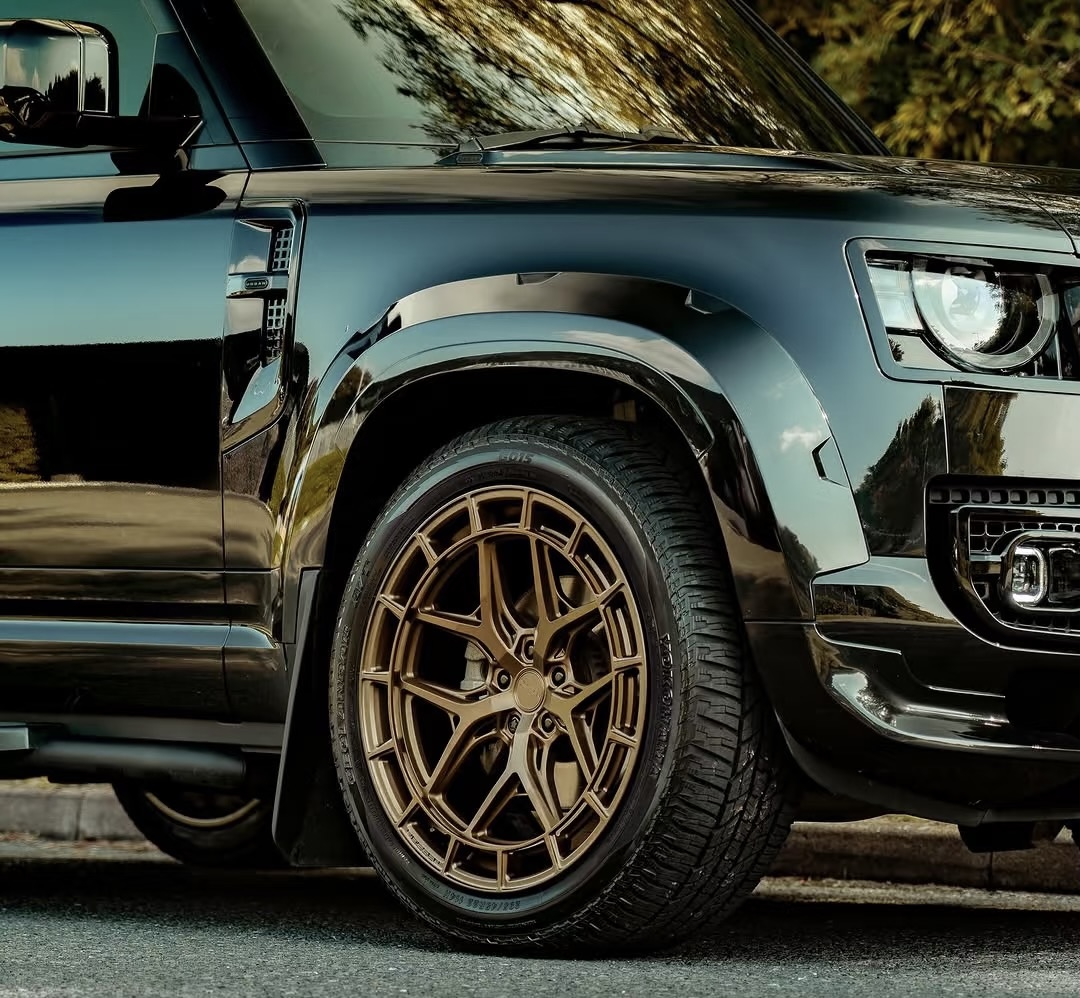
Wheels Alloy Wheels: What You Need to Know Before Buying
Wheels Alloy Wheels: What You Need to Know Before Buying
Whether you are pulling up to a weekend car meet in California, navigating snow-slush highways in the Midwest, or simply trying to replace a damaged factory rim, upgrading your vehicle with high-quality wheels alloy wheels is one of the most rewarding modifications you can make. The right set completely alters your vehicle’s stance, transforms its road dynamics, and turns heads at every stoplight.
However, stepping into the aftermarket wheel market can feel overwhelming. With endless choices regarding casting vs. forging, offset math, load capacities, and finish durability, making an uninformed purchase often leads to fitment issues, fender rubbing, or premature wheel damage. In this comprehensive breakdown, we pull back the curtain on everything surrounding wheels alloy wheels—examining how they work, how they are constructed, how to measure fitment precisely, and how to select the best set for your daily driver or performance vehicle.
1.What Are Alloy Wheels and How Are They Made?
Quick Definition (Featured Snippet Candidate):Alloy wheels are automotive rims constructed primarily from a combination of aluminum and trace non-ferrous metals such as magnesium, silicon, or nickel. Unlike traditional heavy stamped steel wheels, alloy wheels deliver a superior strength-to-weight ratio, rapid heat dissipation, precise structural tolerance, and extensive aesthetic customization options.
Historically, motor vehicles ran on wooden spoke wheels before transitioning to stamped steel. Steel wheels are cheap to manufacture and durable, but they suffer from high weight, poor cosmetic variety, and susceptibility to rust over time. The introduction of aluminum alloy metallurgy revolutionized the automotive world by blending aluminum with strengthening elements to produce rims that are significantly lighter yet structurally resilient.
Manufacturing Methods: Cast vs. Flow-Formed vs. Forged
Not all wheels alloy wheels are created equal. The exact method used during manufacturing dictates a wheel’s weight, structural strength, impact resistance, and price tag:
-
Gravity Casting: The most economical production technique. Molten aluminum alloy is poured into a mold utilizing earth’s gravity to fill the cavity. While budget-friendly and perfect for general daily driving, gravity-cast wheels require thicker material walls, making them heavier and less impact-resistant than advanced alternatives.
-
Low-Pressure Casting: Molten metal is pressurized into the bottom of a mold. This force packs the aluminum denser, reducing internal air pockets or porosity. Most high-grade OEM factory wheels utilize low-pressure casting due to its balanced strength, repeatability, and moderate cost.
-
Flow-Forming (Rotary Forging): Flow-forming bridges the gap between casting and forging. A low-pressure cast wheel blank is mounted on a spinning mandrel while heavy hydraulic rollers apply extreme pressure along the outer barrel. This process stretches and compresses the aluminum’s grain structure, yielding a barrel strength nearly matching a forged wheel at a fraction of the cost.
-
Full Forging: The pinnacle of wheel engineering. A solid billet of 6061-T6 aerospace aluminum is subjected to high heat and thousands of tons of hydraulic pressure before being CNC-machined into shape. Forged alloy wheels boast dense, aligned grain structures, allowing engineers to carve out ultra-thin, highly rigid spokes. They are extremely light and resilient, making them the default choice for track enthusiasts, luxury vehicles, and high-performance builds.
2.Alloy Wheels vs. Steel Wheels: The Direct Comparison
Choosing between steel and aluminum alloy options comes down to prioritizing budget versus overall driving performance. Below is a side-by-side performance breakdown:
| Feature / Characteristic | Alloy Wheels (Aluminum) | Steel Wheels (Stamped) |
|---|---|---|
| Total Mass / Weight | Significantly lighter (lowers unsprung mass) | Heavy (increases rotational inertia) |
| Handling & Steering Response | Crisp, agile steering; minimal body roll latency | Sluggish response; extra inertia |
| Braking & Heat Dissipation | Excellent thermal conductivity; open spoke cooling | Traps heat near brake rotors and calipers |
| Fuel & EV Efficiency | Higher MPGs and extended EV battery range | Increased fuel consumption due to mass |
| Visual Aesthetics | Extensive styles, concierge fitments, multi-color finishes | Utilitarian, basic design; usually requires plastic hubcaps |
| Impact Resistance | Rigid; extreme impacts may cause cracking or bent lips | Malleable; bends on heavy hits, easy to hammer flat |
| Corrosion Resistance | High rust resistance (aluminum oxide layer) | Prone to surface rust if paint/powder coat chips |
| Upfront Price Point | Moderate to premium cost investment | Low cost; highly affordable baseline replacement |
3.How Wheels Alloy Wheels Improve Vehicle Performance
Upgrading to lightweight wheels alloy wheels goes far beyond superficial looks. The physics behind weight reduction on rotating auto components fundamentally enhances how your car accelerates, turns, and stops.
1. Reducing Unsprung and Rotational Weight
Vehicle mass is split into two primary categories: sprung weight (everything supported by the suspension springs, like the frame, engine, and passengers) and unsprung weight (everything directly connected to the road, including tires, brakes, control arms, and wheels). Reducing unsprung weight allows your shocks and struts to react faster to bumps, potholes, and sudden changes in elevation. The tires maintain consistent contact with the asphalt, improving road holding and ride quality.
Furthermore, because wheels rotate, they represent rotational mass. Rotating weight acts as a flywheel: it requires far more energy to spin up to speed and more braking effort to slow down. Shaving 5 pounds off each alloy wheel creates a noticeable improvement in throttle sensitivity and stopping power compared to shedding 20 pounds from inside the vehicle’s cabin.
2. Enhanced Heat Dissipation for Brakes
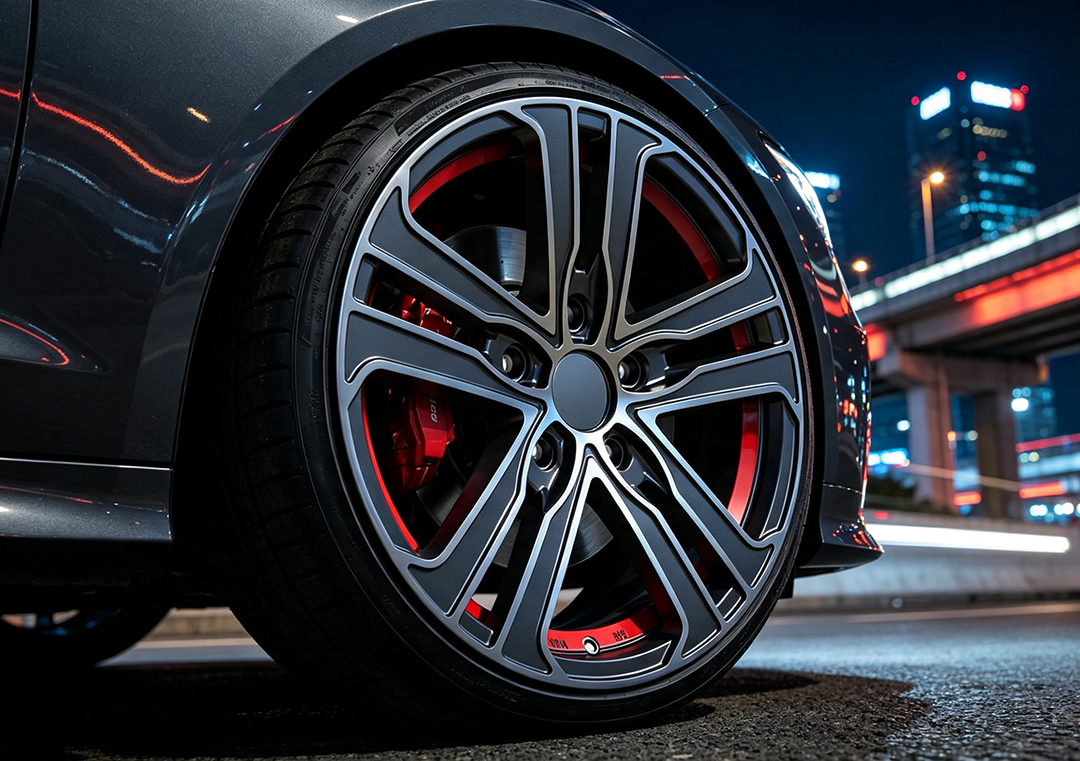
During spirited canyon driving, heavy highway braking, or towing, friction converts kinetic energy into intense thermal energy. Excessive heat build-up causes brake fade—a dangerous situation where brake fluid boils and brake pads lose friction. Aluminum alloy possesses high natural thermal conductivity. Paired with open, aerodynamically designed spoke patterns, wheels alloy wheels pull heat away from brake rotors, keeping brake systems cooler and performing consistently under load.
4.Critical Wheels Alloy Wheels Fitment Parameters You Must Know
Installing new rims requires exact mathematical compatibility. Purchasing wheels purely based on style without verifying fitment numbers leads to rubbing against suspension struts, sticking out past fender flares illegally, or failing to clear brake calipers. Here are the five imperative fitment measurements:
1. Wheel Diameter and Width
Expressed as
18 x 8.5J or 20 x 9.5J, the first number represents the outer wheel lip diameter in inches, while the second number dictates the barrel width from bead seat to bead seat. When upsizing diameter (e.g., going from 17 inches to 19 inches), you must lower tire sidewall profile to keep total rolling diameter identical, keeping your speedometer calibrated correctly.2. Bolt Pattern / PCD (Pitch Circle Diameter)
The bolt pattern defines how many lug holes exist and the invisible diameter circle they form. Expressed as
5x114.3, 5x120, or 4x100, the first digit signifies the lug count (4, 5, 6, or 8 lug), while the second digit is the circle diameter in millimeters. A vehicle with a 5×114.3 pattern cannot mount a 5×120 wheel without specialized hub-centric adapter spacers.3. Wheel Offset (ET Number)
Offset (stamped as ET, from the German word Einpresstiefe) indicates the distance from the wheel’s true centerline to its mounting hub surface, measured in millimeters:
-
Positive Offset (+ET): The hub mounting face sits closer to the front face of the wheel. Common on modern front-wheel drive and all-wheel drive vehicles.
-
Zero Offset (ET0): The mounting hub aligns exactly with the wheel’s center axis.
-
Negative Offset (-ET): The mounting hub sits recessed deep toward the back of the wheel. Common on off-road trucks, classic muscle cars, and aggressive wide-body tuning builds, pushing the wheels outwards for a wide stance.
4. Center Bore and Hub-Centric Rings
The center bore is the machined hole in the middle of the back face of the wheel that slips over your vehicle’s wheel hub snout. Factory wheels are strictly hub-centric, meaning the central hub bears the vehicle’s structural load. Aftermarket wheels alloy wheels are often manufactured with a larger universal center bore (e.g., 73.1mm) to fit various automobile models. If the center bore is larger than your car’s hub (e.g., 66.1mm), you must install poly-carbonate or aluminum hub-centric rings to center the wheel precisely. Relying solely on lug nuts (lug-centric mounting) leads to violent steering wheel vibrations at highway speeds.
5. Load Rating and Gross Axle Weight
Every quality wheel carries a certified load capacity rating stamped into the back side (certified by JWL, VIA, or TUV bodies). Ensure the cumulative load capacity of your selected four alloy wheels exceeds your vehicle’s Gross Axle Weight Rating (GAWR), especially if installing them on heavy trucks, haulers, or electric vehicles (EVs) with massive battery packs.
5.Popular Finishes and Aesthetic Treatments
Modern manufacturing allows alloy wheels to serve as the defining visual signature of any ride. Selecting the appropriate finish involves balancing style preferences with regional climate demands:
-
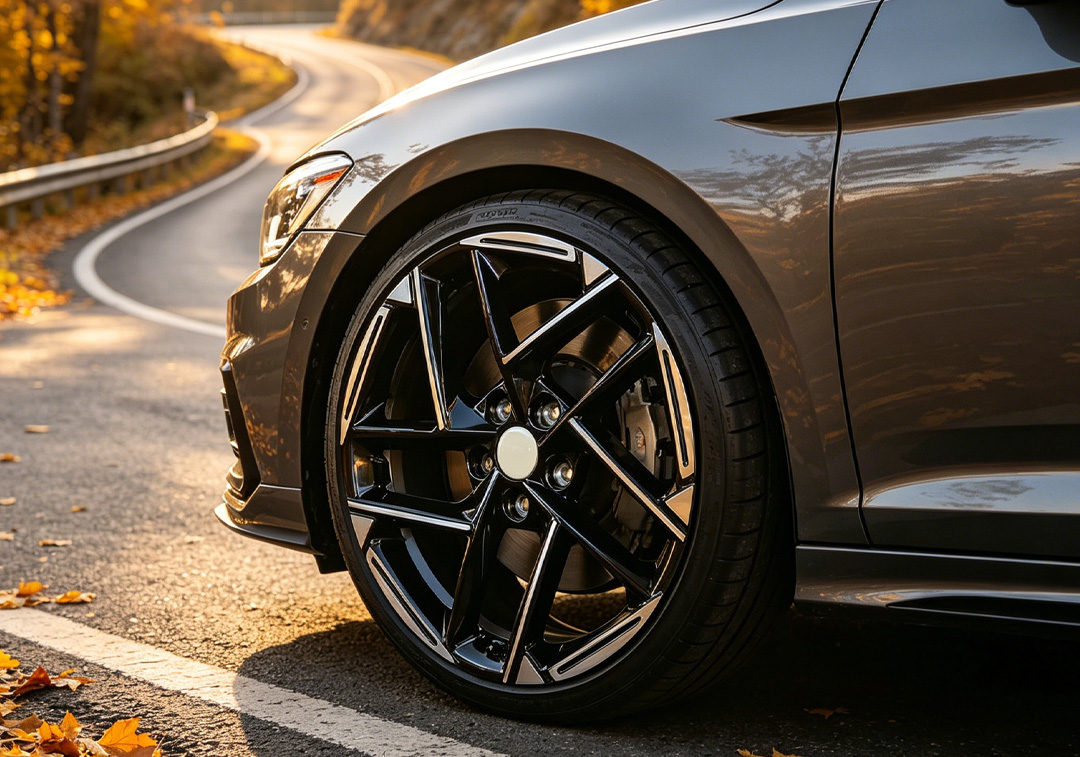
Painted & Powder Coated: A durable layer of liquid paint or baked powder coat sealed under a resilient clear coat. Offers unlimited color options—gloss black, matte bronze, gunmetal grey, hyper silver, and satin white. Ideal for harsh winter climates because clear coat shields aluminum against road salt exposure.
-
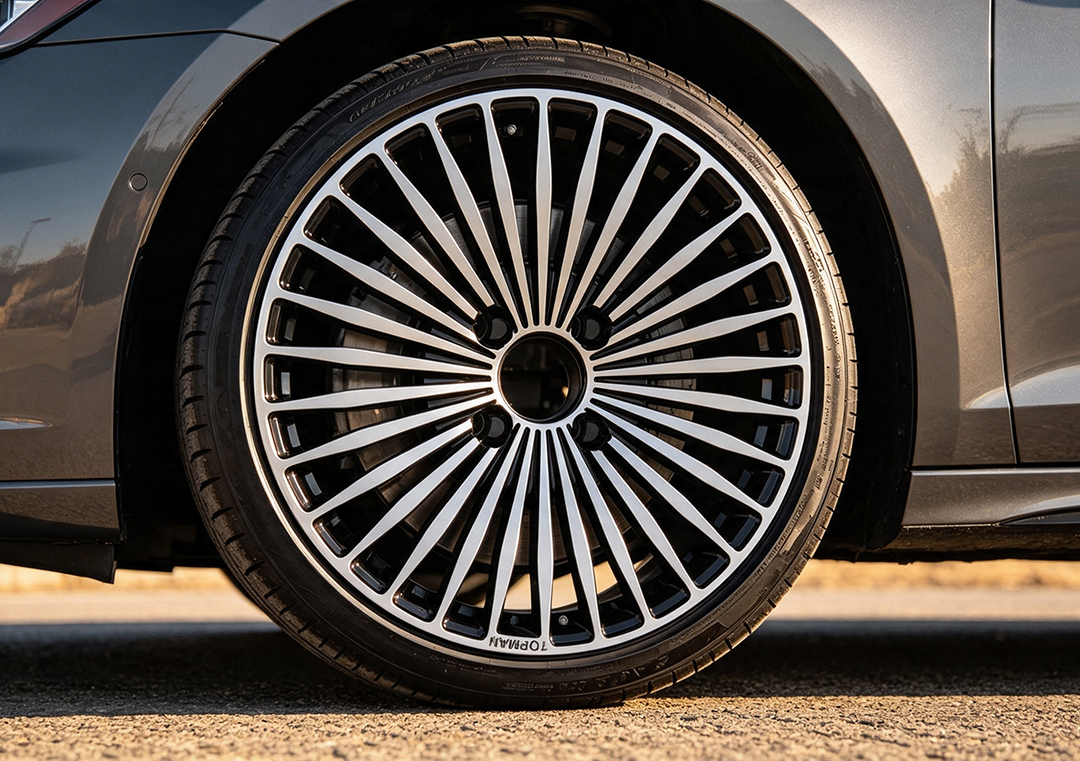
Machined & Diamond-Cut: The wheel face is painted, and then a precision diamond-tipped CNC lathe cuts away thin slices of metal from the spokes, exposing bright raw aluminum before applying a clear coat. Delivers a high-contrast, modern two-tone effect.
-
Polished Aluminum: Mechanical buffing brings raw aluminum up to a mirror-like sheen without using chrome plating. Polished wheels offer a classic vintage look, but require regular metal polish maintenance to prevent oxidation unless clear-coated.
-
Chrome Plated: Electroplating layers nickel and chromium over the alloy surface for a brilliant reflective luster. Highly striking, but vulnerable to peeling if salt and moisture breach the inner plating layers.
6.Maintenance & Care: Keeping Your Alloy Wheels Pristine
To preserve the pristine finish and structural integrity of your investment, avoid harsh automatic car wash tracks and aggressive chemical cleansers. Follow these practical care rules:
-
Never Wash Wheels Hot: Cleaning alloy wheels immediately after driving causes thermal shock, which can crack hot clear coats or warp brake rotors. Always allow wheels and brakes to cool down completely.
-
Avoid Acidic Cleaners: Steer clear of severe acid-based cleaner sprays designed for bare metal. Use pH-neutral wheel cleaners or dedicated auto shampoos that break down baked-on metallic brake dust safely.
-
Use Soft Microfiber and Dedicated Brushes: Avoid coarse scouring pads or stiff brushes that scratch clear coat finishes. Use soft microfiber wash mitts and non-scratch woolie wheel wands to reach inner barrel channels.
-
Apply Synthetic Sealants or Ceramic Coatings: Protecting your wheels alloy wheels with a high-heat ceramic coating creates a hydrophobic shield. Dirt, grime, and hot brake dust wash off effortlessly with simple water pressure during future rinses.
Frequently Asked Questions (FAQ)
1. What are alloy wheels?
Alloy wheels are vehicle rims made primarily from an aluminum alloy blended with elements like magnesium or silicon. They are lighter than traditional steel wheels and provide vastly expanded design variations and finish choices.
2. Are alloy wheels better than steel wheels?
For handling, responsiveness, stopping performance, aesthetic customization, and rust resistance, alloy wheels are clearly superior. Steel wheels remain a practical choice for budget-conscious buyers, heavy winter snow tire setups, or off-road conditions where steel’s ability to bend rather than crack is preferred.
3. Do alloy wheels improve vehicle performance?
Yes. By cutting down unsprung mass and rotational inertia, alloy wheels enhance suspension tracking, sharpen steering turn-in response, allow quicker acceleration, and facilitate better brake cooling during aggressive driving.
4. How do I choose the right alloy wheels for my car?
Identify your vehicle’s factory fitment specifications: diameter, width, bolt pattern (PCD), offset (ET), center bore diameter, and load rating. Cross-reference these dimensions to ensure tire clearance inside wheel wells, brake caliper clearance, and flush fender alignment.
5. Are alloy wheels durable enough for daily driving?
High-quality cast, flow-formed, and forged alloy wheels are engineered to withstand rigorous everyday driving standards. However, because aluminum is stiffer than steel, catastrophic impacts against heavy potholes or concrete curbs are more likely to crack or bend an alloy wheel rather than simply denting it.
Transform Your Vehicle’s Ride & Stance Today
Ready to upgrade your vehicle with a premium set of wheels alloy wheels? Whether you are aiming for track-tested lightweight performance, rugged off-road strength, or head-turning street presence, our wheel fitment specialists are here to guide your search.
Explore our extensive collection of flow-formed and forged wheel designs today at ATK Wheels to discover your perfect precision fitment!