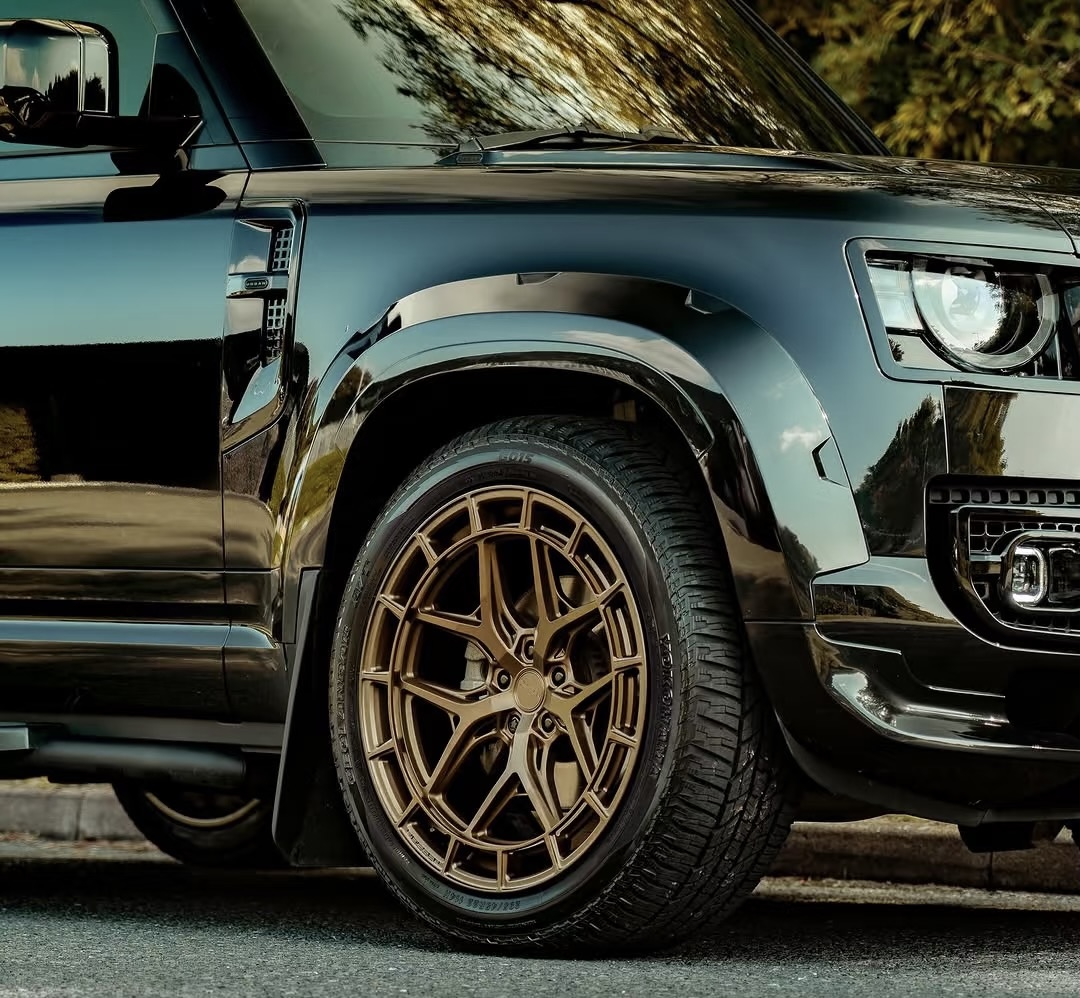
Custom Wheels for Trucks: Choosing the Right Fit, Strength, and Style
Custom Wheels for Trucks: Choosing the Right Fit, Strength, and Style
Upgrading the wheels on your truck transforms more than just its curb appeal. Whether you operate a daily-driven Ford F-150, a heavy-duty Ram 2500 tasked with towing heavy trailers, or a Chevy Silverado built for weekend overland trails, the right set of custom wheels fundamentally dictates your vehicle’s safety, payload capacity, ride quality, and aggressive stance.
However, navigating the aftermarket truck wheel landscape presents a sea of technical jargon. Between offset calculations, backspacing, bolt patterns, structural load ratings, and manufacturing methods, making an uninformed purchase can lead to suspension clearance issues, severe tire rubbing, or dangerous mechanical failures under heavy load.
This deep-dive manual cuts through the marketing noise to deliver a crystal-clear, engineering-backed breakdown of custom wheels for trucks.
1. Why Upgrade to Aftermarket Custom Truck Wheels?
Factory truck wheels are designed for generic mass appeal, cost efficiency, and standard pavement commuting. While functional, stock setups rarely maximize a truck’s true potential—especially after installing an aftermarket suspension lift or upgrading to larger all-terrain tires.
[Factory Wheels]  --> Standard Clearance / Tucked Stance / Moderate Load Capacity
[Custom Wheels]   --> Tailored Offset / Flush or Aggressive Stance / High Load Ratings
Here is why truck owners make the switch:
-
Tailored Stance and Suspension Fitment: Factory wheels typically feature deep positive offsets that pull the tire inside the wheel well. Custom wheels allow you to adjust offset and backspacing, pushing the wheel outwards for a wide, aggressive stance that clears larger aftermarket brake calipers and suspension components.
-
Enhanced Load Ratings for Heavy Towing: Heavy-duty trucks used for commercial hauling or towing fifth-wheel campers require wheels engineered to withstand extreme vertical loads. Premium aftermarket wheels frequently exceed OEM weight ratings.
-
Unmatched Structural Durability: Upgrading from standard cast OEM wheels to flow-formed or fully forged aluminum wheels drastically increases impact resistance against off-road rocks, deep potholes, and rugged worksites.
-
Weight Optimization and Acceleration: Lightweight aftermarket wheels reduce unsprung weight and rotational mass, leading to crisper throttle response, improved braking efficiency, and less wear on factory steering components.
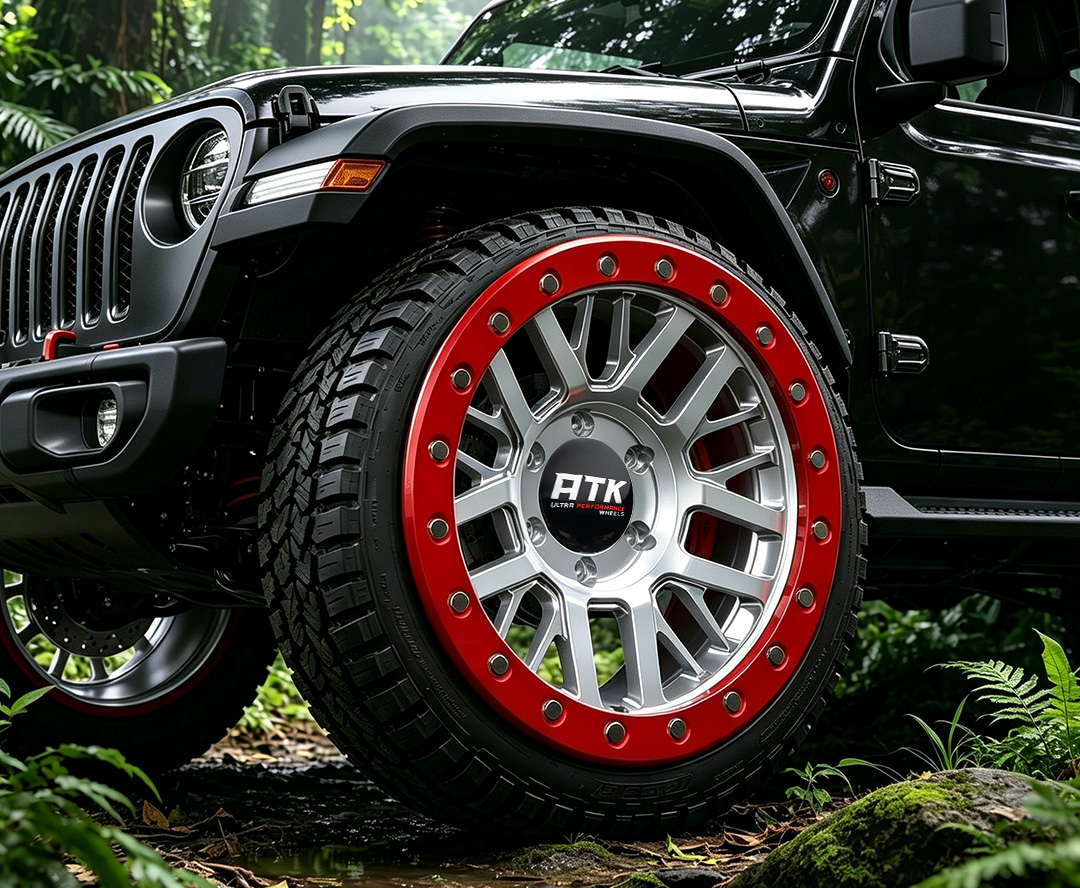
2. Technical Fitment: The 5 Non-Negotiable Metrics
Before selecting a wheel style or finish, you must verify five core technical specifications. Failing to match these parameters guarantees fitment problems, severe tire rubbing, or an unsafe driving dynamic.
+--------------------------------------------------------------------+
|                      WHEEL FITMENT METRICS                         |
+-------------------+------------------------------------------------+
| Bolt Pattern      | Must match hub lug count & PCD (e.g., 6x135)   |
| Center Bore       | Hub-centric fit eliminates high-speed vibration|
| Offset/Backspace  | Controls fender clearance & suspension gap     |
| Load Rating       | Must meet or exceed Gross Axle Weight Rating   |
| Diameter & Width  | Dictates tire sidewall volume & application    |
+-------------------+------------------------------------------------+
A. Bolt Pattern (Pitch Circle Diameter / PCD)
The bolt pattern consists of two numbers: the number of lug holes and the diameter of the imaginary circle they form. You cannot force an incorrect bolt pattern onto a truck hub without unsafe adapters.
-
6×135: Standard on modern Ford F-150s.
-
6×139.7 (6×5.5″): Found on Chevrolet Silverado 1500, GMC Sierra 1500, Toyota Tundra, and Ram 1500.
-
8×165.1 (8×6.5″) & 8×180: Common across heavy-duty 2500 and 3500 series trucks.
B. Center Bore and Hub-Centric Design
The center bore is the machined hole in the middle of the wheel that seats over the truck’s wheel hub.
-
Hub-Centric Wheels: The center bore precisely matches the truck hub diameter. The vehicle’s weight rests directly on the hub, preventing vibrations at highway speeds.
-
Lug-Centric Wheels: The center bore is larger than the hub, placing load stress entirely on the lug nuts. If using lug-centric wheels, installing high-quality aluminum hub-centric rings is mandatory to eliminate high-speed steering shake.
C. Wheel Offset vs. Backspacing
Offset and backspacing dictate where the wheel sits relative to your truck’s fenders and inner suspension arms.
-
Offset (Measured in millimeters): The distance from the wheel’s true mounting surface to its centerline.
-
Positive Offset (+12mm to +44mm): Keeps the wheel tucked inside the fender (Common OEM setup).
-
Zero Offset (0mm): Positions the mounting surface directly in the center of the wheel.
-
Negative Offset (-12mm to -44mm): Pushes the wheel outward beyond the fender, producing a deep-lip look and wide track width.
-
-
Backspacing (Measured in inches): The distance from the back mounting pad to the inner lip of the wheel. Higher backspacing pulls the wheel inward; lower backspacing pushes it outward.
D. Structural Load Rating
A truck’s wheels must carry the gross vehicle weight rating (GVWR) plus towed loads. Never install wheels rated for passenger cars or lightweight SUVs onto a half-ton or three-quarter-ton truck. Look for wheels certified to structural standards like SAE J2530 or DOT compliance with load ratings of at least 2,500 lbs to 3,600+ lbs per wheel.
3. Manufacturing Processes: Cast vs. Flow-Formed vs. Forged
How a wheel is manufactured directly determines its strength, weight, grain structure density, and long-term durability under stress.
| Manufacturing Method | Production Process | Strength Rating | Weight | Best Suited For |
|---|---|---|---|---|
| Cast Aluminum (Low-Pressure) | Molten aluminum poured into a mold. | Standard | Heavy | Daily street driving, mild budget builds |
| Flow-Formed / Hybrid | Cast wheel barrel stretched and compressed under intense heat/pressure. | High (Reinforced Barrel) | Moderate | Overland trails, daily hauling, spirited street use |
| Monoblock Forged | Solid billet 6061-T6 aluminum crushed under 10,000+ tons of pressure. | Maximum Structural Integrity | Ultralight | Extreme off-roading, heavy towing, high-performance builds |
Cast Wheels
Cast wheels are created by pouring liquid aluminum alloy into a pre-shaped mold. While budget-friendly and available in thousands of designs, the cooling process can introduce microscopic porosity. They are heavier and require thicker material to achieve adequate structural strength.
Flow-Formed Wheels
Flow-forming begins with a specialized low-pressure cast blank. The wheel is then placed on a spinning mandrel where hydraulic rollers apply extreme pressure along the inner barrel. This process stretches and compresses the aluminum, aligning the internal grain structure similarly to a forged wheel. You gain a dramatic boost in tensile strength and a noticeable reduction in weight without paying full forging prices.
Forged Wheels
Forged wheels represent the pinnacle of truck wheel engineering. Crafted from solid blocks of aerospace-grade 6061-T6 aluminum, these blanks are subjected to immense pressure that eliminates internal voids and creates an ultra-dense molecular grain structure. Forged wheels handle extreme impacts, heavy payload stress, and harsh trail conditions while remaining significantly lighter than cast alternatives.
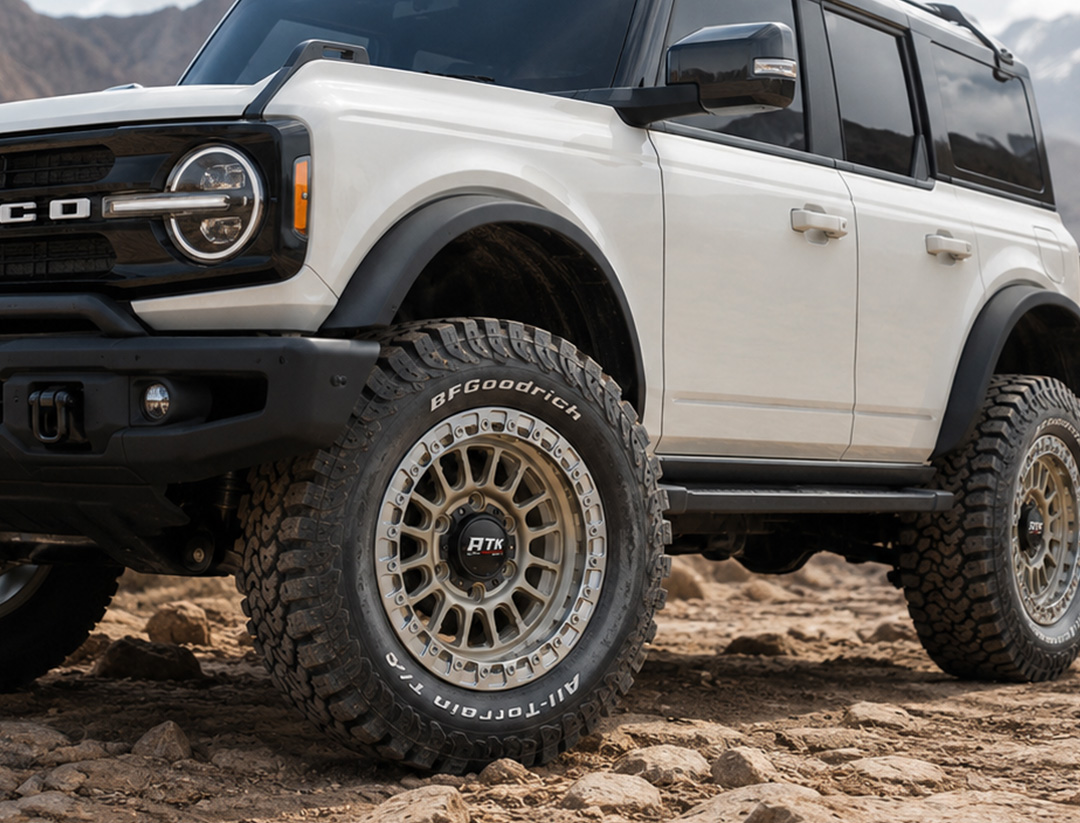
4. Selecting the Optimal Wheel Size for Your Truck Build
Choosing the right wheel diameter comes down to your primary driving environment and tire selection. The rule of thumb: More sidewall rubber yields off-road traction and ride comfort; larger wheel diameters yield crisp handling and modern street aesthetics.
       [ OFF-ROAD / OVERLAND ]                 [ DAILY / STREET / TOWING ]
  17-Inch / 18-Inch Custom Wheels            20-Inch / 22-Inch Custom Wheels
------------------------------------      ------------------------------------
- Maximum tire sidewall cushion                   - Reduced sidewall flex
- Deflates safely for trail grip                  - Direct steering response
- Excellent pothole/rock protection               - Sleek, modern luxury aesthetics
17-Inch & 18-Inch Wheels: The Off-Road & Overland Choice
If you frequently hit dirt trails, rock crawl, or drive over rough terrain, 17-inch and 18-inch wheels are optimal. They allow for a thick tire sidewall (such as 35-inch or 37-inch all-terrain tires), enabling you to “air down” off-road for a larger contact patch and superior shock absorption over jagged obstacles.
20-Inch Wheels: The All-Around Balance
A 20-inch wheel is currently the most popular choice for modern truck owners. It balances an aggressive, contemporary look with enough remaining sidewall height to maintain towing stability and respectable ride comfort on paved roads.
22-Inch & 24-Inch Wheels: Street, Show, and Performance
Larger wheel diameters are designed for street trucks, show builds, and highway hauling. By reducing tire sidewall height, these sizes minimize tire squirm and flex during cornering, delivering tight steering feel on asphalt—though at the expense of trail cushion.
5. Suspension Clearance and Preventing Tire Rub
Installing aftermarket wheels with negative offsets or wider rims often alters the swing arc of your front tires when turning. To prevent high-stress contact between the tire tread and your truck’s body or suspension, you must pair your wheel choice with the appropriate suspension clearance work.
Stock Height         --> Stick to factory-spec offsets (+18mm to +44mm)
Leveling Kit (2"-3") --> Fits 0mm to +12mm offsets with minor inner liner trimming
Suspension Lift (4"+)--> Supports negative offsets (-12mm to -44mm) & 35"+ tires
-
Stock Suspension Height: Stick close to factory offsets (+18mm to +44mm) and modest wheel widths (8.5 to 9 inches) to avoid rubbing inner fender liners or front sway bars.
-
Leveling Kits (2 to 3 Inches): A front leveling kit raises the truck’s nose, allowing you to run 0mm or +12mm offsets alongside 33-inch to 35-inch tires. Minor plastic trimming of the front valence may be necessary.
-
Full Suspension Lifts (4 to 6+ Inches): Designed for aggressive stance enthusiasts. Lifts drop the lower control arms and crossmembers, enabling deep negative offsets (-12mm, -24mm, or -44mm) with 35-inch or 37-inch tires without contacting body mounts.
6. Real-World Case Studies: Truck Configurations
Case Study 1: The Overland Trail & Daily Hauler
-
Vehicle: Ford F-150 SuperCrew 4×4
-
Goal: Maximum off-road capability, durability over washboard roads, maintained towing capacity.
-
Wheel Setup: 17×8.5 Flow-Formed Custom Wheels | 0mm Offset | Hub-Centric
-
Tire Setup: 35×12.50R17 All-Terrain Tires
-
Suspension: 2.5-Inch Coilover Leveling System
-
Result: Flush-to-slightly-aggressive stance, massive sidewall protection against rim damage, smooth highway ride with zero high-speed steering vibration.
Case Study 2: The Heavy-Duty Tow Rig
-
Vehicle: Ram 2500 Heavy Duty Diesel
-
Goal: Pulling a 12,000 lb gooseneck trailer safely while improving stance.
-
Wheel Setup: 20×9 High-Strength Forged Custom Wheels | +18mm Offset | 3,640 lb Load Rating
-
Tire Setup: 295/60R20 Load Range E Highway-Terrain Tires
-
Suspension: Stock Height with Rear Air Helper Springs
-
Result: Crisp highway tracking, absolute zero tire rub, load capability exceeding factory axle specs, polished industrial finish.
7. Frequently Asked Questions (FAQ)
1.What size custom wheels are best for trucks?
The best wheel size depends on your truck model, suspension setup, tire size, and intended use. 17-inch and 18-inch wheels are ideal for off-roading because they allow for thicker tire sidewalls. 20-inch wheels provide the best balance between daily street comfort, towing stability, and aggressive aesthetics. 22-inch and larger wheels suit street performance and show-style builds.
2.How do I choose the right custom wheels for my truck?
To select the correct custom wheels, verify six core technical metrics:
-
Bolt Pattern: Must match your vehicle hub (e.g., 6×135, 6×139.7, 8×165.1).
-
Wheel Diameter and Width: Matched to your target tire dimensions.
-
Offset and Backspacing: Calculated to clear inner suspension components and outer fenders.
-
Center Bore: Ensure it matches your hub or use hub-centric rings.
-
Load Rating: Must meet or exceed your truck’s Gross Axle Weight Rating (GAWR).
3.What offset is best for custom truck wheels?
The ideal offset depends on your desired stance and suspension clearance.
-
+18mm to +44mm (High Positive): Best for stock height trucks seeking a clean, factory-like fitment without rubbing.
-
0mm to +12mm (Neutral/Mild): Ideal for leveled trucks wanting a flush look with wider tires.
-
-12mm to -44mm (Deep Negative): Best for trucks with 4+ inch suspension lifts aiming for a wide, aggressive stance that extends past the fenders.
4.Do custom truck wheels need a high load rating?
Yes. Truck wheels must carry higher structural weight loads than passenger car wheels. Always ensure your aftermarket wheels have a certified load rating appropriate for your vehicle’s weight, cargo capacity, and trailered loads—especially if you regularly haul equipment or tow campers.
5.Are forged wheels better for custom trucks?
Forged wheels offer significantly higher structural strength and lower weight compared to standard cast wheels. They resist severe trail impacts and heavy load stress far better. However, cast or flow-formed wheels are often sufficient for daily pavement commuting and light hauling at a lower price point. Choose forged wheels if you require maximum performance, extreme load safety, or high-end customization.
Final Checklists for Purchasing Truck Wheels
Before placing your order, walk through this quick pre-flight checklist:
[ ] Verified bolt pattern and center bore diameter.
[ ] Confirmed wheel load rating exceeds factory axle ratings.
[ ] Calculated offset/backspace relative to current suspension height.
[ ] Selected lug nuts with the correct seat type (Conical/Tapered vs. Flat Seat).
[ ] Ordered TPMS (Tire Pressure Monitoring System) sensors compatible with your truck year.
Elevate Your Truck’s Stance and Capability
Upgrading your truck’s wheels is a transformative modification that combines functional capability with individual style. By respecting fitment math—bolt patterns, offset, backspacing, and structural load ratings—you ensure your truck performs flawlessly whether cruising the highway or tackling remote trails.
Ready to find the precise fitment for your rig? Explore our curated inventory of heavy-duty, flow-formed, and forged wheel setups at ATK Wheels to discover engineered strength built for your specific make and model.