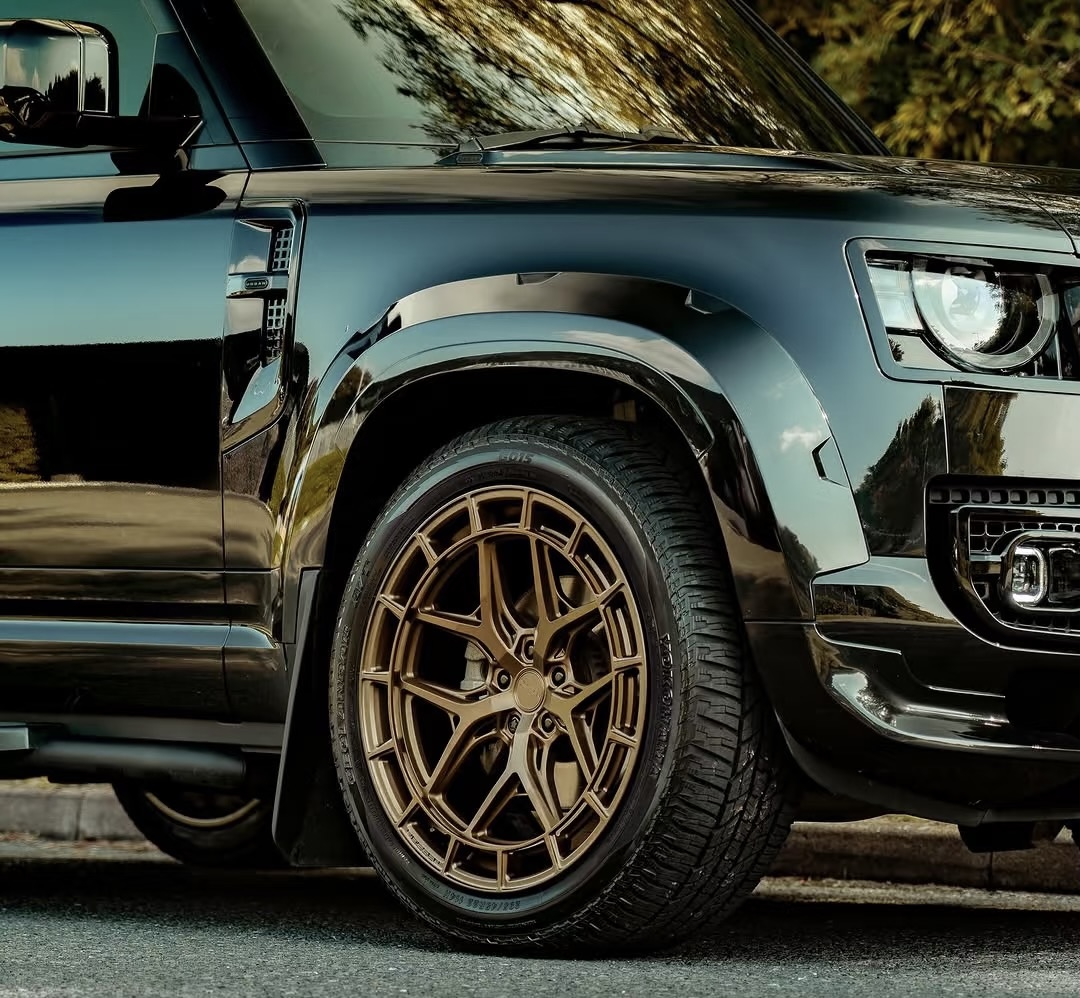
Affordable Forged Wheels: What You Should Know Before Buying
Affordable Forged Wheels: What You Should Know Before Buying
For years, the automotive aftermarket presented enthusiasts with a frustrating dilemma: settle for heavy, fragile cast aluminum wheels or drop $6,000+ on a set of custom forged rims. If you wanted the structural integrity, lightweight benefits, and crisp aesthetic of a forged wheel, your wallet had to take a serious hit.
That dynamic has changed completely. Advances in precision CNC machining, direct-to-consumer distribution models, and optimized manufacturing workflows have given rise to affordable forged wheels. Today, drivers can upgrade to authentic 6061-T6 monoblock forged rims for a fraction of traditional custom prices.
Whether you build a weekend track car, upgrade a daily driver, or fit an electric vehicle with lighter unsprung weight, understanding how budget-friendly forged wheels perform—and how to identify real quality—will help you make the smartest investment for your vehicle.
1.What Are Affordable Forged Wheels?
Affordable forged wheels are budget-friendly monoblock or multi-piece aluminum rims manufactured under extreme heat and intense hydraulic pressure. Unlike traditional cast wheels, which are made by pouring molten aluminum into a mold, forged wheels start as a solid billet of aerospace-grade 6061-T6 aluminum.
During the forging process, industrial presses apply up to 10,000 tons of pressure to compress the metal. This mechanical pressure aligns the internal grain structure of the aluminum along the contours of the wheel face and barrel, eliminating internal voids, porosity, and microscopic cracks.
[Solid 6061-T6 Aluminum Billet]
       │
       ▼ (10,000 Tons Hydraulic Pressure + High Heat)
[Dense, Continuous Grain Structure]
       │
       ▼ (5-Axis Precision CNC Milling)
[Lightweight, High-Strength Forged Wheel]
The resulting wheel is significantly lighter and structurally stronger than any cast or flow-formed alternative, allowing manufacturers to use thinner spoke profiles without sacrificing load ratings.
Key Manufacturing Highlights
-
Material: Aerospace-grade 6061-T6 aluminum alloy.
-
Production Method: High-pressure hydraulic forging followed by 5-axis CNC precision milling.
-
Grain Integrity: Continuous grain flow aligned along stress points for maximum fatigue resistance.
-
Weight Reduction: Up to 25%–35% lighter than OEM cast wheels of identical dimensions.
2.Manufacturing Differences: Forged vs. Flow-Formed vs. Cast Wheels
To appreciate why value-focused forged wheels dominate modern performance builds, you need to look at how different manufacturing methods affect structural strength, weight, and longevity.
+-------------------------------------------------------------------+
|                     MANUFACTURING COMPARISON                      |
+-------------------------------------------------------------------+
| CAST WHEELS        | Molten metal poured into mold.               |
|                    | High weight, porous structure, low strength. |
+--------------------+----------------------------------------------+
| FLOW-FORMED WHEELS | Cast face + pressure-stretched barrel.       |
|                    | Moderate weight, improved barrel strength.   |
+--------------------+----------------------------------------------+
| FORGED WHEELS      | 10,000-ton pressed billet + CNC milled.      |
|                    | Lowest weight, dense grain, maximum strength.|
+-------------------------------------------------------------------+
Gravity and Low-Pressure Casting
Casting involves heating aluminum alloy until it reaches liquid form and pouring or injecting it into a mold. As the molten metal cools, microscopic air pockets and internal voids naturally form throughout the wheel. To compensate for these structural weaknesses, manufacturers must make the spokes and barrels thicker, resulting in a heavier wheel that remains prone to cracking under hard impacts.
Flow-Forming (Rotary Forging)
Flow-formed wheels start as a specialized low-pressure cast blank. The wheel barrel is then heated and spun over a mandrel while hydraulic rollers stretch and compress the aluminum. This process aligns the grain structure along the barrel only, giving it higher tensile strength than standard cast wheels. However, the wheel face and spokes remain cast metal, leaving them subject to the structural limitations of cast aluminum.
Full Forging
A fully forged wheel is forged from center to barrel. The entire wheel structure benefits from compressed, continuous grain alignment. Spoke designs can be milled down to ultra-lean dimensions while maintaining extreme impact resistance and rigid cornering response.
3.Technical Comparison: Wheel Technologies
| Feature / Metric | Standard Cast Wheels | Flow-Formed Wheels | Affordable Forged Wheels |
|---|---|---|---|
| Primary Material | A356 Aluminum Alloy | A356 Aluminum Alloy | 6061-T6 Billet Aluminum |
| Grain Structure | Non-directional / Porous | Grain aligned in barrel only | Fully aligned center & barrel |
| Average Weight (19x9.5) | 26 – 32 lbs | 21 – 25 lbs | 18 – 21 lbs |
| Tensile Strength | ~220 – 250 MPa | ~300 – 330 MPa (Barrel) | ~310 – 380+ MPa (Entire Wheel) |
| Impact Resistance | Low (Prone to cracking) | Moderate | Maximum (Bends before cracking) |
| Custom Fitments | Limited mass specs | Standard offset options | Fully customizable offsets & PCD |
| Average Price (Set of 4) | $600 – $1,200 | $1,100 – $1,800 | $1,500 – $3,500 |
4.Why Value-Priced Forged Wheels Are Worth the Investment
Upgrading to a set of budget-friendly forged wheels delivers tangible, real-world driving benefits that go far beyond aesthetics.
                    ┌──► Reduced Unsprung Weight ──► Faster Acceleration
                    │
Lighter, Stronger   ├──► Higher Structural Rigidity ─► Sharper Handling
Forged Construction │
                    ├──► Lower Rotational Inertia ─► Shorter Braking Distance
                    │
                    └──► Extreme Metal Density ───► Fatigue & Impact Resistance
1. Drastic Unsprung Mass Reduction
Your vehicle’s suspension components, brakes, tires, and wheels make up its unsprung weight—the mass not supported by the suspension springs. Reducing unsprung weight allows your shocks and struts to respond faster to road irregularities.
A reduction of 5 lbs per wheel translates to a dramatic improvement in vehicle dynamics, making steering inputs crisp, direct, and agile.
2. Lower Rotational Inertia
Wheels are rotating mass. The engine must work harder to spin heavy cast wheels up to speed, and the brakes must apply more force to stop them.
-
Quicker Acceleration: Less energy required to rotate the assembly.
-
Shorter Braking Distances: Reduced rotational momentum helps brake pads grab effectively.
-
Improved Efficiency: Electric vehicles (EVs) and gas-powered cars alike see increased range and lower fuel consumption.
3. Superior Strength and Pothole Durability
Because 6061-T6 forged aluminum possesses high yield strength and ductility, forged wheels tend to resist bending or cracking when hitting deep potholes at highway speeds. Where a cast wheel snaps or shatters under heavy shock loads, a forged wheel absorbs and distributes force, preserving tire air pressure and keeping you safe on the road.
5.Price Analysis: What Should You Expect to Pay?
A standard set of authentic, value-engineered fully forged wheels generally ranges between $1,500 and $3,500 per set, depending on sizing, finish, and custom fitment requirements.
+---------------------------------------------------------------------+
|                    FORGED WHEEL PRICE SPECTRUM                      |
+---------------------------------------------------------------------+
| $1,500 - $2,200  │ Entry-Level Monoblock (Standard Sizing/Finishes)|
| $2,200 - $3,500  │ Precision Direct-to-Consumer Custom Offsets     |
| $3,500 - $6,000  │ Mid-Tier Boutique & Two-Piece Forged Rims       |
| $6,000 - $10,000+│ Legacy Motorsport Brands & Multi-Piece Custom   |
+---------------------------------------------------------------------+
Why Legacy Forged Brands Cost $6,000+
Historically, high price tags stemmed from multi-tiered distribution networks involving importers, distributors, regional wholesalers, and local retail shops. Every step added margin onto the final cost. Add expensive boutique marketing budgets and motorsport sponsorships, and the end consumer paid $1,500+ per wheel.
How Direct-to-Consumer Models Drive Down Costs
Modern manufacturers cut out middleman distribution layers. By utilizing direct-to-consumer digital channels, automated CNC programming, and lean inventory controls, brands like ATK Wheels deliver genuine 6061-T6 forged performance directly to enthusiasts at accessible price points.
6.Essential Safety Standards: JWL, VIA, and TÜV Explained
Never compromise on safety when buying wheels. Value-priced forged wheels must meet rigorous international testing certifications to guarantee structural integrity under extreme loads.
[Safety Certification Standard] ──► [Key Test Performed]
 ├── JWL (Japan Light Alloy)      ──► Dynamic Cornering & Fatigue Tests
 ├── VIA (Vehicle Inspection)     ──► Independent Third-Party Verification
 └── TÜV (German Authority)       ──► Extreme Stress & Material Traceability
JWL (Japan Light Alloy Wheel Standard)
A self-certification standard established by the Japanese Ministry of Land, Infrastructure, Transport, and Tourism. It requires wheels to pass rigorous dynamic cornering fatigue, dynamic radial fatigue, and impact resistance tests.
VIA (Vehicle Inspection Association of Japan)
An independent third-party laboratory that verifies whether a wheel tested under JWL standards actually meets or exceeds those technical specifications. Look for wheels stamped with both JWL and VIA markings.
TÜV Certification
The gold standard in automotive safety testing from Germany. TÜV testing checks not only the structural limit of the wheel design under extreme stress, but also audits the manufacturer’s ISO production facilities and metal supply chain traceability.
7.Step-by-Step Selection Workflow for Your Vehicle
Choosing the correct forged wheel fitment requires measuring multiple vehicle parameters. Follow this step-by-step workflow to ensure a perfect fit without rubbing against suspension components or fender arches:
Step 1: Check PCD (Bolt Pattern) ──► e.g., 5x114.3, 5x120, 5x112
        │
Step 2: Determine Rim Diameter & Width ──► e.g., 19x8.5, 20x10
        │
Step 3: Calculate Proper Offset (ET) ──► Balance flush fitment vs clearance
        │
Step 4: Verify Center Bore & Hub-Centric Rings ──► Matches vehicle hub diameter
        │
Step 5: Confirm Brake Caliper Clearance ──► Essential for big brake kits (BBKs)
Key Technical Specs to Confirm Before Ordering
-
PCD (Pitch Circle Diameter): The number of lug holes and the diameter of the invisible circle they form (e.g., 5×114.3 for most Japanese models, 5×120 for BMW, 5×112 for Audi/VW).
-
Wheel Offset (ET): The distance in millimeters from the hub mounting surface to the centerline of the wheel. Lower offsets push the wheel outward toward the fender; higher offsets pull it inward toward the suspension.
-
Center Bore (CB): The center hole of the wheel that sits on the car’s hub. Ensure the wheel is hub-centric to your vehicle or use high-grade aluminum hub-centric rings to prevent high-speed steering vibrations.
-
Load Rating: Ensure the wheel’s certified maximum load rating matches or exceeds your car’s Gross Axle Weight Rating (GAWR)—especially crucial for heavy EV applications.
Frequently Asked Questions(FAQ)
1.What are affordable forged wheels and how do they differ from cast wheels?
Affordable forged wheels are budget-friendly monoblock or multi-piece aluminum wheels manufactured under extreme heat and pressure. Unlike cast wheels—which are made by pouring liquid metal into a mold—forged wheels feature a dense, continuous grain structure. This makes them significantly lighter, stronger, and more resistant to cracks, delivering top-tier performance at an accessible price.
2.How much do affordable forged wheels typically cost?
A standard set of affordable fully forged wheels generally ranges between $1,500 and $3,500 per set. While premium custom-built forged brands can easily cost $6,000 to $10,000+, direct-to-consumer entry-level options offer authentic forged performance at a fraction of the cost.
3.Are affordable forged wheels high quality and safe for daily driving?
Yes, provided they carry official safety certifications such as JWL, VIA, or TÜV. Affordable forged wheels made from high-grade 6061-T6 aluminum offer superior strength-to-weight ratios and structural integrity, making them safer and more durable against heavy pothole impacts than cast or flow-formed alternatives.
4.Flow Formed vs. Affordable Forged Wheels: Which is better?
Forged wheels are structurally superior. Flow-formed wheels start with a cast face and stretch the rim barrel, offering a good balance of low cost and barrel durability. However, affordable fully forged wheels are lighter, stronger across the entire wheel face, and offer higher impact resistance and fully customizable fitments.
5.Are cheap or affordable forged wheels worth the investment?
Yes. Investing in entry-level forged wheels reduces unsprung mass, which improves vehicle acceleration, braking response, and fuel efficiency. Furthermore, their long-term resistance to bending or cracking reduces replacement costs, making them a highly cost-effective upgrade for both daily drivers and track enthusiasts.
Ready to Upgrade Your Ride with High-Performance Forged Rims?
Upgrading your vehicle with genuine forged aluminum wheels no longer requires paying inflated markup prices. By choosing precision-engineered 6061-T6 forged wheels, you unlock faster acceleration, sharper handling response, superior structural durability, and a clean custom aesthetic.
Explore the latest collection of direct-to-consumer forged fitments engineered for track capability and daily driving reliability at ATK Wheels. Upgrade your vehicle’s performance foundation today!