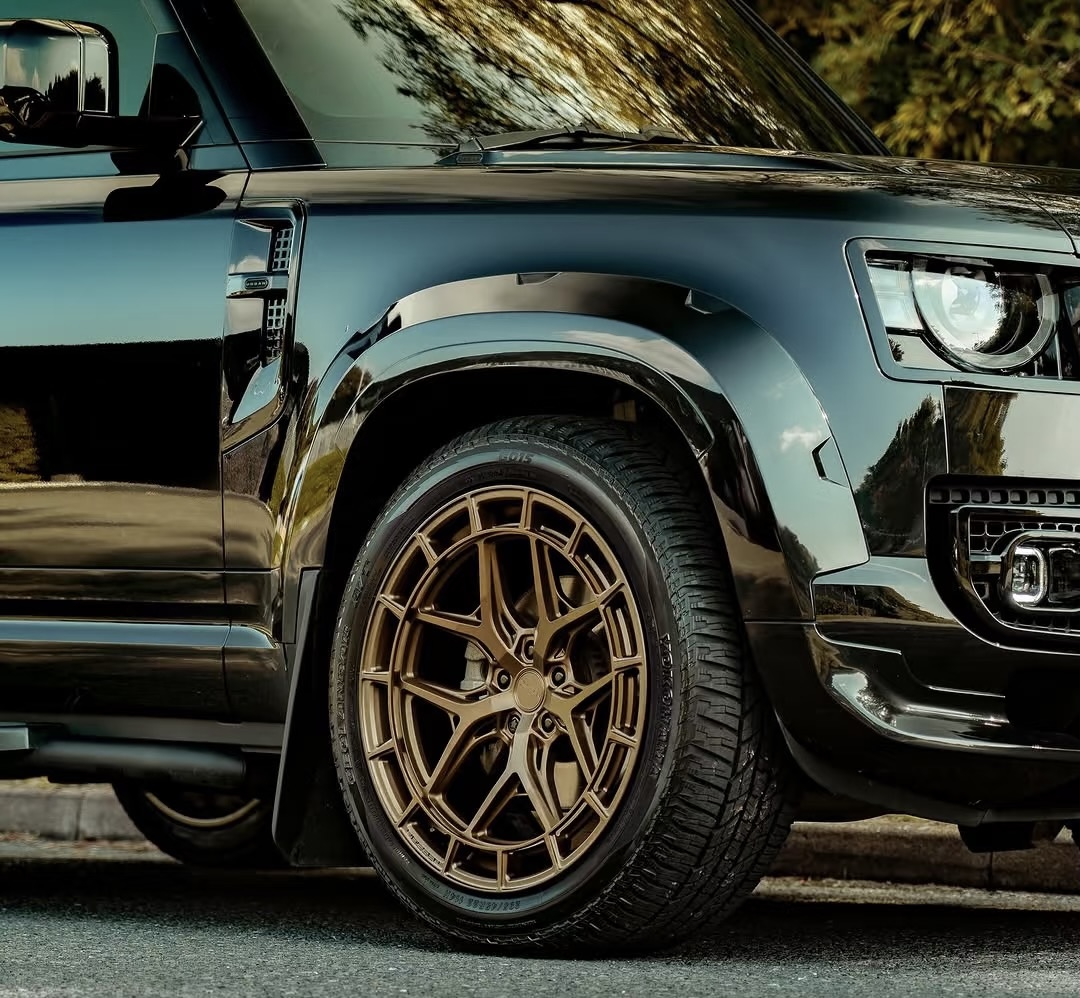
Costom Wheels: What to Know Before Choosing Custom Wheels
Costom Wheels: What to Know Before Choosing Custom Wheels
Adding custom wheels is one of the most effective ways to transform your vehicle’s look, improve highway control, and boost overall driving responsiveness. However, stepping into the aftermarket wheel market can quickly feel overwhelming. Between confusing engineering specs like offset, PCD, and center bore, to navigating the price gaps between cast, flow-formed, and forged builds, a single wrong calculation can lead to wheel rub, vibration, or reduced safety.
Whether you want a flush stance for daily commutes, track-ready strength, or a unique style that turns heads, this manual breaks down everything you need to know about choosing aftermarket custom wheels with total confidence.
1. Why Upgrade to Custom Wheels? (Beyond Aesthetic Appeal)
While custom finishes and aggressive spoke patterns attract most car owners, the functional advantages of high-quality custom wheels run far deeper than visual appeal.
+-----------------------------------------------------------------------+
|                     KEY ADVANTAGES OF CUSTOM WHEELS                  |
+-----------------------------------------------------------------------+
|  [ Visual Styling ]    [ Unsprung Weight ]   [ Stance & Clearance ]   |
|   Personalized look     Faster acceleration   Accommodates bigger     |
|   & unique finishes     & sharper braking     performance brakes      |
+-----------------------------------------------------------------------+
Unsprung Mass and Rotational Inertia
Every pound saved on your wheels delivers a noticeable boost in drive quality compared to saving weight inside the cabin. Wheels, tires, and brake components make up your vehicle’s unsprung mass—the weight not supported by your suspension springs.
Lighter custom wheels reduce rotational inertia, allowing your engine to spin the wheels up to speed with less force and allowing your brakes to stop them more efficiently.
Enhanced Dynamic Handling
Aftermarket wheel configurations often allow you to widen your vehicle’s track width or mount wider performance tires. A wider contact patch yields:
-
Higher cornering stability and reduced body roll.
-
More immediate steering feedback during swift maneuvers.
-
Better traction during hard acceleration from a standstill.
Clearance for Upgraded Brakes
If you plan to install a Big Brake Kit (BBK) with multi-piston calipers, factory rims rarely offer sufficient clearance. Custom wheels can be engineered with specialized spoke profiles (high-disk setups) that accommodate larger calipers without requiring hazardous wheel spacers.
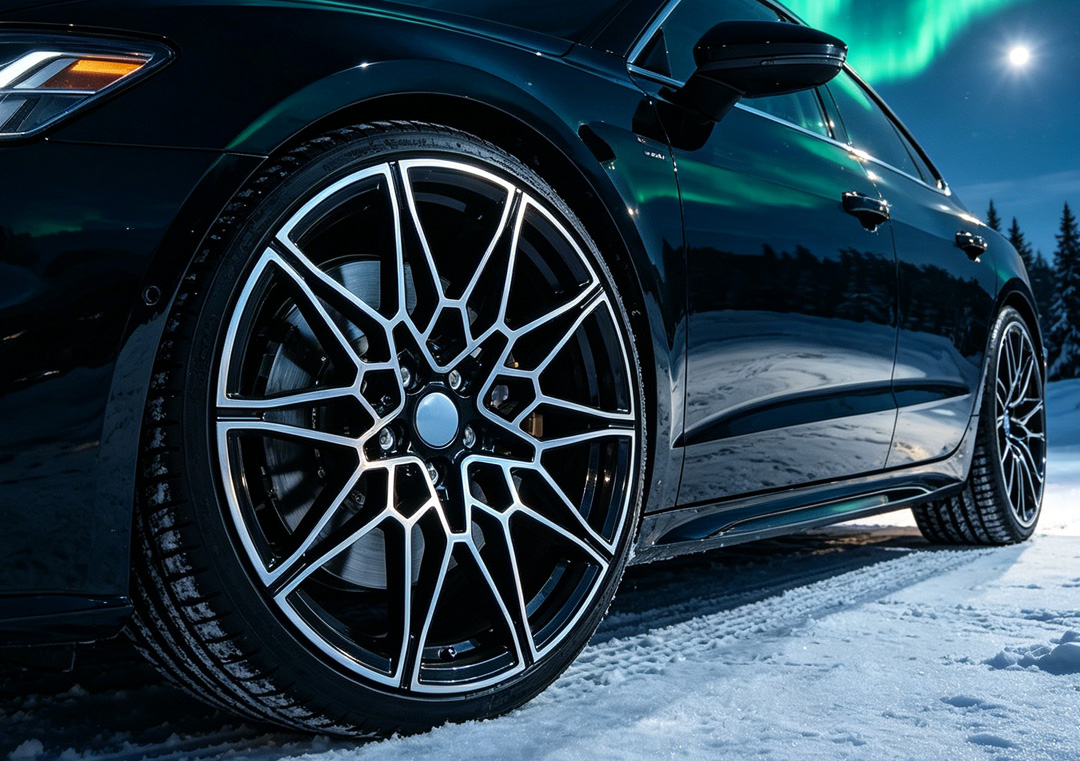
2. Understanding Wheel Manufacturing: Cast vs. Flow-Formed vs. Forged
Not all custom wheels offer the same structural strength. Understanding how an alloy wheel is manufactured is crucial for matching your driving habits, performance goals, and budget.
   CASTING PROCESS           FLOW FORMING              FORGING PROCESS
+-------------------+    +-------------------+    +-------------------+
|  Molten aluminum  |    | Cast wheel barrel |    | Solid billet block|
| poured into mold  | -> | heat-stretched    | -> | compressed under  |
| (Value focus)     |    | (Balanced choice) |    | extreme pressure  |
+-------------------+    +-------------------+    +-------------------+
Low-Pressure Cast Wheels
Casting involves pouring molten aluminum alloy into a mold shaped like the final wheel. In low-pressure casting, liquid metal is drawn up into the mold using mild pressure to reduce air pockets and structural voids.
-
Best for: Daily street driving, show vehicles, and budget-conscious builds.
-
Pros: Highly affordable, endless design variety.
-
Cons: Heavier structure, lower resistance to harsh impact damage (cracking rather than bending under extreme stress).
Flow-Formed Wheels (Rotary Forged)
Flow forming begins with a specialized cast wheel center. The wheel barrel is then heated while high-speed steel rollers stretch and compress the aluminum along the rim edge. This pressure aligns the internal grain structure of the aluminum similarly to a forged wheel.
-
Best for: Spirited road driving, weekend track events, and performance street cars.
-
Pros: Up to 25% lighter than traditional cast wheels, significantly higher tensile strength, mid-range pricing.
-
Cons: Slightly more expensive than basic cast models.
Fully Forged Wheels
Forged wheels begin as a solid block of aerospace-grade 6061-T6 aluminum billet. Under extreme pressure (often 10,000 tons or more), the metal block is crushed into shape before CNC machines carve out the final spoke details.
-
Best for: High-performance sports cars, dedicated track cars, off-road builds, and luxury vehicles requiring maximum load capacity.
-
Pros: Maximum structural strength, ultra-lightweight, high impact resistance (bends instead of shattering under extreme stress), fully customizable dimensions.
-
Cons: Premium price tag.
Comparison Matrix: Wheel Manufacturing Methods
| Feature | Cast Wheels | Flow-Formed Wheels | Forged Wheels |
|---|---|---|---|
| Manufacturing Process | Molten metal poured into mold | Cast center + heat-stretched barrel | Solid aluminum block compressed |
| Relative Weight | Baseline (Heaviest) | 15% – 25% Lighter | 25% – 35% Lighter |
| Structural Strength | Moderate | High | Maximum |
| Impact Durability | Prone to cracking | High bending resistance | Superior structural integrity |
| Price Point ($ per set) | $400 – $1,200 | $900 – $2,200 | $2,500 – $8,000+ |
| Ideal Application | Daily Commuting / Styling | Street Performance / Track | High-End Performance / Racing |
3. The Critical Wheel Fitment Blueprint
Installing custom wheels requires precise measurements. Even a tiny math error can cause tires to scrub against shock struts or rub against outer fender lips.
                    +--------------------------------+
                    |       WHEEL CROSS SECTION      |
                    +--------------------------------+
                    |          Centerline            |
                    |              |                 |
                    |   Negative   |   Positive      |
                    |    Offset    |    Offset       |
                    |   <-------   |   ------->      |
                    |              |   [Hub Face]    |
                    +--------------------------------+
1. Bolt Pattern (PCD – Pitch Circle Diameter)
The bolt pattern identifies the number of lug holes and the diameter of the imaginary circle they form.
-
Example: 5×114.3 means 5 lug holes arranged around a 114.3 mm circle.
-
Key Rule: Never attempt to force a non-matching bolt pattern without certified hub adapters.
2. Wheel Diameter and Width
Expressed in inches (e.g., 18×8.5), where 18 represents total rim diameter and 8.5 indicates width between the inner tire seating flanges.
3. Wheel Offset (ET)
Offset is measured in millimeters from the wheel’s physical centerline to its mounting hub surface.
-
Positive Offset (+ET): The mounting hub sits closer to the outer wheel face (common on modern front-wheel and all-wheel-drive vehicles).
-
Zero Offset (ET0): The mounting surface lines up directly with the wheel’s geometric center.
-
Negative Offset (-ET): The mounting surface sits deep inside the wheel rim, pushing the outer lip outward for a wide stance (popular on trucks and rear-wheel-drive cars).
4. Center Bore and Hub Centric Rings
The center bore is the circular opening on the back of the wheel that sits over the vehicle’s axle hub.
-
Hub-Centric Fitment: The wheel’s center bore matches the vehicle’s axle hub diameter precisely down to the millimeter. Vehicle weight rests on the solid metal hub.
-
Lug-Centric Fitment: The wheel bore is larger than the axle hub. You must install high-density hub-centric rings to center the wheel perfectly on the vehicle hub face. Without center rings, you will likely experience steering wheel vibrations at highway speeds.
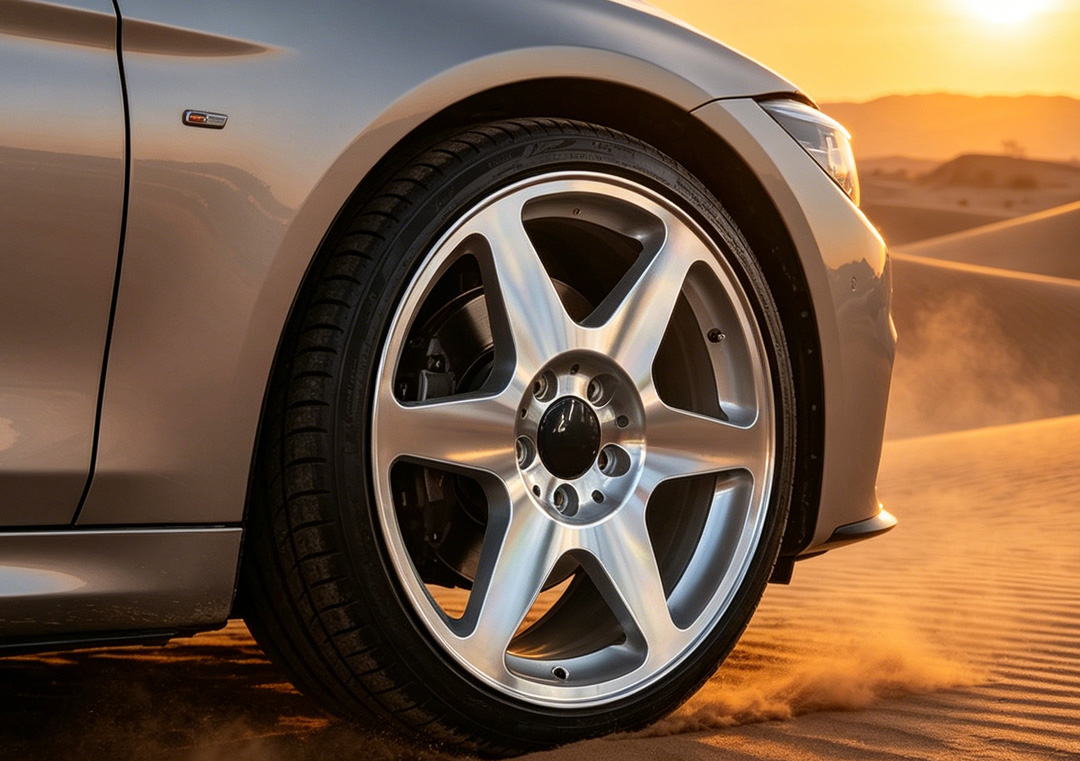
4. Popular Design Styles and Surface Finishes
A wheel’s visual design sets the tone for your vehicle’s overall look. Matching spoke architecture to your vehicle’s body lines builds a clean, cohesive appearance.
+------------------------------------------------------------------------+
|                      POPULAR WHEEL DESIGNS                             |
+------------------------------------------------------------------------+
|  [ Mesh / Y-Spoke ]      [ Multi-Spoke ]       [ Deep Concave ]        |
|  Euro / Sport Sedans     Clean / Luxury Look   Aggressive Muscle/Trucks|
+------------------------------------------------------------------------+
-
Classic 5-Spoke: Timeless, easy to clean, and provides a clear view of brake rotors and calipers. Fits muscle cars, sports coupes, and light trucks well.
-
Mesh & Y-Spoke Designs: Offers superior structural weight distribution across multiple contact points. Popular on European sedans and tuned Japanese performance cars.
-
Multi-Spoke (10+ Spokes): Delivers an elegant, sophisticated appearance that suits executive sedans and luxury SUVs.
-
Deep Concave & Deep Lip Profiles: Curved spoke profiles draw visual depth inward toward the center cap, creating a wide, aggressive stance.
Popular Surface Finishes
-
Gloss or Satin Powder Coat: Highly durable finish that protects against brake dust, road salt, and harsh weather.
-
Brushed Metal: Hand-brushed aluminum coated with a clear seal that highlights raw metal textures.
-
Diamond-Cut / Machined Face: Precision CNC lathes shave off surface finish layers to reveal bare aluminum on spoke faces, creating a striking two-tone contrast.
-
Physical Vapor Deposition (PVD) Chrome: Modern, lightweight chrome application that resists corrosion far better than traditional electroplated chrome.
5. Essential Maintenance Practices for Custom Wheels
Protecting your investment requires simple, regular care. Modern aftermarket wheel finishes require specific maintenance to keep their clear coat intact.
+-----------------------------------------------------------------------+
|                    BEST PRACTICES FOR WHEEL CARE                      |
+-----------------------------------------------------------------------+
|  [ Clean Cool Wheels ]   [ pH-Neutral Soap ]   [ Soft Microfiber ]    |
|   Prevents finish shock   Protects clearcoat    Prevents micro-scratches|
+-----------------------------------------------------------------------+
-
Avoid Acidic Wheel Cleaners: Harsh chemicals, harsh acids, or aggressive degreasers can permanently etch clear coats, dull polished aluminum, and discolor center caps.
-
Clean Wheels When Cool: Never spray cold water or cleaning sprays directly onto wheels hot from aggressive braking. Rapid temperature shocks can craze clear coats or warp brake rotors.
-
Use Separate Wash Supplies: Dedicate separate wash buckets, soft microfiber mitts, and soft wheel brushes exclusively to wheel cleaning to avoid transferring sharp metallic brake dust onto painted vehicle body panels.
-
Apply Protective Sealants: Apply high-temp wheel wax or ceramic coatings twice a year. Ceramic barriers help shed corrosive brake dust, road tar, and grime during routine washes.
-
Always Hand-Torque Lug Nuts: Insist that mechanics install lug nuts using a calibrated manual torque wrench set to manufacturer specifications. High-torque pneumatic impact wrenches can distort wheel mounting faces, strip wheel studs, and cause dangerous vibrations.
Frequently Asked Questions(FAQ)
1. How much do custom wheels cost?
Answer: Custom wheels range from $400 to over $8,000 per set, depending on sizing, materials, and manufacturing methods:
2. How do I know if custom wheels will fit my car?
Answer: To confirm proper fitment, check six crucial parameters: wheel diameter, width, bolt pattern (PCD), offset (ET), center bore, and brake caliper clearance. Matching these exact numbers ensures your wheels will mount safely without rubbing against suspension struts or fender liners.
3. Can custom wheels have a different offset from OEM wheels?
Answer: Yes, custom wheels can use a different offset than stock wheels. Altering offset can widen track width or push the wheel face flush with outer fenders. However, the new offset must leave adequate clearance inside the wheel well to prevent tires from scrubbing internal components during tight turns or deep suspension compression.
4. Are custom wheels better than factory wheels?
Answer: Custom wheels offer far more flexibility in sizing, weight savings, spoke design, and visual finishes. High-grade flow-formed or forged custom wheels outperform heavy cast OEM wheels in strength and dynamic weight savings. However, overall quality depends on structural engineering, certified load ratings, and metal composition.
5. Can custom wheels improve car performance?
Answer: Yes. Lightweight flow-formed or forged custom wheels lower unsprung mass and rotational inertia. Reducing this weight allows for faster throttle response, shorter braking distances, better suspension tracking over rough surfaces, and sharper steering wheel feedback.
Ready to Transform Your Vehicle’s Stance and Drive Quality?
Selecting the ideal custom wheel setup isn’t just about choosing an eye-catching spoke pattern—it’s about combining precision engineering, correct sizing specs, and reliable manufacturing quality.
Whether you’re looking for durable, budget-friendly cast options for your daily driver, track-tested flow-formed setups, or custom-engineered forged wheels built for your exact specs, working with experienced fitment specialists eliminates guessing games.
Explore expertly engineered options, browse real-world fitment galleries, and find your perfect set of high-performance custom wheels at ATK Wheels today.