Off Road Rims: Choosing the Right Wheels for Trucks and SUVs
Off Road Rims: Choosing the Right Wheels for Trucks and SUVs
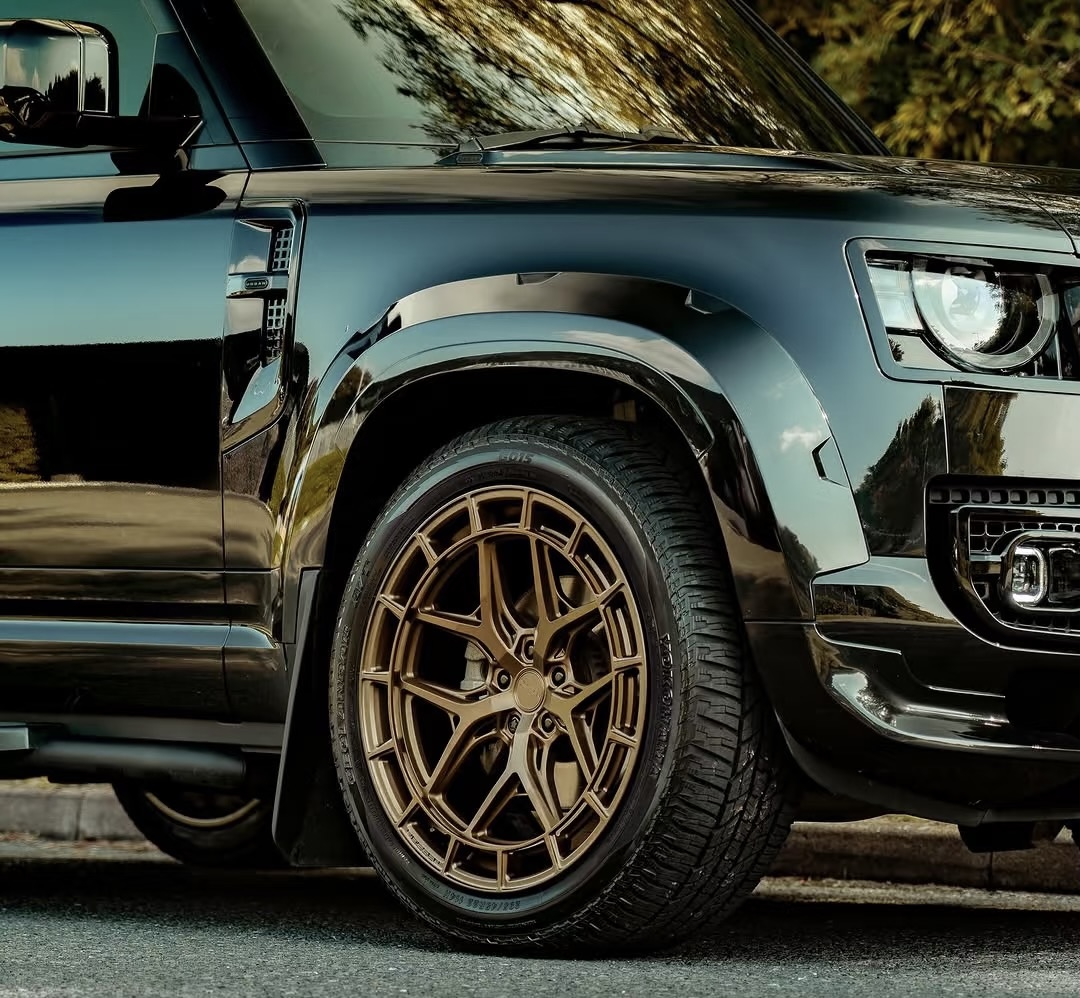
Tackling demanding backcountry trails, rocky inclines, or expansive sand dunes requires total confidence in your truck or SUV setup. While suspension upgrades and aggressive tire treads get plenty of attention, your wheels serve as the direct foundation for every off-pavement excursion. Upgrading to a dedicated set of off road rims isn’t merely about aesthetics; it fundamentally alters vehicle handling, impact resistance, and tire behavior over unpredictable terrain.
Finding the ideal set demands a precise mix of correct fitment metrics, suitable structural materials, and ideal sizing. Installing an incorrect wheel configuration can lead to frame rubbing, broken components, or catastrophic tire bead failure far from paved roads. This article breaks down everything you need to know to select the right setup with absolute precision.
1. Defining Off Road Rims: Core Features & Engineering
Standard factory wheels prioritize high-speed street efficiency, fuel economy, and smooth highway comfort. Conversely, aftermarket off road rims are engineered specifically to withstand heavy lateral loads, harsh impact forces, and extreme environments.
+-------------------------------------------------------------------+
|                        OFF ROAD RIM ANATOMY                       |
+-------------------------------------------------------------------+
|  [Bead Seat] <--- Holds tire lip under low pressure               |
|  [Spoke Design] <--- Thick structure to disperse heavy impacts    |
|  [Hub Center Bore] <--- Centering hole to align with vehicle axle |
|  [Bolt Pattern] <--- Bolt holes matching wheel hub studs          |
|  [Outer Lip/Flange] <--- Reinforced to resist rock scraping       |
+-------------------------------------------------------------------+
Key features that distinguish heavy-duty off road rims from regular passenger wheels include:
-
Reinforced Lip and Flange Structures: Outer rims are intentionally thickened to resist bending or cracking when scraping against granite boulders or falling into deep ruts.
-
Elevated Load Ratings: Off-pavement wheels carry significantly higher weight capacities to support heavy equipment, overland gear, drawbar weight, and sudden dynamic shocks from high-speed trail bumps.
-
Specialized Bead Seats: Interior barrel profiles feature aggressive knurling or deeper drop-centers to hold the tire bead firmly in place when operating at reduced tire pressures.
-
Brake and Caliper Clearance: Modern designs account for oversized aftermarket brake kits and large steering knuckles common on lifted trucks.
2. Steel vs. Alloy Off Road Rims: Material Breakdown
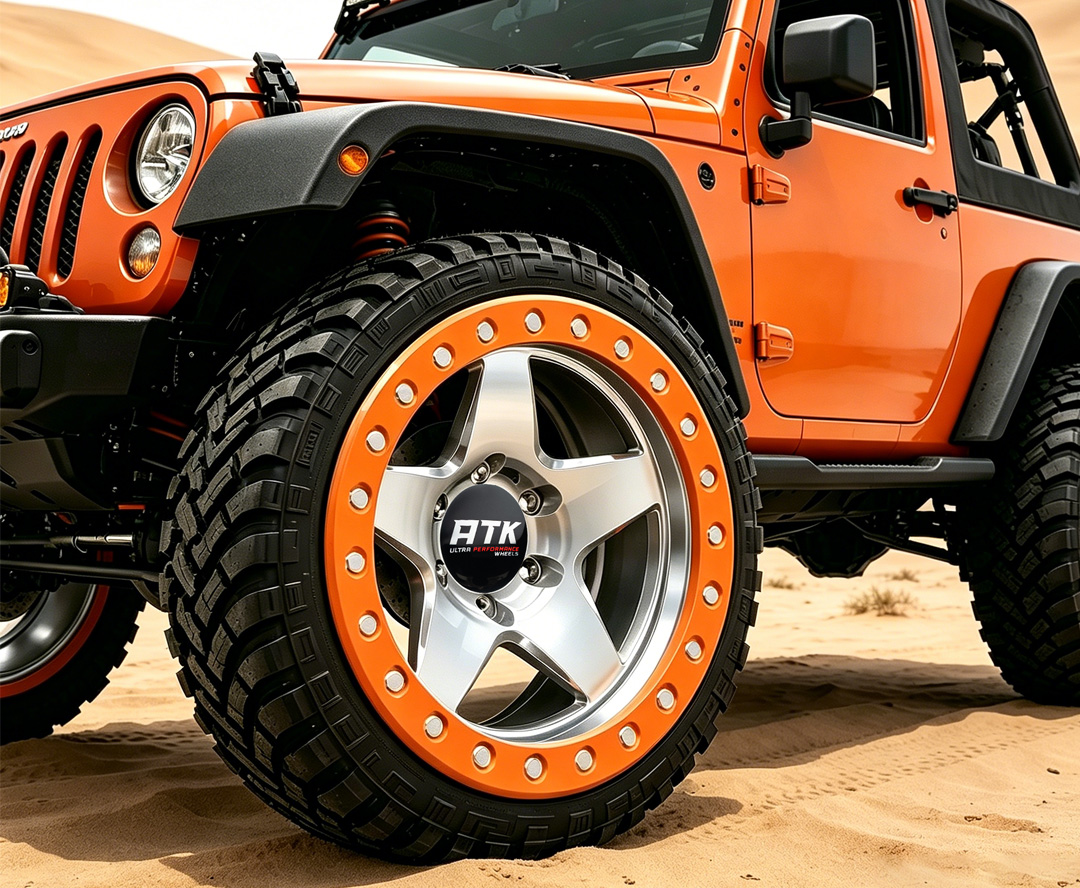
One of the foundational decisions when building an off-pavement rig is choosing between steel and cast or forged aluminum alloy. Both materials offer distinct functional trade-offs depending on your budget, driving style, and primary terrain.
                   STEEL vs. ALLOY AT A GLANCE

   +-----------------------+-----------------------+
   |      STEEL RIMS       |      ALLOY RIMS       |
   +-----------------------+-----------------------+
   | * Malleable / Bendable| * Rigid / Brittle     |
   | * Repairable on trail | * Cracks under extreme|
   | * Heavier weight      | * Lightweight performance
   | * Budget friendly     | * Higher cost investment
   +-----------------------+-----------------------+
Steel Rims
Steel construction remains a staple among rugged overlanders and extreme crawlers who prioritize ultimate durability over weight savings.
-
Pros: Highly malleable under impact. If you slam a steel wheel against a jagged ledge, it bends rather than shatters. This allows trail-side repairs using a sledgehammer to reseal the tire bead and keep rolling. Steel wheels are also noticeably less expensive.
-
Cons: Substantially heavier than aluminum. Higher unsprung weight increases strain on steering components, slows acceleration, lengthens stopping distances, and reduces overall fuel economy.
Alloy Rims
Aluminum alloys (including cast, flow-formed, and fully forged variants) represent the vast majority of modern trail setups.
-
Pros: Exceptionally lightweight relative to their strength. Reduced rotational mass delivers superior throttle response, improved suspension cycling over rapid bumps, better brake cooling, and enhanced fuel efficiency. They also offer limitless design options and corrosion resistance.
-
Cons: Alloy is rigid. Under extreme shock loads that exceed its structural yield strength, an alloy wheel can crack or lose a section of its outer flange, making immediate field repair virtually impossible.
Material Performance Comparison
| Feature / Metric | Steel Rims | Cast Alloy Rims | Forged Alloy Rims |
|---|---|---|---|
| Trail Repairability | Excellent (Can be hammered back) | Poor (Cracks under extreme impact) | Moderate (Higher structural yield limit) |
| Unsprung Weight | Heavy | Moderate | Light |
| Structural Rigidity | Moderate (Flexes under load) | High | Exceptionally High |
| Corrosion Resistance | Poor (Requires powder coating) | Excellent | Excellent |
| Average Cost | Budget-Friendly | Mid-Range/Premium |
3. Demystifying Wheel Fitment: Bolt Patterns, Offset, and Backspacing
Installing new wheels requires absolute mathematical accuracy. Buying the wrong offset or backspacing can cause severe tire scrubbing against control arms, fenders, or frame rails.
                      OFFSET & BACKSPACING

         Zero Offset          Negative Offset          Positive Offset
        (Center Line)          (Deep Lip Look)         (Tucked Inside)
       +-------------+        +-------------+          +-------------+
       |   |  |  |   |        | |  |  |     |          |     |  |  | |
       |   |  |  |   |        | |  |  |     |          |     |  |  | |
       |   | Hub |   |        | | Hub     |          |     | Hub | |
       |   | Face|   |        | | Face    |          |     | Face| |
       |   |  |  |   |        | |  |  |     |          |     |  |  | |
       +-------------+        +-------------+          +-------------+
Bolt Pattern (PCD)
The bolt pattern indicates the number of lug holes and the diameter of the imaginary circle they form. Common truck configurations include 5×127 (5×5) for Jeep Wranglers/Gladiators, 6×139.7 (6×5.5) for Toyota Tacomas/4Runners and Chevy 1500s, and 8×165.1 (8×6.5) for heavy-duty Ford and RAM trucks.
Offset
Offset measures the distance in millimeters from the wheel’s true centerline to the mounting surface that seats against the brake rotor:
-
Zero Offset: The mounting hub sits exactly on the centerline of the wheel.
-
Negative Offset: The mounting face sits toward the back of the wheel (closer to the vehicle). This pushes the rim outward, creating a wider stance, deeper outer lip, and improved lateral stability.
-
Positive Offset: The mounting face sits toward the front face of the wheel. This pulls the rim inward toward the suspension.
Backspacing
Backspacing measures the physical distance from the rear edge of the wheel lip to the hub mounting surface in inches. It directly determines how much room remains for inner suspension components, sway bar links, and upper control arms (UCAs).
4. Selecting the Correct Size for Your Rig
When running larger off-pavement tires (such as 33-inch, 35-inch, or 37-inch setups), matching the correct wheel diameter is critical for proper air-down performance and component clearance.
                 SIDEWALL WALL CUSHION COMPARISON

   Small Rim / Tall Sidewall            Large Rim / Short Sidewall
        (Ideal Off-Pavement)                (Poor Trail Cushioning)

        .-----------------.                     .-----------------.
       /                   \                   /   .-----------.   \
      |   +-------------+   |                 |   /             \   |
      |   |  17" Rim    |   |                 |  |   20" Rim   |  |
      |   +-------------+   |                 |   \             /   |
       \                   /                   \   '-----------'   /
        '-----------------'                     '-----------------'
         [ Generous Cushion ]                    [ Minimal Cushion ]
The 17-Inch Sweet Spot
For most standard mid-size and full-size truck platforms, 17-inch rims offer the absolute best balance of tire options, brake clearance, and rubber sidewall. A 17-inch wheel wrapped in a 35-inch or 37-inch tire provides substantial sidewall height. This extra rubber flexes over rocks, absorbs hard impacts, and creates a massive contact patch when deflated.
The Downside of Oversized Rims (20 Inches and Up)
While 20-inch and larger rims deliver a striking street presence, they severely compromise trail capabilities. A large rim reduces the available tire sidewall height. Without sufficient rubber to flex, you risk pinching the tire between rocks and the rim lip, leading to sidewall tears, bent rims, and an extremely harsh ride over washboard roads.
5. Beadlock Rims vs. Standard Rims
Understanding the functional boundary between standard rims and true beadlock systems helps prevent over-specifying or buying non-street-legal equipment.
                    BEADLOCK SYSTEM MECHANICS

            Standard Rim                   Beadlock Rim
      +----------------------+        +----------------------+
      | Tire Bead sits inside|        | Tire Outer Bead      |
      | rim lip via internal |        | clamped securely by  |
      | air pressure only    |        | external bolted ring |
      +----------------------+        +----------------------+
                 |                               |
                 v                               v
         Rely on ~15+ PSI                 Can run 0-5 PSI
Standard Rims
Standard rims rely entirely on internal air pressure to hold the tire’s bead against the inner wheel flange. If air pressure drops too low—typically below 12–15 PSI depending on vehicle weight—a hard lateral force can break the bead, releasing all remaining air instantly and unseating the tire from the rim.
Beadlock Rims
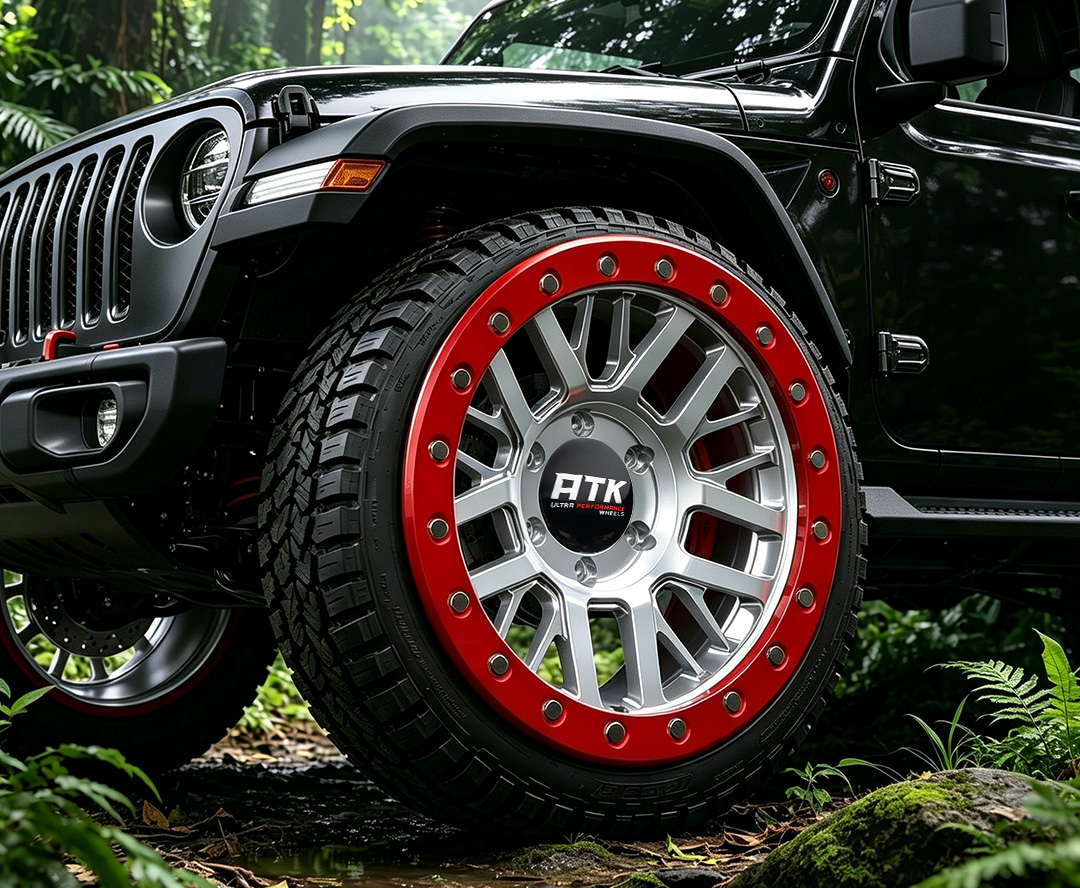
A true beadlock wheel features an integrated outer flange. The tire’s outer bead sits over this flange and is locked in place using a secondary metal ring secured by 24 to 36 grade-8 bolts.
-
Key Advantage: Allows drivers to drop tire pressures down to 3 to 8 PSI without any risk of popping the tire off the rim. This ultra-low pressure flattens the tire tread to maximize traction over slick rock faces and deep sand.
-
Considerations: Beadlocks add significant weight, require meticulous bolt torque maintenance, and are generally not DOT-approved for highway use in many jurisdictions.
6. Real-World Applications: Scenario Breakdown
+--------------------------------------------------------------------+
|                      RIG SETUP SELECTION MATRIX                    |
+--------------------------------------------------------------------+
| [Sand Dunes & Desert Sprinting]                                    |
|  ---> Lightweight Flow-Formed Alloy | 17-inch | Moderate Negative  |
+--------------------------------------------------------------------+
| [Technical Rock Crawling]                                          |
|  ---> Beadlock Alloy or Heavy Steel | 17-inch | Deep Negative      |
+--------------------------------------------------------------------+
| [Long-Distance Overland Touring]                                   |
|  ---> Forged or Heavy Cast Alloy    | 17/18"  | Near-Factory Offset|
+--------------------------------------------------------------------+
Scenario A: Technical Rock Crawling
-
Ideal Setup: 17-inch Beadlock Alloy or Heavy Duty Steel
-
Reasoning: Extremely low tire pressures are required for traction over sharp granite ledges. Outer ring protection guards against sidewall separation, while negative offset keeps the chassis stable on steep side-hills.
Scenario B: Long-Distance Overland Touring
-
Ideal Setup: 17-inch or 18-inch High-Load Cast/Forged Alloy
-
Reasoning: Overland rigs travel thousands of highway miles between remote trails. Lightweight alloy reduces drivetrain stress and improves fuel range while easily carrying heavy rooftop tents and gear drawers.
Scenario C: Desert Dunes and Baja Sprinting
-
Ideal Setup: 17-inch Lightweight Flow-Formed Alloy with Knurled Bead Seats
-
Reasoning: High-speed desert running relies on rapid suspension response. Minimizing unsprung weight helps shocks keep tires planted, while knurled inner beads prevent tire rotation on the rim during hard acceleration.
7. Step-by-Step Step Instructions: Choosing Rims for Larger Tires
When stepping up in tire size, follow this structured evaluation process to ensure total compatibility:
+-------------------------------------------------------------------+
|                   TIRE & RIM UPGRADE WORKFLOW                     |
+-------------------------------------------------------------------+
|  Step 1: Check Vehicle Lug Pattern & Center Bore                  |
|                             v                                     |
|  Step 2: Confirm Minimum Rim Width for Target Tire Size           |
|                             v                                     |
|  Step 3: Calculate Required Offset/Backspacing for Clearance      |
|                             v                                     |
|  Step 4: Verify Wheel Load Capacity Exceeds GVWR Ratings          |
|                             v                                     |
|  Step 5: Test Fit Assembly & Verify Full Steering Lock Clearance |
+-------------------------------------------------------------------+
-
Verify Bolt Pattern and Hub Center Bore: Ensure the rim matches your vehicle’s specific bolt circle and center bore diameter. Hub-centric setups are strongly preferred to minimize high-speed vibrations.
-
Consult Tire Manufacturer Width Specs: Every tire size requires a specific rim width range. For example, a 35×12.50R17 tire typically requires a rim width between 8.5 and 10 inches to ensure even tread wear.
-
Calculate Backspacing Requirements: Measure the distance between your factory tire and the upper control arm or sway bar. Select a lower backspacing numerical value to push the wheel outward and eliminate contact points.
-
Confirm Load Ratings: Divide your vehicle’s Gross Axle Weight Rating (GAWR) by two. Ensure each individual rim rating exceeds this number by a comfortable margin to handle dynamic trail shocks.
-
Account for Lift Kit Geometry: Lift kits alter track width and steering geometry. Always check with your suspension manufacturer for their recommended backspacing specs prior to ordering wheels.
8. Essential Care, Maintenance, and Safety
Keeping your setup in peak condition requires routine maintenance before and after every trip:
-
Torque Lug Nuts Regularly: Off-pavement vibrations can loosen lug nuts. Torque them to factory specifications using a calibrated torque wrench after every trail outing and re-check after the first 50 miles on new wheels.
-
Inspect for Cracks and Debris: After returning from a run, thoroughly wash mud from the back of the wheels. Trapped mud causes severe wheel imbalance on the highway. Inspect alloy faces for hairline stress fractures or deep gouges.
-
Maintain Beadlock Bolts: If running beadlocks, routinely check the torque on every ring bolt using a cross-pattern sequence. Thermal expansion and off-pavement flex can cause ring bolts to back out over time.
Frequently Asked Questions(FAQ)
1.What size rims are best for off-roading?
For most trucks and SUVs, 17-inch rims are a popular choice because they provide more tire sidewall for cushioning impacts and improving traction on rough terrain. The correct size ultimately depends on tire size, brake clearance, suspension setup, and intended use.
2.What offset is best for off road rims?
The ideal offset depends on the vehicle, wheel width, tire size, and suspension setup. A suitable offset should provide adequate clearance without causing excessive tire rubbing or placing unnecessary stress on suspension components.
3.Are beadlock rims better for off-roading?
Beadlock rims can be beneficial in extreme off-road conditions because they mechanically secure the tire bead when running very low tire pressures. However, they are usually unnecessary for normal trail driving, and street-use legality should be checked locally.
4.Are alloy or steel rims better for off-road driving?
Steel rims are valued for durability and repairability, while alloy rims generally offer lower weight and more design options. The better choice depends on terrain, vehicle weight, driving style, and whether weight reduction is important.
5.How do I choose off road rims for larger tires?
Match the rim diameter and width to the tire manufacturer’s specifications, then verify bolt pattern, offset, center bore, brake clearance, load rating, and suspension clearance. Larger tires may also require changes to suspension or fender clearance.
Build Your Setup with Confidence
Choosing the right set of off road rims comes down to understanding the technical requirements of your specific vehicle and the demands of your favorite trails. By balancing structural strength, precise fitment, and proper wheel dimensions, you create a dependable foundation capable of tackling tough terrain with ease.
Are you ready to transform your vehicle’s capability and stance? Explore our full catalog of precision-engineered off road rims today to find the perfect fitment, load rating, and style for your next adventure!