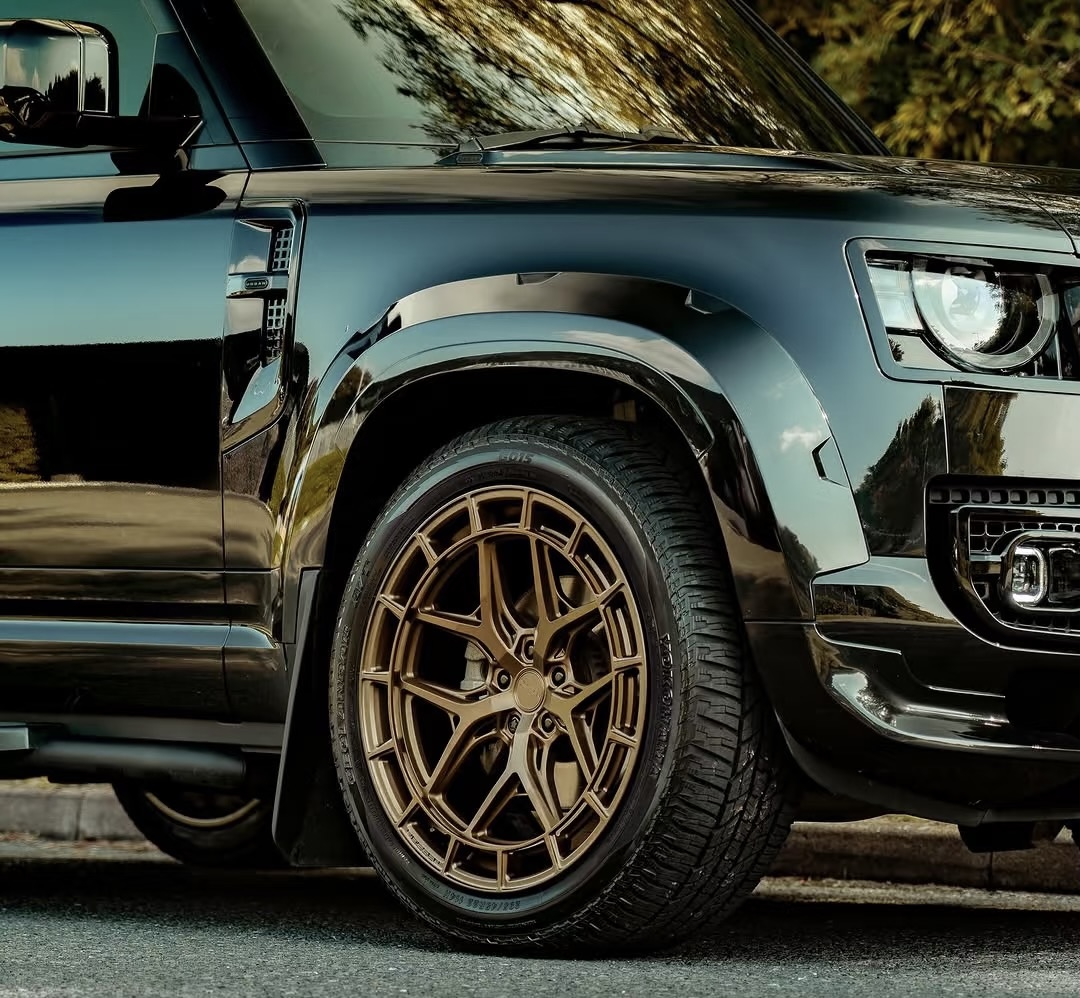
How Do You Measure Wheel Stud Pattern?
How Do You Measure Wheel Stud Pattern?
Upgrading your ride with custom wheels or replacing a damaged rim is one of the most rewarding truck and car projects. However, nothing halts a project faster than ordering a fresh set of wheels only to discover they do not mount properly onto your wheel hub.
The most common reason for this frustrating setback comes down to a single specification: the wheel stud pattern (also known as the bolt pattern or Pitch Circle Diameter / PCD).
So, how do you measure wheel stud pattern accurately without making costly guessing errors? Whether you are working on a sedan, an off-road truck, or a trailer, this comprehensive resource breaks down every step, formula, and tool you need to get an exact measurement every single time.
1.What Is a Wheel Stud Pattern (Bolt Pattern)?
Before grabbing your tape measure or caliper, it helps to understand what a wheel stud pattern actually represents.
A wheel stud pattern consists of two distinct numbers:
-
Lug Count: The total number of lug studs (or bolt holes) on the wheel hub.
-
Pitch Circle Diameter (PCD): The diameter of an imaginary circle that passes directly through the center of every lug stud.
How Bolt Patterns Are Expressed
You will typically see bolt patterns written in either inches or millimeters, formatted as [Lug Count] x [Diameter].
-
Metric Example:
5x114.3means 5 lug studs arranged on a 114.3 millimeter diameter circle. -
Imperial Example:
5x4.5means 5 lug studs arranged on a 4.5 inch diameter circle.
Both examples above actually represent the exact same physical measurement! The automotive industry uses both units depending on the vehicle manufacturer and country of origin.

2.Tools Needed to Measure Wheel Stud Pattern
You do not need expensive shop machinery to measure a bolt circle accurately. A few standard tools will give you precise results:
-
Digital Caliper: Hands down the best choice for pinpoint precision, especially when distinguishing between close metric sizes (like 5×114.3 vs. 5×115).
-
Flexible Tape Measure or Steel Ruler: Great for quick checks, particularly on even-lug count wheels (4, 6, or 8-lug).
-
Dedicated Bolt Pattern Gauge: A simple plastic slide tool designed specifically to drop over wheel studs for an instant reading.
-
Pen and Paper: To jot down your raw measurements before doing metric-to-imperial conversions.
3.Quick Answer: How Do You Measure Wheel Stud Pattern?
The Quick Snippet Method:
Count the Studs: Count the total lug studs on your hub or wheel (4, 5, 6, or 8).
For Even Lug Counts (4, 6, 8-Lug): Measure directly from the center of one stud to the center of the directly opposite stud.
For Odd Lug Counts (5-Lug): Measure from the center of one stud to the outer edge of the farthest stud across the hub.
Record the Pitch Circle Diameter (PCD): Combine your stud count and measurement (e.g., 5 studs + 4.5 inches = 5×4.5).
4.Step-by-Step Instructions: Measuring by Lug Count
Because odd-numbered stud patterns (like 5-lug wheels) do not have studs directly across from one another, the measurement technique changes depending on your lug count. Follow the specific instructions below for your vehicle.
       EVEN LUG PATTERN (4, 6, 8)                ODD LUG PATTERN (5)
          Center-to-Center                        Center-to-Far-Edge

               ( * )                                   ( * )
             /       \                               /       \
         ( * )       ( * )                       ( * )       ( * )
             \       /                               \       /
               ( * )                               ( * )   ( * )
1. How to Measure 4-Lug Wheel Stud Patterns
Four-lug patterns are symmetrical, making them very easy to measure accurately.
-
Pick any single lug stud on the hub.
-
Extend your ruler or caliper to the stud directly opposite (180 degrees across).
-
Measure straight from the center of Stud A to the center of Stud B.
-
Common 4-Lug Patterns: 4×100 mm, 4×108 mm (4×4.25 in), 4×114.3 mm (4×4.5 in).
2. How to Measure 5-Lug Wheel Stud Patterns
Five-lug patterns are the most popular on passenger cars, SUVs, and light trucks—and they are also where most DIY mechanics make errors because studs are not positioned directly opposite each other.
To get an accurate PCD measurement on a 5-lug hub:
-
Select one stud as your starting point.
-
Skip one stud and target the next stud across the wheel circle (the farthest stud).
-
Measure from the center of the first stud to the OUTER EDGE of the farthest stud.
-
This center-to-outer-edge distance compensates for the asymmetrical stud layout, giving you an accurate diameter reading.
-
Common 5-Lug Patterns: 5×114.3 mm (5×4.5 in), 5×120 mm, 5×112 mm, 5×127 mm (5×5 in), 5×139.7 mm (5×5.5 in).
3. How to Measure 6-Lug Wheel Stud Patterns
Six-lug patterns are standard on full-size pickup trucks, off-road vehicles, and mid-to-large SUVs.
-
Locate any stud on the wheel hub.
-
Place your ruler at the center of that stud.
-
Measure straight across the hub center cap to the center of the opposite stud.
-
Common 6-Lug Patterns: 6×139.7 mm (6×5.5 in), 6×120 mm, 6×114.3 mm (6×4.5 in).
4. How to Measure 8-Lug Wheel Stud Patterns
Eight-lug patterns are reserved for heavy-duty trucks (3/4-ton and 1-ton pickup trucks), heavy machinery, and large commercial trailers.
-
Select one stud on the hub.
-
Measure directly across the center of the wheel axle to the center of the directly opposing stud.
-
Common 8-Lug Patterns: 8×165.1 mm (8×6.5 in), 8×170 mm, 8×180 mm.
5.Quick Reference Table: Popular Bolt Patterns & Conversions
Use this convenient comparison chart to convert between inches and millimeters or identify standard vehicle fitments:
| Lug Count | Pattern (Inches) | Pattern (Millimeters) | Common Vehicle Applications |
|---|---|---|---|
| 4-Lug | 4 x 3.94 in | 4 x 100 mm | Honda Civic, Toyota Corolla, Vintage European |
| 4-Lug | 4 x 4.50 in | 4 x 114.3 mm | Older Nissan, Ford, Vintage Japanese Imports |
| 5-Lug | 5 x 4.50 in | 5 x 114.3 mm | Ford Mustang, Jeep Wrangler (TJ/YJ), Toyota RAV4 |
| 5-Lug | 5 x 4.75 in | 5 x 120.65 mm | Chevrolet Camaro, Corvette, Pontiac |
| 5-Lug | 5 x 5.00 in | 5 x 127 mm | Jeep Wrangler (JK/JL), Grand Cherokee, Dodge RAM |
| 5-Lug | 5 x 5.50 in | 5 x 139.7 mm | Ram 1500, Classic Ford F-150 |
| 6-Lug | 6 x 5.50 in | 6 x 139.7 mm | Chevrolet Silverado 1500, GMC Sierra, Toyota Tacoma |
| 6-Lug | 6 x 5.31 in | 6 x 135 mm | Modern Ford F-150, Ford Expedition |
| 8-Lug | 8 x 6.50 in | 8 x 165.1 mm | Older Chevy/GMC 2500/3500, RAM 2500/3500, Ford (pre-1999) |
| 8-Lug | 8 x 6.69 in | 8 x 170 mm | Ford F-250 / F-350 Super Duty (1999-Present) |
6.Imperial vs. Metric Conversions
Because auto manufacturers originate from different parts of the world, wheel dimensions flip constantly between imperial and metric systems. Knowing how to convert between the two ensures you never purchase the wrong set of wheels.
-
Inches to Millimeters: Multiply the inch measurement by 25.4.
-
Example: 4.5 inches * 25.4 = 114.3mm
-
-
Millimeters to Inches: Divide the millimeter measurement by 25.4.
-
Example: 139.7 mm/25.4 = 5.5 inches
-

7.Can You Measure Wheel Stud Patterns Without Removing the Wheel?
Yes, you can! If your wheel design features open lug nuts or wide spoke openings that allow clear access to the studs, you can measure directly through the wheel face using a tape measure or a thin ruler.
Limitations of On-Vehicle Measuring
While measuring without wheel removal saves time, keep these factors in mind:
-
Center caps or covered lug covers must be removed first.
-
Dirt, brake dust, and tight lug recesses can lead to slight visual misalignments.
-
A difference of just 1.7 mm (such as
5x114.3vs5x115) is nearly impossible to spot with a tape measure through a mounted wheel.
Pro Tip: For maximum accuracy, take off the wheel and measure directly across the bare wheel hub using a digital caliper.
8.Why Getting the Exact Stud Pattern Is Critical
Installing wheels with an incorrect bolt pattern creates serious safety hazards and mechanical failures:
-
Vibration at Highway Speeds: Even if you manage to force a
5x115wheel onto a5x114.3hub, the lug nuts will not sit flush in the lug seats, creating off-center rotational wobble. -
Stud Shearing & Hub Damage: Straining studs into non-matching wheel holes places massive side-loads on the wheel studs. Over time, metal fatigue can snap studs off entirely while driving.
-
Loosening Lug Nuts: Incorrect lug seat contact causes lug nuts to vibrate loose over time, creating an immediate risk of wheel detachment.
9.How to Choose Aftermarket Wheels with Confidence
Once you have measured your bolt pattern correctly, matching up high-quality aftermarket wheels becomes simple. Brands like ATK Wheels engineer aftermarket wheels precision-cast to exact OEM and custom bolt specifications, guaranteeing proper hub clearance, balanced load capacity, and seamless mounting.
When browsing wheels, keep three additional fitment specs in mind alongside your stud pattern:
-
Wheel Offset & Backspacing: Determines how far inside or outside the fender well your wheel sits.
-
Center Bore Diameter: Ensures the center hub opening on the wheel fits over your vehicle’s hub snout snugly (hub-centric fitment).
-
Load Rating: Confirms the wheel can safely carry your vehicle’s weight, especially under heavy towing or off-road conditions.

Frequently Asked Questions (FAQ)
1. How do you measure a wheel stud pattern?
Count the total number of wheel studs on your hub. For 4, 6, or 8-lug wheels, measure straight from the center of one stud to the center of the directly opposite stud. For 5-lug wheels, measure from the center of one stud to the outer edge of the farthest stud across the circle.
2. What is the easiest way to identify a wheel bolt pattern?
Count the wheel studs and measure the Pitch Circle Diameter (PCD). The complete pattern is expressed as stud count x PCD, such as 5×114.3 or 6×139.7. You can also check your vehicle owner’s manual or look up factory wheel specifications by vehicle year, make, and model.
3. Can I measure a wheel stud pattern without removing the wheel?
Yes, provided your wheel design permits clear sightlines and tool access to the lug studs. However, measuring directly on an exposed hub with a digital caliper yields significantly more accurate results.
4. What tools are needed to measure a wheel stud pattern?
You can use a flexible tape measure, metal ruler, digital caliper, or a specialized bolt pattern slide gauge. Digital calipers provide the highest precision when distinguishing between nearly identical metric bolt patterns.
5. Why is measuring the correct wheel stud pattern important?
A proper wheel stud pattern guarantees that your wheels bolt on safely and sit centered on the hub. Using an incorrect pattern risks lug stud failure, severe wheel vibration, hub damage, and dangerous wheel detachment while driving.
Upgrade Your Fitment Today
Measuring your wheel stud pattern is a simple task once you know the right technique for your lug count. Avoid fitment headaches by measuring twice, converting accurately between metric and imperial dimensions, and choosing high-performance wheels built to precise tolerances.
Looking for aftermarket wheels engineered for perfect fitment and rugged style? Explore the premium wheel lineup at ATK Wheels to find the exact bolt pattern and design built for your truck, SUV, or daily driver!