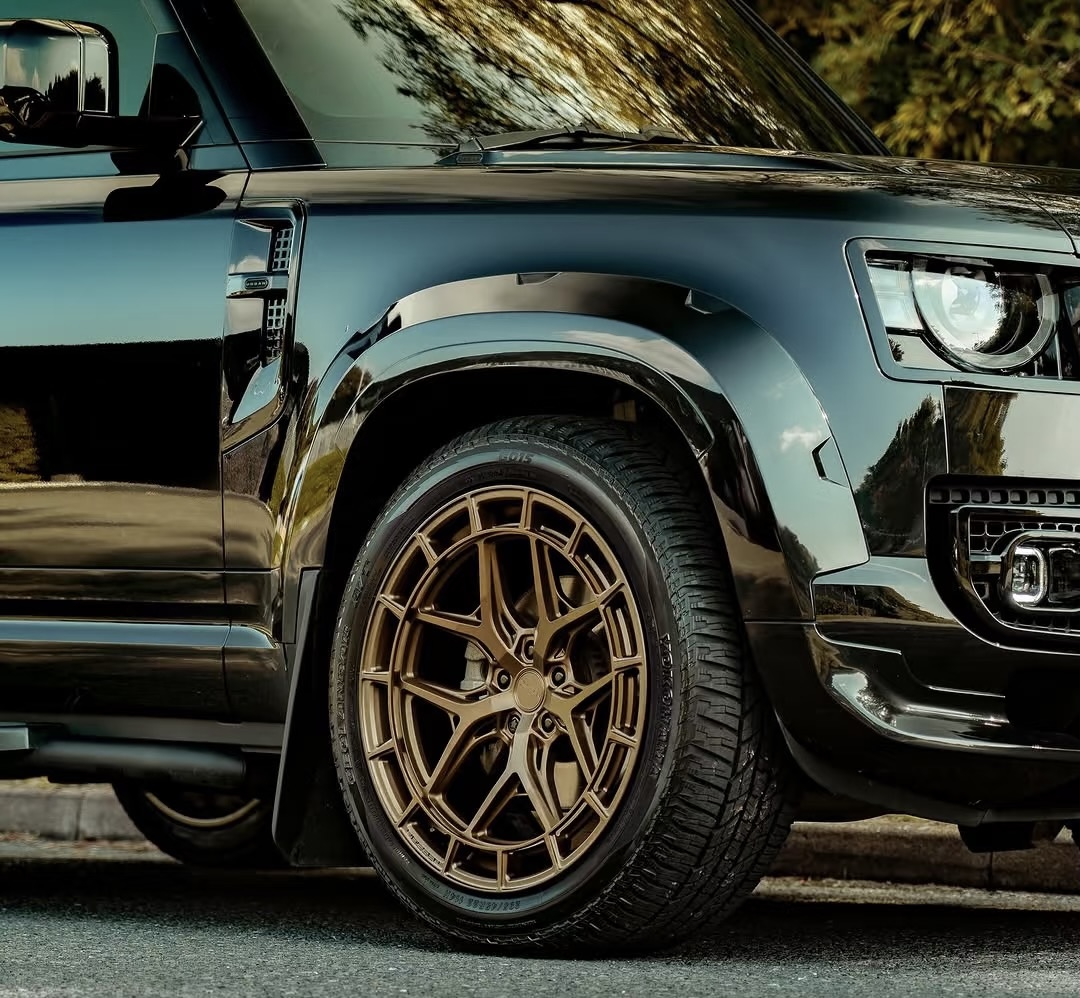
Rotary Forged Wheels: A Smarter Choice for Strength, Performance, and Everyday Driving
Rotary Forged Wheels: A Smarter Choice for Strength, Performance, and Everyday Driving
If you are looking to upgrade your vehicle’s performance and aesthetics, you have likely run into a confusing maze of wheel-manufacturing terminology. Between “cast,” “fully forged,” and “rotary forged wheels,” finding the right balance between budget and performance can feel like a daunting task.
For everyday enthusiasts, track-day warriors, and daily drivers alike, rotary forged wheels (often referred to as flow-formed or spin-forged wheels) represent the absolute sweet spot in the aftermarket wheel industry.
This comprehensive deep-dive breaks down exactly what rotary forged wheels are, how they are made, how they stack up against other manufacturing methods, and whether they are the right choice for your vehicle.
1.What Are Rotary Forged Wheels?
A rotary forged wheel is a high-performance aftermarket wheel manufactured using a specialized hybrid process called flowforming (or rotary forging). This technique begins with a low-pressure cast aluminum preform, which is then subjected to intense heat and high-pressure hydraulic rollers while spinning at high speeds.
[Cast Preform] ---> [Heated & Spun] ---> [Hydraulic Rollers Compress Barrel] ---> [Finished Rotary Forged Wheel]
During this process, the rollers stretch and compress the aluminum alloy of the wheel’s barrel. This hydraulic manipulation fundamentally alters the molecular structure of the aluminum, aligning the metal grains in a continuous, dense pattern.
The Science Behind the Strength
In a standard cast wheel, the microscopic grain structure of the aluminum is random and porous, making it susceptible to cracking under heavy impact.
By contrast, the rotary forging process compresses the grain structure, dramatically increasing the tensile strength of the wheel’s barrel. The result is a wheel that is significantly thinner, lighter, and stronger than a traditional cast wheel, carrying structural properties that closely mimic a fully forged wheel.
2.Rotary Forged vs. Fully Forged vs. Cast Wheels
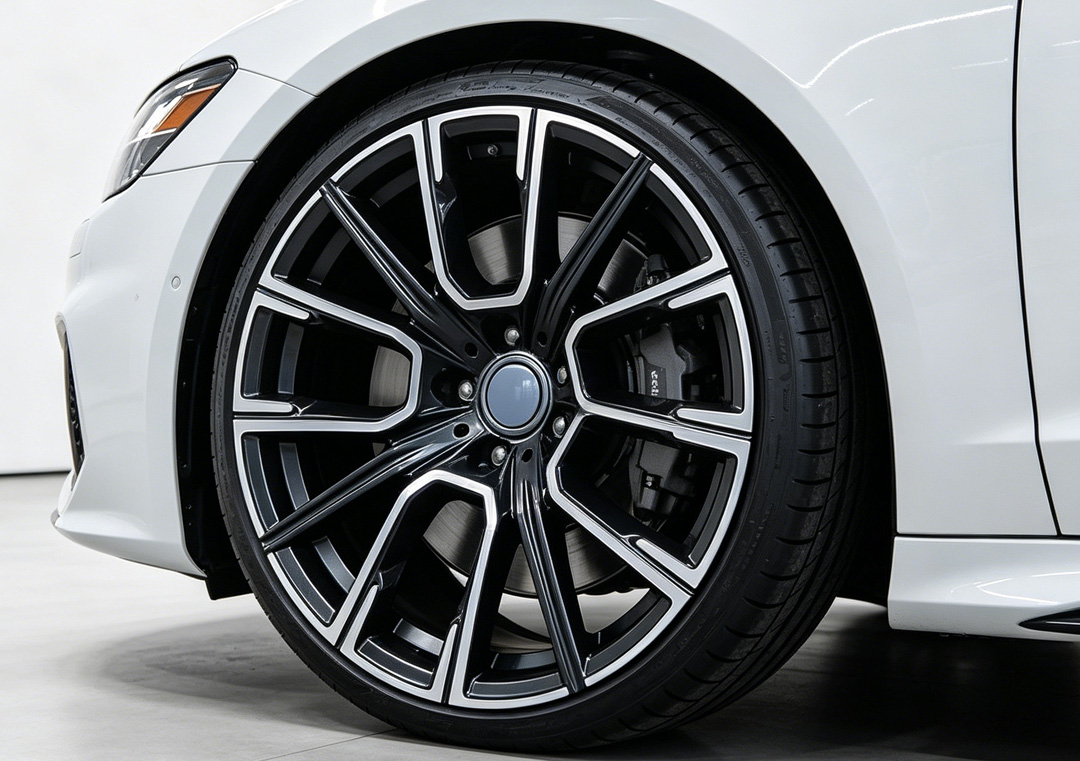
To truly appreciate the value of rotary forged technology, it helps to understand how it compares to the two other primary wheel-manufacturing methods: gravity/low-pressure casting and traditional full forging.
1. Cast Wheels (The Budget Standard)
Cast wheels are made by pouring molten aluminum into a mold. As the metal cools, tiny air pockets and microscopic imperfections can form. To compensate for this inherent structural weakness, manufacturers must make the wheel walls thicker and heavier. While cast wheels are highly affordable, they are heavy and more prone to cracking under severe impacts.
2. Fully Forged Wheels (The Premium Elite)
Fully forged wheels are machined from a single, solid block of aerospace-grade 6061-T6 aluminum billet using massive industrial presses (often applying 10,000 tons of pressure or more). This process yields the absolute strongest, lightest, and most customizable wheels on the market. However, the labor-intensive machining and raw material costs make them exceptionally expensive—often costing thousands of dollars per wheel.
3. Rotary Forged Wheels (The Perfect Hybrid)
Rotary forged wheels utilize casting for the center face of the wheel but employ the advanced flowforming process to create the barrel. Because the barrel experiences the majority of a wheel’s operational stress and rotational inertia, strengthening this specific zone provides massive performance benefits at a fraction of the cost of a fully forged wheel.
Side-by-Side Comparison
| Feature | Cast Wheels | Rotary Forged Wheels | Fully Forged Wheels |
|---|---|---|---|
| Manufacturing Process | Molten aluminum poured into a static mold | Cast center face + flow-formed/rolled barrel | CNC-machined from a solid forged billet |
| Grain Structure | Porous, random, and weaker | Aligned and compressed in the barrel | Perfectly aligned throughout the entire wheel |
| Weight | Heavy | Lightweight (approx. 15–25% lighter than cast) | Ultra-lightweight |
| Structural Strength | Low to Medium | High (specifically in the barrel) | Maximum |
| Impact Resistance | Prone to cracking under heavy loads | Highly durable; bends rather than shatters | Exceptional durability and resilience |
| Price Point | $ | $$\vert{}$$$$ | |
| Best For | Budget-conscious daily driving | Track days, performance tuning, daily driving | Elite racing, luxury builds, exotic supercars |
3.Key Benefits of Upgrading to Rotary Forged Wheels
Why are performance enthusiasts turning to rotary forged wheels? The advantages go far beyond simple aesthetics.
1. Drastic Reduction in Unsprung Weight
In automotive engineering, unsprung weight refers to the mass of the vehicle components not supported by the suspension system—such as the brakes, tires, and wheels.
-
Lighter suspension load: Reducing unsprung weight allows your suspension to react much faster to road imperfections, keeping your tires firmly planted on the pavement.
-
Rotational mass reduction: Because wheels spin, they generate rotational inertia. A lighter wheel requires less energy to spin up and slow down, directly improving your vehicle’s overall dynamics.
2. Enhanced Acceleration and Braking
Because your engine doesn’t have to work as hard to rotate a lighter wheel, you will notice a sharper throttle response and quicker 0–60 mph times. Similarly, less kinetic energy is stored in the spinning wheel, allowing your braking system to stop the vehicle more efficiently and with less brake fade.
3. Superior Strength and Safety
Potholes are the ultimate enemy of low-profile tires and aftermarket rims. While a cheap cast wheel will often crack or shatter when hitting a sharp pothole at speed—leading to sudden tire deflation—a rotary forged wheel is much more ductile. Its dense grain structure allows it to absorb impacts better, often bending slightly rather than catastrophically cracking, keeping you safe on the road.
4. Improved Fuel Efficiency and EV Range
For daily drivers and electric vehicle (EV) owners, heavy wheels are a silent battery and fuel drain. Reducing wheel weight by even 4 to 5 pounds per corner can noticeably improve fuel economy (MPG) and extend the real-world driving range of EVs by minimizing rotational drag.
4.How Rotary Forging Works: Step-by-Step
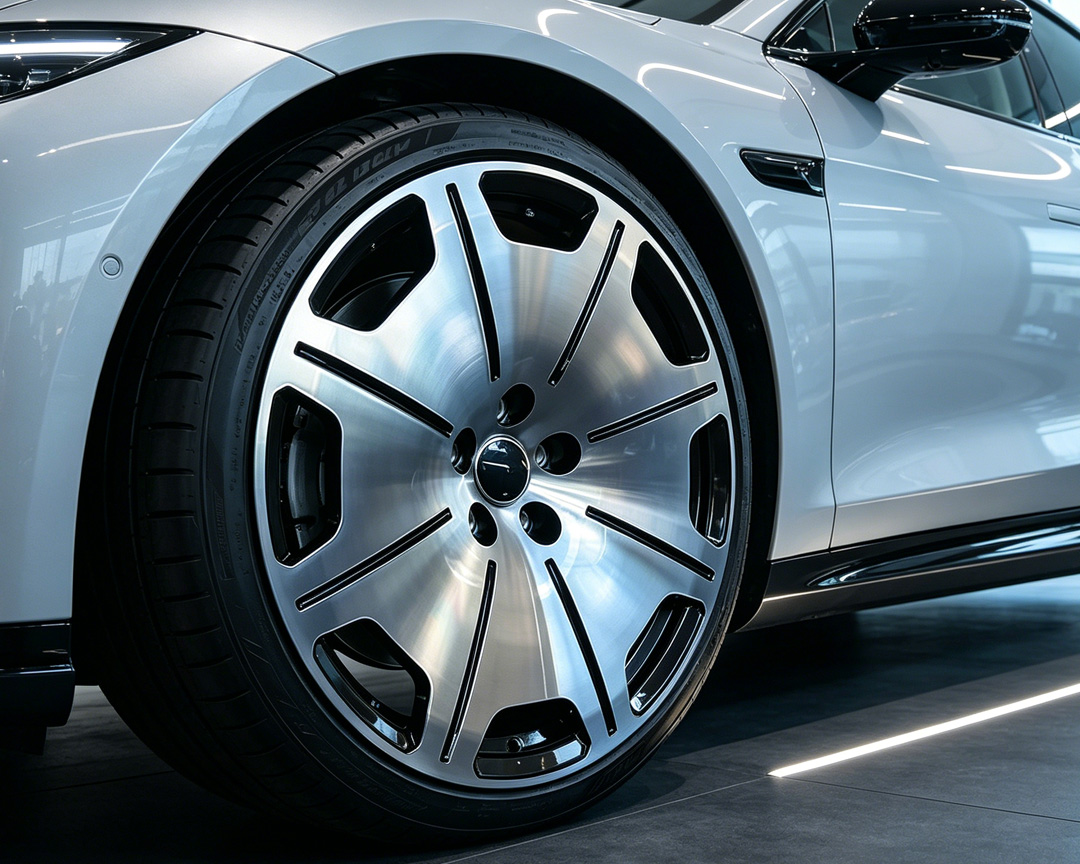
Understanding the engineering behind these wheels highlights why they perform so exceptionally well. The flowforming process is a marvel of modern metalworking:
Step 1: Cast Preform ---> Step 2: Heat & Spin ---> Step 3: Hydraulic Pressure ---> Step 4: Final Heat Treat
-
Step 1: Creating the Preform: A specialized aluminum casting is created. This preform looks like a very thick, stubby wheel with the face design already molded, but with a short, thick barrel.
-
Step 2: Heating and Spinning: The preform is mounted onto a proprietary flowforming mandrel and heated to precise temperatures (typically around 350°F to 450°F) to make the aluminum malleable without melting it. The machine then begins to spin the wheel at high speeds.
-
Step 3: Hydraulic Roller Profiling: Heavy, computer-controlled hydraulic rollers press against the spinning barrel. As they move along the width of the wheel, they squeeze, stretch, and smooth the aluminum over the mandrel. This aligns the metal’s grain structure horizontally.
-
Step 4: Cooling and T6 Heat Treatment: Once the barrel reaches its final width and thickness, the wheel is cooled and subjected to a rigorous T6 heat-treating process to lock in the newly aligned grain structure, maximizing its final hardness and tensile strength.
5.Are Rotary Forged Wheels Worth Buying?
For 90% of automotive enthusiasts, yes, rotary forged wheels are absolutely worth buying.
If you are building an unlimited-budget dedicated race car or an exotic show car, fully forged wheels remain the gold standard. However, for those who want a tangible performance upgrade, gorgeous styling, and everyday durability without spending $4,000+ on a set of rims, rotary forged options offer an unbeatable price-to-performance ratio.
They offer a perfect middle ground: they deliver roughly 85% of the performance and weight-saving benefits of a fully forged wheel at only a slight premium over standard cast options.
Frequently Asked Questions (FAQ)
1.What are rotary forged wheels?
Rotary forged wheels are high-performance wheels manufactured using a flowforming process. This process applies heat and intense hydraulic pressure to stretch and compress the wheel’s barrel, altering the aluminum’s grain structure to make it significantly lighter and stronger than traditional cast wheels.
2.Are rotary forged wheels stronger than cast wheels?
Yes, rotary forged wheels are substantially stronger and lighter than traditional cast wheels. The flowforming process eliminates porosity in the metal and aligns the aluminum molecules, which dramatically improves structural integrity and impact resistance.
3.Are rotary forged wheels worth buying?
Yes. For most drivers, rotary forged wheels provide the best overall value on the market. They deliver excellent performance enhancements, reduced weight, and superior strength at a fraction of the cost of fully forged wheels.
4.What is the difference between rotary forged and fully forged wheels?
The primary difference lies in how the center face of the wheel is constructed. Rotary forged wheels use a cast aluminum face combined with a flow-formed barrel. Fully forged wheels are carved entirely from a single solid block of forged aluminum, making them lighter and stronger across the entire wheel structure—though at a much higher price point.
5.Do rotary forged wheels improve vehicle performance?
Yes. By reducing unsprung weight and rotational mass, rotary forged wheels improve acceleration, handling, steering response, braking efficiency, and fuel economy.
6.Can I repair a damaged rotary forged wheel?
In many cases, yes. Because the aluminum barrel is dense and ductile (rather than brittle like cast aluminum), professional wheel repair shops can often safely straighten minor flat spots or bends caused by potholes. Always consult a certified professional to assess structural safety.
Upgrade Your Ride Today
Are you ready to elevate your driving experience with the perfect balance of strength, lightweight performance, and striking design? Upgrading to a premium set of rotary forged wheels is one of the most cost-effective modifications you can make to your vehicle.
Explore our elite collection of high-performance wheels engineered to transform your vehicle’s handling and style.
[Browse Our Collection at ATK Wheels] to find the perfect fitment for your vehicle, or contact our team of fitment experts today for personalized advice!