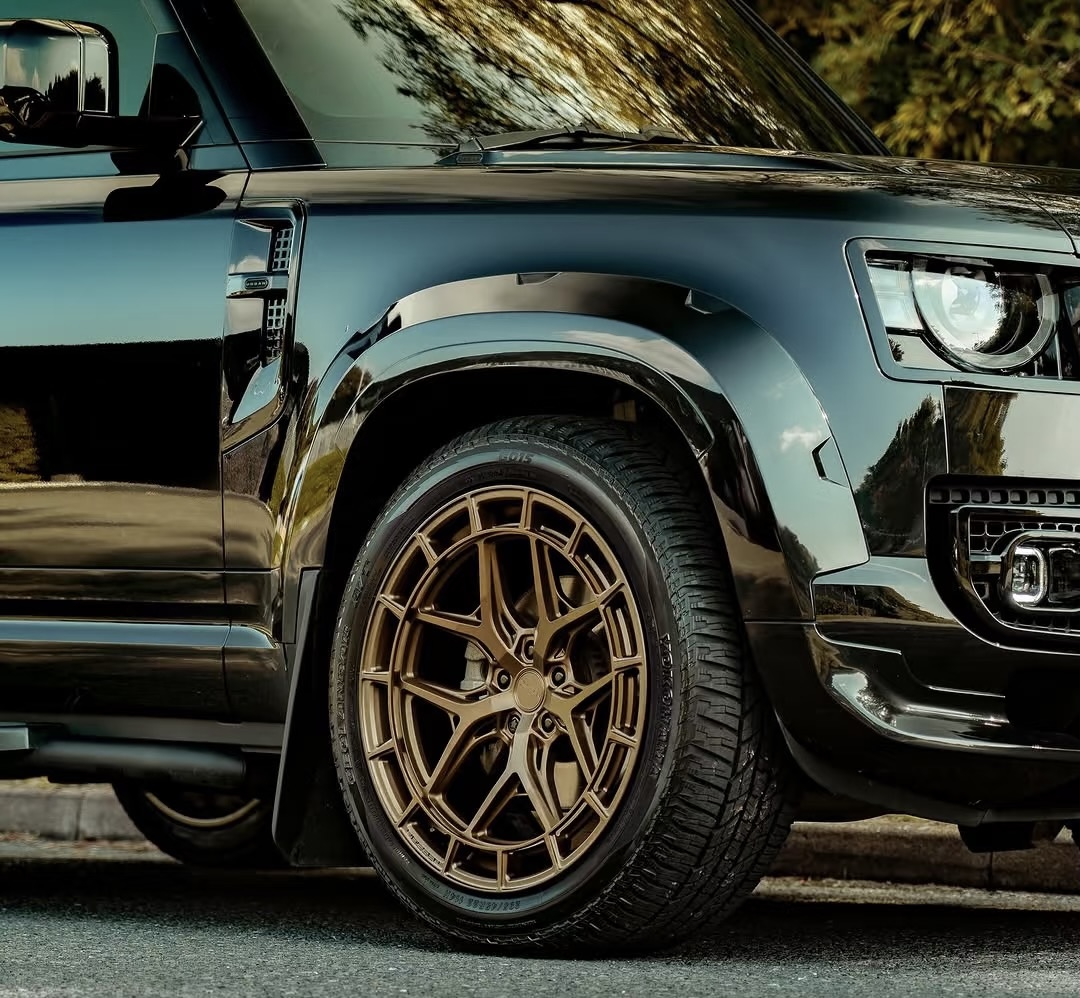
Forged Wheels for Trucks: Why More Truck Owners Are Choosing Premium Aluminum Wheels
Forged Wheels for Trucks: Why More Truck Owners Are Choosing Premium Aluminum Wheels
If you use your truck for what it was actually built to do—hauling heavy payloads, towing trailers, navigating rugged off-road trails, or eating up highway miles—you’ve likely looked at upgrading your wheels.
But as you browse the aftermarket, you’ll quickly notice a massive price gap between standard cast options and premium forged wheels for trucks. It’s easy to wonder: Is the premium price tag actually worth it, or is it just about aesthetics?
The short answer is: yes, they are worth every penny. But to understand why, you need to look past the shiny finish. The real value of forged truck wheels lies in how they are made, how they perform under pressure, and how they protect your investment over hundreds of thousands of miles.
Let’s dive deep into the science, the performance benefits, and the long-term ROI of equipping your truck with forged wheels.
1.What Are Forged Wheels for Trucks?
To understand a forged wheel, you first have to understand what it isn’t.
Most stock truck wheels and cheap aftermarket options are cast wheels. Casting involves melting aluminum into a liquid state, pouring it into a mold, and letting it cool. While this is a highly cost-effective way to mass-produce wheels, it has a major structural downside: as the liquid aluminum cools, tiny microscopic air bubbles (porosity) get trapped inside the metal. This makes cast wheels inherently more brittle and prone to cracking under extreme stress.
Forging, on the other hand, is an entirely different beast.
The process starts with a solid billet of premium, aerospace-grade 6061-T6 aluminum. Instead of melting it down, specialized heavy machinery subjects this solid block to millions of pounds of extreme pressure and heat. This intense compression forces the microscopic grain structure of the aluminum to align perfectly with the shape of the wheel.
The result? A wheel with zero porosity, incredibly high density, and unmatched structural integrity. Finally, advanced CNC machines precision-carve the intricate designs and lug patterns out of this hyper-dense aluminum face.
2.Forged vs. Cast vs. Flow Formed: The Truck Wheel Showdown
When shopping for truck wheels, you’ll generally run into three manufacturing types: Cast, Flow Formed (sometimes called rotary forged, though it is not a true forging), and Forged.
Because trucks carry heavy loads and tackle harsh terrain, choosing the wrong type can lead to catastrophic structural failure. Here is how they stack up side-by-side:
| Feature | Cast Wheels | Flow Formed Wheels | Forged Wheels |
|---|---|---|---|
| Manufacturing Process | Liquid metal poured into a mold | Cast face with hydraulically rolled barrel | Solid aluminum compressed under extreme pressure |
| Material Density | Low (highly porous) | Medium (dense barrel, porous face) | Maximum (zero porosity) |
| Strength-to-Weight Ratio | Low | Medium | Exceptionally High |
| Impact Resistance | Poor (prone to cracking/shattering) | Moderate | Outstanding (bends rather than breaks) |
| Payload Capacity | Standard | Moderate to High | Maximum Heavy-Duty Rating |
| Average Lifespan | 3–5 years (depending on abuse) | 5–8 years | Lifetime of the truck |
| Price Point | Budget-friendly | Mid-range | Premium investment |
3.Major Performance Benefits of Forged Truck Wheels
Upgrading to forged wheels isn’t just about getting a custom look for your Ford F-250, Ram 2500, or Silverado. It directly impacts how your truck drives, stops, and hauls.
1. Unmatched Payload and Towing Capacity
Trucks are built to work. Whether you are towing a 15,000-pound fifth-wheel camper or hauling construction materials, your wheels bear the brunt of that weight.
Because forged aluminum has an incredibly dense grain structure, forged wheels can support significantly higher load ratings than cast wheels of the same size. When you hit a pothole on the highway while towing heavy, a cast wheel is at risk of cracking and causing a sudden blowout. A forged wheel has the structural elasticity to absorb that impact safely.
2. Reduced Unsprung Weight
“Unsprung weight” refers to any part of your truck that isn’t supported by the suspension—namely, your wheels, tires, and brakes.
Because forging makes aluminum incredibly strong, manufacturers can use less material to achieve the same (or higher) load rating as a cast wheel. This makes forged wheels significantly lighter. Reducing unsprung weight delivers immediate performance upgrades:
-
Faster Acceleration: Your engine doesn’t have to work as hard to spin a lighter wheel.
-
Sharper Handling: Your suspension can react more quickly to changes in the road surface.
-
Better Braking: Lighter wheels mean less rotational inertia, allowing your brakes to bring your heavy rig to a stop much faster.
3. Improved Fuel Economy (MPG)
It’s simple physics: less weight to rotate means less energy wasted. While putting forged wheels on a lifted truck with 37-inch mud tires won’t suddenly turn it into a hybrid, the weight savings do reduce rolling resistance. Over tens of thousands of miles, the slight bump in MPG can add up to serious savings at the diesel pump.
4. Extreme Off-Road Durability
If you take your truck off the beaten path, your wheels are going to take a beating from rocks, ruts, and tree roots.
When a cast wheel suffers a severe impact off-road, its brittle structure is likely to crack, leaving you stranded with a flat tire and a useless wheel. Under the exact same impact, a forged wheel is far more likely to simply bend. A bent wheel might slowly leak air, but it won’t catastrophically shatter, allowing you to limp your truck back to civilization safely.
4.Why Are Forged Truck Wheels So Expensive?
There’s no hiding from it: forged wheels are a premium investment. While a set of cast wheels might run you $1,000, a set of high-quality forged wheels can easily range from $3,000 to $6,000 or more.
But where does that money actually go?
-
Premium Materials: True forged wheels are made from aerospace-grade 6061-T6 aluminum, which is significantly more expensive than the lower-grade recycled aluminum alloys often used in casting.
-
Extreme Industrial Machinery: Pressing solid aluminum requires massive forging presses that exert anywhere from 10,000 to 50,000 tons of pressure. This machinery requires massive capital investments and highly skilled technicians to operate.
-
Extensive CNC Machining: Because the forging process creates a dense, solid blank, every detail of the wheel’s design, the lug holes, and the valve stem openings must be meticulously carved out using high-precision CNC milling machines. This process is time-consuming and produces a lot of high-value aluminum scrap that must be recycled.
-
Rigorous Testing: Premium forged manufacturers subject their wheels to radial, cornering, and impact fatigue testing that far exceeds standard industry requirements.
When you buy forged, you aren’t paying for a brand name; you are paying for the advanced engineering and manufacturing precision that keeps you safe on the road.
5.How to Choose the Right Forged Wheels for Your Truck
If you are ready to make the investment, you want to make sure you get the perfect setup for your specific truck. Here are the key factors to consider:
Monoblock vs. Multi-Piece Forged Wheels
-
Monoblock (1-Piece): Carved from a single forged aluminum billet. These are the lightest, stiffest, and most structurally durable wheels available. They are ideal for heavy-duty work trucks and dedicated off-roaders.
-
Multi-Piece (2-Piece or 3-Piece): Consist of a forged center face bolted to a separate inner and outer barrel. These offer unmatched customization in terms of width, offset, and finish, making them incredibly popular for show trucks and street performance builds.
Bolt Pattern and Fitment
Truck manufacturers use different hub designs. Ensure you know your truck’s specific bolt pattern (e.g., 8×170 for modern Ford Super Duties, 8×165.1 for older Ram/GM heavy duties) and the correct offset to avoid rubbing against your suspension components or fenders.
Finish Options
Forged wheels can be finished in a variety of ways to match your truck’s aesthetic:
-
Polished: A classic, mirror-like finish that shines brilliantly but requires regular polishing to maintain.
-
Powder Coated: Highly durable, baked-on paint that resists rock chips, road salt, and harsh weather. Ideal for work trucks and daily drivers.
-
Brushed: A textured, satin finish that shows off the premium grain of the forged aluminum beneath a clear coat.
Frequently Asked Questions (FAQ)
Q1: Are forged wheels better for trucks than cast wheels?
A: Yes, absolutely. Forged wheels are significantly stronger, lighter, and more durable than cast wheels. They are engineered to handle heavy payloads, towing demands, and off-road abuse without cracking, making them the superior choice for trucks.
Q2: Can forged truck wheels crack under heavy loads?
A: It is extremely rare. Because forged wheels have a dense, continuous grain structure with zero internal air pockets, they do not crack under load. Under extreme, catastrophic impacts, a forged wheel is designed to bend rather than shatter, which is a much safer failure mode.
Q3: Do forged wheels improve truck performance?
A: Yes. By reducing unsprung weight and rotational mass, forged wheels improve your truck’s acceleration, braking efficiency, handling response, and can even slightly improve your fuel economy (MPG).
Q4: What is the average lifespan of forged wheels on a truck?
A: With basic maintenance, a set of quality forged wheels can easily last the entire lifespan of your truck. They resist structural fatigue far better than cast wheels, making them a true “buy-it-once” investment.
Q5: Do forged wheels require special maintenance?
A: It depends on the finish. Fully polished forged wheels require regular cleaning and occasional hand-polishing to prevent oxidation. However, clear-coated, painted, or powder-coated forged wheels require no more maintenance than a standard factory wheel—just regular washing with mild soap and water.
The Bottom Line: Is Forging Worth It?
At the end of the day, upgrading your truck to forged wheels is about peace of mind. It’s about knowing that when you are miles away from cell service on a mountain trail, or towing a heavy trailer down a busy interstate at 70 MPH, your wheels are structurally capable of handling whatever the road throws at them.
They look incredible, they improve your truck’s driving dynamics, and they are built to outlast the truck itself.
Upgrade Your Ride with ATK Wheels
Ready to experience the ultimate in truck performance and durability? At ATK Wheels, we specialize in precision-engineered, high-strength wheels designed to elevate your truck’s capabilities. Browse our premium collection today to find the perfect fitment for your rig, or contact our team of experts to customize your dream setup.