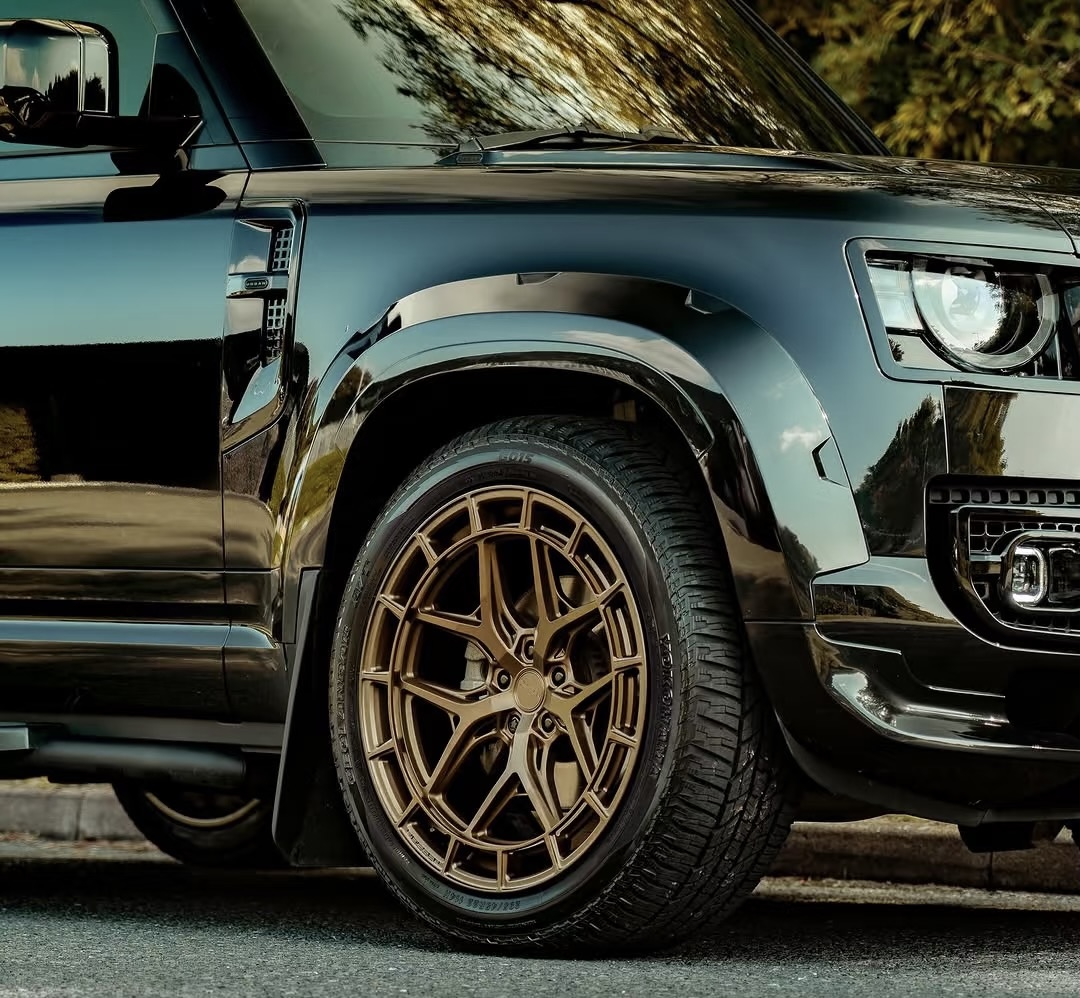
How to Measure Backspacing on Wheels
How to Measure Backspacing on Wheels
When upgrading to aftermarket wheels, nothing ruins the excitement quite like a devastating “crunch” or “rub” during your first test drive. Whether you are building a rugged off-road rig, restoring a classic muscle car, or lowering a street machine, getting your wheel fitment right the first time is critical.
At the absolute center of this equation is wheel backspacing.
If your backspacing is off by even a fraction of an inch, your new wheels could collide with your brake calipers, scrape against your control arms, or stick out past your fenders like a skateboard.
Fortunately, figuring out this measurement does not require an engineering degree. In this comprehensive blueprint, we will break down exactly how to measure backspacing on wheels, explore how it differs from wheel offset, and provide a foolproof method to ensure your next set of rims fits flawlessly.
1.What Is Wheel Backspacing and Why Does It Matter?
Before reaching for your tape measure, it helps to understand what you are actually measuring.
Wheel backspacing is the distance from the mounting pad (where the wheel bolts to the hub of your vehicle) to the absolute innermost edge of the wheel lip. It determines how deep the wheel sits inside the fender well.
Why Getting It Right Is Crucial for Your Vehicle
-
Suspension and Frame Clearance: If your backspacing is too deep (large measurement), the wheel sits too far inward. This can cause the tire sidewall or the inner wheel lip to rub against your suspension struts, control arms, sway bars, or frame rails.
-
Brake Caliper Clearance: Upgrading to large, multi-piston brakes often requires specific backspacing to ensure the wheel spokes and inner barrel clear the calipers.
-
Fender Clearance and Aesthetics: If your backspacing is too shallow (small measurement), the wheel pushes outward. This can cause the tire to catch on the outer fender lip when hitting bumps or during tight turns.
-
Handling and Steering Geometry: Proper backspacing maintains the scrub radius designed by factory engineers, keeping your steering predictable and preventing premature wear on your wheel bearings.
2.The Essential Tools You Need
You do not need expensive shop equipment to get an exact measurement. In fact, you likely already have these three basic items sitting in your garage:
-
A Flat Surface: A clean garage floor, a sturdy workbench, or a piece of flat cardboard to protect the face of your wheel from scratches.
-
A Rigid Straightedge: A metal ruler, a carpenter’s level, or a perfectly straight piece of scrap wood. It must be long enough to span the total outer diameter of the wheel lip without flexing.
-
A Tape Measure or Caliper: A standard tape measure works perfectly, though a digital caliper offers pinpoint accuracy.
-
Pen and Paper: To jot down your numbers (remember: measure twice, buy once).
3.How to Measure Backspacing on Wheels: The 3-Step Process
This is the standard, foolproof method for measuring a bare wheel (without a tire mounted).
Quick Summary for Google Featured Snippet
To accurately measure wheel backspacing, lay the wheel face down on a flat surface. Place a rigid straightedge flat across the back lip of the wheel. Measure the exact distance from the bottom edge of the straightedge down to the wheel’s mounting pad surface. This total distance is your backspacing.
Step 1: Prep the Wheel
Remove the wheel from your vehicle. If it is dirty, wipe down the back mounting pad and the inner lip to remove brake dust and debris. Lay the wheel flat on its face (the beautiful side facing down) on your protected workbench or floor.
Step 2: Position Your Straightedge
Place your rigid straightedge across the back edge of the wheel lip. Ensure the straightedge is resting securely on the highest points of the metal lip on both sides, spanning directly across the center center-bore hole.
Step 3: Measure the Depth
Slide your tape measure down through the center hole until it touches the flat surface of the mounting pad (the metal surface that makes contact with your vehicle’s brake rotor or drum). Read the measurement at the exact point where it meets the bottom edge of your straightedge.
This number—typically ranging between $3.5$ and $6.5$ inches—is your wheel’s backspacing.
Plaintext
  [ Straightedge ] <------------------------------ Resting on back lips
  ================================================
         |                                |
         | <--- Measure This Distance --->|
         |                                |
  [ Mounting Pad ]                        [ Inner Barrel ]
4.Measuring Backspacing With a Tire Mounted
What if you need to measure a wheel that already has a tire inflated on it? You can still get an accurate reading, but you must account for tire bulge. Because tires bulge past the metal lip of the wheel, placing a straightedge across the tire will skew your numbers.
The Tire-Mounted Workaround:
-
Lay the wheel and tire assembly flat on the ground, face down.
-
Place your straightedge across the tire’s sidewall (the highest protruding points).
-
Measure from the bottom of the straightedge down to the mounting pad. This gives you your total assembly depth.
-
To find the true wheel backspacing, use a smaller ruler to measure how far the tire bulges past the actual metal wheel lip.
-
Subtract that tire bulge distance from your total assembly depth. The remaining number is your true wheel backspacing.
5.Backspacing vs. Offset: Clearing Up the Confusion
A common point of confusion in the automotive world is the difference between backspacing and wheel offset. While they both describe how a wheel sits in the wheel well, they measure from different starting points and use different units.
-
Backspacing is measured in inches. It is a direct measurement from the mounting pad to the absolute back edge of the wheel, accounting for the total width including the thickness of the wheel lip.
-
Offset is measured in millimeters. It is the distance from the mounting pad to the exact centerline of the wheel width. Offset can be positive (mounting pad closer to the street side), negative (mounting pad closer to the suspension side), or zero.
Direct Comparison Table
| Feature | Wheel Backspacing | Wheel Offset |
|---|---|---|
| Measurement Unit | Inches (e.g., 4.5", 5.0") | Millimeters (e.g., +12mm, -24mm) |
| Reference Point | Absolute inner lip of the wheel | Exact centerline of the wheel width |
| What it accounts for | Total wheel width, including lip thickness | Nominal wheel width only |
| Primary Industry Use | Classic cars, trucks, off-road vehicles | Modern sports cars, imports, OEMs |
| Impact of Width | If width increases but backspacing stays the same, the wheel grows outward. | If width increases but offset stays the same, the wheel grows equally inside and outside. |
6.How to Convert Between Backspacing and Offset
If you know your wheel’s width and offset, you can calculate the backspacing without lifting a tape measure.
Important Note on Wheel Width: When a wheel is advertised as $9$ inches wide, that is the inside measurement where the tire bead sits. The actual overall width from outside lip to outside lip is usually about $1$ inch wider (approx. $0.5$ inches of flange lip on each side).
To convert offset to backspacing manually, use the following formula:

Quick Reference Conversion Chart (Based on Standard 1-inch Lip Factor)
| Advertised Wheel Width | Wheel Offset (mm) | Approximate Backspacing (Inches) |
|---|---|---|
| 8.0" | 0mm | 4.5" |
| 8.0" | +15mm | 5.1" |
| 9.0" | -12mm | 4.5" |
| 9.0" | 0mm | 5.0" |
| 9.0" | +18mm | 5.7" |
| 10.0" | -24mm | 4.5" |
| 10.0" | 0mm | 5.5" |
7.Real-World Fitment Scenarios: Avoiding Common Mistakes
When browsing for your next setup, keep these golden rules in mind:
The “Too Much Backspacing” Trap
If you select a wheel with too much backspacing (e.g., moving from a factory $4.5″$ to a custom $6.0″$), the entire wheel profile shifts inward toward the chassis. Be prepared to check your frame rails and brake lines. If you encounter minor rubbing here, you may need to look into hub-centric wheel spacers or choose a wheel with less backspacing.
The “Deep Dish / Stance” Dynamic
If you want that classic deep-dish look or an aggressive stance where the wheels push out wide, you want less backspacing. For instance, a $3.5″$ backspacing pushes the wheel further out toward the fender than a $5.0″$ backspacing on the same width wheel. Just ensure your fenders are rolled or your suspension lift is high enough to clear the tires during articulation.
Frequently Asked Questions(FAQ)
1.How do you accurately measure wheel backspacing?
Lay the wheel face down on a flat surface. Place a straightedge flat across the back lip of the wheel. Measure the distance from the bottom of the straightedge down to the wheel’s mounting pad surface. That measurement is your backspacing.
2.What is the difference between wheel offset and backspacing?
Backspacing measures the distance from the mounting surface to the absolute back edge of the wheel (in inches). Offset measures the distance from the mounting surface to the exact centerline of the wheel (in millimeters). Backspacing accounts for the total width, including the lip.
3.Can you measure backspacing with a tire mounted?
Yes, but you must account for tire bulge. Lay the wheel and tire flat. Place a straightedge across the tire’s sidewall (the highest point), measure down to the mounting pad, and then subtract the distance the tire protrudes past the wheel lip to get the true backspacing.
4.What tools do I need to measure wheel backspacing?
You only need three basic tools: a straightedge (or a stiff ruler/piece of wood) long enough to span the wheel’s total diameter, a tape measure or caliper, and a flat surface to lay the wheel on.
5.Why is measuring backspacing important for custom wheels?
Correct backspacing ensures the wheel clears internal components. If backspacing is too deep, the wheel or tire will rub against suspension parts, frame rails, or brake calipers; if it is too shallow, the wheel will stick out too far from the fender.
6.Does backspacing include the wheel lip?
Yes. Unlike advertised wheel width (which measures the inner bead seat), backspacing measures to the absolute physical edge of the outer rear lip. This is why it is highly reliable for checking physical vehicle clearance.
Find Your Perfect Stance
Measuring your wheels does not have to be a guessing game. By taking five minutes with a tape measure and a straightedge, you can confidently order custom wheels knowing they will bolt up perfectly, clear your brakes, and give your ride the exact stance you want.
Ready to upgrade your stance with premium engineering built for the road? Explore the precision-crafted collection at ATK Wheels to find the perfect style, width, and fitment tailored for your vehicle today.